TwitterFacebookGoogle PlusLinkedInRSS FeedEmail

Koenigsegg - Performance

When we speak performances, nothing would represent the word "PERFORMANCE" better than any Koenigsegg.

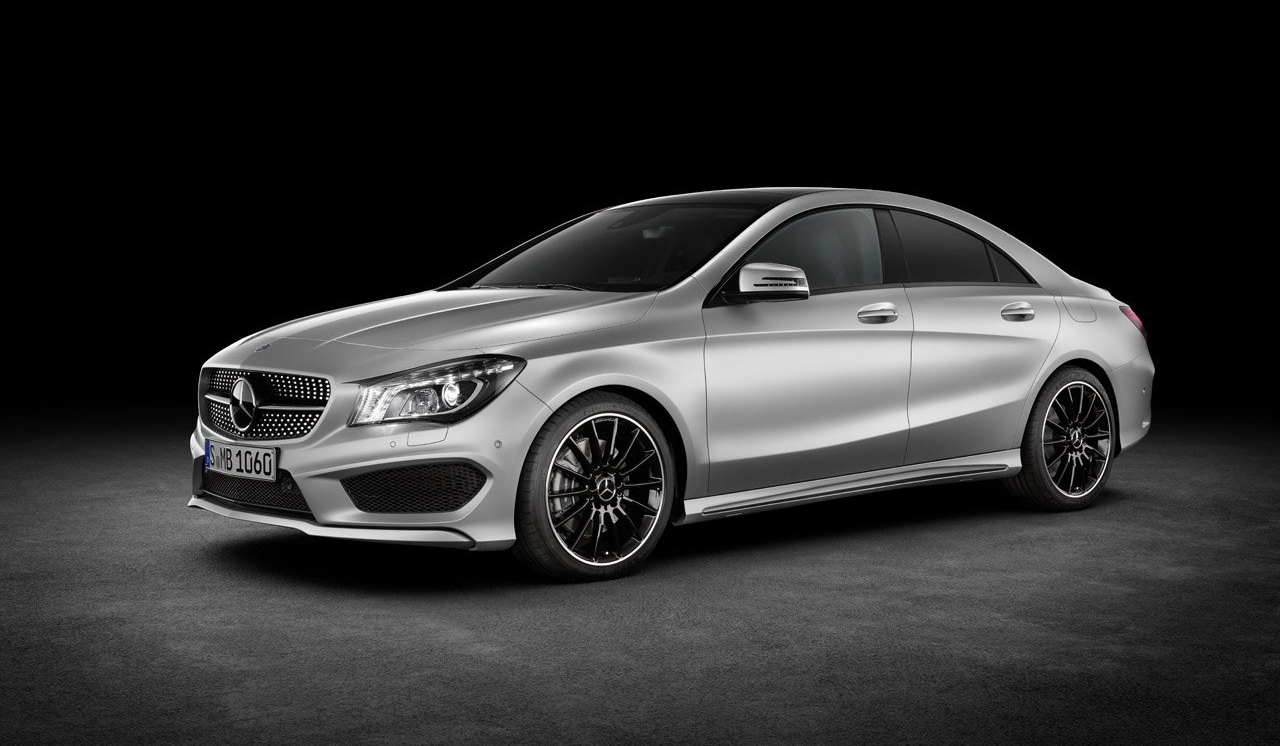
Benz McLaren

Mercedes-Benz - Made In German, the parents to the Silver Arrow McLaren.

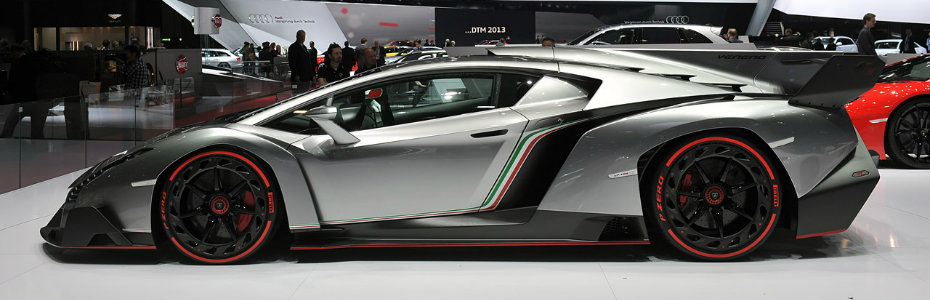
Lamborghini Veneno

Lamborghini's $4 Million Price Tag Veneno, only 3 of these bad boys were produced.

Bentley Motors

Bentley, the Definition of Luxury. What are there more to say?

Porsche 918 Spyder Concept

So, is the 918 Spyder everything it has been hyped up to be? Well, the picture speaks for itself.

Showing posts with label 2014. Show all posts

Monday, March 18, 2013

2014 Mini John Cooper Works GP


About three weeks prior to this brief yet balls-to-the-wall drive on the Spanish island of Mallorca, I saw that Mini USA announced pricing for the keenly anticipated Mini John Copper Works GP. And that number would be – *a-hem* – $39,950 for starters.

I am always intent upon finding the pinnacle of what a certain car promises me, and almost at any cost. Almost. When I think "steaming hatchback," I think of something exactly like this Mini GP, and the steep price doesn't squelch my pleasure. They're only building 2,000 of them anyway, and the units coming to the US will start arriving in owners' hands on March 16 of next year. These buyers will be extremely happy and remorse-free.

Five scorched laps at the very Mini-perfect Circuito Mallorca RennArena showed me all.

Driving Notes

- To me, the previous Mini JCW GP edition (the one I'm driving here is referred to by the development team as the "Mk II") came off as one of those well-meant but less-than-satisfying brand exercises – too soft and not separated enough from the stock JCW hatch.

- The 211 horsepower from the 1.6-liter turbocharged four-cylinder are just three horses better than the $30,800 standard Mini John Cooper Works, and the 207 pound-feet of overboost torque between 2,000 and 5,100 rpm remains the same.

- The claimed 165 pounds shaved off, adjustable coil-over competition-grade dampers, 17-inch high performance (and not run-flat) Kumho Ecsta tires on lighter dedicated alloys, sturdy cross-brace where the rear seats used to be, sport brake system and GP aero pieces all have their desired effect on the hottest Mini two-door.

- Acceleration is now estimated at 6.3 seconds to 62 mph (i.e. 100 kmh) and top speed is let out to 150 mph.

- I talked in the pit area prior to my laps with Mini GP head of development Jörg Weidinger and asked him point blank if this GP was a soft porker like the first one. He assured me that, no, this one was the real deal. He says the adjustable suspension is extraordinary on this edition and both wheel camber and toe-in front and rear have been radically adjusted to improve turn-in response and straight-line thrust.

- Latched in to the GP's cabin, I felt right at home and eagerly awaited my laps. Mini chose to have the laps policed by one of their champion Mini Challenge drivers from Germany in his own Challenge car, and it was just me and Racer Boy out there.

- I obediently performed Lap One at about eight-tenths and did the responsible display to one and all that safety comes first and I was not out there to race. I was already reminded again why I love this six-speed Getrag manual shifter so damned much.

- Laps Two through Four turned into a downright Mini Challenge race weekend. The boy in front of me was good and I was sure he wasn't giving it his absolute all, but we were certifiably rocketing along. In some ways, I can see that dynamically the GP street car is better than even the Challenge car. This setup is killer.

- Each time we passed the main straight and headed into two speed-shaving hairpins that fed us into a fantastic long and drawn-out descending right-hander at full throttle, nothing I felt made me think Mini could have done better than this.

- All of the chassis notes engineer Weidinger shared with me in the pits came true under pressure: There is a near total lack of understeer, and the hook-up and Velcro-like adherence of the Kumho tires is incredibly liberating. Losing the run-flats makes a huge difference.

- Heel-and-toeing is the order of the day and Mini knows about pedal placement. The coil-overs, too, are remarkable. I was cutting apexes immediately and with greater gusto on each successive lap. Coming down off the apex and back onto tarmac caused no jitter, no slide, and I didn't need to let up at all.

- The braking sections was where I got severe sphincter-pucker behind my German pal in the Challenge car, but the damned things kept on successfully reeling in all my straight-line enthusiasm.

- It's always difficult for me to tell whether or not all the aero dolling-up is actually helping me with downforce into curves or with neutral resistance on the straights. Some of the treatment seems a bit cosmetic.

My conclusion after this brief spin? We finally have a proper Mini GP car, kids. All of the tweaks do a soon-to-be-famous Mini make. It's no longer just a mild brand exercise.

Read more by Matt Davis at Autoblog.com

2014 Ford Fiesta 1.0-liter EcoBoost


There's an analogy to diesel engines hiding in the new Ford Fiesta with the 1.0-liter EcoBoost powerplant. There's still a segment of the population that has bad memories of diesel engines, and that makes it harder for Audi or Volkswagen to sell their new clean diesels in the US today. Not impossible, but more of a challenge than it needs to be. In the same way, ask any car geek if they've had good experiences with three-cylinder engines, and the response is likely to be a flashback to a bad ride in a Geo Metro.

But, if no one were to tell you that the new Fiesta 1.0-liter EcoBoost is rocking three cylinders, you'd probably be hard pressed to notice. The engine has already found a home in the Ford Focus (read our Quick Spin) and, after driving about 100 miles around Los Angeles and the Malibu hills in a Euro-spec Fiesta equipped with one, we can safely say that this is a solid B-segment car – one that happens to get over 40 miles per gallon (city) without a hybrid powertrain. Here's what we learned about the car and Ford's plans to bring it to the US.

Driving Notes

- The Fiesta with a 1.0-liter EcoBoost engine is already on sale in Europe, and will come to the US in about a year, in late 2013. There will be a few little changes (the Econetic badges will be replaced with the EcoBoost wording that we have here) and what we think is a big one. Specifically, auto start-stop, which is available on the European model, will not be an option for Americans. The reason, we were told, is that B-segment customers are extremely price sensitive, and spending a few hundred extra bucks on this technology – which the EPA tests still don't quite understand – is something Ford doesn't expect them to do. There is still a chance this will change, though.

- Still, at an estimated 40+ mpg, this flavor of the Fiesta will likely be the "most fuel-efficient, non-hybrid vehicle sold in North America." The current high-mileage Fiesta SFE model gets 40 on the highway (and 33 combined, 29 city). Ford is not talking about combined or city mpg estimates for the new Fiesta just yet.
It bears repeating that you do not feel that this is a shaky three-cylinder engine. The power – 123 horses – is there when you want it, with plenty of low-end torque. Some people on our drive were bothered by noise from the high-speed turbocharger that spins up to 248,000 rpm "almost instantaneously," but this is not enough to detract many points from the overall package.

- Also, since a three-cylinder engine is inherently imbalanced, Ford optimized the engine mounts and made other adjustments to decouple engine shaking forces for "extreme smoothness." It worked.

- For shorter people, the low placement of the side mirrors, especially on the passenger side, might be a problem. I'm about 5'9", and it was fine, but my co-pilot on this drive was a few inches shorter and she could not easily use the mirrors. They do sit awfully low, as you can see here.

- Going around tight corners, the Fiesta 1.0-liter EcoBoost feels a heckuva lot better than the Honda Fit in the same situation, but we found it roughly the same as the new Chevrolet Spark, two vehicles it will compete against for frugal-minded city drivers.

- Some of the other ways the new Fiesta will try to set itself apart is the big "40+ mpg!" sign that's sure to be emblazoned all over the dealership, the connectivity of Sync and MyFordTouch (with a new, 6.5-inch touch screen) and Sony HD radio.

- Jim Farley, executive vice president of global marketing, sales, service and Lincoln, said the new Fiesta is part of Ford's new high-mpg line-up, making fuel economy a reason to buy a Ford. It used to be, he said, "when people thought fuel economy, they did not think of Ford. We have made a tremendous amount of progress in the last few years of changing that perception."

- Put all this together and you've got a compelling "smaller is better" package that we need more details on to properly assess (price is a big one). For years, people have been asking for the Euro-spec Fiesta in the US. Well, we're going to get it, start-stop excluded.

Read more by Sebastian Blanco at Autoblog.com

2014 Audi A3 Sportback


The (final) final decision on whether or not we will get the second-generation Audi A3 Sportback in the US has yet to be handed down by the juries in Ingolstadt and Herndon (Virginia, corporate seat for Audi USA). But that doesn't mean we can't head to the roads of the Monte Carlo Rally in this car's most powerful and accoutered trim three months before European customers take deliveries in late February. Our ride for the day? The A3 Sportback 2.0 TDI Quattro S-line with the beefy six-speed S-tronic, a car good for 181 horsepower and 280 pound-feet of torque between 1,750 and 3,000 rpm. If it came available in the US, we anticipate pricing would begin around $34,500 for this topmost trim.

When we get a shot to drive on these utterly spectacular roads, the assumption would be that our Audi of choice would be an RS trim with a chassis set up for our usual abuses. Such was not the case this time, however, as our tester did not even benefit from the optional Audi Magnetic Ride dampers that are now available on the A3. Audi Drive Select is standard at this engine and trim level (we had the European "Ambition" trim, which equates roughly to Premium Plus in the States), and this does provide for the recalibration of several dynamic bits between Efficiency, Comfort, Auto, Dynamic and Individual modes. With the six-speed S-tronic gearbox, ADS takes care of shift responses, as well.

Although this A3 Sportback was not like an RS3 by a longshot on our route, we simply toned down our rate to match what might be the driving attitude of a typical owner. Taken as such, this top tune of the 2.0 TDI engine, plus all of our model's premium touches inside, made for a thoroughly satisfying experience on roads any enthusiast would never want to leave. Conditions were ideal, as there was literally zero traffic to disturb our exploration of this latest Sportback.

The everyday sensation while simply cruising along the highway is, as we experienced recently on the latest Volkswagen Golf that shares its chassis with the A3, is more like the drive of a well-dressed A4. Riding here on optional top-level S-line 18-inch wheels and tires on this trim's standard dynamic suspension with newly engineered rear multi-link axle, this Sportback body comes off even more capable and sophisticated than other models we've tested using Volkswagen Group's new MQB modular architecture.

A chief reason for the even greater maturity of the ride on this A3 Sportback is that one of the benefits of the new architecture is the ease with which it can be elongated or shortened to fit a particular model. While the overall length of the Sportback body adds just .7 of an inch over the three-door A3 we tested earlier this year, the rear wheels on their axle are simply shifted back 1.4 inches, thereby creating a larger footprint while giving both rear passengers and cargo more space to occupy. The new Sportback wheelbase is a full 2.3 inches longer than that of the outgoing model, which is darn near a lightyear in compact car terms.

It's a pity that Audi seems to be leaning toward not submitting this new A3 Sportback for its immigration papers. According to A3 marketing guru Patrick Rismont, the A3 Sportback in its first generation has barely managed to exceed the company's humble sales expectations in America, and that lack of a boffo hit has thrown the A3 Sportback's North American future into question. The feeling in the air is that Audi wants to pummel us rather with the forthcoming A3 sedan and ragtop convertible, the former in its production trim scheduled for public unveiling at the Shanghai Motor Show next April. We know that this is probably the easiest and most practical move, but we are great lovers of Audi's sportbacks, so hope springs eternal they'll keep us supplied with five-doors – especially since this latest edition is so much better than the first one.

Perhaps due to the sheer physics of size and weight, the electro-mechanical steering of the A3 Sportback feels spot-on, and putting it into Dynamic mode tightens things up quite nicely when the road gets twisty. It is eerily smooth, of course, and feedback from the asphalt is not immediate, but we'll hold off whining on that note until the new S3 and RS3 models bless us with their presence. In this trim the steering feel is exactly as it should be.

We tried our best to shove the A3 Sportback around for cornering photographs and whatnot (stability control all the way off), but whatever natural lateral give there was felt less like oversteer and more like purposeful sideways squish. This redone A3 model weighs between 100 and 165 pounds less than last generation, which is still on sale in the US, and because of that, this aforementioned dynamic squishing can be let to run its natural course through the curve, even allowing us to stay judiciously on throttle. We're not talking body roll here, just a forceful and not altogether unpleasant sideways scooching while holding the good steering rack steady and eyeing the road ahead. Such is the world of your typical Quattro chassis, only now lighter.

To our eyes, this new A3 Sportback, along with the TT, A4 and A5, is solidly in sweet zone for the Audi's most recent styling language. The five-door A3 now looks far more interesting than its three-door counterpart. As on all MQB-based models, too, practically all things you can opt for on larger Audis are now available on the A3 family. There is Audi Pre Sense for avoiding lower speed accidents, Audi Side Assist, lane assist, traffic sign recognition, adaptive cruise control, and several other usual suspects.

The latest MMI Navigation Plus with touch pad also makes its Sportback debut, and when you add the Connect feature, your connectivity to the world takes you and your car to places never before known to this vehicle segment. An added compact-class first – shared with all MQB hatches launched so far, but with the most sophisticated treatment saved for Audi – is the full LED lighting front and rear, the front being of the adaptive sort. On the topic of lights, the cargo area – good for a minimum of 13.4 and up to 43.1 cubic feet and eminently flexible despite the lack of a perfectly flat floor – gets two ambient night lights for when you need to open up the panel covering the underfloor stowage space.

Diesel engine family EA288 has been completely redesigned to suit the MQB architecture and be more efficient. Way down low in the rev range, there is certainly some turbo lag before the diesel freight train effect takes hold. But hit the sweet spot starting at 1,750 rpm in second or third gear coming out of curves and the urgency is felt quite clearly. Plus, the noise it makes through the pair of exhaust pipes is pretty nice for a little diesel. Acceleration to 62 mph is estimated at 7.1 seconds, but based on the spirit with which we were dicing up the hills, we figure it's got to have a 6.8-second run in it. As far as economy goes, highway mileage in the US would peak somewhere around 45 miles per gallon.

As ever, we'd love to have a six-speed manual in this application, but Audi isn't planning to offer such a gearbox in the Quattro-equipped A3 at this top diesel power rating. The existing S-tronic dual-clutch gearbox is heavy and it behaves heavily at times. Here's hoping that the latest S-tronic design, as seen on the new R8 supercoupe, can somehow trickle down the lineup, because that quicker and more compact tranny really does work as promised... finally.

Equally important while shoving around any car is a good set of brakes since, aside from the famous curvy roads we drove, there are several spots in the vicinity where huge trucks have inexplicably been allowed inland from the seaside, and there is hardly enough room for their side-view mirrors to pass the local bar without nicking it. Luckily, the A3 Sportback's discs hauled us down from speed pretty well all day long, and with a bare minimum of nose dive and consequent passenger discomfort in the process.

We do hope Audi sees fit to keep one of its hatchback bodies in the US. If not, our lineup of cars from Audi will soon be nearly free of conventional wagons and hatchbacks. And that's not good – because this new Sportback certainly is.

Read more by Matt Davis at Autoblog.com

2014 Lexus IS prototype


At the beginning of 2011, we rocked up to the parking lot at Southern California's Santa Anita Raceway to test the 2012 Lexus GS. This was the first sedan in the luxury brand's lineup to reset its intentions on the balance of sport and luxury. The previous GS had blanched into mute tepidity, and the new generation we drove on an autocross course and on a canyon road corrected just about everything; we liked its looks, and the Variable Gear Ratio Steering- and Adaptive Variable Suspension-equipped car moved its abilities into the realm of a true sports sedan, and it was great to drive. They absolutely nailed it.

In our review of that car, we wrote that the only other sporty Lexus was the IS, and that our favorite among its rank and file is the IS 250 with the six-speed manual. Specifically, we called it "a spirited little weakling of a car." Down on power but also on weight, it rewarded commitment and skill – it didn't have the gumption to compensate for missed shifts and bad lines, and because it was so easy to get wrong, the momentum carried through right to the smiles when you got it right.

Yet no one was ever seriously comparing the IS – Lexus' third-best-selling car – to the BMW 3 Series, and for Lexus that was a problem. You can't have your entry-level sports sedan omitted entirely from the conversation. So now, finally, it is time for the IS to get its dip into Lexus' spindle-grille-and-F-Sport-performance bath.

The aim is high: Chief Engineer Junichi Furuyama said he wanted the IS to be "the most fun to drive in the segment." That was reinforced throughout the presentation and the day with statements that the new IS should react "faithfully to even slight inputs" and that it should "respond to the driver's will." The idea with this model is to build a link from the LFA, down through the IS F, to this F Sport model.

These are goals that are hard enough in light of how cars are growing in size and weight, in general. On top of that, Lexus has to work around the ideas of luxury and refinement that any mention of the brand brings with it. Easy (well, easier) to do when you're charging LFA money, much harder when buyers are checking the bottom line and lease rates carefully. And one only needs to look at where the 3 Series has gone to see how weak the word "sport" has gotten in the phrase "sport sedan."

The next generation IS 250 and IS 350 F Sports were benchmarked against the previous-generation 3 Series M Sport, targeting its driving dynamics, feedback and fun-to-drive factor. While buyers for standard cars in the segment skew female, buyers of tuned versions like F Sports and M Sports skew male, and that's the pie Lexus wants a larger piece of.

Furuyama grouped the changes to the IS into three categories: body and suspension, driver environment and powertrain. Body rigidity has been increased by using more spot welding, a process called laser screw welding, and a lot more adhesive to join body panels at all of the major cutouts – windshield and backlight, door cutouts, engine bay and wheel arches. The front suspension is stiffer by 20 percent through the use of a new front stabilizer. In back, the IS adopts the rear suspension from the GS, separating the spring and the absorber and changing the position of the toe arm. The increased body rigidity also meant they could lower the spring rates. The objective was increased rear grip, a side benefit being that with the suspension towers going more upright there is more cargo room in the trunk.

Another part from the GS used as a starting point for this IS was the steering gear. Better feedback through the wheel and more direct steering have come through refinements like a higher stroke ratio, new ball-screw structure and increased rigidity in the pinion shaft. Lexus also wanted to give drivers the sensation of a clear on-center area.

To raise its dynamic game, the new IS 350 gets the eight-speed Sport Direct Shift (SDS) automatic from the IS F that has "G-AI," programming that makes it sensitive to g-forces and will keep it from shifting during hard cornering when in Sport mode. The 350 also gets the aforementioned Variable Gear Ratio Steering (VGRS) and Adaptive Variable Suspension (AVS) from the GS.

The IS 250 has three driving modes: Eco, Normal and Sport. The IS 350 gets four, adding Sport S+ to the top end. Sport ups the throttle sensitivity, while Sport S+ 'activates' the most aggressive settings on the electric power steering, the VGRS and the AVS.

This is called the Next Generation IS, but it's the cabin and chassis changes that go the furthest. Covered in camo as these cars were, we had to use the light and shadow to make out what we could as best we could, but on the outside this is an evolution of the current design. It doesn't look noticeably bigger than it is now, but it is noticeably more expressive.

Naturally, that starts with the spindle grille in front. The F Sports will be differentiated by exterior design and tuning, and the grilles on these sedans were filled in with different treatments on the 250s and 350s at the event – a six-bar grille up top on the 250, mesh on the 350, and each wore a different lower bumper – but we were told that these differences weren't indicative of the final cars. The headlights, single-lens jobs that are cleaner in design, jut out from the line of the car instead of being contained within it. The side sills are more sculpted and get thicker as they move rearward, then twist to form a character line that runs up the front of the rear wheel arch. It doesn't appear that substantial when viewed straight-on, but when we saw the car driving into the sun you could detect the width – everything below the sill character line is in shadow. That line is met on the other side of the rear arch by a cutline that runs over the tops of the taillights. Behind the arch, another line forms a crease that runs underneath the lights. As for the lights themselves, it almost looks like the current units have been turned over and drawn out a bit more along the sides of the car. And we don't know if the rear track is wider, but the rear arches are definitely punchier.

Instead of a lip on the decklid, the deck is shaped into a spoiler in the center of the car. Below, another crease in the bodywork runs from the bottom of the rear arch up to the bottom of the bumper, creating an effect like a built-in diffuser.

Inside, the interior feels vastly different – moreso than a list of its details would indicate. The driver's hip point has dropped 20 millimeters due to the increased concavity of the seats – and concomitant increase in bolstering. Neither the roof height nor the floor height of the car have changed, but those 20 mm raise the center tunnel and the door shoulder height in relation to your position, so you feel like you're dropped much more deeply into the cabin.

The armrest starts up near the instrument panel, the inclined portion housing the window, lock and mirror switches, sliding down into a flat stretch where one's arm would go. It's a familiar setup and replaces the L-Finesse wave of the door on the current car, where the buttons are placed on a horizontal low and in front.

The vertical slabs of paneling in the current car give way to inclines. The IP doesn't rise, cliff-like, from the center tunnel; instead it slopes up and away toward the windshield and away from the driver, but it isn't canted toward the driver. A vertical feature that houses the vents divides the upper and lower parts of the dash, textured plastic and the nav screen above, hard, shiny bits below. The climate controls have been reworked with eight buttons in two rows underneath a digital temperature readout as opposed to the six buttons in one row on the current car. Beside that readout there are touch controls to adjust the temperature; slide your finger along the silver bar, up to increase the temp, down to lower it, or you can tap either end for the same function.

We were told that one of the primary reasons for rejection of the current car among shoppers is the lack of rear leg room. That has been addressed. In the new car, with the driver's seat set for a driver nearly six-feet tall, hopping in the back seat still left an inch between the closest part of the driver's seat. Leaving one's legs in the scallops of the back of the seat meant even more space. In the previous gen our knees were hard up against the driver's seatback. There is appreciably more headroom as well. And for the first time in an IS, the rear seats fold down in a 60/40 split.

Read more by Jonathon Ramsey at Autoblog.com

2014 Maserati Quattroporte


The sixth-generation Maserati Quattroporte is big – and not just because it's 6.5 inches longer than before with a wheelbase that stretches 4.3 inches beyond its predecessor. The new Quattroporte is big also because it's a huge deal both for its segment and for Maserati. Just as FoMoCo is finally chucking $1 billion at Lincoln MoCo, so too is Fiat investing 1.2 billion euros ($1.55 billion at the time this writing) in Maser's future hopes of achieving the larger success we all have wished for it. And after a thorough drive over the intensely challenging mountain roads of France's Mediterranean coast, we can't deny that there's finally reason to put some faith in this long overdue investment.

The much-applauded outgoing Quattroporte enjoyed a reputation of being among the very fastest executive sedans of its day, all while delivering the sportiest overall ride and handling, even in base trims. Yet there was constant corporate-level dysfunction that kept all Maseratis from getting important upgrades or receiving much-needed investment support. So, the outgoing Quattroporte has up until now sort of languished nobly, largely resting on the laurels it earned when it launched way back in 2003.

With continued proper mother company support and ambitious marketing initiatives finally on the table, this all-new 2014 Maserati Quattroporte looks fit to help lead "Il Tridente" through some huge changes as the company prepares to celebrate its centenary in December of 2014. First off, from its current annual total sales figure of 6,000 or so units, Maserati is confident that its global sales will reach 50,000+ per annum by the end of 2015, thanks certainly to all-new product coming on soon like a house afire. Try not to scoff at that too much. Rather cheer when the lights hit the new Quattroporte this January at the 2013 Detroit Auto Show, knowing that new products are on the way to help the FourDoor and the Gran Turismo in their quest for this ambitious volume target.

The departing fifth-gen Quattroporte maxed out in $135,200 Sport GT S trim with 444 horsepower at 7,000 rpm and 376 pound-feet of torque at 4,750 rpm from its naturally aspirated, Ferrari-assembled 4.7-liter V8. The only transmission in North America to this point has been a standard six-speed ZF automatic that can be paddled at the steering column, and the departing model's curb weight totaled 4,375 pounds. For those documenting such things, 0-60 took 5.3 seconds en route to a top speed of 178 miles per hour. Those were nice numbers in 2003, but they're decidedly less so in 2013. What's more, the Quattroporte has only ever come in a standard length, 200.7 inches long, providing owners with 15.9 cubic feet of luggage room. These days, none of this is terribly competitive.

Right out of the gate, the V8 base model of the new Quattroporte hits 523 hp at 6,800 rpm and 524 pound-feet of overboost torque between 2,250 and 3,500 rpm, that power arriving courtesy of a bi-turbo 3.8-liter direct-injected V8, also built by Ferrari. There are now eight gears available from the standard ZF automatic and curb weight reads 4,189 lbs, so the new, bigger car is lighter, too. The 0-60 is now a game-changing 4.6 seconds and top speed hits 191 mph. Given that long-wheelbase versions of these big exec sedans sell far better worldwide, Quattroporte VI is now offered exclusively at 207.2 inches, and the wheelbase has been stretched from 120.6 inches to 124.9 inches. Luggage room with the rear seats up is also a much more acceptable 18.7 cubic feet. So, this Italian is again champing at the bit to compete, primed to land on more shopping lists at the very least.

The Quattroporte's all-important steering remains lovingly hydraulic, plus there's a new, very decent and truly adaptive Comfort/Sport suspension, a bit of tech that was glaringly absent before. Keeping all of this rightness in mind, we were set loose on a Monte Carlo Rally-style drive loop where almost any other extended-wheelbase sedan would never have been launched for fear of journalists coming away with a sideways first impression. Many of the most tortured alpine roads on our loop possess lanes not much wider than the new Quattroporte's 76.7-inch width, and there was usually a low rock wall to the outside, the sort that traditionally doesn't offer much give when hit.

About that steering and how it has gone a step better – one of the sensations that has been unique to this big Italian in a class utterly dominated by the Germans has been the Quattroporte's light-on-its-feet feeling when carving up roads as on our test route. A Porsche Panamera Turbo S or GTS comes close, but the manner in which we were able to toss this Quattroporte around would be likely not possible – at least not as confidently – with the weightier-feeling Teutons. This, Maserati technicians tell us, is partially due to the stressing of lateral acceleration forces, particularly at the rear wheels as the suspension guides them along. Switching off stability control doesn't really alter the situation all that much when the conditions are sunny and perfect, as they were for our drive. The Pirelli P Zero tires – 245/40 ZR20 99Y front and 285/35 ZR20 100Y rear – did a layman's fine job in every circumstance, through every transition and weight shift. About the design of our tester's alloy wheels, well, we leave you to your own thoughts. As a no-cost offering, buyers of this V8 model can also request 19-inch tires from the soon-to-follow V6 model for added ride comfort.

Just ambling along in the cash-drenched Riviera or cruising the French autoroutes, the Quattroporte's chassis and suspension continued to perform as anticipated – not as imperfection-numbing as the typically over-engineered German über sedan, but rather with a well-received sportiness. Said another way, you'll know you're in a Maserati, even though the standard adaptive suspension in Comfort is plenty compliant. The overall payoff for someone living with this new Quattroporte is that they'll have the finest driver feedback in this class, bar none. And this is just the base model of the V8 trim.

When setting off from idle, the compact bi-turbo V8 from Ferrari provides just a modicum of lag, though this feels right for the sort of automobile which, in many markets, will have His Lordship in the back seat. Get into the 1,500- to 2,000-rpm range, however, and the response of the throttle/engine and behavior of this new modular chassis are point-blank. Really, between about 1,800 and 4,000 revs, the powertrain's torquey character takes over, and from there, the power curve rolls right up to 6,800 revs. Redline is marked at 7,200 revs, but we rarely went there, as we were too busy playing incessantly with the really crisp eight-speed paddle shifters in Sport mode, taking gear changes in a solid fifteen-one-hundredths of a second.

The Maser's exhaust tone, whether set to normal or in Sport, just explodes at 4,200 rpm and above. The off-throttle popping and snarling is legendary stuff. It's so supremely mighty when compared to any other super sedan's base exhaust that it should come as no surprise that the pipework is supplied by current cobbler of great exhausts, Faurecia.

Eyeballing the Quattroporte, we couldn't help but stare at the brakeset, especially after studying the day's drive route map. Before taking the wheel, we asked Maserati product development boss Benedetto Orvietani why a massive set of profit-mongering carbon ceramic brake discs are still not even an option. He gave us that cheeky response of "Drive it first and then decide." After flying all day over brake-baking roads, the standard aluminum and lead drilled and vented Brembo performance brakes (15.0-inch front with six-piston calipers, 13.8-inch rear with four-piston pinchers) proved sufficient enough that we've stopped assuming the car needs $15,000 brakes to make it any better. Nonetheless, marketing people at Maserati tell us they're in deep discussions on the hot topic, and not just for the Quattroporte.

The exiting Quattroporte still on sale has a design that has aged. Pretty well, we must say, but still a little long in the tooth, so the 2014's completely fresh design from Pininfarina is good to see in person. From nose tip to rear cabin pillar, we knew they'd get it right. It was arguably the rear portion of the departing generation that aged most poorly. What we see now is a vastly improved approach that is also helped a lot by the larger proportions on display. The only possible dubious reaction, which just about everyone is having and rightly so, is that the rear fascia looks straight off of a new Audi A4 with a dash of Citroên C5 in the shaping thereof. We can't really turn that into a criticism, though, since we like those rear end executions a lot, and the Quattroporte is at least no longer featureless when viewed from behind.

The cabin is equally as revolutionary as the exterior, and it previews a really good, cleaner trend for Maseratis yet to come. Sit in any German big gun, any big Jaguar, or the Japanese competitors, and things have arguably gone a bit, well, pimpy. This overwrought style trend all works and reflects an abundance of onboard tech, but the trend is seemingly also meant to come off as some sort of showy flashbulb that adds value to one's large investment. But Maserati's designers and engineers have collaborated for a truly classy interior that doesn't overcook a thing. Spatially, you can assume more than sufficient passenger and cargo room now, but the surfacing and materials are also decidedly finer than ever before. The adjustable seating on the V8 is very good, providing decent support for when the hairpins hit or for when it's time to travel 400 miles. More sound enters this Maserati's interior than with any other competitor, but when it's such a great soundtrack, this isn't a complaint.

The controls on the middle dash and center console all make sense, giving us an immediately good feeling. Only one novelty really leapt out at us as a surprise, and it's placing the Start button to the left of and below the steering column, as if inspired by Porsche. Did we continually un-remember this and poke the lower right dash instead? You betcha. The seven-inch Maserati Touch Control (MTC) screen orchestrated by Garmin is hardly revolutionary stuff, but we enjoyed it, as it's fast and, again, simply makes sense all around. In fact, it's very close to state-of-the-art as is, so once more, Maserati has avoided an over-complicated solution. Hallelujah.

Read more by Matt Davis at Autoblog.com

2014 Mazda CX-5 with 2.5-liter Skyactiv engine


Back in October, we compared the relative merits of two new and very good small crossovers: the 2013 Ford Escape and 2013 Mazda CX-5. The CX-5 we tested then had Mazda's 2.0-liter Skyactiv-G engine under its hood, and it managed to just edge out the EcoBoosted Ford despite being down by some 23 horsepower and 34 pound-feet of torque. Had it been available, the 2.5-liter Skyactiv engine that we recently had the opportunity to try out in the 2014 Mazda CX-5, it may have made that comparison even easier to call in the Japanese CUV's favor.

Clearly, if you're in the market for a reasonably sized crossover, the CX-5 should, at the very least, be on your test-drive list. The new engine offering will let buyers opt for a stronger powerplant, with 184 hp and 185 lb-ft on tap. On our second day in Austin's Hill Country – the first was spent quick-spinning the 2014 Mazda6 i Sport, you'll recall – we covered a couple of hundred miles and put the new CX-5 through its paces; here's what we turned up.

Driving Notes

- The extra half-liter of Skyactiv displacement, resulting in 29 more horsepower and 35 more pound-feet of torque than in the 2.0-liter model, is satisfying in this new CX-5. With the larger engine, the CX-5's 0-60 time falls to about 7.2 seconds (Mazda's estimate) from just under 9 seconds in the 2.0-liter version. Those numbers are borne out in real-world feel, too, where the new CX-5 absolutely feels quicker away from a stoplight and less strained when passing slower folks at highway speeds. The 2.5 engine sounds a bit better, too – offering a mildly enthusiastic growl up around 5,000 rpm and onward.

- Every other piece of the dynamic driving experience is more or less exactly the same with the 2.5-liter engine as it was with the smaller powerplant. Mazda only had CX-5s with the new engine on hand at our drive event in Austin, and it's possible that driving both versions, back-to-back, could reveal some mild handling differences. But with only a few months separating our last seat time in the 2.0-liter car from this drive, we feel safe saying that the more-potent CX-5 is every bit the nimble handler as its slightly lighter sibling.

- With the added thrust and equal handling taken as read then, what exactly is the give/get situation relative to the smaller-engine CX-5? The larger-engined vehicle gains about 100 pounds, trim-for-trim. The 2.0-liter is the only 2014 CX-5 that can be had with Mazda's very good six-speed manual transmission, meanwhile, though product planners hinted that we may be seeing a 2.5L/6MT combo later in the model year. (We know from the Mazda6 that the engine and manual transmission work nicely together.) Impressively, the 2.5L CX-5 only loses one mile per gallon in the city versus the smaller displacement engine (25 versus 26 mpg), and the highway ratings stay exactly the same (32 mpg). Towing capacity stays steady at a modest 2,000-pound maximum for all CX-5 models.

- With such stellar comparative specifications versus its 2.0-liter brother, the determining factor for opting-in to a 2.5-liter CX-5 is essentially only cost. For 2014, Mazda is only offering the 2.0-liter engine in Sport (read: base) models – both all-wheel-drive and front-wheel-drive flavors – while the 2.5-liter engine starts at the plusher Touring trim in both driveline configurations. That means while a true apples-to-apples comparison isn't possible, you will have to pony up about $2,000 to get into the larger mill. A front-wheel-drive CX-5 Sport 2.0 6AT starts at $22,595, while the FWD CX-5 Touring 2.5 6AT asks $24,615 (all models have identical $795 destination charges). For AWD models, the difference between the Sport and Touring is an identical $2,020 gap – MSRPs of $23,845 and $25,865, respectively.

- Here's a little model-year 2014 trivia for future members of the CX-5 enthusiast clubs: This year sees three new colors (Soul Red, Jet Black, Meteor Gray) replacing three old colors (Zeal Red, Black Mica, Metropolitan Gray). The new red is a $300 option. Last year's blue plastic engine cover has been replaced with a black plastic engine cover. Mazda's Smart City Brake Support, which automatically brakes the vehicle in low-speed, crash-imminent maneuvers, is now standard with the Touring and Grand Touring tech pack, while the burglar alarm has been deleted from those packages. Got all of that? We'll have a quiz next week.

Read more by Seyth Miersma at Autoblog.com

2014 Kia Sorento


It happens all the time. Three or four years into an automobile's lifecycle, the manufacturer goes back to the drawing board, making what it hopes are vital improvements to keep its product at the top of the sales charts. It's true of the vehicle we're discussing today, the 2014 Kia Sorento, but unlike many midlife facelifts, most of what's new here can't be seen with the naked eye.

Yes, there are the normal changes to the front and rear fascias, and a few nips and tucks here and there to improve the crossover's outward appearance. But, for the first time in as long as we can remember, the big news here is that the new Sorento is actually riding atop a new platform, according to Kia.

So while the bodywork has been reshaped where appropriate, it really is what's under the skin that counts with the 2014 Kia Sorento. We decided this development was worth a closer look, so we borrowed the keys to the new Korean crossover and drove a few hundred miles into the desert in Arizona with nothing but a notebook and our trusty camera.

Let's get the styling updates out of the way. At the front, you'll see thinner chrome trim around the familiar "tiger-nose" grille, which is now finished in an anodized silver shade or black plastic mesh. Flanking the grille are new headlight clusters, which now have LED accents at the top, forming sort of a brow shape over the projector lamps. The optional foglights are pushed to the lower corners for 2014, and the taillights at the rear feature LED bulbs as well. Nothing has changed in between the stem and stern, except for body-color cladding that replaces the thicker black plastic of previous years.

Judging from what we saw on the surface, we were a bit dubious when Kia engineers told us the 2014 Sorento was riding on an all-new platform. A closer look, however, reveals a few significant changes to the car's unibody structure. Starting from the top, there's a new panoramic sunroof with larger panes of glass and a single sliding cover. While this would normally reduce structural rigidity, Kia added additional strut tower bracing in the engine bay, new stiffer front and rear suspension subframes with larger bushings and new welding patterns that make the unibody structure 18-percent stiffer than before.

Not only are the guts of the Sorento beefed up, its new suspension bits, though still MacPherson struts and coil springs up front with a multi-link arrangement out back, allow for more interior room than before. Second-row passengers now enjoy an additional 30 millimeters (about 1.2 inches) of legroom and those in the third row see an additional 9 millimeters (not quite half an inch). Those aren't massive increases, but any little bit of knee room is appreciated when packing three rows into a crossover of this size.

The new platform also reduces weight. In its most basic four-cylinder trim, the 2014 Sorento weighs 3,594 pounds, whereas the last-gen machine came in at 3,845. That's significant, and it carries over to the V6 models – a top-level Sorento SX with the V6 engine and all-wheel drive tips the scales at 3,894 pounds, a very useful reduction from the 4,131-pound 2013 model.

Add up all those changes and we're pleased to say that Kia's not full of hot air when describing the 2014 Sorento's platform as redesigned.

Engine options for 2014 are also a step up from last year. Standard in the new Sorento is a 2.4-liter gasoline direct-injected four-cylinder engine that puts out 191 horsepower at a high 6,300 rpm and 181 pound-feet of torque at 4,250 revs. That engine was optional in 2013, with the base machine eschewing direct injection and losing 16 horses and 12 lb-ft in the process. Similarly, a new 3.3-liter gasoline direct-injected V6 engine can be had (the V6 comes standard in SX and SX-L trim) pumping out 290 horsepower and 252 pound-feet. It's both more powerful and more fuel efficient than the 3.5-liter engine it replaces.

A six-speed automatic gearbox comes standard with either engine, as does front-wheel drive; all-wheel drive is optional. As before, this on-demand system sends power to the wheel with the most traction, but for 2014, the system adds Torque Vectoring Cornering Control that Kia claims improves stability in certain situations.

Rounding out the mechanical changes for 2014 is a new electronic power steering system that replaces the previous hydraulic unit. Benefits include increased fuel efficiency and a quicker ratio than before. The big drawback, as is so often the case these days, is a numb feel from the wheel, with very little feedback offered to the driver. On the positive side, Kia has fitted the 2014 Sorento with a system it calls FlexSteer that offers three distinct steering weights: Comfort, Normal and Sport (a similar system is offered in the Sorento's platform mate, the Hyundai Santa Fe Sport). Normal felt fairly appropriate, while Comfort seemed there solely to remind enthusiastic drivers that they don't care about comfort and really want to have it in Sport.

Step inside the new 2014 Sorento and you'll be greeted with some fancy technological tidbits that include a seven-inch color LCD center gauge on EX models and up (optional on LX) that is really quite impressive. It takes a few double-takes to realize you're not looking at a simple needle and gauge until you start playing with the steering wheel buttons. The digital gauge can offer up multiple trip meters, fuel mileage and range, music displays, outside temperature, routing directions and more. Better yet, it is crisp, clear and easy to read in all types of light.

An audio system with AM/FM/CD/MP3, Sirius satellite radio and Bluetooth streaming comes standard. If you don't like anything over the air, there are USB and auxiliary input jacks, of course. A very impressive 10-speaker sound system from Infinity is optional. Smartphone owners will also be happy to hear that Kia's latest UVO with eServices is along for the ride. The telematics suite operates through your phone's data connection and makes use of a downloadable app (iPhone available at launch, Android coming soon). Using the eight-inch center-mounted LCD panel, owners can either use the touchscreen or a long list of voice commands for music, phone services and navigation. Vehicle diagnostics, customized maintenance schedules, roadside assistance and Google Maps join entertainment bits like Pandora and Twitter. Best of all, the services are all free for the first 10 years or 100,000 miles, minus, of course, whatever you already pay for your mobile data plan.

Dual ventilated front seats are a very nice touch, and are most appreciated in the sunny climes of Arizona where we tested the Sorento. Those in colder climates will also be happy to hear that both the front and rear seats are available with optional heating elements. Of course, these are just a few of the many options available on the Sorento. There are two leather choices in addition to the standard fabric, a power liftgate with programmable height control, power driver and passenger seats, a backup camera, and Kia's first use of blind spot monitoring.

Seventeen-inch silver-painted wheels come with the base LX model, while the EX upgrades those to 18 inches and the SX goes all the way to 19. The EX V6 model we tested wore the 18-inch wheels, which were not only attractive, but appropriately sized to nicely fill the wheel wells.

When the unibody Sorento first debuted in 2009, many a rumble was heard about the crossover's stiff ride – so much so that Kia upgraded the 'ute with Dual Flow Damper shocks in 2011. These units are still in use for 2014, and we found the ride to be on the firm side of comfortable, just as we prefer. Handling also benefits from the high-tech shocks, as the Sorento tracks well on long stretches of highway and, though nobody will mistake it for a sportscar, it even feels a wee bit sprightly when the going gets twisty, likely helped by its smaller-than-average footprint and manageable weight.

Those somewhat downsized dimensions are a key point when discussing the Sorento. Consider: Kia points to the Chevrolet Equinox, Ford Edge and Toyota RAV4 as the Sorento's main competitors. None of those crossovers are particularly large, and the Sorento's wheelbase is shorter than all but the RAV4's. Just as interestingly, now that Toyota has dropped the third-row option in its RAV4, the Sorento is the only one that offers seven-passenger seating. That could be an important point for families, but bear in mind that space inside will be at a premium. Think of the Sorento as something of an in-betweener nestling in the space just larger than compact but smaller than other seven-seat CUVs.

We're happy to report that Kia has upgraded the Sorento's four-wheel disc brakes for 2014. All four rotors now measure 11.9 inches in diameter, ventilated up front and solid at the rear. It's not that there was anything wrong with the previous brakes, but who's to argue with an eight-foot reduction in stopping distance from 62 miles per hour? We found the brakes perfectly adequate and noted a firm pedal feel.

We didn't get a chance to sample the direct-injected four-cylinder engine, as all the test cars we drove were equipped with the 3.3-liter V6. Not that we're complaining – the new direct-injected engine is smooth, powerful and unobtrusive, and the six-speed automatic it's paired with executes nicely timed shifts. There's plenty of power from the V6 engine, and acceleration felt more than zippy enough, and while nobody is going to be disappointed with the six, we hope to get some seat time in a four-cylinder model soon before assuming the bigger engine is necessary.

Read more by Jeremy Korzeniewski at Autoblog.com

2014 Porsche Cayman S


I need you to understand what it's like to drive this car. I'm not talking about your ability to comprehend the words on this page or process the figures that surround the 2014 Porsche Cayman S, but rather what it feels like to take control of a car conceived, designed, engineered and manufactured to set your prefrontal cortex alight with all the glee a Zippo typically reserves for pine needles marinated in jet fuel. From the instant you put your tail in the driver's seat, the Cayman sets about impregnating your veins with a full and varied spectrum of ludicrous emotion. It's not like taking the family pickup to market, I can tell you that much.

For 2014, the next-generation Cayman features many of the same styling tweaks first displayed on the coupe's drop-top cousin, the Boxster, though a spate of mechanical changes, more power, less weight and better efficiency join the party to further differentiate this model from its predecessor. And while additions like rev-matched downshifts and electronic power steering help push the Cayman into a new era, one fact remains unchanged: This is one of the best driving cars on the market. Period. Bear with me and I'll try to explain exactly why that is.

Engineers stretched the Cayman wheelbase by nearly 2.4 inches and widened the front track by 1.6 inches, and the result is a car with all four wheels pushed well to each corner. Thanks to shorter overhangs front and rear, total vehicle length has grown by a manageable 1.3 inches from stem to stern. That means it will take a keen eye to spot the machine's swell. Instead, onlookers are likely to first take note of the dramatic upkick from rocker panel to air inlet. Porsche calls the feature a "dynamic recess," and the contrasting black inlets really do shuttle air to the flat six mounted mid-ship.

Up front, the Cayman S splits from its more demure Cayman sibling with larger front air inlets framed by black plastic strakes instead of the standard body color treatment. Base models are left to suffer with a black front splitter while the S trim gets a bit of paint on the lower aero. Around back, the two can be separated via the exhaust outlet, where the Cayman uses one tip and S gets the double barrel treatment. Otherwise, the stern looks awfully familiar. Boxster fans will recognize the integrated lip spoiler stretching from tail lamp to tail lamp across the rear deck. The vehicle's mechanized spoiler, meanwhile, has grown in surface area by 40 percent to increase downforce at higher speeds.

Designers did move the windscreen forward by nearly four inches, resulting in a finished product that looks a bit less like someone simply tack welded a roof onto the company's entry convertible. Still, the two cars share more than a few strands of DNA, and despite protests from engineers and designers alike, shoppers will inevitably look at the pair's third generation as two shades of the same hue.

As if that were a slight. This car is drop-dead gorgeous in the flesh. With its lusty flanks and new, optional 20-inch wheels, the Cayman looks more mature than ever. While purists can hem and haw all they like, the truth is the youngest of the Porsche sisters is still the fairest of them all, 911 included.

Meanwhile, the cabin has remained largely untouched for 2014. Drivers will welcome the addition of new sport seats. The thrones manage to thumb that fragile line between support and comfort, serving up fantastic lateral support without cutting off circulation to the body's more sensitive environs over a long haul. If I could afford it, I'd have them for every seat in the house, toilet included. Standard trim serves up a set of manually adjustable buckets with Alcantara inserts, though our tester came rocking power adjustable seats dipped in leather. European buyers, meanwhile, get to option up to a set of carbon fiber, fixed-back race buckets capable of bonding the seat of your jeans to the car's chassis on a molecular level. Unfortunately, the gear doesn't pass crash safety in the US, though we hear Porsche is working on that one. Keep your fingers crossed.

Otherwise, the Cayman cabin features redesigned air vents, and the option sheet now comes packed with a 12-speaker Burmester sound system. By some engineering wizardry, the system turns out some 851 watts of power while tipping the scales at a scant 14.3 pounds. Regardless of whether or not you opt for the black-art stereo, odds are you'll appreciate the extra interior room over the second-gen Cayman. For 2014, the model boasts a total of 15 cubic feet of cargo area, up a little over half a cube overall. In addition, the longer wheelbase delivers a bit more leg room as well.

As with most Porsche products, it's what you don't see that separates Cayman generations, starting with the chassis itself. The body shell is now 44-percent aluminum for the first time. The move slashed body-in-white weight by some 103 pounds while increasing torsional rigidity by a baffling 40 percent. What does that mean, exactly? Porsche says the base Cayman is now twice as rigid as the Boxster and substantially stiffer than even the 911, making it one of the most rigid sports car chassis in the world.

Both the 2014 Cayman and Cayman S bring extra muscle to the table. Our S tester came with a 3.4-liter flat-six engine pumping out 325 horsepower at a screaming 7,400 rpm and 272 pound-feet of torque from between 4,500 and 5,800 rpm. More impressively, the six can wrap its tach all the way to 7,800 rpm before hitting the limiter. While a six-speed manual transmission is standard equipment, our machine came equipped with the nutty-good PDK dual-clutch seven-speed transmission. Those who stick with the row-your-own can now look forward to rev-matched downshifts when in Sport mode.

Engineers also turned a keen eye on helping the Cayman S get down from speed, and as a result, the coupe now features the same front brakes as the mighty 911 itself. With stiffer four-piston calipers, better cooling and larger 13-inch front discs, the clamps had no trouble shouldering two days of hard driving through the twisting hills of southern Portugal, complete with a morning of bashing around the Autodromo Internacional Agarve – a fiendish track used for Moto GP events and Formula One testing. Carbon ceramic brakes are also available, offering up lifetime durability in non-track use as well as a substantial cut in unsprung weight. Porsche says going for the carbon discs can pull as much as 52 pounds from the brake system's total mass.

But again, all that information doesn't so much as utter a syllable about how it feels to pilot this car. Slide into the driver's seat and the 2014 Cayman wastes no time in serving up what might be the perfect driving position. Those excellent buckets situate you high enough to deliver plenty of visibility with all but the tops of both fenders clear from view. Hit the key and that menacing flat six barks and snarls before settling into a smooth idle. If your heart hasn't started beating to match time with the flat six by now, you might want to get the organ checked.

Under civil driving conditions, the PDK gearbox is content to prattle along with nearly imperceptible shifts. Under deceleration, the drivetrain can also kick into a coast mode to save fuel, and an auto start stop system means the driveline keeps from sucking down gas while the car is at a stop. Kick the two-door into Sport mode, stiffen the optional adjustable suspension, crack open the available sports exhaust and the car opens up like the maw of some hyperactive sea beast, whipping from comfortable tourer to mountain crest hellion with a few button presses.

Diving into the throttle results in blistering response, and while the flat six doesn't exactly provide neck-snapping acceleration, thrusters kick in once the engine finally starts stirring up some torque. Officially, Porsche says the Cayman S can clip off a 0-60 run in a shave under 4.7 seconds on the way to a terminal velocity of 175 miles per hour. What's more, the company says it managed to whip around the infamous Nurburgring in 7 minutes, 55 seconds. That time is a full 11 seconds quicker than the second generation.

Clearly straight line punch isn't what the Cayman is about. Get off onto a tickling thread of asphalt and the car begins stroking your ego in earnest. The platform is nothing if not confidence-inspiring. With each bend and twist, a sultry German voice in the back of your skull whispers what you knew all along: You really were cheated out of a career in the World Rally Championship.

Those of you who started bellyaching when you first heard the Cayman now comes with electronic power steering can politely shut your faces. The tiller is as precise as you're likely to find on any machine, delivering excellent feedback with plenty of communication. If you don't know what the front wheels are doing in the Cayman S, you can't blame the car.

The PDK really is the only "automatic" transmission I've had my hands on that can accurately anticipate which gear I need to be in for whatever assault on proper driving I'm attempting to execute at that particular moment. The shift logic is something from another future, one where there's a little German gnome clinging to your brain stem and barking commands at the gearbox via HAM radio. Go for the wheel-mounted paddle shifters and the hardware pops off blistering shifts that hit like a telephone book to the lower back. As a die-hard defender of the manual transmission, I can honestly say this tech is driving bliss.

Get the Cayman S out on a track and it's immediately clear what Porsche has cooked up with this car. The platform is incredibly forgiving, turning even butter-fisted yokels like myself into competent lappers. With a little prompting, the Cayman will rotate in a nice, slow, even breakaway before squatting on its haunches and popping out of a corner. Those massive brakes tolerate regular sieges without drama or significant fade, providing a confident pedal with excellent initial bite. That's true even after a handful of hard laps trying to chase down a 911.

Read more by Zach Bowman at Autoblog.com

2014 Mazda6 Skyactiv-D Wagon


This was sort of a quirky surprise drive opportunity. I've been over here in Italy for a while now, and Mazda Italia contacted me seemingly out of the blue to drive test some version of the Mazda6 with a diesel engine. Supremo. The Mazda6 is a sexy everyday beast and I have been digging their SkyActiv-D engines for a while now. Very spirited units.

My contact phones me the day of, and says he can come by with the car, and then we'll head off to some sort of special spot for dynamics testing and technical conversation. Nice deal, say I.

My guy Ernesto pulls up outside of the house and – lo and behold – it's a dang Mazda6 station wagon with the very most recent 2.2-liter SkyActiv-D motor good for 148 horsepower and healthy 280 pound-feet of torque. The wee four-banger with 14.0:1 compression ratio hauls this 3,260-pound wagon around with the best of them. A decent 0-to-60-mph time of 8.7 seconds, too.

Best touch? This one had the standard six-speed manual gearbox. We at Autoblog know how we bend a few noses the wrong way with our open cravings for exactly this sort of un-American car setup. But, oh my, did we have a good day together.

Driving Notes

- First off, the Mazda6 sedan we just tested is a fine-looking conveyance. But if you like wagons like I do, this 2013 Mazda6 wagon is even finer. To my eyes, it doesn't overdo it like some Infiniti models or the Nissan Juke, and any references to the swoopy Fisker Karma soon fade away. Mazda's "Kodo" ("Soul of Motion") design approach just works.

- I was so geeked that this was a wagon. And the six-speed manual mated with the SkyActiv-D engine just took it over the top. Before hopping in, I noticed the optional set of really nice 19-inch wheels wrapped in Bridgestone Turanza T001 treads, the latest vintage of this fine rubber.

- Ernesto tells me that I am the very first in all of Italy to drive this engine trim outside of the company testers. "What about the Italian journos?," I ask. He smiles and shrugs, meaning, "Too bad for them, I guess."

- This revvy and strong 2.2-liter turbodiesel is not the 173-hp tune that arrives in the U.S. later this year in the sedan, but it would do just fine on American roads. If the hp bump seems modest on the trim we'll get, well, the torque bump is also a mild 30 lb-ft. Acceleration to 60 mph will be only a half-second quicker and fuel use will increase, though it will still be good at about 30 miles per gallon city and 40 mpg highway.

- We pulled up outside of a go-kart track I know out in the middle of the northern Italian flatlands. Ernesto tells me this is the place. Seriously? Yes, seriously. Ever whipped a front-wheel-drive family wagon with manual shifter and small diesel engine around a karting circuit? Me either.

- The terrific Turanza tires were smoking freely under the cranking enthusiasm of the 2.2-liter four. All of the torque was there at 1,800 revs and the action of the manual shifter proved smooth and precise. It was easy to heel-and-toe at all times – this, on an extremely tight kart track, not an open road with time to think built in.

- The wagon handled my induced-oversteer moves well, with superb steering and exceptional weight transfers. (It's like this on almost any hopped-up wagon I've driven even a little like this. For instance, I prefer the Mini Cooper S JCW Clubman on a hot circuit versus the hatchback for this very reason).

- All traction nannies were off and Ernesto and I were having a little more fun than I think his bosses had in mind. I started in with the Scandinavian handbraking, a technique that invariably enters the equation on such tracks, and we were giggling like school girls in short order.

- The Mazda6's rear suspension setup's lateral arms do not, as many do, err forward and higher than the wheel hub. Instead they attach low, below the wheel center. This results in an extremely sporting attitude over twisty roads as the arms push at the rear wheel down lower and closer to the center line. This was most noticeable on track.

For the moment, no wagons are promised for the US, sadly. That's a serious bummer for all of us; this Mazda6 wagon is a brilliantly executed design. Pretty damn good on a kart track, too.

Read more by Matt Davis at Autoblog.com

2014 Jeep Grand Cherokee SRT


We'll start with the styling. "Aggressive" is the word that best describes the 2014 Jeep Grand Cherokee SRT, from its massive 20-inch wheels – a different pattern than last year's controversial "Spider Monkey" alloys is now available – wrapped in Pirelli P-Zero P295/45/ZR20 tires (Pirelli Scorpion Verde all-seasons are also available) to the unique blacked-out front fascia dominated by Jeep's traditional seven-slat grille. Viewed in profile, there aren't too many clues to the casual onlooker, besides the massive wheels, of course, that this isn't your average SUV. But look a little closer and you'll see details like blacked-out headlight clusters with LED surrounds and a deeply scooped hood with functional heat extractors – telltale signs that this mule is built to haul.

Even if you happen to be behind this brutish 'ute, it will be impossible to miss Jeep's SRT – if the unique rear fascia doesn't tip you off, the rumble emanating from the dual exhaust tips is sure to seal the deal. The soundtrack belted out by the massive 6.4-liter Hemi V8 will stir the souls of all those enamored with big displacement and natural aspiration – you can count us among that group – just as surely as it will irritate your grandparents on long highway slogs.

If nothing else, looking at and listening to the Jeep Grand Cherokee SRT proves that SRT CEO Ralph Gilles isn't just blowing smoke when he says that the brand is "Unapologetically selling high performance."
It's also worth noting that the rear glass is no longer separate from the rest of the tailgate. Jeep says the change makes the piece lighter while improving rear visibility. That's all true, but the ability to stick long objects out the back without a fully erect lid is now lost, though that may at least partially be forgiven since the tailgate is now power operated.

The look inside the cabin has also been fine-tuned for performance drivers. Carbon fiber trim replaces the wood accents found in less powerful Grand Cherokee models, and the so-called Laguna leather and suede seating surfaces are nice and grippy. New for the model year is a dual-pane panoramic sunroof option. Oh, don't forget the bright red engine start/stop button. Racy!

SRT's new-for-2014 steering wheel deserves mention. According to Gilles, the automaker purchased wheels of high-performance models hailing from the likes of Audi, BMW and Porsche to make sure its wheel, one of the most tactile parts of the driving experience, is truly world class. As far as we're concerned, SRT has nailed it – the wheel is nice and meaty where your hands want to rest, and the buttons and controls don't get in the way while driving. Similarly, the big metal paddle shifters on either side of the wheel are easy to locate and feel good to the touch.

Along with the new transmission comes a new shifter. Shaped like a traditional T, the lever is now fully electronic, with separate detents when moving from Park to Reverse, Neutral or Drive. As with all such doohickeys, this one takes some time getting comfortable with, but it eventually becomes a non-issue. Directly behind the shifter is a rotating knob with settings labeled Track, Sport, Auto, Snow and Tow, and just to the right of that is a button labeled Launch. We'll talk more about these bits and pieces later.

The biggest changes to the interior are the new 8.4-inch Uconnect central infotainment system, of which many Autoblog staffers voted tops in its category when it won the AOL Technology of the Year Award for 2012, and the seven-inch customizable display in the gauge cluster.

For the 2014 model year, Chrysler is introducing Uconnect Access Via Mobile, which includes navigation and apps like Aha Radio, Pandora, iHeart Radio and Slacker, plus safety features that include an embedded cellular chip that can contact emergency services; remotely lock, unlock or start the car; and alert the owner of a possible theft.

The entire Uconnect system can now be activated using voice commands, from switching radio stations, changing climate settings, answering or making phone calls or calling upon the cloud using Bing search for directions, places of interest or phone numbers. Drivers can also send and receive text messages if they have connected their phone via Bluetooth.

Since this is an SRT model, the center screen also displays performance data. For instance, the driver can call upon a series of gauges to monitor the vehicle's vital signs, a graphic display of the car showing the g-forces from every direction, lap times or current and best acceleration and braking figures.

Directly in front of the driver is a new seven-inch instrument cluster screen that can electronically display things like the car's speed, current powertrain and suspension settings, trip information, fuel economy, radio settings and plenty more.

Now that we're familiar with our surroundings, it's finally time to hit that big red button to start the engine.

You might think that driving the 2014 Grand Cherokee SRT is all about the engine... and you wouldn't necessarily be wrong. The grunt underhood does indeed dominate the driving experience, and we mean that in the best way possible. Acceleration from a dead stop is effortless up to freeway speeds and beyond, though you won't be lighting up the rear tires as with other products from SRT. Instead, instant all-wheel-drive traction is the name of the game, and holeshot starts are as easy as touching the Launch button we mentioned earlier.

One press puts the car into a predetermined mode that optimizes everything for straight-line acceleration. The suspension hunkers down, the transmission goes into its sportiest programming mode and the engine settles into a 2,000-rpm hum. Let your foot off the brake while mashing the throttle, and you'll be to 60 mph in well under five seconds, each and every time, so long as you're not driving on something as slick as snow, mud, snot or marbles.

Assuming you're interested in more than just pin-your-passengers-back antics, we suggest you investigate the dial to the right of the Launch button. If you're driving at a track, there's a dedicated mode that takes as many of the electronic nannies away as Jeep's engineers felt was safe, including the removal of anything that would take full power away from the engine, along with a torque split that sends 70 percent to the rear tires. There's still roll mitigation and some small level of traction control, however, and that's likely a good thing for everyone but professional race car drivers.

Sport mode adds some of those failsafe features back into the mix, but still allows enough wheelspin to make an aggressive driver feel fast while still being under control with a 65-percent rearward torque bias. This is probably where you'll want to keep the knob pointed on the street. Auto mode is self explanatory, as are Snow and Tow, but you may be interested to know that Auto provides the cushiest ride while Snow and Tow modes lock the torque distribution at 50/50 front to rear.

We already talked a bit about how the eight-speed transmission improves performance, but it's also worth mentioning that the gearbox now includes rev matching, meaning the throttle is automatically blipped when downshifting for smoother and quicker shifting. All in, Jeep says its test drivers shaved six-tenths of a second off their lap times due to the upgraded transmission at Nelson Ledges Road Course in Ohio. That's a massive improvement when talking all-out hot laps.

Braking performance is also very good. Jeep quotes a stopping distance of 116 feet from 60 mph along with a 0-100-0 time of 16.3 seconds. We were only given the opportunity to take the SRT around COTA for two laps at a time, so we can't say if brake fade will be a significant issue. We can say, though, that the 15-inch rotors with six-piston Brembo calipers at the front and 13.78-inch rotors with four-piston Brembo calipers stopped the heavy SUV with authority over the course of our track time, limited as it was.

Steering the Grand Cherokee SRT, we were reminded how polished the final generation of hydraulic power steering systems have been... because this Jeep is still fitted with one in lieu of the electronic units that are becoming commonplace. As such, you won't find driver adjustable steering feel or any changes in ratio, which is locked in at 17.5:1. That's just fine and dandy, though, because the settings chosen by SRT's engineers for the rack-and-pinion work perfectly well.

Read more by Jeremy Korzeniewski at Autoblog.com

2014 Jeep Grand Cherokee EcoDiesel


Jeep has got you covered. We can say this without even having to know what it is you want, because there's hardly an option or configuration that you won't find in the 2014 Grand Cherokee. There are three different engines, three different four-wheel-drive systems (plus rear-wheel drive), four different trim levels – not counting SRT – two different suspension setups and five different settings for various off-road terrain conditions. If you happen to check the box for Quadra-Lift, you'll also have five different ride-height settings for the driver-selectable air suspension.

As you might expect with so many customization possibilities, the way a buyer checks the options sheet can have a profound effect on the final product and its capabilities, to say nothing of its price. Nowhere is that more true than with the Grand Cherokee's choice of engines, with the brand-new 3.0-liter EcoDiesel V6 stealing the spotlight from the still excellent gasoline-fueled 3.6-liter Pentastar V6 and 5.7-liter Hemi V8 powerplants that carry over from last year. No matter which engine you choose, though, it will be paired up with Jeep's new standard eight-speed automatic transmission from ZF. This, ladies and gentlemen, is very good news indeed.

We took to the ranch lands surrounding Austin, Texas at Jeep's invitation to put the 2014 Grand Cherokee through its paces, both on road and off. Read on for our initial report card.

Before we get to the 2014 Grand Cherokee's slightly revised styling, let's break down the most salient reasons why the new diesel engine is so important for Jeep. First, with 240 horsepower and 420 pound-feet of torque, this oil-burning mill, which is manufactured in Italy by well-known supplier VM Motori, has the guts needed to get the Grand going in fine fashion. The fact that it does so with minimal sound intrusion, no in-cabin rattling or shaking to speak of and instantaneous startup thanks to new ceramic glow plugs is icing on the cake. And the cherry on top? Up to 30 miles per gallon on the highway – 28 with four-wheel drive.

Just as impressively, the new Grand Cherokee EcoDiesel has earned city ratings of 22 mpg with rear-wheel drive or 21 with power to all four wheels. Real-world mileage should prove to be the best of any off-road capable luxury SUV in the world – when switching from the Hemi to the diesel on back-to-back driving loops, our average mpg jumped from 14 to 24. A full tank of fuel will enable the Jeep to travel a whopping 730 miles before requiring a refill, and both oil changes and urea refills should be about 10,000 miles apart.

Opting for the diesel won't bring any compromises in utility, either. Both the V8 and EcoDiesel models can tow up to 7,400 pounds (four-wheel drive drops all ratings by 200 lbs, and the the V6 manages up to 6,200), and while acceleration from the oil-burner may not match that of the Hemi and its 360 hp and 390 lb-ft, it's certainly no slouch. It's also worth mentioning that the base gasoline V6 engine is perfectly adequate as well, with the eight-speed making the most of the Pentastar's 290 hp and 260 lb-ft.

Naturally, there's a dollars-and-cents penalty for all that diesel-fied performance, and we'll get to that a little later. Suffice it to say, though, that we're smitten with the engine/transmission combo and would have to think twice, and maybe even a third time, before buying a Grand Cherokee without it.

Now that the engine talk is over (for now), let's talk style. The Grand Cherokee is available in four different trim levels. In order of price, they are Laredo, Limited, Overland and Summit, which is standard with just about everything and new for 2014.

No matter which model you choose, all of Jeep's traditional elements are here, including the seven-slat grille and squared-off wheel arches, but it's all been smoothed out a bit for the new year. The grille itself has shrunk in height, as have the headlamps, which now feature LED elements. At the rear, the tailgate is now one piece – no more separate opening for the glass – and there's a new aerodynamic spoiler at the top and larger taillamp clusters on each side. The changes are indeed subtle, but they're enough to make the 2014 model stand apart from the 2013.

Each individual trim level gets unique exterior bits. Laredo models come with a body-color grille, side mirrors, door handles and chrome headlight trim. The lower cladding is dark gray. Seventeen-inch wheels come standard, and 18-inchers are optional. At the rear, a lone exhaust outlet peeks through the lower valance.

Limited models step up the style game with chrome grille slot frames, side mirrors and door handles. LED lighting elements are optional. More chrome surrounds the lower fascia up front, and dual exhausts add some flair to the rear. Standard wheels are 18-inch satin chrome alloys and polished 20-inchers are optional.

Step up to the Overland model and you're rewarded with standard LED lighting, chrome tow hooks and body-color trim all around that replaces the dark gray. Wheels are standard 20-inch five spokes, polished with mineral gray highlights. The top-of-the-line Summit model gets a lot of unique detailing that includes chrome mesh grilles, a larger front bumper, body-color wheel arch moldings and contrasting dark gray rocker moldings with chrome trim, rectangular exhaust openings and unique satin clear coat wheels measuring 20-inches in diameter.

Inside, Jeep has added a dual-pane sunroof that it's calling CommandView (oh, how they love their marketing monikers...) on the Overland and Summit machines, with the more traditional single-panel sunroof offered on Laredo. Limited models can be optioned with either sunroof.

More interestingly, Jeep's designers have created different interior color and trim treatments for each model level. Laredo and Limited models were "inspired by the cultures and environments of Morocco and New Zealand." The Jeep Brown and Indigo Blue scheme of the Overland was "inspired by the blue-hued dark gray walls of Mount Vesuvius" while the Jeep Brown and Light Frost motif was "derived from the geographic diversity found in the Asian country of Nepal. Summit models come in either black or Jeep Brown with copper accents, inspired by the Grand Canyon and seen in our gallery of images.

Overland and Summit models step up their game with open-pore wood in a differing shades, which we greatly prefer over the high-gloss lacquered pieces more common in the auto industry, and the Summit goes one step further still with an Alcantara-like material covering the A-pillars and headliner. The overall interior ambience changes between all of the available models, and, plain-Jane Laredo aside, they all look and feel like premium spaces with a clear design direction.

All models offer up 35.1 cubic feet of space behind the rear seats, or 68.7 cubes with those seats folded down. More from the measuring tape: you'll find 40.3 inches of legroom up front and 38.6 in the rear between its 114.8-inch wheelbase. You won't find a third row of seats in the Grand Cherokee, so if your clan is larger than five, you'll have to look elsewhere.

Tech-junkies will be happy to note that the 2014 Grand Cherokee is the first Jeep vehicle offered with Chrysler's latest Uconnect Access system. An embedded cellular chip allows remote connectivity from the road for safety purposes, such as to contact 911 or remotely lock or unlock the vehicle, and a mobile app can be used with a smartphone or tablet for a number of unique uses. Voice commands are new for 2014 and can be used to operate the navigation system or any number of apps like Pandora, iHeart Radio and Slacker. Users can also send and receive text messages or use their new Grand Cherokee as a wireless hot spot.

Besides price, if there's any real drawback to offering such technology and its attendant 8.4-inch screen, it's that models without the equipment are forced to fill that space with a smaller five-inch touchscreen and plenty of plastic trim that doesn't exactly scream "premium."

Our advice is to get the Uconnect system to go along with the seven-inch LCD set into the gauge cluster directly in front of the driver. Between the two screens, the Grand Cherokee can display a huge amount of data to its occupants, from the current configuration of the four-wheel-drive system to the car's ride height, navigation or radio information. There are also screens to help the driver track the car's off-road capabilities, showing such useful information as the angle of its front wheels or the current articulation of its suspension.

We took the Grand Cherokee off the beaten path a few times and consistently came away with the feeling that there probably isn't a more capable sport utility vehicle on the market today, save Jeep's own Wrangler and possibly something from Land Rover. With the Quadra-Lift air suspension in its uppermost setting, there's 11.3 inches of ground clearance to go along with a 35.8-inch approach angle, a 29.6-inch departure angle and 23.5-degree breakover angle. Said another way, there are very few situations likely to be encountered by a properly equipped 2014 Grand Cherokee driver that they won't have the ability to conquer, including passage of the famed Rubicon Trail.

Making life easier on the driver is Jeep's Selec-Terrain traction control system with factory predetermined settings for sand, mud, snow or rock crawling. Auto mode can be used the rest of the time, and a Sport mode can be selected from the shift lever.

Three different four-wheel-drive technologies exist that make off-roading a safer and more enjoyable experience. Quadra-Trac I is the base system, and it's always engaged with no input from the driver. There's no low range for serious off-road work, and the Selec-Terrain knob isn't included. Stepping up to Quadra-Trac II adds a two-speed transfer case and the traction control dial, and the system is smart enough to send up to 100 percent of torque to whichever axle has the most traction. The top-level Quadra-Drive system is even smarter, being able to send all available torque to whichever individual wheel has the best traction. Low range for both Quadra-named packages is improved for 2014, boasting a crawl ratio of 44.1:1 as compared to the last generation's 30.2:1 ratio.

Read more by Jeremy Korzeniewski at Autoblog.com

Sunday, March 17, 2013

2014 Mercedes-Benz CLA 250 Sport


We got overexcited when the W203 Mercedes-Benz C-Class sedan came out in 2001, calling it the "Baby Benz" when it really wasn't. We knew that, too, but our enthusiasm for a model more like the old 190 of the '80s was so strong that we were willing to stretch the C-class to fit that mold. Today, the C-class has done what all German premium cars do: grown in size. In this case, grown to satisfy the market intentions of the previous E-Class.

There was the tall A-Class sold from 1998 through 2010, but we never considered that a serious small Benz in the proper spirit, nor was it ever offered in the US. We've been craving a smaller, premium, sexy sedan, man.

As you read this, Mercedes-Benz has just unveiled, with great fanfare at this year's Geneva Motor Show, the production CLA-class. We saw the car at the Detroit Auto Show in January, and the Concept Style Coupe that led to the CLA was first seen in China at the 2012 Beijing Motor Show. The CLA – a.k.a. "the baby CLS" – is finally here and we've driven it.

The name CLA stands for "Coupe Light A-Class" in keeping with the CLS that set the four-door coupe standard. Think of it simply as the A-Class that we get. The CLA arrives in European markets this April and will compete with the future BMW 2-Series Gran Coupe sedan and Audi A3 sedan, both of which will be introduced to us over the next twelve months.

Starting at $30,825 in the US with front-wheel drive and around $33,500 with the all-wheel-drive 4Matic system, the CLA's long list of premium and near-premium competitors should make for some fascinating comparison testing with Japanese, Korean and American rivals. And you, too, Volvo V40, once they slap a trunk on you. The US will get the top trim CLA 250 only, with front-drive models arriving in September of 2013 and 4Matic versions coming by Spring 2014. Some of us may once again be justifiably irked by the exclusion of smaller gas and diesel engines from the US market. Some others will dislike that there is no six-speed manual offered (the standard transmission in all markets outside of North America), only the somewhat new 7G dual-clutch seven-speed.

As soon as we heard that all CLA 250s destined for the United States were to come standard with a lowered sport suspension, we were all over spending more time with the front-wheel-drive sport chassis test cars, which is what you see here.

The interior you see on this CLA 250 Sport is part of the limited-run Edition 1 trim, which gets the sport leather-dressed Neon Art performance seats with yellow stitching, the very nice blackened AMG design 18-inch alloys, the aforementioned sport chassis, AMG-look aero bits, bi-xenon headlights, and synthetic leather-covered dash and console surfaces. The US will only receive 750 units of the CLA 250 Edition 1. That manual shifter and clutch pedal would sure look good in here...oh, well...

So we took off through the rustic, hilly wilds of southern France, much like a bat out of Hell, or at least as hellishly batty as this most aggressive CLA model can run. The first order of business was to simply feel the calibration of the sport chassis in motion. This particular calibration lowers the CLA some 0.8 inches in the front and 0.6 inches in back. Throw in the electro-mechanical steering and Merc's Direct Steer technology, and we were optimistic about how things would turn out over 200 miles of twisty French two-lanes.

On these older driving surfaces, the Euro-style road noise came through easily via the 18-inch 225/40 Continental ContiSportContact5 run-flats that come standard with the Edition 1 sport chassis. We enjoyed ourselves – a lot – at medium-to-quick speeds, but at slower around-town velocities, the tires thwacked us every time an imperfection or sewer head popped up. That's fine for those who opt for it, but equipping all CLAs in America with this default setup? Not a bullet-proof plan, we thought.

Mercedes project leader for compact cars, Hans-Georg Engel, responded frankly to our questions regarding this issue. Apparently, the plan is shifting as we speak. Now the logic is to bring over both the sport and comfort chassis setups. For now, that means still having the sport chassis as standard and the comfort setup available for order. But will it be offered by dealers as a no-cost option? This last detail is still TBD. Or the comfort calibration could, down the road, be standard and the sport chassis become part of a more aggressive sport package option. Call us wusses, but this re-thinking seems right if Mercedes wants to sell a lot of CLAs in the US.

Engineer Engel also shared with us that, seeing as part of the CLA's good looks and kinship to the CLS rests on its lower stance, a new setup could be formulated in time for US deliveries that essentially combines the comfort dampers with the shorter sport springs. It would require more than just a switcheroo, but we're most in favor of this alternative. The other wish-list item is some simpler form of optional adaptive suspension, a suggestion Engel pretty clearly supported, provided it doesn't push up the price of the CLA to conflict with base C-class trims.

While we did just get finished harping on about the sport suspension's roughness, once we got out on wide open roads with hairpins, bends and the like, this chassis tune showed that it was both capable and smooth – even on those brick-like 18-inchers. Understeer was minimal, weight transfer was very good, and we felt no untoward torque steer while punching the throttle coming out of turns. This was reassuring, seeing as the CLA is 1.5 inches longer and a little wider than a C-Class, while sharing the 2.4-inch-shorter wheelbase of the A-Class, along with the A's slightly narrower tracks. Weighing 150 pounds or so less than the most equivalent C-class sedan also helps its dynamics.

Then there's the feel coming from the motor and software of the electromechanical steering system provided by Jtekt in Japan. On the more hectic sections of road, there was less time to notice the action of its thinking and re-thinking process. Where it really stood out, though, is through longer curves with constant or decreasing radii; the feel is of the trajectory being instantaneously and subtly remapped and executed many times, and so lacking the smooth and constant steering angle feel we're accustomed to.

The real help here comes from the re-engineered transverse "M270" 2.0-liter four-cylinder engine, with an ICSI turbocharger good for 14.5 psi of constant maximum boost pressure. The power is a pretty universal 2.0T-like 208 horsepower, while the torque raises its game nicely to 258 pound-feet between 1,200 and 4,000 rpm. Our other pal, Mr. Guido Vent in charge of gas engine development on smaller Mercedes vehicles, tells us that there is an unadvertised overboost effect during kickdown with one's foot to the floor, which results in roughly 13 more hp and 15 more lb-ft of torque for brief bursts.

On these test routes, we had several opportunities to try out this overboost effect for passing maneuvers and we can say the powertrain pulls pretty dang well throughout the middle rev range. 0-to-60-mph acceleration in the CLA 250 Sport should happen in 6.5 seconds or less, according to Mercedes, with top speed set at 149 mph. Fuel mileage, meanwhile, is seen as roughly five-percent better than in the C250 Sport sedan with 1.8-liter turbo, so around 23 miles per gallon in the city and 33 mpg highway.

Our running lack of enthusiasm for the 7G seven-speed automated gearbox carries on here. When driving with verve or sporting expectations, this dual-clutch version of the transmission is perfectly fine. But flip into Sport or Manual modes and go on the attack, and the current calibration of the tranny's software seems overtasked frequently, as though it really doesn't like being told to do quite so much. Then being able to hold higher revs while in "manual" mode would sure be appreciated. As we have said in other such reviews of Mercedes' various 7G transmissions, the company insists that it is working on crispening up Sport shift actions across the lineup.

Read more by Matt Davis at Autoblog.com 

2014 Mercedes-Benz SLS AMG Black Series


There have been four Black Series models since the Mercedes-Benz SLK55 AMG Black Series introduced itself to European audiences in 2006. Following that, the Black Series club has hosted appearances by the 2008 CLK63 AMG Black Series, the 2009 SL65 AMG Black Series and last year's 2013 C63 AMG Black Series. The sixth member of the group is one we would have thought already was a Black Series car in its standard guise. Right out of the box, the SLS AMG is loud, frenetic, cozy, boisterous and frightfully easy to oversteer. How much more Black did it need to get?

Quite a bit so, apparently. The SLS AMG Black Series has lost weight, gained power and been refitted with upgrades and aero bits from front to rear. If you liked the way it looked before, you'll probably be an even bigger fan of this one. If you thought it looked ungainly, well, this one should stay even further away from pageants. Regardless of where you come down this is the best SLS AMG variant we've driven.

"Extreme performance for the road" and "race driver for the street" were the mottoes that guided development of the SLS AMG Black Series, but that could reasonably be said of every model that has worn the Black Series badge. No other model, however, had a dedicated race variant from which to draw inspiration, whereas this one does: the SLS AMG GT3 race car. Last year, the checkered-flag-only version continued to put the bite behind its ridiculously basso bark with 43 victories and nine titles in global competition, including both driver and team titles in the FIA GT3 and FIA GT1 World Championships.

Ola Källenius, Chairman of Mercedes-AMG, said of the road car, "The new SLS AMG Black Series is a perfect study in the one-hundred-percent transfer of technology and engineering from motorsport to road. We have drawn inspiration from the worldwide success of the SLS AMG GT3 customer sport racing car on both a conceptual and a technological level."

The problem is that, at the drive event we were invited to attend at the Paul Ricard circuit in the South of France, Tobias Moers, Head of Total Vehicle Development at AMG, admits that the tech transfer went, in large part, in the other direction – from the road car to the race car. That is to say, the car you could buy on dealer floors was already engineered to such a high degree that, once you parked it on the paddock straight, you were already halfway there. It's similar to the Audi R8 Grand-Am, in which the production engine has just three changes made to it and the race car is more than half made of up production car bits, the body panels being much of the difference. The SLS AMG GT3 got its carbon-fiber-reinforced polymer (CFRP) torque tube from the road car, and when we asked about getting rid of the HVAC system in the Black Series, Moers told us, "The GT3 car has air conditioning."

When asked what the objective was, Moers said, "We wanted it to be among the best performing cars at the Hockenheimring," which is ostensibly to German car buffs what the Nürburgring has become to us. In the 'short' configuration as used by German magazine Sport Auto, Moers said they wanted to take 2.5 seconds off the lap time of the SLS AMG GT at the track. The Black Series did Hockenheim in 1:08, and if these lap times can be trusted, that would put it somewhere between the road-legal Radical SR3 SL and Chevrolet Corvette Z06 with the Z07 Package in the 1:08 bracket, joining other speedy coupes like the Porsche 911 GT2 RS, Lamborghini Aventador LP700-4 and McLaren MP4-12C. Oh, and yes, it does the circuit at least 2.5-seconds quicker than the SLS AMG GT.

An enlarged heart is where the upgrades begin, the 6.2-liter naturally aspirated V8 getting a higher redline in the Black Series than in the GT – 8,000 rpm versus 7,200 rpm – and 39 more horsepower for a total of 622 hp at 7,400 rpm. Torque drops a touch, from 479 pound-feet in the GT to 468 lb-ft at 5,500 rpm in the Black Series. To keep her steady in front, AMG installed a gas-filled strut between the engine and the body, and another gas-filled strut stabilizes the transmission.

Since everyone knows a bionic heart needs bionic parts to really show off, the limbs and sinews also come in for nth-degree engineering. A CFRP torque tube runs from the engine to the seven-speed dual-clutch transmission, that gearbox under the orders of rewritten software to perform even quicker shifts and rev-match on downshifts. It has been placed almost half an inch lower to drop the center of gravity, the low CoG aided as well by items like the CFRP hood and CFRP rear bulkhead panel.

The coilover suspension gets new wishbone mounts and knuckles, revised camber settings and bushings and increased spring rates. It hangs out further as well, the track stretched in the front by 0.8 inches, out back by 0.9 inches. The Adaptive Performance suspension's two damping settings for Sport and Sport+ are suited to different terrain: the former for country roads and undulating tracks with altitude variations like The 'Ring where you need a little more body roll and compliance, and the latter for flatter tracks like Paul Ricard.

One hundred and fifty four pounds of track-day bloat have been removed from the Black Series compared to the GT, the titanium exhaust accounting for almost 29 of it. The CFRP torque tube drops almost another 30 pounds, the two-piece high performance brake system omits another 35.3, the ten-spoke forged wheels – 19 inches in front, 20 inches in back wearing Michelin Pilot Sport Cup 2 rubber – shave 8.8 pounds of unsprung mass. A lithium-ion battery replaces the conventional unit, and it sheds nearly 18 pounds by comparison. It could have been made even lighter, but AMG wanted it to be robust enough for year-round use; it doesn't need to be removed in the winter.

The final tally is a curb weight of 3,417 pounds. If you're keeping track, that's a couple hundred pounds more than the 2014 Porsche GT3.

There are no such weight-weenie subtleties on the outside, the SLS AMG Black Series announcing its road-legal race car intentions with a shoebox full of aero bits. Black Series tells like the black surrounds on the rear lights are lost among the fender flares, air intakes and extractors, carbon fiber lips and skirting, a wide rear diffuser and – should one opt for the AMG Aerodynamics Package – a carbon fiber wing with a Gurney flap. It will get you 60 kilograms of downforce at 200 kilometers per hour, and is why the top speed of the Black Series is one mile per hour less than the GT at 196 mph.

DTM legend Bernd Schneider led the way for lead-follows around Paul Ricard, and it was evident as soon as the hot laps began that he wasn't being paid to take it easy. The first version of the SLS AMG didn't hesitate to punish sloppiness or a lack of focus through a corner, throwing its back way out any time it was thoughtlessly provoked. That was brought under control a couple of years later when the suspension settings were revised for more compliance in the less rowdy settings, but it was still ready to do the pendulum without much need for coaxing.

The track setup on this day had Turn One as a 90-degree right-hander, another 90-degree right just 50 yards further that was a little more open, then a short straight to build up just enough speed that you'd have to hit the brakes hard for a 90-degree left-hander that went immediately into a 90-degree right and an increasing-radius left that led to a long straight, after which the rest of the track opened up into single- and double-apex high-speed sweepers left and right until the final tight right took you back onto the main straight.
That first sequence would have been at least four invitations to mess up the entire lap, and perhaps even your day and one of the press cars, in the original SLS AMG. On top of that, when we took the roadgoing SLS AMG out on the Autobahn just a few months ago, we found it to be a little nervous once deep into triple digits.

Both of those behaviors have been quelled in the SLS AMG Black Series. Strap into the non-adjustable carbon fiber buckets in the Black Series – we won't get those in the US, we'll get the traditional seats – and pull out onto the track, and the first two surprises are the thinness of the Alcantara-shod, flat-bottomed steering wheel and the lightness of the steering. For all its lightness, though, it is precise. We wouldn't complain about having to make more effort, but we've no complaints about what you can do with it.

Read more by Jonathon Ramsey at Autoblog.com