TwitterFacebookGoogle PlusLinkedInRSS FeedEmail

Koenigsegg - Performance

When we speak performances, nothing would represent the word "PERFORMANCE" better than any Koenigsegg.

Benz McLaren

Mercedes-Benz - Made In German, the parents to the Silver Arrow McLaren.

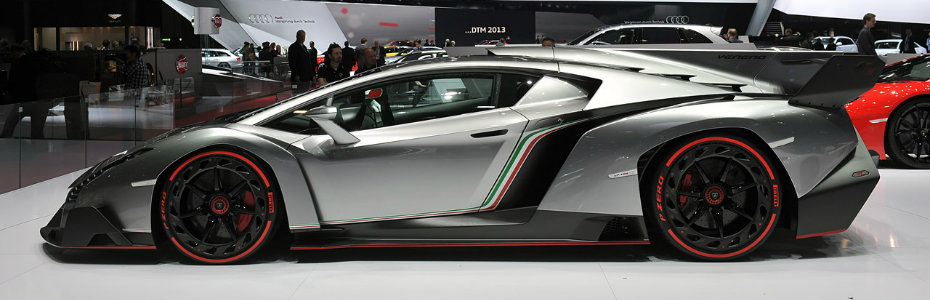
Lamborghini Veneno

Lamborghini's $4 Million Price Tag Veneno, only 3 of these bad boys were produced.

Bentley Motors

Bentley, the Definition of Luxury. What are there more to say?

Porsche 918 Spyder Concept

So, is the 918 Spyder everything it has been hyped up to be? Well, the picture speaks for itself.

Showing posts with label Sports Cars. Show all posts

Monday, March 18, 2013

2013 Mazda MX-5 Miata Club


In what could have been my final time reviewing a current-generation Mazda MX-5 Miata, I'll have to say it was like saying a bittersweet farewell to an old friend. You see, the third-generation Miata (NC) is my favorite iteration of the fun little roadster, and with the next Miata being co-developed with Alfa Romeo, I fear the car might lose some of the "jinba ittai" that has made it incredible track car for the last 23 years. If this was to be my last extended drive in the MX-5 Miata, I couldn't have asked for a better send-off with it being a black-on-red tester with a soft top, manual transmission and the all-new Club trim level.

Perhaps as a tip of its proverbial hat to the car's cult following among club racers, the 2013 model year for the MX-5 Miata sees the new Club model replace the Touring trim level in the middle of the car's lineup. This new model should also be a welcomed sight for buyers who were late in snagging one of the 450 Miata Special Edition units that were sent to the US this year, and with a starting price of $26,705, it is substantially less than the Special Edition car. Like the Special Edition, though, the Club comes with black wheels and black door mirrors, and other key elements helped give the car an eye-catching look that got the car noticed almost everywhere I took it.

Driving Notes

- The first thing I notice every time I drive a Miata is how balanced the car feels. A low curb weight (less than 2,500 pounds) and an almost perfectly even weight distribution make the car fun to drive in just about any conditions.

- More fun, of course, is driving with the top down, and the Miata's manual soft top has to be one of the simplest tops to operate in the history of convertibles. One central latch holds it in place, and it is light and hassle-free to raise and lower. You can even just reach back while at a stop light and raise the roof in about five seconds with one hand.

- The six-speed manual transmission not only makes the Miata more engaging to drive, it also gives the car more power. Cars equipped with the automatic transmission are rated at 158 horsepower and those with the manual get 167 ponies under the hood, and while I've yet to drive an automatic Miata, at no point does the manual's power feel insufficient. Even better, it is still decent on gas with fuel economy numbers 21 miles per gallon city and 28 highway; I had no problems hitting either number even with a healthy dose of spirited driving.

- Aside from maybe a Tesla Roadster, there are few cars on the road that feel as small as the Miata. To some, this might be a good thing, but when the average SUV bumper is at face level and getting into and out of the car feels like it should be a part of the Insanity Workout, the Miata might not be an ideal primary vehicle.

- The 2013 Miata Club represents a slight price increase ($875) over the 2012 Miata Touring, but what you get is a truly unique look without having to make any modifications yourself. The Gunmetal Black 17-inch wheels do a lot for the car, but the Club also gets black side stripes, black headlights, a front lip spoiler, rear diffuser, "Club" fender badges and chrome trunk brackets; inside, the instrument panel gets a new body-color-matching insert and red stitching to accent the black seats.

- In today's tech-savvy world, the Miata's option list is devoid of many options available on most entry-level cars, but for a car that shouldn't even have cupholders (especially on the manual-equipped models), the lack of technology inside the Miata makes the car feel even more raw and refreshing.

Read more by Jeffrey N. Ross at Autoblog.com

2014 Maserati Quattroporte


The sixth-generation Maserati Quattroporte is big – and not just because it's 6.5 inches longer than before with a wheelbase that stretches 4.3 inches beyond its predecessor. The new Quattroporte is big also because it's a huge deal both for its segment and for Maserati. Just as FoMoCo is finally chucking $1 billion at Lincoln MoCo, so too is Fiat investing 1.2 billion euros ($1.55 billion at the time this writing) in Maser's future hopes of achieving the larger success we all have wished for it. And after a thorough drive over the intensely challenging mountain roads of France's Mediterranean coast, we can't deny that there's finally reason to put some faith in this long overdue investment.

The much-applauded outgoing Quattroporte enjoyed a reputation of being among the very fastest executive sedans of its day, all while delivering the sportiest overall ride and handling, even in base trims. Yet there was constant corporate-level dysfunction that kept all Maseratis from getting important upgrades or receiving much-needed investment support. So, the outgoing Quattroporte has up until now sort of languished nobly, largely resting on the laurels it earned when it launched way back in 2003.

With continued proper mother company support and ambitious marketing initiatives finally on the table, this all-new 2014 Maserati Quattroporte looks fit to help lead "Il Tridente" through some huge changes as the company prepares to celebrate its centenary in December of 2014. First off, from its current annual total sales figure of 6,000 or so units, Maserati is confident that its global sales will reach 50,000+ per annum by the end of 2015, thanks certainly to all-new product coming on soon like a house afire. Try not to scoff at that too much. Rather cheer when the lights hit the new Quattroporte this January at the 2013 Detroit Auto Show, knowing that new products are on the way to help the FourDoor and the Gran Turismo in their quest for this ambitious volume target.

The departing fifth-gen Quattroporte maxed out in $135,200 Sport GT S trim with 444 horsepower at 7,000 rpm and 376 pound-feet of torque at 4,750 rpm from its naturally aspirated, Ferrari-assembled 4.7-liter V8. The only transmission in North America to this point has been a standard six-speed ZF automatic that can be paddled at the steering column, and the departing model's curb weight totaled 4,375 pounds. For those documenting such things, 0-60 took 5.3 seconds en route to a top speed of 178 miles per hour. Those were nice numbers in 2003, but they're decidedly less so in 2013. What's more, the Quattroporte has only ever come in a standard length, 200.7 inches long, providing owners with 15.9 cubic feet of luggage room. These days, none of this is terribly competitive.

Right out of the gate, the V8 base model of the new Quattroporte hits 523 hp at 6,800 rpm and 524 pound-feet of overboost torque between 2,250 and 3,500 rpm, that power arriving courtesy of a bi-turbo 3.8-liter direct-injected V8, also built by Ferrari. There are now eight gears available from the standard ZF automatic and curb weight reads 4,189 lbs, so the new, bigger car is lighter, too. The 0-60 is now a game-changing 4.6 seconds and top speed hits 191 mph. Given that long-wheelbase versions of these big exec sedans sell far better worldwide, Quattroporte VI is now offered exclusively at 207.2 inches, and the wheelbase has been stretched from 120.6 inches to 124.9 inches. Luggage room with the rear seats up is also a much more acceptable 18.7 cubic feet. So, this Italian is again champing at the bit to compete, primed to land on more shopping lists at the very least.

The Quattroporte's all-important steering remains lovingly hydraulic, plus there's a new, very decent and truly adaptive Comfort/Sport suspension, a bit of tech that was glaringly absent before. Keeping all of this rightness in mind, we were set loose on a Monte Carlo Rally-style drive loop where almost any other extended-wheelbase sedan would never have been launched for fear of journalists coming away with a sideways first impression. Many of the most tortured alpine roads on our loop possess lanes not much wider than the new Quattroporte's 76.7-inch width, and there was usually a low rock wall to the outside, the sort that traditionally doesn't offer much give when hit.

About that steering and how it has gone a step better – one of the sensations that has been unique to this big Italian in a class utterly dominated by the Germans has been the Quattroporte's light-on-its-feet feeling when carving up roads as on our test route. A Porsche Panamera Turbo S or GTS comes close, but the manner in which we were able to toss this Quattroporte around would be likely not possible – at least not as confidently – with the weightier-feeling Teutons. This, Maserati technicians tell us, is partially due to the stressing of lateral acceleration forces, particularly at the rear wheels as the suspension guides them along. Switching off stability control doesn't really alter the situation all that much when the conditions are sunny and perfect, as they were for our drive. The Pirelli P Zero tires – 245/40 ZR20 99Y front and 285/35 ZR20 100Y rear – did a layman's fine job in every circumstance, through every transition and weight shift. About the design of our tester's alloy wheels, well, we leave you to your own thoughts. As a no-cost offering, buyers of this V8 model can also request 19-inch tires from the soon-to-follow V6 model for added ride comfort.

Just ambling along in the cash-drenched Riviera or cruising the French autoroutes, the Quattroporte's chassis and suspension continued to perform as anticipated – not as imperfection-numbing as the typically over-engineered German über sedan, but rather with a well-received sportiness. Said another way, you'll know you're in a Maserati, even though the standard adaptive suspension in Comfort is plenty compliant. The overall payoff for someone living with this new Quattroporte is that they'll have the finest driver feedback in this class, bar none. And this is just the base model of the V8 trim.

When setting off from idle, the compact bi-turbo V8 from Ferrari provides just a modicum of lag, though this feels right for the sort of automobile which, in many markets, will have His Lordship in the back seat. Get into the 1,500- to 2,000-rpm range, however, and the response of the throttle/engine and behavior of this new modular chassis are point-blank. Really, between about 1,800 and 4,000 revs, the powertrain's torquey character takes over, and from there, the power curve rolls right up to 6,800 revs. Redline is marked at 7,200 revs, but we rarely went there, as we were too busy playing incessantly with the really crisp eight-speed paddle shifters in Sport mode, taking gear changes in a solid fifteen-one-hundredths of a second.

The Maser's exhaust tone, whether set to normal or in Sport, just explodes at 4,200 rpm and above. The off-throttle popping and snarling is legendary stuff. It's so supremely mighty when compared to any other super sedan's base exhaust that it should come as no surprise that the pipework is supplied by current cobbler of great exhausts, Faurecia.

Eyeballing the Quattroporte, we couldn't help but stare at the brakeset, especially after studying the day's drive route map. Before taking the wheel, we asked Maserati product development boss Benedetto Orvietani why a massive set of profit-mongering carbon ceramic brake discs are still not even an option. He gave us that cheeky response of "Drive it first and then decide." After flying all day over brake-baking roads, the standard aluminum and lead drilled and vented Brembo performance brakes (15.0-inch front with six-piston calipers, 13.8-inch rear with four-piston pinchers) proved sufficient enough that we've stopped assuming the car needs $15,000 brakes to make it any better. Nonetheless, marketing people at Maserati tell us they're in deep discussions on the hot topic, and not just for the Quattroporte.

The exiting Quattroporte still on sale has a design that has aged. Pretty well, we must say, but still a little long in the tooth, so the 2014's completely fresh design from Pininfarina is good to see in person. From nose tip to rear cabin pillar, we knew they'd get it right. It was arguably the rear portion of the departing generation that aged most poorly. What we see now is a vastly improved approach that is also helped a lot by the larger proportions on display. The only possible dubious reaction, which just about everyone is having and rightly so, is that the rear fascia looks straight off of a new Audi A4 with a dash of Citroên C5 in the shaping thereof. We can't really turn that into a criticism, though, since we like those rear end executions a lot, and the Quattroporte is at least no longer featureless when viewed from behind.

The cabin is equally as revolutionary as the exterior, and it previews a really good, cleaner trend for Maseratis yet to come. Sit in any German big gun, any big Jaguar, or the Japanese competitors, and things have arguably gone a bit, well, pimpy. This overwrought style trend all works and reflects an abundance of onboard tech, but the trend is seemingly also meant to come off as some sort of showy flashbulb that adds value to one's large investment. But Maserati's designers and engineers have collaborated for a truly classy interior that doesn't overcook a thing. Spatially, you can assume more than sufficient passenger and cargo room now, but the surfacing and materials are also decidedly finer than ever before. The adjustable seating on the V8 is very good, providing decent support for when the hairpins hit or for when it's time to travel 400 miles. More sound enters this Maserati's interior than with any other competitor, but when it's such a great soundtrack, this isn't a complaint.

The controls on the middle dash and center console all make sense, giving us an immediately good feeling. Only one novelty really leapt out at us as a surprise, and it's placing the Start button to the left of and below the steering column, as if inspired by Porsche. Did we continually un-remember this and poke the lower right dash instead? You betcha. The seven-inch Maserati Touch Control (MTC) screen orchestrated by Garmin is hardly revolutionary stuff, but we enjoyed it, as it's fast and, again, simply makes sense all around. In fact, it's very close to state-of-the-art as is, so once more, Maserati has avoided an over-complicated solution. Hallelujah.

Read more by Matt Davis at Autoblog.com

2014 Porsche Cayman S


I need you to understand what it's like to drive this car. I'm not talking about your ability to comprehend the words on this page or process the figures that surround the 2014 Porsche Cayman S, but rather what it feels like to take control of a car conceived, designed, engineered and manufactured to set your prefrontal cortex alight with all the glee a Zippo typically reserves for pine needles marinated in jet fuel. From the instant you put your tail in the driver's seat, the Cayman sets about impregnating your veins with a full and varied spectrum of ludicrous emotion. It's not like taking the family pickup to market, I can tell you that much.

For 2014, the next-generation Cayman features many of the same styling tweaks first displayed on the coupe's drop-top cousin, the Boxster, though a spate of mechanical changes, more power, less weight and better efficiency join the party to further differentiate this model from its predecessor. And while additions like rev-matched downshifts and electronic power steering help push the Cayman into a new era, one fact remains unchanged: This is one of the best driving cars on the market. Period. Bear with me and I'll try to explain exactly why that is.

Engineers stretched the Cayman wheelbase by nearly 2.4 inches and widened the front track by 1.6 inches, and the result is a car with all four wheels pushed well to each corner. Thanks to shorter overhangs front and rear, total vehicle length has grown by a manageable 1.3 inches from stem to stern. That means it will take a keen eye to spot the machine's swell. Instead, onlookers are likely to first take note of the dramatic upkick from rocker panel to air inlet. Porsche calls the feature a "dynamic recess," and the contrasting black inlets really do shuttle air to the flat six mounted mid-ship.

Up front, the Cayman S splits from its more demure Cayman sibling with larger front air inlets framed by black plastic strakes instead of the standard body color treatment. Base models are left to suffer with a black front splitter while the S trim gets a bit of paint on the lower aero. Around back, the two can be separated via the exhaust outlet, where the Cayman uses one tip and S gets the double barrel treatment. Otherwise, the stern looks awfully familiar. Boxster fans will recognize the integrated lip spoiler stretching from tail lamp to tail lamp across the rear deck. The vehicle's mechanized spoiler, meanwhile, has grown in surface area by 40 percent to increase downforce at higher speeds.

Designers did move the windscreen forward by nearly four inches, resulting in a finished product that looks a bit less like someone simply tack welded a roof onto the company's entry convertible. Still, the two cars share more than a few strands of DNA, and despite protests from engineers and designers alike, shoppers will inevitably look at the pair's third generation as two shades of the same hue.

As if that were a slight. This car is drop-dead gorgeous in the flesh. With its lusty flanks and new, optional 20-inch wheels, the Cayman looks more mature than ever. While purists can hem and haw all they like, the truth is the youngest of the Porsche sisters is still the fairest of them all, 911 included.

Meanwhile, the cabin has remained largely untouched for 2014. Drivers will welcome the addition of new sport seats. The thrones manage to thumb that fragile line between support and comfort, serving up fantastic lateral support without cutting off circulation to the body's more sensitive environs over a long haul. If I could afford it, I'd have them for every seat in the house, toilet included. Standard trim serves up a set of manually adjustable buckets with Alcantara inserts, though our tester came rocking power adjustable seats dipped in leather. European buyers, meanwhile, get to option up to a set of carbon fiber, fixed-back race buckets capable of bonding the seat of your jeans to the car's chassis on a molecular level. Unfortunately, the gear doesn't pass crash safety in the US, though we hear Porsche is working on that one. Keep your fingers crossed.

Otherwise, the Cayman cabin features redesigned air vents, and the option sheet now comes packed with a 12-speaker Burmester sound system. By some engineering wizardry, the system turns out some 851 watts of power while tipping the scales at a scant 14.3 pounds. Regardless of whether or not you opt for the black-art stereo, odds are you'll appreciate the extra interior room over the second-gen Cayman. For 2014, the model boasts a total of 15 cubic feet of cargo area, up a little over half a cube overall. In addition, the longer wheelbase delivers a bit more leg room as well.

As with most Porsche products, it's what you don't see that separates Cayman generations, starting with the chassis itself. The body shell is now 44-percent aluminum for the first time. The move slashed body-in-white weight by some 103 pounds while increasing torsional rigidity by a baffling 40 percent. What does that mean, exactly? Porsche says the base Cayman is now twice as rigid as the Boxster and substantially stiffer than even the 911, making it one of the most rigid sports car chassis in the world.

Both the 2014 Cayman and Cayman S bring extra muscle to the table. Our S tester came with a 3.4-liter flat-six engine pumping out 325 horsepower at a screaming 7,400 rpm and 272 pound-feet of torque from between 4,500 and 5,800 rpm. More impressively, the six can wrap its tach all the way to 7,800 rpm before hitting the limiter. While a six-speed manual transmission is standard equipment, our machine came equipped with the nutty-good PDK dual-clutch seven-speed transmission. Those who stick with the row-your-own can now look forward to rev-matched downshifts when in Sport mode.

Engineers also turned a keen eye on helping the Cayman S get down from speed, and as a result, the coupe now features the same front brakes as the mighty 911 itself. With stiffer four-piston calipers, better cooling and larger 13-inch front discs, the clamps had no trouble shouldering two days of hard driving through the twisting hills of southern Portugal, complete with a morning of bashing around the Autodromo Internacional Agarve – a fiendish track used for Moto GP events and Formula One testing. Carbon ceramic brakes are also available, offering up lifetime durability in non-track use as well as a substantial cut in unsprung weight. Porsche says going for the carbon discs can pull as much as 52 pounds from the brake system's total mass.

But again, all that information doesn't so much as utter a syllable about how it feels to pilot this car. Slide into the driver's seat and the 2014 Cayman wastes no time in serving up what might be the perfect driving position. Those excellent buckets situate you high enough to deliver plenty of visibility with all but the tops of both fenders clear from view. Hit the key and that menacing flat six barks and snarls before settling into a smooth idle. If your heart hasn't started beating to match time with the flat six by now, you might want to get the organ checked.

Under civil driving conditions, the PDK gearbox is content to prattle along with nearly imperceptible shifts. Under deceleration, the drivetrain can also kick into a coast mode to save fuel, and an auto start stop system means the driveline keeps from sucking down gas while the car is at a stop. Kick the two-door into Sport mode, stiffen the optional adjustable suspension, crack open the available sports exhaust and the car opens up like the maw of some hyperactive sea beast, whipping from comfortable tourer to mountain crest hellion with a few button presses.

Diving into the throttle results in blistering response, and while the flat six doesn't exactly provide neck-snapping acceleration, thrusters kick in once the engine finally starts stirring up some torque. Officially, Porsche says the Cayman S can clip off a 0-60 run in a shave under 4.7 seconds on the way to a terminal velocity of 175 miles per hour. What's more, the company says it managed to whip around the infamous Nurburgring in 7 minutes, 55 seconds. That time is a full 11 seconds quicker than the second generation.

Clearly straight line punch isn't what the Cayman is about. Get off onto a tickling thread of asphalt and the car begins stroking your ego in earnest. The platform is nothing if not confidence-inspiring. With each bend and twist, a sultry German voice in the back of your skull whispers what you knew all along: You really were cheated out of a career in the World Rally Championship.

Those of you who started bellyaching when you first heard the Cayman now comes with electronic power steering can politely shut your faces. The tiller is as precise as you're likely to find on any machine, delivering excellent feedback with plenty of communication. If you don't know what the front wheels are doing in the Cayman S, you can't blame the car.

The PDK really is the only "automatic" transmission I've had my hands on that can accurately anticipate which gear I need to be in for whatever assault on proper driving I'm attempting to execute at that particular moment. The shift logic is something from another future, one where there's a little German gnome clinging to your brain stem and barking commands at the gearbox via HAM radio. Go for the wheel-mounted paddle shifters and the hardware pops off blistering shifts that hit like a telephone book to the lower back. As a die-hard defender of the manual transmission, I can honestly say this tech is driving bliss.

Get the Cayman S out on a track and it's immediately clear what Porsche has cooked up with this car. The platform is incredibly forgiving, turning even butter-fisted yokels like myself into competent lappers. With a little prompting, the Cayman will rotate in a nice, slow, even breakaway before squatting on its haunches and popping out of a corner. Those massive brakes tolerate regular sieges without drama or significant fade, providing a confident pedal with excellent initial bite. That's true even after a handful of hard laps trying to chase down a 911.

Read more by Zach Bowman at Autoblog.com

2013 Mercedes-Benz SL65 AMG


Make way for the 2013 Mercedes-Benz SL65 AMG, the most wonderfully preposterous car I have ever driven.

There is absolutely no reason why any two-seat roadster should be fitted with a twin-turbocharged 6.0-liter V12 developing 621 horsepower and 738 pound-feet of torque, but I sure am glad that Mercedes-Benz doesn't see things that way.

Drop into the leather-lined cockpit of this $213,145 provocateur, floor the accelerator pedal as I did over and over again, and 60 miles per hour falls in a traction-limited 3.9 seconds. Top speed has been electronically held to 186 mph (this apparently saves Gulfstream jet owners from embarrassment). Forget the SL550 and SL63 AMG, the valets will trip over themselves attending to the tycoon driving this thoroughbred – it's the real deal.

Driving Notes

- The handcrafted 36-valve V12 returns with a new internal designation of M279 (replacing the M275) and a matte carbon-fiber engine cover. Mercedes-Benz has updated the powerplant's turbochargers and improved engine airflow for the 2013 model year. This explains the 17-horsepower improvement and efficiency gains over its predecessor. The venerable five-speed automatic was also replaced with AMG's Speedshift seven-speed transmission (offering electronically controlled Efficiency, Sport, Sport Plus and Manual modes), and the SL65 AMG now features an engine start-stop function.

- Acceleration rates normally flatten as aerodynamic drag rises. The SL65 AMG seems to do just the opposite as it picks up speed like a rocket leaving the earth's pull of gravity. Full throttle applications release a throaty growl from the quad exhaust, accompanied by spine-chilling burbles as the transmission catches each gear. Downshifts are equally as pleasing as the V12 cackles and pops as each gear falls. Yet, during steady cruising the exhaust note is perfectly tame and proper.

- Despite is substantial physical size, the SL65 AMG is surprisingly agile. It tracks well and the new electrically boosted steering is precise and nicely weighed. Cornering is flat, thanks to Active Body Control (offering both Sport and Comfort settings). The 19-inch wheel and upgraded monobloc brake package (lifted right off the enthusiast-tuned SL63 AMG), does its job commendably.

- The cabin is a smart mix of luxury and sport. What leather doesn't cover is made of either woven carbon-fiber or brushed aluminum. The infinitely adjustable quilted seats are heated and equipped with the automaker's neck-heating Airscarf. The meaty three-spoke flat-bottom steering wheel is wrapped in smooth leather with grippy Alcantera sides and aluminum wheel-mounted paddle shifters are standard. The convertible hard top, with its lightweight magnesium frame encircling the automaker's trick Magic Sky Control dimming feature, can be raised or lowered in about 20 seconds at the touch of a button.

- Don't confuse the SLS AMG GT Roadster with the SL65 AMG, as each has very different role. The SLS is a true sports car, with a mission-appropriate ride, gnarly exhaust snarl and a moderate level of amenities. The SL65, on the other hand, is a luxury grand tourer engineered to make miles pass effortlessly beneath it chassis. One does not replace the other – a true boss owns both.

Read more by Drew Phillips at Autoblog.com

Sunday, March 17, 2013

2014 Mercedes-Benz SLS AMG Black Series


There have been four Black Series models since the Mercedes-Benz SLK55 AMG Black Series introduced itself to European audiences in 2006. Following that, the Black Series club has hosted appearances by the 2008 CLK63 AMG Black Series, the 2009 SL65 AMG Black Series and last year's 2013 C63 AMG Black Series. The sixth member of the group is one we would have thought already was a Black Series car in its standard guise. Right out of the box, the SLS AMG is loud, frenetic, cozy, boisterous and frightfully easy to oversteer. How much more Black did it need to get?

Quite a bit so, apparently. The SLS AMG Black Series has lost weight, gained power and been refitted with upgrades and aero bits from front to rear. If you liked the way it looked before, you'll probably be an even bigger fan of this one. If you thought it looked ungainly, well, this one should stay even further away from pageants. Regardless of where you come down this is the best SLS AMG variant we've driven.

"Extreme performance for the road" and "race driver for the street" were the mottoes that guided development of the SLS AMG Black Series, but that could reasonably be said of every model that has worn the Black Series badge. No other model, however, had a dedicated race variant from which to draw inspiration, whereas this one does: the SLS AMG GT3 race car. Last year, the checkered-flag-only version continued to put the bite behind its ridiculously basso bark with 43 victories and nine titles in global competition, including both driver and team titles in the FIA GT3 and FIA GT1 World Championships.

Ola Källenius, Chairman of Mercedes-AMG, said of the road car, "The new SLS AMG Black Series is a perfect study in the one-hundred-percent transfer of technology and engineering from motorsport to road. We have drawn inspiration from the worldwide success of the SLS AMG GT3 customer sport racing car on both a conceptual and a technological level."

The problem is that, at the drive event we were invited to attend at the Paul Ricard circuit in the South of France, Tobias Moers, Head of Total Vehicle Development at AMG, admits that the tech transfer went, in large part, in the other direction – from the road car to the race car. That is to say, the car you could buy on dealer floors was already engineered to such a high degree that, once you parked it on the paddock straight, you were already halfway there. It's similar to the Audi R8 Grand-Am, in which the production engine has just three changes made to it and the race car is more than half made of up production car bits, the body panels being much of the difference. The SLS AMG GT3 got its carbon-fiber-reinforced polymer (CFRP) torque tube from the road car, and when we asked about getting rid of the HVAC system in the Black Series, Moers told us, "The GT3 car has air conditioning."

When asked what the objective was, Moers said, "We wanted it to be among the best performing cars at the Hockenheimring," which is ostensibly to German car buffs what the Nürburgring has become to us. In the 'short' configuration as used by German magazine Sport Auto, Moers said they wanted to take 2.5 seconds off the lap time of the SLS AMG GT at the track. The Black Series did Hockenheim in 1:08, and if these lap times can be trusted, that would put it somewhere between the road-legal Radical SR3 SL and Chevrolet Corvette Z06 with the Z07 Package in the 1:08 bracket, joining other speedy coupes like the Porsche 911 GT2 RS, Lamborghini Aventador LP700-4 and McLaren MP4-12C. Oh, and yes, it does the circuit at least 2.5-seconds quicker than the SLS AMG GT.

An enlarged heart is where the upgrades begin, the 6.2-liter naturally aspirated V8 getting a higher redline in the Black Series than in the GT – 8,000 rpm versus 7,200 rpm – and 39 more horsepower for a total of 622 hp at 7,400 rpm. Torque drops a touch, from 479 pound-feet in the GT to 468 lb-ft at 5,500 rpm in the Black Series. To keep her steady in front, AMG installed a gas-filled strut between the engine and the body, and another gas-filled strut stabilizes the transmission.

Since everyone knows a bionic heart needs bionic parts to really show off, the limbs and sinews also come in for nth-degree engineering. A CFRP torque tube runs from the engine to the seven-speed dual-clutch transmission, that gearbox under the orders of rewritten software to perform even quicker shifts and rev-match on downshifts. It has been placed almost half an inch lower to drop the center of gravity, the low CoG aided as well by items like the CFRP hood and CFRP rear bulkhead panel.

The coilover suspension gets new wishbone mounts and knuckles, revised camber settings and bushings and increased spring rates. It hangs out further as well, the track stretched in the front by 0.8 inches, out back by 0.9 inches. The Adaptive Performance suspension's two damping settings for Sport and Sport+ are suited to different terrain: the former for country roads and undulating tracks with altitude variations like The 'Ring where you need a little more body roll and compliance, and the latter for flatter tracks like Paul Ricard.

One hundred and fifty four pounds of track-day bloat have been removed from the Black Series compared to the GT, the titanium exhaust accounting for almost 29 of it. The CFRP torque tube drops almost another 30 pounds, the two-piece high performance brake system omits another 35.3, the ten-spoke forged wheels – 19 inches in front, 20 inches in back wearing Michelin Pilot Sport Cup 2 rubber – shave 8.8 pounds of unsprung mass. A lithium-ion battery replaces the conventional unit, and it sheds nearly 18 pounds by comparison. It could have been made even lighter, but AMG wanted it to be robust enough for year-round use; it doesn't need to be removed in the winter.

The final tally is a curb weight of 3,417 pounds. If you're keeping track, that's a couple hundred pounds more than the 2014 Porsche GT3.

There are no such weight-weenie subtleties on the outside, the SLS AMG Black Series announcing its road-legal race car intentions with a shoebox full of aero bits. Black Series tells like the black surrounds on the rear lights are lost among the fender flares, air intakes and extractors, carbon fiber lips and skirting, a wide rear diffuser and – should one opt for the AMG Aerodynamics Package – a carbon fiber wing with a Gurney flap. It will get you 60 kilograms of downforce at 200 kilometers per hour, and is why the top speed of the Black Series is one mile per hour less than the GT at 196 mph.

DTM legend Bernd Schneider led the way for lead-follows around Paul Ricard, and it was evident as soon as the hot laps began that he wasn't being paid to take it easy. The first version of the SLS AMG didn't hesitate to punish sloppiness or a lack of focus through a corner, throwing its back way out any time it was thoughtlessly provoked. That was brought under control a couple of years later when the suspension settings were revised for more compliance in the less rowdy settings, but it was still ready to do the pendulum without much need for coaxing.

The track setup on this day had Turn One as a 90-degree right-hander, another 90-degree right just 50 yards further that was a little more open, then a short straight to build up just enough speed that you'd have to hit the brakes hard for a 90-degree left-hander that went immediately into a 90-degree right and an increasing-radius left that led to a long straight, after which the rest of the track opened up into single- and double-apex high-speed sweepers left and right until the final tight right took you back onto the main straight.
That first sequence would have been at least four invitations to mess up the entire lap, and perhaps even your day and one of the press cars, in the original SLS AMG. On top of that, when we took the roadgoing SLS AMG out on the Autobahn just a few months ago, we found it to be a little nervous once deep into triple digits.

Both of those behaviors have been quelled in the SLS AMG Black Series. Strap into the non-adjustable carbon fiber buckets in the Black Series – we won't get those in the US, we'll get the traditional seats – and pull out onto the track, and the first two surprises are the thinness of the Alcantara-shod, flat-bottomed steering wheel and the lightness of the steering. For all its lightness, though, it is precise. We wouldn't complain about having to make more effort, but we've no complaints about what you can do with it.

Read more by Jonathon Ramsey at Autoblog.com

Tuesday, March 12, 2013

2014 Aston Martin Vanquish


What's New for 2014

The 2014 Aston Martin Vanquish returns after a five-year absence, replacing the DBS as Aston's flagship sports car.

Introduction

When it comes to ultra-high-performance cars, great performance is often accompanied by great sacrifice. On specifications alone -- a 565-horsepower V12, a lightweight carbon-fiber body, near-perfect weight distribution and, yes, a stratospheric price -- one would expect the 2014 Aston Martin Vanquish to compromise plenty of comfort and refinement in the name of performance.

Not so.

Like the original Vanquish last seen in 2006, this latest Aston Martin flagship exudes sophistication that is as agreeable as it is exhilarating. The new Vanquish may not beat other high-priced exotics head to head, but not every wealthy driver desires total road supremacy. We doubt reasonable owners will mind the supercar gap and will instead simply luxuriate in the Vanquish's full sensory treats.

The Vanquish isn't radically new, but Aston Martin has updated just about every aspect compared to the DBS. Its seductive shape owes largely to its construction and body panels made from carbon fiber. The underlying structure mixes bonded aluminum and more carbon fiber, and curb weight is about 3,800 pounds. Motivation still comes from a V12, but various tweaks have increased power by about 55 hp.

But as with most Aston Martins, the overall experience transcends the specs and numbers. The Vanquish is a feast for the eyes, with seductive lines tracing its aggressive shape. The V12 delights the ears and the cabin exudes an intoxicating scent from the numerous premium leather surfaces that are also a pleasure to touch. This is automotive craftsmanship at its best.

If you're shopping this class of car, you're no doubt aware of your choices. We have yet to sample the delights of the 2013 Ferrari F12, but if the past is any indication, the new Ferrari will impress. There's also its Italian V12 counterpart, the outlandish 2013 Lamborghini Aventador. But for design sophistication and refinement, the Vanquish indeed stands triumphant.

Body Styles, Trim Levels, and Options

The 2014 Aston Martin Vanquish is a two-seat high-performance coupe offered in one very well-appointed trim level.

Standard features include 20-inch alloy wheels, xenon headlights, LED accent lights, power-folding and heated mirrors, front and rear parking sensors, adaptive dampers, keyless remote entry, cruise control, automatic climate control, leather upholstery, a faux-suede headliner, power-adjustable heated front seats with memory functions, glass-faced switchgear, a 6.5-inch information screen, a Garmin-based navigation system, Bluetooth phone and audio streaming, mobile WiFi (via a 3G phone connection) and a 13-speaker Bang & Olufsen audio system with iPod/USB connectivity and satellite radio.

Buyers can also opt for various wheel styles and add carbon-fiber exterior elements (roof, mirrors, side strakes and door handles), two rear seats, an auto-dimming rearview mirror, heated and ventilated front seats, a faux-suede-trimmed steering wheel, carbon-fiber or glossy interior trim and a six-CD changer. Along with an extensive color palette for the exterior and interior, customization is available through "Q by Aston Martin."

Powertrains and Performance

At the heart of the 2014 Aston Martin Vanquish is a front midmounted 6.0-liter V12 that produces 565 hp and 457 pound-feet of torque. Power is sent to the rear wheels through a six-speed automatic transmission with column-mounted shift paddles.

In Edmunds.com testing, the Vanquish accelerated from zero to 60 mph in 4.2 seconds, about a full second slower than its McLaren or Lamborghini competition.

Safety

Standard safety features on the 2014 Aston Martin Vanquish include antilock carbon-ceramic disc brakes, stability and traction control, side curtain airbags, pelvis and thorax side seat airbags, front and rear parking sensors and a rearview camera.

In Edmunds brake testing, the Vanquish stopped from 60 mph in 105 feet, about what we'd expect from a high-performance coupe.

Interior Design and Special Features

Opening the lightweight door accesses an inspiring cabin bathed in exquisite leather that's delicately stitched together. Simply starting the car offers some ceremony, as you slide the crystal-trimmed "key" fob into the center of the dash and trigger an evocative ignition sequence. Controls are well-placed in a glass-faced center stack that utilizes sensors underneath the printed control symbols, while a subtle haptic feedback system simulates button feel and acknowledges commands.

On closer inspection, however, a few less desirable elements temper the initial splendor. The pop-up information screen is cheap even by entry-level luxury car standards and some switchgear is lifted directly from Volvo. Some switches and knobs are downright flimsy, prone to fall off in your hand as was the case in our Vanquish test car. The infotainment menus, however, are relatively easy to navigate via a central knob controller.

Unlike most exotics or supercars, the Vanquish actually has usable trunk space that accommodates up to 13 cubic feet of cargo. In the U.S., there is additional space on a parcel shelf behind the front seats. Buyers can replace the shelf with two seats, but we'd caution against subjecting any humans to those tight confines.

Driving Impressions

If you're familiar with the typical supercar's compromises in comfort and refinement, the 2014 Aston Martin Vanquish's luxury and sophistication will surprise. It may not equal the performance numbers of other supercars, but its wide range makes it a fantastic grand tourer. The ride quality is entirely agreeable, and we wouldn't hesitate to take it on an extended road trip.

Acceleration is impressive, though not as terrifying as similar supercars. In full automatic mode, the transmission shifts smoothly, but more spirited drivers will probably use the manual mode with the column-mounted paddle shifters to keep the revs high. This is especially likely if you've engaged the wheel-mounted Sport button, which clears the baffles for a truly inspiring snarl, howl and growl from the exhaust.

The Vanquish also features Normal, Sport and Track settings for the adaptive suspension, and there's enough of a difference among these modes to suit most driving tastes. We found, however, that minor midcorner bumps upset the rear wheels regardless of mode. Fortunately, the stability control interrupts the action very briefly and doesn't demand any additional driver intervention.

Source: Edmunds

2014 Porsche Cayman Coupe


Some cars — namely the really good ones — have it all together right from the start: the moment you fire the engine, select 1st gear and set off down the road.

The new, second-generation 2014 Porsche Cayman S is one of those cars.

But you don't have to wait until you've unlocked the driver's door, slid your backside across the heavily contoured seat and turned the key to discover just what a compelling car it is.

Even before we had drawn the frameless door open and climbed in, we already had an inkling that the new two-seat coupe had what it would take to build on the haughty reputation of its predecessor, still one of the finest driver's cars going some 6.5 years after it was added to the Porsche lineup.

This Porsche Cayman Looks the Part

Up close in the metal, the 2014 Porsche Cayman S is stunning. The overall design is significantly more mature than on the first-generation Cayman, with superbly executed elements such as the crease line running through the door and the automatically deploying rear spoiler — all set to be mirrored on the upcoming 918 Spyder due out in September. Its confident and self-assured stance make this Cayman look exactly like a sports car should.

As with the latest Boxster, the new Porsche Cayman receives slightly altered proportions that serve to give it a more cab-forward silhouette. Length is up by 1.4 inches to 172.4 inches, width remains the same at 70.9 inches and height drops by 0.4 inch to 51 inches.

The new Porsche also rides on a chassis boasting a 1.2-inch-longer wheelbase at 97.4 inches and the tracks have been pushed out by 1.6 inches to 50.1 inches at the front and 0.7 inch to 60.6 inches at the rear to provide it with a significantly larger footprint. The wheelhouses are also bigger to swallow the standard 19-inch wheels with 235/40 tires in front and 265/40 tires in back.

Porsche has also revised the construction of the Cayman in a bid aimed at offsetting the increase in dimensions with a reduction in weight. As with the new Boxster, the body is no longer made exclusively out of steel. Instead, it uses a combination of aluminum, magnesium and steel, which drops the overall weight of the car to 2,976 pounds, a 55-pound reduction versus the previous Cayman S.

The Flat-6s Remain

As with the first-generation Porsche Cayman, buyers have an initial choice of two naturally aspirated horizontally opposed water-cooled six-cylinder engines. The $52,600 Cayman base model receives a newly developed 2.7-liter unit complete with direct fuel injection that boosts power output to 275 horsepower at 7,400 rpm, a 10 hp bump up from the previous 2.9-liter base engine. Torque, however, drops by 7 pound-feet for a total of 214 lb-ft at 4,500 rpm.

The model driven here is the $63,800 Cayman S, which gets a revised 3.4-liter version of Porsche's classic boxer engine. Various tweaks to the induction system result in output numbers of 325 hp and 272 lb-ft of torque at 4,500 rpm.

Both engines come standard with a six-speed manual gearbox, although Porsche expects the optional seven-speed dual-clutch gearbox with steering-wheel-mounted paddle shifters will prove the more popular choice over time: and with good reason. The latest software update has improved the quality and speed of its shifts to a point where it is now one of the best units of its type in any car. Purists will still hanker for the manual, if only out of habit, but the dual-clutch gearbox is now clearly the better choice, both in everyday and track-oriented driving.

A Livelier Feel

The 3.4-liter engine really does deliver the best of both worlds, providing for docile part-throttle traits in an everyday city driving environment and captivating liveliness when the conditions allow, particularly above 4,000 rpm where the camshaft profile is noticeably altered and it really begins to deliver.

Significantly, the points at where peak power and torque are delivered have risen by 700 rpm and 1,300 rpm respectively, endowing the revised engine with a slightly peakier delivery than in the old Cayman S. Its character hasn't changed in any great way, but there is now even more reason to explore the upper end. The best attribute, the one that sticks in your memory well after you've climbed out, remains the sound it makes at wide-open throttle. Changes to the induction and exhaust system have enhanced what was already a stirring soundtrack, providing the Cayman S with the aural attributes to back up its exceptional dynamic characteristics.

It is not supercar quick in a straight line, but the performance you get for the money with the 2014 Porsche Cayman S is rather compelling. Porsche claims zero to 62 mph in 4.7 seconds in combination with the dual-clutch gearbox and Sport Chrono package, which brings a launch control feature. This is 0.4 second faster than the old model and just 0.1 second shy of a similarly specified 911 Carrera, which runs the same engine but in a slightly higher state of tune. Top speed extends to 175 mph, achieved at the 7,600 rpm redline in 6th gear owing to the widely overdriven 0.62:1 ratio used in the seven-speed dual-clutch gearbox.

A More Modern Chassis

With its engine mounted low down wholly within the wheelbase and the majority of its weight concentrated over the rear wheels, the Cayman has never lacked for traction. However, Porsche has seen ways to improve it. The new model receives a revised version of its predecessor's stability control function and, for the first time, an optional torque-vectoring system. It's capable of juggling the amount of drive being sent to each of the rear wheels as part of a rear locking differential that offers 27 percent lockup under load and 22 percent lockup under deceleration.

As with much of the new Cayman save for its driveline, the chassis has been heavily updated. It continues to use a suspension with struts both front and rear, although they have been redesigned, making them more compact, stiffer and better able to maintain a constant camber for more precise handling. The subframes to which the suspension is attached are also new, offering greater dispersion of shock throughout the body structure, which is claimed to boast an impressive 40 percent increase in overall rigidity.

Other changes include an improved optional active suspension management system. With four vertical sensors, it provides faster and more intuitive changes in damping control. The driver can choose between Normal and Sport, which provide moderate and higher damping forces, respectively. A bigger change is the adoption of electromechanical steering in place of the wonderfully communicative hydraulic-mechanical setup used on the old Cayman.

Bigger Size Doesn't Compromise Handling

The lingering concern was that in adopting a larger chassis — and with it larger wheels, tires and brakes — the Cayman may lose some of its valued intimacy. However, this proves unfounded. The new model is, if nothing else, more encouraging to drive, both in an everyday sense and close to its dynamic limit. There is a completeness to its handling repertoire that makes the new car special. In isolation it feels more engaging than the 911 Carrera, at least in Cayman S form.

The steering, for a start, is wonderfully weighted, if slightly lacking in ultimate feedback. But it is the chassis that really shines, as its actions are superbly responsive. There's proper compliance and it is never harsh, even on badly pitted pavement when the dampers are switched to Sport mode. You can feel the detail of the engineering that has gone into it with every turn of the steering wheel. The brakes, with optional 13.8-inch carbon-ceramic rotors grabbed by a new six-piston caliper up front and four-piston caliper at the rear on our test car, are beyond criticism, providing stunning stopping power at any speed.

This Cayman hasn't lost any of its ability to entertain, either. Switch off the stability control system and it will oblige, with progressive drifts there for the taking in the right conditions. It takes a fair bit of provocation to get the rear end to really step out, though. Could it handle more power? Of course, the chassis feels to have loads in reserve. Just don't expect the Cayman to encroach too much upon the 911 for outright firepower any time soon. Porsche policy has always been to keep the two firmly separated.

Read more by Andreas Stahl at Edmunds.com

2013 Lamborghini Gallardo


What's New for 2013

New front- and rear-end styling debuts for the 2013 Lamborghini Gallardo, but only for the 560-4 coupe and Spyder roadster. An LP570-4 Edizione Tecnica also replaces the outgoing Trofeo Stradale edition.
Introduction

The V10-powered 2013 Lamborghini Gallardo might be the little brother to the V12-poweredAventador supercar. But it'd be wrong to see the Gallardo as a major step down from all-out road-going supremacy because in some ways it's actually better than the Aventador, and not just in terms of performance.

In all likelihood, the Gallardo will turn just as many heads as any supercar. It's also a valid assumption that the so-called baby Lambo will deliver similar thrills behind the wheel, unless you have regular access to a racetrack. Where it figuratively pulls away is in how it behaves under normal conditions. With a smaller footprint, better visibility and conventionally hinged doors, the Gallardo is comparably easy to live with on a daily basis.

Much of this can be attributed to parent company Audi, which managed to exorcise many of the demons of Lamborghinis past without diluting the potent solution that makes Lamborghinis so wildly desirable. This year sees only a few changes, as rumors point to a replacement model for 2014. The Gallardo lineup receives a styling update to the front and rear of the LP560-4 models, and last year's Trofeo Stradale special edition has been replaced by the LP570-4 Superleggera Edizione Tecnica.

So if you have a quarter-million dollars to spend on a car, there's no reason to overlook the 2013 Lamborghini Gallardo. Even as it approaches the end of its production, we find it just as desirable as the Aston Martin Virage (or for that matter, almost any Aston), Ferrari 458 Italia and Mercedes-Benz SLS AMG. Mild exotics like the Audi R8 and higher-end Porsche 911 models provide comparable thrills, but are notably less distinctive. In any case, if you're considering any of these exotics, consider us jealous.

Body Styles, Trim Levels, and Options

The 2013 Lamborghini Gallardo is a midengine exotic sports car that is offered as the LP550-2 coupe and Spyder roadster, LP560-4 coupe and Spyder roadster and LP570-4 Superleggera Edizione Tecnica coupe and LP570-4 Spyder Performante Edizione Tecnica roadster. The "-2" indicates rear-wheel drive while "-4" indicates all-wheel drive.

Standard equipment on the LP550-2 and LP560-4 models includes 19-inch wheels, an automatically extending rear spoiler, bi-xenon headlights, power-folding outside mirrors, a nose-raising suspension for curb clearance, dual-zone automatic climate control, power seats, an auto-dimming rearview mirror, leather upholstery, a tilt-and-telescoping steering wheel, a multimedia driver interface similar to Audi's Multi Media Interface (MMI) system and a four-speaker stereo with a CD player. The Spyder has a full power-operated soft top, while coupes receive a transparent engine cover and LED accent lights.

Options include upgraded alloy wheels, faux suede upholstery, fitted luggage, heated seats, a navigation system, a rearview camera and upgraded audio with iPod integration. Available packages include the Travel package (which adds a cupholder, a luggage net behind the seats and a small storage compartment near the steering wheel) as well as a pair of interior Carbon packages. The latter bathe the cabin in carbon-fiber trim -- you get less with one package and more with the other. Lamborghini also offers its "Ad Personam" customization program, which gives the buyer extensive input into exterior and interior color combinations.

The LP570-4 Superleggera Edizione Tecnica coupe and Spyder Performante Edizione Tecnica roadster get carbon-fiber exterior and interior components, a more powerful V10, a standard automated manual transmission, polycarbonate rear and side windows, lighter 19-inch wheels, a fixed and larger rear spoiler, carbon-ceramic brakes, faux suede upholstery and special colors. Most, but not all, of the regular Gallardo's options can be added.

Powertrains and Performance

Powering all 2013 Lamborghini Gallardo models is a midmounted 5.2-liter V10. A six-speed manual transmission is fitted to the Gallardo LP550-2. All other Gallardos receive a six-speed, single-clutch automated manual transmission (known as "e-gear"); it is optional on the "550" models.

The Gallardo LP550-2 models produce 550 horsepower and 397 pound-feet of torque and send all power to the rear wheels. More power is available with the LP560-4, which makes 560 hp and 397 lb-ft of torque that powers all four wheels. Lamborghini estimates that these models will reach 60 mph in the mid-3-second range.

Finally, the LP570-4 Superleggera Edizione Tecnica coupe and Spyder Performante Edizione Tecnica squeeze even more power out of the 5.2-liter V10, with 570 hp and 397 lb-ft of torque on tap. All that thrust should be enough to get the car up to 60 mph in the low 3-second range.

EPA-estimated fuel economy checks in at 12 mpg city/20 mpg highway and 15 mpg combined with the traditional manual and 13/20/16 with e-gear. Spyder models with the manual transmission drop by about 1 mpg in combined driving.

Safety

Standard safety features on all 2013 Lamborghini Gallardo models include antilock brakes, stability control and side airbags with head protection. A rearview camera is optional.

Interior Design and Special Features

The Gallardo provides a fairly livable cabin. Leather and soft-touch materials adorn much of the interior, as one might expect, and the switchgear, gauges and multimedia driver interface are essentially pulled from the Audi parts bin. Some might bemoan this dilution of Lamborghini's traditional Italian character, but most will be thankful that everything actually works. Further advancements can be found in the fundamentally sound driving position and the comfortable and supportive seats.

The aforementioned multimedia interface leaves something to be desired, however, as the control knob and accompanying buttons are placed next to the screen rather than near the shifter, requiring altogether too much driver attention given the Gallardo's fearsome capabilities. Furthermore, storage space is negligible, and only the most limber drivers will find ingress and egress an easy task. The latter is par for the course in this segment, perhaps, but some competing models provide supercar performance without requiring contortionist antics to get behind the wheel.

Read more at Edmunds

Lamborghini Veneno supercar sprang from tractors and toreros


(Reuters) - Millionaire tractor maker Ferruccio Lamborghini wanted to build a better, faster sports car in Italy than rival Enzo Ferrari when he established Automobili Lamborghini in 1963.

Half a century later, though both founders are long dead, the corporate rivalry continues unabated at the Geneva Auto Show, where Lamborghini, now an affiliate of the Volkswagen Group, on Tuesday countered the million-euro LaFerrari "hyper-hybrid" supercar with its own "extremely exclusive" Veneno two-seater.

It may not be the fastest car on display at Geneva's Palexpo - Veneno and LaFerrari are both said to exceed 350 km/h - but the new Lamborghini is among the most expensive, with a pre-tax sticker of 3 million euros ($3.9 million), triple the cost of the Ferrari.

Only three Venenos will be built, and all three are pre-sold, the company said.

The Veneno is also way over the top in terms of styling, with scissors-style doors, massive rear wing, roof-mounted air scoop and "shark fin" stabilizer.

"This is one of the most extreme cars we've done to date," Lamborghini CEO Stephan Winkelmann said in an interview Wednesday at the Geneva show.

Showgoers agree.

"I like sports cars, but this is too much for me," said Urs Weiger, a Bern resident.

Swiss law student Victor Argand added: "If I had the money, I wouldn't buy this car, I'd buy the Ferrari."

Unlike the LaFerrari, which pairs a petrol engine with an electric motor to reduce fuel consumption and CO2 emissions, the Veneno eschews any pretext of being "green".

Its 6.5 liter V12 engine, which is mounted behind the seats, drives all four wheels through a seven-speed transmission.

The Veneno is rated at 740 horsepower, well below the Ferrari's 963 hp, but its ultra light weight helps the racy-looking two-door rocket from 0 to 100 km/h in just 2.8 seconds. Ferrari claims its hyper-hybrid makes the same sprint in "less than 3 seconds."

Like the Ferrari, the newest Lamborghini benefits from extensive use of carbon fiber composite in the chassis, body panels and cockpit. The space-age material, widely used in race cars, not only trims weight, but increases structural strength and crashworthiness.

Like the Aventador model on which it is based, and many previous Lamborghinis, the Veneno borrows its name from a famous Spanish fighting bull.

According to Lamborghini, the original Veneno gained notoriety nearly 100 years ago when the bull "fatally wounded the famous torero Jose Sanchez Rodriguez during a bullfight in the arena Sanlucar de Barrameda" in Andalusia in 1914.

Lamborghini's logo still carries the imprint of a "raging bull" in contrast to Ferrari's more civilized "prancing horse". ($1 = 0.7677 euros)

Read more by Paul Lienert and Andreas Cremer and Jennifer Clark at Reuters.com

Could The Scion FR-S Get A Hybrid Version For More Performance?


Go ahead and sit down if you aren't already, because I have some news that may upset you: it is possible that our beloved Toyota GT-86 (aka Scion FR-S, aka Subaru BRZ, aka The Toyobaru) could get a hybrid version in the near future. Gasp!

That's what the UK's Autocar is reporting, anyway. They spoke to chief engineer Tetsuya Tada, who said he is exploring all possibilities for improving the car's performance. That could include forced induction, but it could also include electric motor assistance. Here's what he said:

“I’ve been asked a lot about a turbocharging,” Tada told us. “We are already working on a mid-life facelift for the car, and we are investigating both turbocharging and supercharging too,” he added. “But an electric motor assistance solution is also possible, and would bring benefits that forced induction does not.”

Okay, more power for the Toyobaru. Enthusiasts have been clamoring for that since then beginning, although I have driven it and I don't feel like it needs it all that much. Tada adds this, and I think it's an important point.

"But we must guard against compromising any of the key virtues of the standard GT86 in the pursuit of more power.”

I'm glad Tada sees that. He probably knows better than anyone that one of the best things about the Toyobaru is its purity, its unabashed old-school-ness. Do they really want to mess with that in the pursuit of power?

On the other hand, let's play devil's advocate. Nearly all of the hypercars we saw at Geneva this week have hybrid systems to boost power and efficiency, one way or another. Now we could also see that on an affordable sportscar most of us love already.

Does this mean that hybrids have finally arrived for people like you and me? That they aren't just for Priuses and Insights anymore? Tell us what you think this means, and if the Toyobaru should go hybrid or not.

Read more by Patrick George at Jalopnik.com

2013 Maserati GranTurismo Sport


Isn't Maserati one of those brands we're always rooting for despite the odds? It's a whole lot like Alfa Romeo in this regard; we root and root for them to turn some magic corner that will signal a huge breakthrough with buyers and trigger a sweet reconnection with a glorious past of which we are so frequently reminded.

But the return to any true and powerful worldwide Ferrari-like glory just lingers out there, seemingly always a couple of years off. That the company is owned by Fiat is mostly a blessing, but it also engenders a set of sensitive political hurdles given the awkward banter between the Trident, the Biscione (the snake in Alfa's logo) and the Prancing Horse.

And then this Sport update to one of the two models built in Maserati's Modena precincts quietly emerges, we drive it as it really ought to be driven, and it's enough to have us cheering again. How can all the world not get behind a car so sexy as the Maserati GranTurismo and command people in that price bracket to buy the damned thing? It just seems wrong – and downright un-Italian – that such coercion isn't allowed. Yet surely the ongoing Maserati situation is the result of other things not going quite right beneath its corporate skin.

But we didn't want to think about all of that on our drive day. We wanted to drive the bells and whistles out of this 2013 Maserati GranTurismo Sport and have something approaching an irresponsible 1960s-style great time at the wheel. And we pretty much got it.

We were driving in and around Modena during the recent flurry of nasty earthquakes, too, so there was significant added drama in the air, and our thoughts go out to the locals. Our nearly 200-mile loop took us from the civilization surrounding Modena, Bologna and the straight-as-an-arrow A1 Autostrada, due south into what is a sports car wonderland of Apennine foothill driving. It is in precisely these sorts of off-the-radar areas where every great racecar driver of the 1950s and 1960s came for their truest form of over-the-road driving pleasure. All of history's great Maseratis were tested here in between exquisite coffee breaks.

This GranTurismo Sport is the model that replaces both the GranTurismo S and GranTurismo S Automatic in the lineup, so now there is just this Sport model in between the base GranTurismo and the heatedGranTurismo MC. The GranTurismo Sport arrives in North American showrooms soon after the European launch in July, most likely in September for us. (It's important to get these production launches started prior to the Italian August holiday when things essentially shut down for the entire month.) That the GranTurismo Sport is now more powerful than the GranTurismo MC and quicker to 60 miles per hour in acceleration runs gives us reason to scratch our heads over the MC's higher price tag. While the more rigid 444-horsepower MC currently sits at just a few cents below $140,000, the much-improved 453-hp Sport should start at a little above $130,000.

On the outside, the GranTurismo Sport adopts an approximation of the look introduced on the MC. Headlights and front airflow are the two big items addressed with full-LED daytime running lights and adaptive light control to illuminate curves with up to 15 degrees of steering angle at the wheel. And there is a new front splitter to increase aerodynamic efficiencies and guide more air to the compound metal brake discs for cooling. Other exterior touches include more pronounced side skirts and 20-percent darker tint on the taillamp lenses. This blue you see is the new color dedicated to the GT Sport, called in Italian "blu sofisticato," and the Brembo brake calipers can be ordered in the same color as well. The telltale Trident in the grille gets red highlights now, a Maserati tradition for marking its most powerful cars.

The new power front seats with integrated headrests and more sporting side bolsters are a thoroughly welcome upgrade, the previous thrones never seeming to us to be quite up to the mark. And, despite pooh-poohing comments from jaded journalists, the new flat-bottom steering wheel does help grip strategy and aids leg/knee room while dancing through the regions' hundreds of storybook curves. The entire driver's zone in the cabin is close to ideal for a GT experience in a vehicle this size. Meanwhile, rear knee room is nicely increased thanks to new concave front passenger seatbacks.

Regarding the existing 4.7-liter V8 engine now milked for 453 hp and 384 pound-feet of torque peaking at 4,750 rpm (increases of 20 and 22 units of measure, respectively), this widely shared multi-point injected engine has reached its peak and is wonderful throughout. This, despite teetering on the edge of being replaced by an all-new direct-injection turbocharged V8 beginning in all new Maserati models starting as early as mid-2013 with the newQuattroporte.

But this will not be a good-riddance goodbye; this naturally aspirated V8 built by Ferrari and employed by Maserati and in Alfa's 8C Competizione is an icon of power and sound. We will miss the Sport exhaust roar engineered by the Italians in partnership with Faurecia of Germany. In this latest guise, the roar is best in Sport with gearshifts in the manual MC Auto Shift mode, and we found ourselves leaving the windows open a lot just to hear the song and the five-percent quicker gear changes that waited for our command at the 7,200-rpm redline.

Those shifts from the six-speed ZF automatic gearbox are also as good as they'll likely ever get with such a setup, though things should improve when a ZF eight-speed comes online within the next couple of years. Regardless, we ceased whining about that as we hammered harder and harder over the hills. Keeping in mind that this isn't an all-out performance Ferrari, this six-speed torque-converter-equipped box is extremely well matched to this V8. We expect more in the future from the GranTurismo calibration allowed for North Americans, but it's damned fine right now. We still remember our first drive in the GranTurismo S back in 2008, it had those perfect long carbon fiber shift paddles attached to the column. They continue on here and remain the very best solution in the fingertip-shifting business.

We once again tried the six-speed automated manual Graziano gearbox, called MC Shift, and were once again reminded why the setup was a flop in North America. As it stands, less than 30-percent of buyers in world markets opt to have their GranTurismo thus equipped. The thrill is still there at high revs or on track days, but on public roads and in daily stop-and-go, this transaxle setup is simply too full of the yips and shunts to blend smoothly with Maserati's chassis and gentleman-GT image. North America stopped getting the gearbox imported after a brief test run in 2008, and we'll have to wait and see if there is a new, more sophisticated automated manual solution in store for next-generation Maseratis.

Read more by Matt Davis at Autoblog.com

2013 McLaren MP4-12C Spider


So far, so good for McLaren Automotive. Since the MP4-12C coupestarted deliveries roughly 16 months ago, there are now 1,500-plus more great supercars traveling the roads of our planet. There have been potholes, particularly the hotly awaited initial UK comparison tests in 2011 that (frankly) both we and McLaren felt the MP4-12C would ace versus the Ferrari 458 Italia & Co.

In almost every test, the 570-horsepower Ferrari eclipsed the 592-horsepower MP4-12C and, beyond lap time tenths and hundredths, the victory was based almost purely on emotional issues: disappointing exhaust sounds from the 3.8-liter twin turbocharged V8, clinically efficient chassis responses tempered by little excitement through the steering wheel or seat of the pants, or an exterior that didn't look quite special enough.

While the exterior of the 12C coupe will take a few years to make "more special" (some at Autoblog share in this criticism), creating a spider version with a folding hardtop automatically dices up the styling conversation on any car. So, we arrived in Malaga, Spain, for two whole days of driving madness in what could easily be termed perfect conditions on road and track, and all for the MP4-12C Spider. That's spelled with an "i".

In the latter part of 2011, following some internal post-launch confabs regarding whether or not to alter slightly the MP4-12C recipe to bring it to that 458-like eleven on a scale of ten, McLaren upgraded the supercar's engine management to bring horsepower from 592 to today's 616 at 7,500 revs, while leaving torque at 443 pound-feet between 3,000 and 7,000 rpm. Acceleration runs to 60 mph with the optional Corsa tires and carbon ceramic brakes will surely hit 2.9 seconds in the proper hands. Top speed rests at 204 miles per the hour... a performance figure we have yet to test.

There is also a more responsive program for the seven-speed Seamless Shift dual-clutch gearbox, a less chunky shift action from the rocker paddles behind the steering wheel and a much improved level of exhaust sound entering the cabin. Naturally, all of these upgrades are found on this Spider, too. Plus the roof opens wide to let air flow through your hair or over your shining scalp. We needed 30 SPF, for the record.

Setting a new precedent, the already very light 3,185-pound MP4-12C puts on only 85 pounds more with this two-piece folding hardtop configuration, so at 3,270 pounds the Spider is 165 pounds less hefty than the Ferrari 458 Spider when the cars are properly weighed. The McLaren tested here starts at $265,750 while its matchup from Maranello starts at $257,000.

When 12C project manager Marcus Youden repeated to us that absolutely nothing has been altered on the chassis, suspension, engine or transmission versus the coupe, we were doubtful for a second. They were effectively telling us that no added masses have been added anywhere on the frame or chassis to account for the overhead Wind Package causing wag in the structure. Every time we asked if this were the case, the answer was an unqualified "No." Such is the luxury of having an already rigid structure and subframing, and of having created an exceptional carbon fiber passenger tub. The truth is that when development started on the MP4-12C six years ago, the Spider was already an integral part of the program, hence the lack of change between the fixed and folding roof versions.

Lo and behold, to the seat of our pants, the spider version of the 12C is a better package in many subtle ways than the coupe (just as we believe with the Ferrari 458). There is only one issue with this configuration that we'd like McLaren to look at more closely, but all other bits and pieces in the mix are pretty thoroughly right.

The driving position and seating comfort in the MP4-12C are probably our favorites in the whole world of sports cars. Our tester in Supernova Silver came with optional power seats, which aren't really needed but are more of a popular "want" item. As to the positioning itself of the seats, placing all dual-zone climate control knobs and window opening controls on the door-side armrests is a stroke of genius, especially in this very narrow configuration. This not only lets the center console stay elegantly slim, it also shifts the seats – and the humans sitting in them – closer to the center of the car. It's a philosophy that made our inner ear feel even more in sync with what was actually going on below as we thundered down the sun-splashed Spanish roads, just four Pirelli P Zeros – 235/35 ZR19 91Y front and 305/30 ZR20 99Y rear – separating us from really severe road rash.

As we have always noted regarding the non-presence of anti-roll bars on the McLaren ProActive Chassis, the MP4-12C's ride is uniquely sensational over any asphalt surface. We get the image in our collective head of a flat lizard clambering across a rough stone surface with seemingly little effort. All forward progress carries merrily on without perceptible letup – even when the road is strewn with lumps. We repeatedly monkeyed with the two key rheostat knobs on the center console – one for chassis feel and one for powertrain responses – and when we were alone on the road without traffic, we preferred the chassis in Sport and the powertrain in Track. But we also tooled along with everything in Normal and the transmission in fully automatic mode and found it good and relaxing.

And this ends up being the MP4-12C Spider's great distinction from others in this hornet's nest of a market segment: we could easily drive the McLaren all day long, while doing so in the 458 Spider orPorsche 911 would be a little forced. To go along with the sensations of the seating orientation within the comfy carbon tub, the low-down edge of the windscreen creates unrivaled visibility benefits, which in turn create masses of confidence in knowing what's going on at your corners and in your immediate vicinity.

The steering is also to be praised, all the more so because we knew where everything is at spatially due to the aforementioned great visibility. We haven't felt this effortless in our pointing and shooting in any other similarly conceived supercar. And with the opened roof, one's oneness with the outside world is only further accentuated. Throw in the deft Brake Steer for entering and executing fast curves with virtually no understeer at all, and the good responses just get better.

That one thing with the MP4-12C Spider that is out of whack with the rest of all this rolling glory? With the roof open and the long rear buttresses being the highest members behind the top of the windscreen, wind noise while traveling at or above 80 miles per hour borders on unacceptable. Oddly, buffeting in the seating area is never a problem, it's the thundering wind noise itself that is bothersome. Playing with the retractable rear glass, keeping the side windows up and otherwise fiddling with whatever controls are in your power doesn't help either. The best setup overall at higher speeds is roof up and rear glass down... but this is a spider and it shouldn't necessarily have to be that way, no?

The exhaust sound in the revamped MP4-12C coupe is definitely improved with McLaren's post-launch upgrades, with more sweet sounds entering the cabin (the most sound entering overall is in Track mode). But now the Spider gets the real benefits of all this with that open top (twelve seconds to open, ten to shut btw), and even with just the rear glass down. The sound from the twin-turbo 3.8-liter V8 is geometrically better, and we found several really good, long tunnels out in the middle of nowhere for useless downshifting and thrill-seeking redline acceleration. Though top speeds in each gear happen around 7,500 revs, we took our tunnel testing to 8,500 revs in Track mode with manual shifts. It was suddenly the seaside tunnel at Monte Carlo on race day.

Finally, one added feature in the MP4-12C's gestation is this definitive version of the company's onboard computer display with satellite navigation. The system handles only navigation, music and other media and phone functions, which is just as it should be. There remain a couple software bugs in the sat-nav, but at least the system was at last there to actually play with. How this rather simple system has taken so long to get right is a bit confusing to us, but it's on its way and the graphics and various interfaces are good and quick-thinking. The portrait-style orientation of the screen versus landscape is a particularly pleasing touch we'd like to see more of in other cars.

A word of praise is due for the roof mechanism in that it is theoretically meant to go up or down when asked at speeds up to 19 mph, but it continues putting the roof all the way up or down even when we err close to 30 mph. That is, instead of freezing the roof halfway up or down and making the driver look like a major dork, it finished the job for us. Another cool cue is that the spider body gains 1.8 cubic feet of cargo space over the MP4-12C coupe, with added storage possible under the tonneau panel when the roof is up.

Read more by Matt Davis at Autoblog.com

2013 Pagani Huayra


It feels wrong to be asking this question after another inspiring visit to Pagani Automobili in San Cesario sul Panaro, Italy: Where on Earth do they get the money to do all this at such a high level? The answer to this question is most certainly really long and, I would like to believe, swathed in at least a little dark intrigue. I'm also certain that it's none of my damned business.


For some reason, I never seem to find myself asking the same question after visiting Koenigsegg on the southwest coast of Sweden or Morgan in westernmost England. Even though Christian von Koenigsegg's operation comes closest in kind to what Horacio Pagani is doing, the Swedes do it with a very different attitude, and up north there is always that sense of a close-to-the-bone shop pushing to build the next pair of amazing $1.5-million Agerasupercars. As for Morgan, when I go there I am made so drunken by the artisanal works involved in building a $40,000 3-Wheeler that I just forget to even imagine anything as sobering as the company's finances.

Maybe my inquiring mind regarding Pagani is due to the fact that they plan on building 40 units of the Huayraeach year starting on January 1, 2013. That's veritable mass production for the Italians, and they've sold over 3.5 years' worth already. This, for a model whose base version starts north of $1.2 million.

Anyone accustomed to talking with car company bosses knows just how tight-lipped and distracted they can be. Horacio Pagani, at least when talking about his cars, is neither. You have to set aside around 90 minutes to take in all that he wishes to tell you about his Huayra, his new production facility and his family, all of which he is so proud. It's like an elaborate welcoming tea ceremony in a gorgeous desert tent, only with several exotic cars being assembled nearby.

This is to say, in order to properly test a Pagani Huayra, you must go to the northern Italian flatlands on Via dell'Artigianato (translation: "Handicraft Road" or "Craftsman Road") and soak in the heady perfume of inspiration. After all of this, the Huayra – just like the marvelous Zonda before it – does the rest.

I actually set off right from the delivery area at Pagani in a much-updated Huayra with the company's recently finished Track Pack in place, so this was theoretically the most aggressive model to date. Not like a Huayra without a Track Pack should be kicked out of bed for eating crackers, with its SAE-rated 720 horsepower peaking at 5,800 rpm and 738 pound-feet of torque flat-lining from 2,250 up to 4,500 rpm. Stated acceleration to 62 mph, or 100 kmh, is 3.2 seconds, top speed is marked at 224 miles per hour (Mr. Pagani tells us 230 mph), and confirmed constant lateral acceleration has been measured at 1.64 Gs. That makes the Huayra even more a racing car than the Zonda was, apart from the drool-worthy Zonda R from 2009 that pulled a 6:47 lap time at the Nürburgring Nordschleife. The Pirelli P Zero Corsa tires – in the case of the Huayra, 255/35 ZR19 96Y front and 335/30 ZR20 104Y rear – get a hellish workout under any Pagani.

But at first I just wanted to ease my way down Handicraft Road and onto the S623 two-lane that would carry me south into the Apennine foothills wherein lays the ultimate Sportscar Funland. Huayra owners, most of whom are multiple Zonda owners and are like an extended family for Pagani (while also being a wealth of information to draw upon), apparently wanted hardcore shifting from their automated manual setup. Xtrac in the UK has been doing very lightweight and durable gearboxes for race applications for many years, and the Huayra is the first street car to carry an Xtrac 'box. It is a seven-speed unit with a single clutch and it's mounted transversely out back. They could have more easily gone with a dual-clutch setup, too, but that would have added at least 155 pounds to the running weight and adversely affected the car's dynamics. The other key item owners called for was light weight at all costs, so single clutch it was.

As this reworked competition gearbox meshed with the bi-turbo M158 6.0-liter V12 from Mercedes-Benz AMG in Auto mode, feisty Sport mode or full-on Launch Control, I was amazed that I wasn't beaten up more. Being bi-turbo certainly helps to soften some power transitions, but Xtrac works well with this seven-speed to avoid making the Huayra a tooth crusher. The engine, being an over-engineered AMG V12, can take out some of that gratuitous bite, too. All the same, it's not a Power Puff Girl four-cylinder in aVolkswagen Love Bug with a wagging four-speed shifter stick; Huayra shifts in the hairiest moments are forceful suckers and this, to repeat, has been engineered into the mix at customers' request.

As I was sitting in the carbon-titanium passenger cell structure with its rigid central backbone and trying to concentrate on the Huayra's very eventful drive experience, as in the Zonda, I was constantly distracted by the spectacle of the interior. There is a persistent debate over Horacio Pagani's particular sense of design taste, and the Argentine is by now comfortable with the controversy. Personally, I very much prefer this Huayra treatment over what was in the Zonda. Nonetheless, it does shine inside there. And then there is the herd of impeccable hides that cushion me and fill my senses with the odors of luxury. Sitting in the Huayra is like being inside one of Franck Muller's Aeternitas Mega 4 wristwatches.

Mr. Pagani is considered one of the true overlords of carbon fiber expertise, and he is the person most singularly responsible for the carbon fiber reputation of Lamborghini that today has swept over the entire industry to bring lighter weight and more rigidity to the masses. Looking all around at the carbon fiber work in the Huayra, the fibers everywhere have been perfectly matched like the finest hides that palm my backside. The workmanship is unparalleled. I also noticed that every one of the 1,500 titanium nuts, bolts and washers are not only torqued to the exact same orientation, they all bear the Pagani logo.

The payoff in all of this ostentation is that the Huayra also walks the walk in equally convincing fashion. The electrically assisted steering rack is treated just right and gives all the feedback you might want from this package. At the same time, unlike a 4,300-pound Bugatti Veyron, the 3,100-pound curb weight Huayra – without all-wheel drive – makes me want to attack all of these Apennine curves as though I'm in a tricked-outPorsche Cayman S. And in this sense, the Pagani Huayra is again still a slightly finer driver than the competing Koenigsegg. Its stunningly effective carbon ceramic brake discs help keep the weight off in the right places and make stopping or slowing feel like getting pulled from behind by another Huayra going the opposite way.

Read more by Matt Davis at Autoblog.com

2012 Porsche 911 Carrera Cabriolet


Honesty time: Much like Editor-in-Chief John Neff, convertibles aren't really my thing. Oh sure, I love having a good droptop for a week every now and then, but I just can't see myself ever plunking down the cash to own one.

But whereas Neff cites specific areas of compromise as the big reason for not owning a cabrio, my argument lies mostly with design. Simply put, I can't think of a single convertible on the market that doesn't somehow look slightly worse than its coupe kin. Exceptions can be made for droptop-only models like the BMW Z4, Mercedes-Benz SLK and the lovely Mazda MX-5 Miata, but again, there are no dedicated hardtop versions of those cars to compare them to. And when you're working with a shape as iconic and precision-cut as thePorsche 911, lopping the roof off just doesn't do it for me.

So while I would never buy this Cabriolet over the beautiful coupe, there's still a lot to love about the wind-in-your-hair 911 experience. And as I learned over the course of a week, there's a whole lot of praise to be given to the Porsche's base powertrain, as well.

Driving Notes

- I've spent a bit of time with the Carrera S and its 3.8-liter direct-injected flat-six, but even with 50 less horsepower and 38 fewer pound-feet of torque on hand, this 3.4-liter mill is still quite impressive. Even in 3,197-pound, two-wheel-drive Cabriolet form, the smaller engine's 350 hp and 287 lb-ft are more than enough to keep things interesting.

- That's especially true when paired with the seven-speed manual transmission. I was initially worried that I'd be spending a lot of time changing gears, but thankfully, there's enough power available in each gear for most passing situations. Even so, with a nicely weighted clutch and a gearbox that's perfectly placed for quick steering-wheel-to-shifter movements, frequent use of the seven-speed stick is quite sweet.

- One more word about that seven-speed unit: The actual action of shifting into seventh gear is neat, but the weirder feeling is downshifting into sixth. And since seventh gear really acts as a full-on overdrive, seven-to-five shifts are more appropriate for moments of power on demand.

- The chassis of this 911 Cabriolet feels every bit as solid as the Carrera S coupe I drove earlier this year. Sporting convertibles are tricky business, but Porsche has absolutely nailed it here with this 991 generation. You really don't feel any sort of dynamic sacrifice by losing the added rigidity of the hardtop.

- The best part about the roof-removed experience is being able to hear the 911's excellent exhaust note at full volume, especially with the sport exhaust in full swing. Push the button on the right side of the center console and you'll be treated to nothing but aural delight during acceleration, as well as that snap-crackle-grumble-burble wind-down when you let off the throttle. It's simply intoxicating.

- Overall, topless driving is actually quite pleasant. Don't want to be in a flurry of wind noise? Flip up the electronic windscreen and the front passenger compartment becomes a place where you can actually hold conversations with your shotgun-rider at higher speeds. And since those rear seats are really only usable as parcel shelves anyway, the screen gives added protection for your shopping bags, as well.

- Going back to my design discussion for a moment, the big area of offense is what happens to the coupe's sloping roofline when the top was chopped off. Basically, instead of a svelte, fluid design, you're left with a sort of hunchback over the engine when the soft top is folded. Things look fine with the cloth top in place, but if you are paying extra for the Cabriolet, you'd better be dropping that topas often as possible.

- That said, I think the 991 generation 911 might be my favorite yet. I love specific design elements like the slim taillamps and LED accents up front, and while the 20-inch Carrera Classic wheels($2,730) look one inch too large to my eyes, they're seriously handsome.

- As tested, this 911 Carrera Cabriolet stickers for $119,530 including $950 for destination. Yes, that price includes lavish options like the Guards Red seatbelts ($540) and full leather interior ($4,120!), but even so, the cost of entry is still $93,700.

- Considering the fact that you aren't really gaining any sort of functionality with those totally useless rear seats, I just don't see the argument for owning a 911 Cabriolet over a $60,990 Boxster S. It's arguably a more sporting performer – lighter, more powerful and will sprint to 60 miles per hour in the same 4.8 seconds as this 911 C2 Cabriolet – and with its two-seat roadster-only design, the whole package looks more appealing to my eyes, as well.

Read more by Steven J. Ewing at Autoblog.com