TwitterFacebookGoogle PlusLinkedInRSS FeedEmail

Koenigsegg - Performance

When we speak performances, nothing would represent the word "PERFORMANCE" better than any Koenigsegg.

Benz McLaren

Mercedes-Benz - Made In German, the parents to the Silver Arrow McLaren.

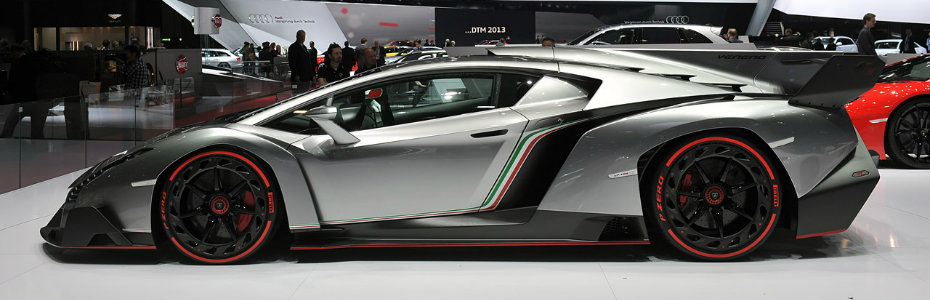
Lamborghini Veneno

Lamborghini's $4 Million Price Tag Veneno, only 3 of these bad boys were produced.

Bentley Motors

Bentley, the Definition of Luxury. What are there more to say?

Porsche 918 Spyder Concept

So, is the 918 Spyder everything it has been hyped up to be? Well, the picture speaks for itself.

Showing posts with label BMW. Show all posts

Monday, March 18, 2013

2013 BMW Alpina B7


For the time being, BMW has left it up to close collaborator Alpina to create a turbocharged V8-powered rival for the Mercedes-Benz S63 AMG and Audi S8. We've been lucky enough to take a few spirited drives in Alpinafied BMWs on the no-limit Autobahns around the company's headquarters in Buchloe, Germany, over the years, and each experience has been solidly hair-raising.

Other than creating what may be the country's ultimate everyday Autobahn missiles, Alpina does wonders for the ride and handling of the BMW models they touch, along with providing impressively reworked transmission interfaces and improved overall responsiveness. In the case of this B7, Alpina turns the 7 Series into the best big Bimmer going.

In the niche of thundering bi-turbo V8 luxury sedans, only this 532-horsepower Alpina B7, 512-hp Audi S8 and the 536-hp Mercedes S63 AMG (563 horses, that is, with the $7,300 AMG Performance Package) really reach this particular level. The $139,625 Porsche Panamera Turbo and the $176,275 Turbo S are both fine rides, but they aren't traditional sedans, and their unusual aesthetics don't always appeal to the buttoned-down execs that buy traditional premium saloons.

It's not surprising that buying either the B7 Bimmer or the S63 Benz will likely set you back some $140,000 to $145,000 once they are spec'd exactly the way you'd want 'em (the SWB-only Audi is a bit cheaper, at about $124k happily optioned). Base price for the Alpina B7 short wheelbase is $127,600 or $131,500 for the long wheelbase model, with a further $3,000 premium for xDrive. Following these, as a curveball, there's the 503-hp Jaguar XJ/XJL Supersport at around $126,000. The US comes closest with its Chrysler 300 SRT8 at 465 hp and a price of $60,000 tops in your driveway. It's like two separate worlds.

We were expecting greatness in our 750Li-based rear-wheel-drive Alpina B7, but it went a bit beyond our expectations. Its overall composure, grace and sophistication, even while in the sportiest of setups, are impressive. The N63B44 4.4-liter twin turbo engine with Valvetronic now pumps forth 540 hp between 5,200 and 6,250 rpm and 538 pound-feet of torque from 2,800 to 5,000 rpm. The pre-facelift B7, you may recall, offered but 493 hp and a "paltry" 516 lb-ft. For shame. Official 0-60 time is now listed at 4.3 seconds, while top speed has jumped from 175 mph in last year's car to 194 mph, a number that we tested ourselves on the latest episode of The List. Take your new B7 to a track with a really long straight; you'll be astounded at the pulling power the V8 pours out right up until the braking point – and the Alpina compound brake set is forever up to the task.

Alpina has done extensive aero work to the standard 7 Series bodyshell for big increases in cooling air flow to the engine and brakes. The whole front chin has been redesigned with larger intakes and each passage ducted to cool one specific portion of this finely tuned high-performance mix.

There is, of course, the reworked engine control electronics. Aside from this mandatory software upgrade, Alpina fits the engine's two turbochargers with larger flow-through turbines that are two millimeters greater in diameter. That seems like little, but, lord, is it much. Our first track session in the B7 happened with expert Andreas Bovensiepen at the wheel. He is now effectively the boss at Alpina, following in his papa's footsteps. Bovensiepen also just happens to be one hell of a track star, having won various GT championship titles. Out on the circuit at Mazda Raceway Laguna Seca, just as a front passenger, we could feel a dramatic improvement versus the stock 750Li. In fact, the B7 already struck us as a finer track car than either the M5 or M6, something we'd bet that BMW doesn't really want to hear. That's particularly impressive considering how much the B7 weighs – models vary between 4,655 pounds up to 5,055 pounds, depending on wheelbase length and whether xDrive is fitted.

Couple this sensation with the fact that the revamped Alpina suspension lowers the car by six-tenths of an inch while also providing a stiffer spring set all around, and some of the improvement starts to makes sense. Even in the B7's firmest Sport+ damper setting, the springs are still surprisingly compliant, while the anti-roll control does its part to keep this big boy on the straight and level in hot corners. Another fine helper? The Michelin Pilot Sport tires – 245/35 ZR21 front, 285/30 ZR21 rear. Again, one would rightly assume that 21-inchers at the corners would make the B7's ride and cabin noise a little too Euro, but that's not the case thanks to Alpina's fine tuning expertise and the fact that they aren't stiff-sidewalled run-flats.

As far as we're aware, Alpina can take the credit for introducing steering-wheel-mounted shifters on a road car, having added the technology way back in 1993. Never content with the clutter caused by having large-enough shift paddles, Alpina uses slick little pushbuttons for swapping cogs in the eight-speed ZF. The hidden switchgear is on the backside of the steering wheel spokes, right for upshift and left for downshift, clean and simple. The custom steering wheel itself is a wonderful piece under all circumstances – steering action is calibrated to be easier than on the standard Bimmer 7 Series while in Comfort/Efficiency mode and heavier than on the series car when in Sport+ mode.

Alpina is also somewhat known for doing swell interiors. We tried both the Alpina B7 and the latest iteration of BMW 7 Series, and the work by Alpina is superior. Other than the terrific new and functional sport steering wheel with Switch-Tronic shifting, the Alpina-specific gauge cluster should be robbed by BMW and used on all of its cars; the current ages-old BMW dial graphics are boring and not as legible.
We're still waiting for BMW's M6 Gran Coupé, which will frankly hold almost no surprises for us. We know we'll generally appreciate it, but it's a derivative of the M5/M6 mix, pure and simple. If you want something utterly distinctive and to stay in a BMW, get the Alpina B7 and enjoy yourself in hot luxury.

Who needs an M7?

Read more by Matt Davis at Autoblog.com

2013 BMW ActiveHybrid 3


The business case is pretty simple: BMW wants a green (or blue, if you like) "liaison" line of models between its standard lineup of cars and the upcoming mega-wow i models. This maximizes choices, fills all niches, and buys time while BMW waits to get those i cars just right before the start of deliveries.

These ActiveHybrid full parallel-hybrid electrics are also acting as the closest BMW can get to its amazing range of turbocharged diesel motors that not enough people want in North America and Asia. In European terms, there is no business case for these hybrid cars apart from curious and cash-heavy early technology adopters, since the EU is awash in BMW's wonderful oil-burners. Those beloved turbocharged diesels would be a far better product in North America and Asia as well, but, hey, let's not get all pipedream-y, now. And, no, we're not trolling here.

So BMW has created a lineup of pretty darn good heavier and pricier models, coining the new brand word ActiveHybrid with versions of the X6, 7 Series, 5 Series and now the 3 Series, called "F30h" internally in this case. The efficiencies gained by this powertrain are fairly good as well, so we'll try tempering our doubts.

Versus the 335i sedan, the ActiveHybrid 3 adds 305 pounds of curb weight for a grand total of 3,860 pounds. Most of that weight increase happens under the trunk floor thanks to the 96-cell lithium-ion battery pack between the rear wheel wells. This changes the fore:aft weight split from 51.5:48.5 percent in the 335i sedan to 49.7:50.3 percent in the ActiveHybrid 3. Seems small to notice, but it does change the comportment of the sedan to a more dynamically neutral feel. We also lose 3.2 cubic feet of trunk space.

While the electrical guts added pump up the curb weight, they also thankfully add some welcome juice to the throttle play. Versus the 302 horsepower and 295 pound-feet of torque of the 335i with the "N55" twin-scroll turbocharged inline six-cylinder engine, the ActiveHybrid 3 adds an electric motor integrated in the housing of the eight-speed Steptronic transmission. This e-motor by itself is good for 54 hp and 155 lb-ft of torque from the moment you graze the pedal. The actual power and torque numbers that result are exactly what we reported for the ActiveHybrid 5 back in January of this year: 335 hp and 332 lb-ft.

At least the ActiveHybrid 3 weighs 505 pounds less than its larger 5 Series sibling and therefore the overall drive experience is more suited to our expectations of a BMW carrying the 35i engine. We require at least a little "ultimate driving machine" in our ultimate driving machine, especially if we're paying a base price on delivery of $50,195 ($7,395 above the 335i) when the ActiveHybrid 3 leaves the lot for home. And the characteristic Liquid Blue metallic paint job that screams "ActiveHybrid"? Costs $550 extra right off the bat. Jet black or Alpine white are the only colors that cost zero dollars.

There are four separate model lines you can choose from to enhance your active hybridization – Sport, Modern, Luxury and M Sport – each of them prettying up both the exterior and interior. Ours was a Sport Line car (add $1,700) that stresses the color red, while Modern goes with shiny chrome details, Luxury with brushed chrome and M Sport runs with blue. Our car also had the no-cost optional 18-inch Streamline design alloy wheels that slightly enhance aerodynamics and brake cooling, plus they look very "AH".

As we said, this 3 Series setup with its ActiveHybrid powertrain and drivetrain is dynamically superior compared to the heavier and larger ActiveHybrid 5, so unless you absolutely need a larger car, stick with this smaller carriage. Besides, it's quicker off the line than its big brother – an estimated 5.2 seconds to 60 miles per hour against the Activehybrid 5's 5.3 seconds. Wow.

About all of the hybrid action that happens is dictated by the attitude you choose for the car through the touchy-feely-sounding Driving Experience Control to the left of the console lever for the eight-speed Steptronic transmission. While in Eco Pro and Comfort modes, the hybrid electric system is showing us everything it is programmed to do, including the standard Stop-Start function at intersections with red lights or in stop-and-go traffic. Once in Sport or Sport+, you in some ways have a heavy BMW 335i Sport Line on your hands, though some energy recuperation for the lithium-ion battery pack still happens as well as other small efficiency moves. And there is still the added boost at take-off of the parallel electric motor.

All else aside, though, this N55 six-cylinder is simply an exceptional motor, and using it as the base material for any car almost automatically makes that car really good. Even with the e-motor and/or N55 engine chiming in seamlessly and often (pure EV driving extends only to 2.5 miles max and at an average speed no greater than 22 mph before the internal combustion engine switches back on), the overall driving comfort of this hybrid design works extremely well. Fuel mileage per gallon with the ActiveHybrid tech on board is said to improve by an average of 25 percent over the stock 335i sedan. The car has an official EPA rating of 25 miles per gallon in the city and 33 on the highway, though, which likely underestimates how it will perform in the real world.

There is also a coasting mode for the drivetrain, a state of forward progress more fanciful companies call 'sailing'. When you let off the throttle on a downhill portion of the highway (only up to 100 mph while operating in Eco Pro mode), the internal combustion engine decouples from the driveshaft to the rear axle and shuts off, thus emitting no pollutants nor slowing the car down via the engine's own friction. It is a very interesting experience watching needles drop to zero. On some of the downhills we were actually gaining speed, so when they say decoupled, they mean it.

All the while, as you play with the various calibrations over different road situations, there is a small blue number readout at the base of the instrument cluster telling you how many "free" miles you are awarding yourself thanks to having bonded with the hybrid system.

Further, as on the ActiveHybrid 5 we tested, when you opt for the $2,150 Navigation Professional onboard system, its intelligent ECU syncs up with the car's ECU, the chief benefit being to chart out the entire mapped route and anticipate hills, descents and curves so as to maximize fuel savings at all times without slowing the journey. This feature also permits a fully accurate, instantaneous recalculation of true range when weighing remaining battery energy in parallel with the fuel supply over the chosen route.

To make certain the ActiveHybrid 3 can be more than just quick in a straight line despite all its green credentials, you can still opt for an M sport suspension calibration, variable sport steering ($1,000 together) and crisper shift mapping with the sport automatic that then gets a dedicated console lever design ($500).

It'll be very interesting to see for how long BMW carries on the ActiveHybrid offerings once plans for the opening salvo of BMW i models are all realized in a few years. That's the challenge with these nonetheless perfectly valid hybrid-electric Bimmers: It feels like a placeholder solution while Munich waits eagerly to start selling the dense i technologies it cares about more. This ActiveHybrid 3 really is as good as BMW needs it to be and, to their credit, they admit that the sales figures sought are "realistic".

A new-gen 330d and 335d would be exceptional, lighter and more efficient. Or even an ActiveHybrid diesel with these. But we'll leave the business case stuff to the experts.

Read more by Matt Davis at Autoblog.com

2013 BMW 750Li


For a while now, the absolute and rather uncontested king of big luxury executive sedan sales worldwide has been the Mercedes-Benz S-Class. Among the obvious competition, there has been an almost unspoken agreement that this is so, and that it shall remain so for our lifetimes. Clearly, this is regardless of the fact that the motoring press – i.e. we the so-called "experts" – have generally preferred this generation of Audi A8/S8, or the sporting BMW 7 Series in its various trims. But hey, what do we know?

Deliveries of this midlife-update BMW 750Li to US dealers began back at the end of September, and we waited deliberately until now to delve deeply into it. Visually, aside from some small aesthetic changes, there is little difference on the surface between this 2013 model and the 2012 model it replaces, the main change being that it gets the latest edition of BMW's iDrive system, which in software terms is version 4.2.

We'll get to that, but there have actually been upgrades to the twin-turbocharged V8 ("N63B44" to those in the know) that renders this big Bimmer more of a sports car in its class, even in the long-wheelbase form tested here. Output is up by over eleven percent to 443 horsepower at 5,500 rpm, torque now stands at 479 pound-feet for a more modest gain of just under seven percent between 2,000 and 4,500 revs. Acceleration to 60 miles per hour is claimed at 4.7 seconds using the eight-speed Steptronic automatic, a time that seems almost freakishly quick for a 4,660-pounder that stretches 17.1 feet from bumper to bumper.

As you have likely already assumed, our test car arrived fairly well stuffed with performance, aesthetic, comfort and convenience options, taking the ultimate sticker price a few thousand north of the $100k mark. This sort of pricing is fairly common at this tier, whether you want this rear-wheel-drive 750Li with its $3,300 M Sport Package, a Mercedes S550, Jaguar XJL Supercharged, Audi A8L 4.0 TFSI, or (for a little bit less) Lexus LS460 F Sport. Every single one of these models is very well executed and intensely interesting in its own right, but there's still something special about the Bavarian.

The interior is very nice on this 750Li, and the M Sport touches add some welcome attitude and tactile surfaces. The changes all work well with the car's most aggressive drive attitude, achievable through the Driving Dynamics Control on the center console. Go for Sport or Sport+, and the M-wearing 750Li gets pleasantly hungry in its throttle mapping, steering calibration and shift times. Our tester was also supplied with options like Integral Active Steering ($1,750) and Active Roll Stabilization ($2,500), assuring that our drive experience on California's finest sunny and dry roads was going to be entertaining.

Like all of the latest high-end onboard infotainment suites, iDrive 4.2 is all about ridiculous levels of connectivity, 3D graphics aplenty, choosing the most efficient route to the charcuterie shop and much wider use of the handy pie-style menus. The iDrive interface and functionality have come light years since that fateful September 2001 day in Frankfurt, when the new 7 Series was revealed with the groundbreaking, all-in-one controller for the first time. That first generation was one of the most hated devices ever seen in a new automobile, and the Chris Bangle design didn't exactly come in for a lot of praise at the time, either.

By comparison – and thanks to other manufacturers' systems like Audi's MMI that showed how to do the central control knob scheme better – today's BMW iDrive can duke it out with the absolute best. (Are you listening, Cadillac CUE?) A particular favorite feature of ours is the progressive quality of the 3D graphics when approaching a destination, usually in a city setting. Get within several blocks of where you're headed and the screen offers a street-level point-of-view in enlightening detail. This is a very helpful advancement of the already full-featured tech on board.

As this sort of long-wheelbase 7 Series frequently doubles as a mobile office, it's a good development that the frontiers of voice recognition and dictation are becoming so advanced. There is full-sync connectivity onboard for two smartphones as well, so not only the boss can stay connected and hands-free. BMW Apps subscriptions make sure the car's ConnectDrive capabilities actually enhance and outstrip those of your smartphone. Voice recognition software can quickly identify and adapt to six different languages, among them English and Spanish, of course. The editing tools via voice control can also help you perfect any text message or email before sending.

Back to the driving, though. With the main screen and the instrument cluster both displaying what mode the standard electronic damping system was set to, it was easy to keep tabs on the Dynamic Drive Control's mood. It was also easy to appreciate our tester's 20-inch Pirelli P Zero tires (245/40 R20 front, 275/35 R20 rear), which jacketed a handsome set of optional $1,300 twin-spoke M-specific alloys. With the Active Roll Control system governing the dynamic anti-roll bars to level out the corners, good handling was all but assured, but we were pleased that the 20-inch tire option didn't translate into a lot of extra road noise in the cabin. The added sound deadener in the middle and rear pillars, as well as the beefed-up window seals that are new to this midlife update all do their part to make sure peace is maintained inside.

Between the newly added Eco Pro powertrain mode and a new coasting mode while off-throttle between 30 and 100 mph, the Valvetronic-equipped V8 is said to be 25 percent more efficient than last year's model. The EPA sets 2013 city/highway ratings at 16 miles per gallon and 24 mpg, respectively, with a total range from the 21.1-gallon tank of 400 miles when driving the 750Li with restraint – something we found difficult on California's excellent roads.

This updated 2013 7 Series is more than equipped to win the proud Number Two rank in this class. An executive desiring this ride is likely to be more sport image-oriented than the comfort and luxo-liner reputation of the Mercedes S-Class, a positioning that suits us well. So, BMW is fine with the silver trophy... and we do love 7 Series. But then again, Mercedes is set to unveil an all-new S-Class sometime this auto show season, and the Audi A8 keeps getting better and better, too. It's an increasingly difficult scrap in the premium saloon boardroom, and continued fortifications like this mid-cycle updo are going to be necessary to keep BMW in the hunt.

Read more by Matt Davis at Autoblog.com

Tuesday, March 12, 2013

2013 BMW 1 Series


What's New for 2013

The 2013 BMW 128i and 135i are essentially unchanged and receive increased standard equipment and shuffle packages and options. In lieu of the now discontinued 1 Series M, BMW has introduced the 135is trim to either coupe or convertible models.

Introduction

Not even BMW has been immune from the automotive industry's current trend of each model-year's successor creeping, growing or inflating nearly to the size of the next-larger class. That's why the 2013 BMW 1 Series is such a gem; at about the size of the original 3 Series, the coupe or convertible 1 Series just might be the last BMW that still upholds the nimble characteristics that once defined the entire BMW brand.

Under the hood there is more proof that the 1 Series is a genuine BMW. With the same superb set of inline-6 engines as the BMW 3 Series, the thrills are there for the taking. Transmission choices are also first-rate, with a choice of a six-speed manual, six-speed automatic or a sophisticated seven-speed dual-clutch automated manual.

While Americans are still getting used to the idea of premium-branded compact cars, there's growing support for buying small, but buying well. The 2013 BMW 1 Series might seem expensive when compared to a Hyundai Genesis Coupe or 2013 Nissan 370Z, especially if you tick each of the option packages. But if you think of the 1 Series as the only rear-wheel-drive compact from Europe, then it begins to look rather exceptional.

Still, you owe it to yourself to cross-shop a few other coupe/convertible models before making such a big decision. Consider an all-wheel-drive Audi TT, a front-drive Mini Cooper, and even flex a little American muscle with a Chevy Camaro, Dodge Challenger or Ford Mustang. Compared to any of the above, we think you'll sense the extraordinary quality and dynamism of the 1 Series.

Body Styles, Trim Levels, and Options

The 2013 BMW 1 Series comes in two-door coupe or convertible body styles, both of which are available in 128i, 135i and 135is configurations.

The 128i comes equipped with 17-inch wheels, automatic headlights, foglights, rain-sensing wipers, cruise control, eight-way manual front seats, a tilt-and-telescoping steering wheel, premium vinyl upholstery, dual-zone automatic climate control and a 10-speaker sound system with a CD player, HD radio, a USB/iPod interface and an auxiliary audio jack. The 128i convertible adds different-style wheels, a fully lined power-folding soft top and a special convertible mode for the climate control.

Aside from its more powerful turbocharged engine, the 135i adds a sport-tuned suspension, 18-inch wheels, eight-way power front seats, adaptive xenon headlights, an aerodynamic kit, and (on the coupe) a sunroof. The top-tier 135is further benefits from a yet more powerful turbocharged engine, sport front seats, a sport steering wheel with paddle shifters (when ordered with an automatic transmission) and specialized exterior and interior trim.

The Premium package adds keyless ignition/entry, auto-dimming mirrors, interior ambient lighting, satellite radio, leather seating, and to the otherwise lacking 128i coupe, it further adds the 135's power front seats and a sunroof. When the 128i is ordered with the Premium package, adaptive xenon headlights with auto-leveling are available.

The 128i and 135i Cold Weather packages include a heated steering wheel and front seats. The 128i and 135i M Sport packages essentially mimic the extra features that are standard on the 135is.

Finally, the Technology packages adds to all trim levels a navigation system, BMW Apps with online information services, smartphone integration, voice commands and BMW Assist (concierge).

Unbundled, stand-alone options available on all trims include rear parking sensors, automatic high-beams, BMW Assist and a Harman Kardon surround audio system. For the 135i and 135is, BMW's variable-ratio active steering is available.

Powertrains and Performance

The rear-wheel-drive BMW 1 Series offers a choice of three different 3.0-liter inline-6 engines. The naturally aspirated 128i produces 230 horsepower and 200 pound-feet of torque. A six-speed manual transmission is standard and a six-speed automatic transmission is optional. In Edmunds performance testing, a manual-equipped 128i coupe sprinted from zero to 60 mph in 5.9 seconds. A convertible (300 pounds heavier), also with a manual transmission, posted a 6.7-second time. EPA-estimated fuel economy for the 128i coupe is 18 mpg city/28 mpg highway and 22 mpg combined regardless of transmission. The 128i convertible earns 18/27/21 with the automatic and 19/28/22 with the manual transmission, however.

The 135i's turbocharged inline-6 engine produces 300 hp and 300 lb-ft of torque. A six-speed manual transmission is standard and a seven-speed dual-clutch automated manual transmission (known as DCT) is optional. In our testing, a 135i coupe with the manual transmission sprinted to 60 mph from a standstill in an impressively quick 5 seconds flat and 5.5 seconds for a convertible. However, that number rose to 6.2 seconds for a 135i with DCT. EPA-estimated fuel economy is actually better than the 128i's, achieving 20 mpg city/28 mpg highway/23 mpg combined with the manual and 18/25/21 with the automated manual transmission. The manual-equipped convertible gets 19/28/22.

The new-for-2013 135is has a modified version of the 135i's engine that produces 320 hp and 317 lb-ft of torque. Though we've yet to test it, we suspect it will easily run to 60 mph in under 5 seconds when equipped with the manual transmission. The seven-speed DCT is also available.

Safety

Antilock disc brakes (with brake drying and standby feature), traction and stability control and hill-start assist for manual-equipped cars are all standard on the 2013 BMW 1 Series. Front-seat side airbags and full-length side curtain airbags are standard on the coupe; convertibles come equipped with front-seat side airbags that extend higher to protect occupants' heads. The convertible also features pop-up rollover hoops.

In Edmunds brake testing, a 128i convertible stopped from 60 mph in 115 feet. However, a 135i Coupe with the standard 18-inch wheels and summer tires came to a stop from 60 mph in an excellent 107 feet.
Interior Design and Special Features

The interior of the 1 Series is generally competitive with its rivals in terms of materials quality. Although there are still more hard plastics than we'd like in a BMW, the optional aluminum or wood trim dress things up a bit.

Most of the controls are straight out of the standard BMW playbook and are easy to use. The base seats are notably lacking in support given this car's performance potential, so we strongly recommend anteing up for the M Sport package and its superb, manually adjustable sport seats that some say are better than the power sport seats. The convertible's optional sun-reflective leather seating does a remarkable job of keeping your butt from roasting.

Although the subcompact BMW 1 Series is technically a four-seater, the rear seats are significantly smaller than those in the 3 Series coupe, so they're best left to cargo or those of smaller stature. The coupe's decent-sized trunk holds 13 cubic feet of luggage; in the convertible, there are 8.5 cubes left over when the top is stowed.

Read more at Edmunds

Monday, March 11, 2013

BMW 1 Series with B38 three-cylinder engine


The red five-door BMW 1 Series seen in this photo gallery has little to do with what is actually of importance here. What we've just tested at an airfield not far from Munich, Germany, is a new 1.5-liter TwinPower Turbo inline three-cylinder gas engine that we'll be hearing an awful lot about in the coming few years.

This engine, codenamed B38, made its public debut in the well-received Concept Active Tourer at the 2012 Paris Motor Show, alongside other BMW innovations that were tucked into the CAT. Besides this new Efficient Dynamics engine clan of three-, four-, and six-cylinder units thus launched, the CAT uses a front-wheel-drive chassis, and is a plug-in hybrid electric. That's a lot of fresh tech in a small space. And, oh yes, the CAT is an MPV.

But let's focus on driving this B38 amongst the well-laid-out cones. There will no doubt be a few three-cylinder capacities eventually created – a 1.2-liter is in the works as well – but it is this 1.5-liter that will be most involved in the BMW Group's small capacity revolution. On this roughly 3,000-pound 1 Series prototype, the initial output of this single twin-scroll turbo-fed triple is quoted at 175 horsepower at 5,000 rpm, plus 200 pound-feet of torque starting at 1,500 rpm. The BMW experts on hand say the prototype can hit 62 miles per hour (100 kmh) in 7.0 seconds.

The tech approach here is reliant on a couple of issues. First, for this B38 and the almost identical B37 diesel version, the magic capacity is 500cc per cylinder. The other issue regards abandoning the stratified part of stratified direct fuel injection.

A cylinder capacity of 500cc, according to BMW engineers' detailed matrices and explanations, is the happy medium if we want the maximum in both sound and low vibrations together with greater efficiency, reduced mechanical friction and fewer parts with lower mass. And BMW's messaging with this new engine philosophy clearly shows a 3.0-liter inline six-cylinder simply being sliced into two halves to create this three-cylinder.

Getting rid of the technical bell-and-whistle of stratifying your direct-injected fuel means that these engines will be able to deal with all of the less pure blends of unleaded that pour from the pumps in countries like Russia, China and the United States. So the business case clearly calls for these various three-cylinder powerplants to eventually replace a few of BMW's existing four-cylinders on a global basis.

We took a few laps of the setup course in this rear-wheel drive hatchback, trying various calibrations of the throttle, gearshifts, and so on. The first thing that became apparent is that BMW has been working hard on making this three-cylinder still sound like a Bimmer that BMW fans would happily buy instead of a cracking four-pot. Engineers on hand wouldn't go into exactly what has been done with the manifold or pipes, but the prototype sounded really fine to us. And two- and three-cylinder engines definitely have their own alto/baritone note. Add the twin-scroll turbo cranking up to 14.5 PSI of boost pressure, and all we can say is that the sound is uniquely pleasing.

Another issue, especially with three-cylinders, is vibration mainly from fore-aft jiggling along the axis of the cylinder bank and crankshaft. This can also sometimes create an almost pleasing massage for the feet and butt, but you really don't want this going on. The engineers in this case have designed a counter-spinning balance shaft that passes through the crankcase beneath the crankshaft. It works and the engine proved smooth and responsive throughout all the types of driving we experienced.

Read more by Matt Davis at Autoblog.com

2012 BMW M6 Convertible


The new BMW M6, and to an even greater extent this M6 Convertible, often causes automotive apoplexy in your typical armchair motoring enthusiast. That's because as soon as the M badge is applied to any BMW, all sorts of expectations are heaped upon it. Mostly those entail remembering what we, collectively, loved about the E30 M3, the E28 M5 and to a lesser extent, the E24 M6. Then cue bemoaning the added weight, complexity and unasked-for modernity of the new M.

Of course, those perceived infractions are all tantamount to treason for lovers of BMW history, but they're also critical elements of building a new, safe, stunningly competent luxury car that real buyers in the segment will take seriously. And the really good news is that, despite the sheer bulk, turbocharged engines, the continued existence of iDrive and a lack of manual transmissions, cars like this 2012 M6 Convertible are – shock, horror – far better overall than their storied precursors.

Let us immediately jump into defending that last statement, lest we be pilloried into early retirement by our razor-tongued commentariat. There are two real missions for this M6 droptop: go really, really fast, and make your driver look and feel like a million bucks. The convertible even more than the coupe, is meant to be a special-occasion car; where the occasion in question is a grand touring road trip more often than a day at the track, for instance. On these fronts, the 2012 version of the M car is far better off than was its ancestor, which was objectively slower and less richly appointed.

Whether or not the M6 Convertible rises to the level of "specialness" required from a visual standpoint is truly an open question. This is an unmistakably large vehicle, especially for a 2+2 that isn't overly endowed in the rear-seat quarters. An impossibly long hood, aggressively raked windscreen and longish rear overhang all cause the body to appear about 50-feet long (especially in profile). The M-spec body kit, most notably its front fascia, makes the 6 Series seem more aggressive, certainly, but not more beautiful in our opinion. The standard 650i convertible is such an arrow-straight, thin-hipped thing that the M6 treatment almost causes the car to seem cartoonish from some angles – albeit in a particularly brutal and fast kind of a way. Frankly, if we were judging by sheetmetal alone, we'd take any one of the Mercedes-Benz, Porsche or Jaguar competitors here.

Inside the cabin is a totally different story, however, as BMW has created a space that is at once lovely, useful and utterly rich. There's no question that the driver's seat is the best in the house, especially with the M-specific three-spoke steering wheel to hang on to. The rim offers a pleasant thickness while still having a great open space at top to see the gauges through. Leather here, and everywhere one can touch, is soft with nice graining. Not a single driver control feels anything less than well weighted, solidly constructed or elegantly designed for its task. A massive 10.2-inch display dominates the forward-center view, and it proved very readable in the shifting light as we drove with the top down.

In fact, the only luxury that was noticeably absent from this M6 interior was that of excess space. The front seats are incredibly supportive and malleable, but they're also quite large. A driver taller than six-feet, two-inches (your author included) will find just enough leg and elbow room to feel comfortable behind the wheel, and will never sit quite low enough behind that windscreen header to get truly tucked in. And, of course, if your big-and-tall driver is behind the wheel, any useable space for the seat behind him disappears but quick. The four-place BMW may boast more room than aPorsche 911 Cabriolet, for instance, but it's not a long-range tourer for four adults. Two grownups will find the trip very nice though, and very fast if need be.

This is a large car. It has a high curb weight (4,508 pounds) and impressive dimensions for both length and width (193 inches and 75.6 inches, respectively). But putting all of that bulk in quick context is the brain-busting power of BMW's 4.4-liter TwinPower Turbo V8. A very likely underrated 560 horsepower and 500 pound-feet of torque move this big convertible forward with alacrity that belies its size, and in a manner that most certainly calls into question BMW's stated 0-60 time of 4.2 seconds. (The well-respected testers at Car and Driver saw 60 mph in four seconds flat, for instance.) Further, even if BMW's official figures were true, the character with which the M6 gets up and goes – its mentally quick power delivery and exotic exhaust wail causes one to be a pretty happy camper. We like the engine... is that clear?

Read more by Seyth Miersma at Autoblog.com