TwitterFacebookGoogle PlusLinkedInRSS FeedEmail

Koenigsegg - Performance

When we speak performances, nothing would represent the word "PERFORMANCE" better than any Koenigsegg.

Benz McLaren

Mercedes-Benz - Made In German, the parents to the Silver Arrow McLaren.

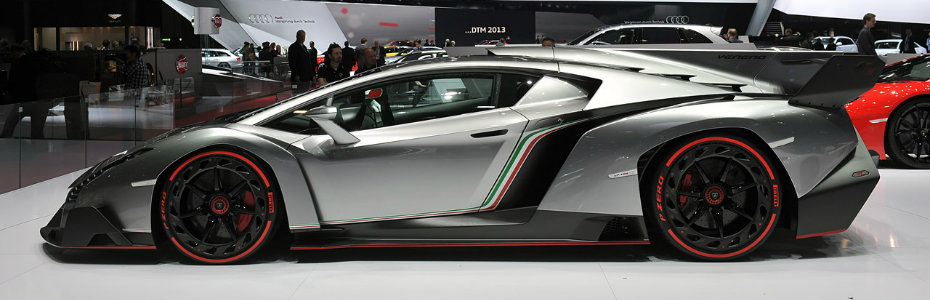
Lamborghini Veneno

Lamborghini's $4 Million Price Tag Veneno, only 3 of these bad boys were produced.

Bentley Motors

Bentley, the Definition of Luxury. What are there more to say?

Porsche 918 Spyder Concept

So, is the 918 Spyder everything it has been hyped up to be? Well, the picture speaks for itself.

Showing posts with label SUV. Show all posts

Monday, March 18, 2013

2013 Porsche Cayenne S Diesel


Not so long ago, our Michael Harley drove the Porsche Cayenne Diesel up in flannel-lovin' Alaska, and he returned home safely from that expedition pretty well convinced that Porsche knows how to create a really heavy, mountain-topping 4x4. In fact, since the test for the first generation of the Cayenne Diesel back in 2008, it's been clear: The diesel version of the Spice Islands Porsche is among its very best.

I'm not taking away from the spectacularity of the latest Turbo S or GTS Cayennes, but when it comes to traditional 4x4 duties, a gnarly turbodiesel's progressive power delivery and spitting torque make for great satisfaction. And a 4.2-liter biturbo V8 diesel is just bound to do something right for you. Cue this drive of the Cayenne S Diesel.

Over the standard Cayenne Diesel, the S's horsepower is up by 137, torque is up by 221 pound-feet, and straight-line oil-burning acceleration to 60 miles per hour requires just 5.6 seconds, maybe less. For this additional chutzpah, you'd be staring at a window sticker with a starting price of around $71,500, or just over 25-percent more than seen on the monroney for the S-less Cayenne Diesel Michael left in Alaska.

If, that is, the Cayenne S Diesel was destined for the US, which it sadly is not.

Driving Notes

- Whether you really like or really hate the Cayenne, I have to say that since the first-generation packaging got itself fully sorted around 2006, this interior is about the most robust and finely crafted cabin in the automotive business. Not a flabby or overstuffed anything in sight, though; it's all muscle with an undeniable sense of premium quality.

- Check out the exhaust tips to hear the voice of the Cayenne S Diesel. As one Cayenne team member asked us, "It's not at all like a diesel, is it?" And it's almost entirely true that there's almost no hint of a diesel mill under the hood. Blipping the throttle and accelerating hard stresses this point even further. Pretty impressive.

- Whereas for the most part the exterior still gives me troubles, from certain angles, this thing looks pretty incredible. The front three-quarter view is the best angle on the Cayenne, while I feel the rear three-quarter could also be as great if it weren't for the taillight design on this generation.

- The 377 horsepower peaking at 3,750 rpm is impressive, but it's the towering 627 pound-feet of torque punching things forward between 2,000 and 2,750 rpm (almost all of it available from 1,650 rpm) that can separate my retinas.

- A 4,400-rpm redline is a reality on this 4.2-liter V8 biturbo diesel. That rev limit is no limitation at all, though, as far as holding the throttle in a given gear for a long time.

- The eight-speed Tiptronic S transmission's action and the Porsche Traction Management chassis has reached near perfection here. The half-step gears here help smooth things while also improving fuel efficiency for cruising.

- Despite this storm of energy and the vehicle's 5,005-pound curb weight, this SUV can easily return an average of 25 miles per gallon.

- The performance figures for this Cayenne S Diesel are well beyond the thrills experienced in the already good V6 diesel. Punching the throttle is simply vicious in the midrange.

- Recommended braked towing weight remains 7,700 pounds. It feels like the Cayenne S Diesel would prefer five passengers and about 12,000 pounds to tow. Uphill.

- European deliveries of this exceptional tank begin before the end of the year. Russia is foreseen as a huge market. What a surprise.

Read more by Matt Davis at Autoblog.com

2013 Dodge Durango R/T


Not too long ago, Chevrolet got itself into some trouble by throwing the SS badge on just about everything it produced, so I've always been a little hesitant about the seemingly excessive use of the R/T nameplate on Dodge vehicles. For the 2013 model year, practically every model in Dodge's lineup has an R/T trim level from the Avenger all the way up to the Durango. Although the R/T name used to signified models made for road and track, I doubt anyone would be delusional enough to assume the Durango – and some of the other models wearing this badge – are suited for any sort of track duty.

Still, when this 2013 Dodge Durango R/T rolled up for me to drive for the week, I couldn't help but take in its big, mean and imposing stance. Sure, if I had my choice of buying any of the Dodge R/T products, the Charger and Challenger would be my top picks for sure, but it's easy to say that the Durango would be a close third – far above the R/T versions of the Avenger, Journey and Grand Caravan.

Driving Notes

- Not that the current Durango was a bad-looking SUV to begin with, but the R/T package gives it more aggressive styling thanks to a monochromatic look. With the removal of just about all the chrome that comes on a Durango, this tester even looked good in what would normally be a boring shade of silver thanks to the body-colored front fascia, smoked headlights, 20-inch wheels and the sporty-looking rear fascia with dual exhaust outlets.

- The styling might be there to back up the badge, but there is no extra power under the hood of the R/T. In possibly one of the best moves Dodge made with this particular model, the only engine offered is the 5.7-liter Hemi V8. The 360-horsepower, 390 pound-feet of torque engine feels adequate perfectly for this 5,331-pound utility. This is the only model of the Durango lineup that comes standard with the six-speed automatic transmission, too.

- Fuel economy is about what you'd expect from a V8-powered SUV weighing as much as the Durango does, with EPA estimates of 13 miles per gallon in the city and 20 mpg on the highway. During my week with the R/T, this tester returned 15.5 mpg.

- The Hemi is equipped with cylinder deactivation, which feels clunky at times when it switches from V8 to V4 power, with an ever-so-slight delay when the cylinders reengage once again. The only bypass for the system is just to be sure that you're right foot stays planted whenever possible.

- Chrysler says the Durango R/T comes with a sport suspension, but aside from the bigger standard wheels, I felt no difference between this and any other Durango I've driven in the past. If you're really looking for a sporty, family-sized (three-row) SUV, you're probably going to want to check out the new Explorer Sport.

- The best part of the Durango R/T might be its exhaust system. Yes, the dual pipes poking through the rear fascia give it an aftermarket look, but it's the exhaust note that makes the R/T thrilling. Dodge gave the Durango R/T unique mufflers, pipes and resonators for a deep, throaty note, which makes the package a little more distinctive.

- Similar to the exterior styling, the R/T's interior has a sportier look and feel with plenty of red accents on the standard black leather throughout the cabin. This particular model came with the center-row captain seats limiting the overall seating capacity to just six, but it made accessing the third-row seat much easier. Not surprisingly, as the innovator of third-row seating for non-fullsize SUVs, the Durango's rearmost accommodations are spacious enough for two adults and can also fold completely flat quickly and easily.

- The R/T trim level sits just under the Citadel as the top Durango model, and as such, it isn't a cheap SUV. Starting at $35,995 in base form, this all-wheel-drive 2013 Durango R/T was optioned up quite impressively, bringing with it a hefty as-tested price of $45,360.

- What you get for that high price, though, is plenty of optional goodies including leather-wrapped door panels, heated steering wheel, heated and ventilated front seats, adaptive cruise control and Chrysler's Uconnect navigation system. This test vehicle may very well have been completely fully loaded, and while it'd be a hard financial pill to swallow, it's certainly easy enough to option rivals to the same level.

- Yes, the third-gen Durango is no longer body on frame, but proving that it hasn't completely lost touch with its SUV roots, the Durango is still rear-wheel drive in base form, even though it's now competing against a newer breed of three-row utilities like the Chevy Traverse, Nissan Pathfinder and the Ford Explorer. Unlike its corporate cousin, the Jeep Grand Cherokee, the Durango is not offered with a multi-mode off-road system, but it did handle itself quite well while driving on the loose sand of a northeast Florida beach.

Read more by Jeffrey N. Ross at Autoblog.com

2014 Jeep Grand Cherokee SRT


We'll start with the styling. "Aggressive" is the word that best describes the 2014 Jeep Grand Cherokee SRT, from its massive 20-inch wheels – a different pattern than last year's controversial "Spider Monkey" alloys is now available – wrapped in Pirelli P-Zero P295/45/ZR20 tires (Pirelli Scorpion Verde all-seasons are also available) to the unique blacked-out front fascia dominated by Jeep's traditional seven-slat grille. Viewed in profile, there aren't too many clues to the casual onlooker, besides the massive wheels, of course, that this isn't your average SUV. But look a little closer and you'll see details like blacked-out headlight clusters with LED surrounds and a deeply scooped hood with functional heat extractors – telltale signs that this mule is built to haul.

Even if you happen to be behind this brutish 'ute, it will be impossible to miss Jeep's SRT – if the unique rear fascia doesn't tip you off, the rumble emanating from the dual exhaust tips is sure to seal the deal. The soundtrack belted out by the massive 6.4-liter Hemi V8 will stir the souls of all those enamored with big displacement and natural aspiration – you can count us among that group – just as surely as it will irritate your grandparents on long highway slogs.

If nothing else, looking at and listening to the Jeep Grand Cherokee SRT proves that SRT CEO Ralph Gilles isn't just blowing smoke when he says that the brand is "Unapologetically selling high performance."
It's also worth noting that the rear glass is no longer separate from the rest of the tailgate. Jeep says the change makes the piece lighter while improving rear visibility. That's all true, but the ability to stick long objects out the back without a fully erect lid is now lost, though that may at least partially be forgiven since the tailgate is now power operated.

The look inside the cabin has also been fine-tuned for performance drivers. Carbon fiber trim replaces the wood accents found in less powerful Grand Cherokee models, and the so-called Laguna leather and suede seating surfaces are nice and grippy. New for the model year is a dual-pane panoramic sunroof option. Oh, don't forget the bright red engine start/stop button. Racy!

SRT's new-for-2014 steering wheel deserves mention. According to Gilles, the automaker purchased wheels of high-performance models hailing from the likes of Audi, BMW and Porsche to make sure its wheel, one of the most tactile parts of the driving experience, is truly world class. As far as we're concerned, SRT has nailed it – the wheel is nice and meaty where your hands want to rest, and the buttons and controls don't get in the way while driving. Similarly, the big metal paddle shifters on either side of the wheel are easy to locate and feel good to the touch.

Along with the new transmission comes a new shifter. Shaped like a traditional T, the lever is now fully electronic, with separate detents when moving from Park to Reverse, Neutral or Drive. As with all such doohickeys, this one takes some time getting comfortable with, but it eventually becomes a non-issue. Directly behind the shifter is a rotating knob with settings labeled Track, Sport, Auto, Snow and Tow, and just to the right of that is a button labeled Launch. We'll talk more about these bits and pieces later.

The biggest changes to the interior are the new 8.4-inch Uconnect central infotainment system, of which many Autoblog staffers voted tops in its category when it won the AOL Technology of the Year Award for 2012, and the seven-inch customizable display in the gauge cluster.

For the 2014 model year, Chrysler is introducing Uconnect Access Via Mobile, which includes navigation and apps like Aha Radio, Pandora, iHeart Radio and Slacker, plus safety features that include an embedded cellular chip that can contact emergency services; remotely lock, unlock or start the car; and alert the owner of a possible theft.

The entire Uconnect system can now be activated using voice commands, from switching radio stations, changing climate settings, answering or making phone calls or calling upon the cloud using Bing search for directions, places of interest or phone numbers. Drivers can also send and receive text messages if they have connected their phone via Bluetooth.

Since this is an SRT model, the center screen also displays performance data. For instance, the driver can call upon a series of gauges to monitor the vehicle's vital signs, a graphic display of the car showing the g-forces from every direction, lap times or current and best acceleration and braking figures.

Directly in front of the driver is a new seven-inch instrument cluster screen that can electronically display things like the car's speed, current powertrain and suspension settings, trip information, fuel economy, radio settings and plenty more.

Now that we're familiar with our surroundings, it's finally time to hit that big red button to start the engine.

You might think that driving the 2014 Grand Cherokee SRT is all about the engine... and you wouldn't necessarily be wrong. The grunt underhood does indeed dominate the driving experience, and we mean that in the best way possible. Acceleration from a dead stop is effortless up to freeway speeds and beyond, though you won't be lighting up the rear tires as with other products from SRT. Instead, instant all-wheel-drive traction is the name of the game, and holeshot starts are as easy as touching the Launch button we mentioned earlier.

One press puts the car into a predetermined mode that optimizes everything for straight-line acceleration. The suspension hunkers down, the transmission goes into its sportiest programming mode and the engine settles into a 2,000-rpm hum. Let your foot off the brake while mashing the throttle, and you'll be to 60 mph in well under five seconds, each and every time, so long as you're not driving on something as slick as snow, mud, snot or marbles.

Assuming you're interested in more than just pin-your-passengers-back antics, we suggest you investigate the dial to the right of the Launch button. If you're driving at a track, there's a dedicated mode that takes as many of the electronic nannies away as Jeep's engineers felt was safe, including the removal of anything that would take full power away from the engine, along with a torque split that sends 70 percent to the rear tires. There's still roll mitigation and some small level of traction control, however, and that's likely a good thing for everyone but professional race car drivers.

Sport mode adds some of those failsafe features back into the mix, but still allows enough wheelspin to make an aggressive driver feel fast while still being under control with a 65-percent rearward torque bias. This is probably where you'll want to keep the knob pointed on the street. Auto mode is self explanatory, as are Snow and Tow, but you may be interested to know that Auto provides the cushiest ride while Snow and Tow modes lock the torque distribution at 50/50 front to rear.

We already talked a bit about how the eight-speed transmission improves performance, but it's also worth mentioning that the gearbox now includes rev matching, meaning the throttle is automatically blipped when downshifting for smoother and quicker shifting. All in, Jeep says its test drivers shaved six-tenths of a second off their lap times due to the upgraded transmission at Nelson Ledges Road Course in Ohio. That's a massive improvement when talking all-out hot laps.

Braking performance is also very good. Jeep quotes a stopping distance of 116 feet from 60 mph along with a 0-100-0 time of 16.3 seconds. We were only given the opportunity to take the SRT around COTA for two laps at a time, so we can't say if brake fade will be a significant issue. We can say, though, that the 15-inch rotors with six-piston Brembo calipers at the front and 13.78-inch rotors with four-piston Brembo calipers stopped the heavy SUV with authority over the course of our track time, limited as it was.

Steering the Grand Cherokee SRT, we were reminded how polished the final generation of hydraulic power steering systems have been... because this Jeep is still fitted with one in lieu of the electronic units that are becoming commonplace. As such, you won't find driver adjustable steering feel or any changes in ratio, which is locked in at 17.5:1. That's just fine and dandy, though, because the settings chosen by SRT's engineers for the rack-and-pinion work perfectly well.

Read more by Jeremy Korzeniewski at Autoblog.com

2014 Jeep Grand Cherokee EcoDiesel


Jeep has got you covered. We can say this without even having to know what it is you want, because there's hardly an option or configuration that you won't find in the 2014 Grand Cherokee. There are three different engines, three different four-wheel-drive systems (plus rear-wheel drive), four different trim levels – not counting SRT – two different suspension setups and five different settings for various off-road terrain conditions. If you happen to check the box for Quadra-Lift, you'll also have five different ride-height settings for the driver-selectable air suspension.

As you might expect with so many customization possibilities, the way a buyer checks the options sheet can have a profound effect on the final product and its capabilities, to say nothing of its price. Nowhere is that more true than with the Grand Cherokee's choice of engines, with the brand-new 3.0-liter EcoDiesel V6 stealing the spotlight from the still excellent gasoline-fueled 3.6-liter Pentastar V6 and 5.7-liter Hemi V8 powerplants that carry over from last year. No matter which engine you choose, though, it will be paired up with Jeep's new standard eight-speed automatic transmission from ZF. This, ladies and gentlemen, is very good news indeed.

We took to the ranch lands surrounding Austin, Texas at Jeep's invitation to put the 2014 Grand Cherokee through its paces, both on road and off. Read on for our initial report card.

Before we get to the 2014 Grand Cherokee's slightly revised styling, let's break down the most salient reasons why the new diesel engine is so important for Jeep. First, with 240 horsepower and 420 pound-feet of torque, this oil-burning mill, which is manufactured in Italy by well-known supplier VM Motori, has the guts needed to get the Grand going in fine fashion. The fact that it does so with minimal sound intrusion, no in-cabin rattling or shaking to speak of and instantaneous startup thanks to new ceramic glow plugs is icing on the cake. And the cherry on top? Up to 30 miles per gallon on the highway – 28 with four-wheel drive.

Just as impressively, the new Grand Cherokee EcoDiesel has earned city ratings of 22 mpg with rear-wheel drive or 21 with power to all four wheels. Real-world mileage should prove to be the best of any off-road capable luxury SUV in the world – when switching from the Hemi to the diesel on back-to-back driving loops, our average mpg jumped from 14 to 24. A full tank of fuel will enable the Jeep to travel a whopping 730 miles before requiring a refill, and both oil changes and urea refills should be about 10,000 miles apart.

Opting for the diesel won't bring any compromises in utility, either. Both the V8 and EcoDiesel models can tow up to 7,400 pounds (four-wheel drive drops all ratings by 200 lbs, and the the V6 manages up to 6,200), and while acceleration from the oil-burner may not match that of the Hemi and its 360 hp and 390 lb-ft, it's certainly no slouch. It's also worth mentioning that the base gasoline V6 engine is perfectly adequate as well, with the eight-speed making the most of the Pentastar's 290 hp and 260 lb-ft.

Naturally, there's a dollars-and-cents penalty for all that diesel-fied performance, and we'll get to that a little later. Suffice it to say, though, that we're smitten with the engine/transmission combo and would have to think twice, and maybe even a third time, before buying a Grand Cherokee without it.

Now that the engine talk is over (for now), let's talk style. The Grand Cherokee is available in four different trim levels. In order of price, they are Laredo, Limited, Overland and Summit, which is standard with just about everything and new for 2014.

No matter which model you choose, all of Jeep's traditional elements are here, including the seven-slat grille and squared-off wheel arches, but it's all been smoothed out a bit for the new year. The grille itself has shrunk in height, as have the headlamps, which now feature LED elements. At the rear, the tailgate is now one piece – no more separate opening for the glass – and there's a new aerodynamic spoiler at the top and larger taillamp clusters on each side. The changes are indeed subtle, but they're enough to make the 2014 model stand apart from the 2013.

Each individual trim level gets unique exterior bits. Laredo models come with a body-color grille, side mirrors, door handles and chrome headlight trim. The lower cladding is dark gray. Seventeen-inch wheels come standard, and 18-inchers are optional. At the rear, a lone exhaust outlet peeks through the lower valance.

Limited models step up the style game with chrome grille slot frames, side mirrors and door handles. LED lighting elements are optional. More chrome surrounds the lower fascia up front, and dual exhausts add some flair to the rear. Standard wheels are 18-inch satin chrome alloys and polished 20-inchers are optional.

Step up to the Overland model and you're rewarded with standard LED lighting, chrome tow hooks and body-color trim all around that replaces the dark gray. Wheels are standard 20-inch five spokes, polished with mineral gray highlights. The top-of-the-line Summit model gets a lot of unique detailing that includes chrome mesh grilles, a larger front bumper, body-color wheel arch moldings and contrasting dark gray rocker moldings with chrome trim, rectangular exhaust openings and unique satin clear coat wheels measuring 20-inches in diameter.

Inside, Jeep has added a dual-pane sunroof that it's calling CommandView (oh, how they love their marketing monikers...) on the Overland and Summit machines, with the more traditional single-panel sunroof offered on Laredo. Limited models can be optioned with either sunroof.

More interestingly, Jeep's designers have created different interior color and trim treatments for each model level. Laredo and Limited models were "inspired by the cultures and environments of Morocco and New Zealand." The Jeep Brown and Indigo Blue scheme of the Overland was "inspired by the blue-hued dark gray walls of Mount Vesuvius" while the Jeep Brown and Light Frost motif was "derived from the geographic diversity found in the Asian country of Nepal. Summit models come in either black or Jeep Brown with copper accents, inspired by the Grand Canyon and seen in our gallery of images.

Overland and Summit models step up their game with open-pore wood in a differing shades, which we greatly prefer over the high-gloss lacquered pieces more common in the auto industry, and the Summit goes one step further still with an Alcantara-like material covering the A-pillars and headliner. The overall interior ambience changes between all of the available models, and, plain-Jane Laredo aside, they all look and feel like premium spaces with a clear design direction.

All models offer up 35.1 cubic feet of space behind the rear seats, or 68.7 cubes with those seats folded down. More from the measuring tape: you'll find 40.3 inches of legroom up front and 38.6 in the rear between its 114.8-inch wheelbase. You won't find a third row of seats in the Grand Cherokee, so if your clan is larger than five, you'll have to look elsewhere.

Tech-junkies will be happy to note that the 2014 Grand Cherokee is the first Jeep vehicle offered with Chrysler's latest Uconnect Access system. An embedded cellular chip allows remote connectivity from the road for safety purposes, such as to contact 911 or remotely lock or unlock the vehicle, and a mobile app can be used with a smartphone or tablet for a number of unique uses. Voice commands are new for 2014 and can be used to operate the navigation system or any number of apps like Pandora, iHeart Radio and Slacker. Users can also send and receive text messages or use their new Grand Cherokee as a wireless hot spot.

Besides price, if there's any real drawback to offering such technology and its attendant 8.4-inch screen, it's that models without the equipment are forced to fill that space with a smaller five-inch touchscreen and plenty of plastic trim that doesn't exactly scream "premium."

Our advice is to get the Uconnect system to go along with the seven-inch LCD set into the gauge cluster directly in front of the driver. Between the two screens, the Grand Cherokee can display a huge amount of data to its occupants, from the current configuration of the four-wheel-drive system to the car's ride height, navigation or radio information. There are also screens to help the driver track the car's off-road capabilities, showing such useful information as the angle of its front wheels or the current articulation of its suspension.

We took the Grand Cherokee off the beaten path a few times and consistently came away with the feeling that there probably isn't a more capable sport utility vehicle on the market today, save Jeep's own Wrangler and possibly something from Land Rover. With the Quadra-Lift air suspension in its uppermost setting, there's 11.3 inches of ground clearance to go along with a 35.8-inch approach angle, a 29.6-inch departure angle and 23.5-degree breakover angle. Said another way, there are very few situations likely to be encountered by a properly equipped 2014 Grand Cherokee driver that they won't have the ability to conquer, including passage of the famed Rubicon Trail.

Making life easier on the driver is Jeep's Selec-Terrain traction control system with factory predetermined settings for sand, mud, snow or rock crawling. Auto mode can be used the rest of the time, and a Sport mode can be selected from the shift lever.

Three different four-wheel-drive technologies exist that make off-roading a safer and more enjoyable experience. Quadra-Trac I is the base system, and it's always engaged with no input from the driver. There's no low range for serious off-road work, and the Selec-Terrain knob isn't included. Stepping up to Quadra-Trac II adds a two-speed transfer case and the traction control dial, and the system is smart enough to send up to 100 percent of torque to whichever axle has the most traction. The top-level Quadra-Drive system is even smarter, being able to send all available torque to whichever individual wheel has the best traction. Low range for both Quadra-named packages is improved for 2014, boasting a crawl ratio of 44.1:1 as compared to the last generation's 30.2:1 ratio.

Read more by Jeremy Korzeniewski at Autoblog.com

Sunday, March 17, 2013

2013 Land Rover Range Rover Sport


Truth be told, I have always considered the Range Rover Sport to be something of a poseur in the Land Rover lineup, but there's one big reason this SUV is so popular in chic cities like New York and Miami – it has the boxy, instantly recognizable looks of a classic Range Rover but with a sportier demeanor. In fact, if sister marque Jaguar ever does get around to building an SUV (as has been rumored for years), I have the feeling it will have the ride quality, performance and handling similar to the Range Rover Sport, albeit with a greater on-road emphasis.

Coming in at just under $80,000, the 2013 Land Rover Range Rover Sport is no easy financial pill to swallow, but even now, with its replacement waiting just off-stage, it's just hard to say anything that bad about an SUV that is equal parts off-road, luxury and performance. Land Rover has kept the Sport fresh with a mess of small tweaks (new wheel and interior color options, etc.), and we thought spending a week with this generation would be a fine sendoff before the all-new 2014 model arrives.

Driving Notes

- First and foremost, the performance of the Range Rover Sport Supercharged is a result of the supercharged 5.0-liter V8 under the hood cranking out 510 horsepower and 461 pound-feet of torque. That's enough power to get this almost-three-ton SUV to accelerate from 0-60 in just 5.9 seconds, which is not too far off the pace from a Porsche Cayenne S. Moving that kind of mass takes a lot of fuel, and the engine isn't afraid to suck down the octane – I averaged just over 11 mpg for the week in mostly city driving.

- My biggest disappointment with this Range Rover was how flat and uninspiring the exhaust note sounded (especially knowing how great the supercharged Jags sound using the same engine).

- It's very unlikely you're going to see a Range Rover Sport tackling any serious trails, but that's not because it can't. While most Range Rover Sport owners likely consider off-roading to consist of splashing through big puddles in NYC or kicking up sand blown onto Miami Beach's Ocean Drive, the Sport is no less capable off-road than its brethren thanks to its height-adjustable suspension and Terrain Response System. There's even an off-road screen that lets the driver know the articulation of each wheel, whether the differentials are locked and the angle of the front tires.

- Terrain Response takes the guesswork out of off-road driving by providing five simple modes that are all accessible at the push of a button (yes, the days of locking hubs and manual transfer cases are long gone for most modern off-roaders). Purists might take issue with this system – or similar ones used by Jeep and Ford – but it's hard to argue with the simplicity and user-friendliness that Terrain Response provides. Most of the Terrain Response settings are there to make off-roading easier, but the Range Rover Sport also comes with a Dynamic mode that tightens up the steering, throttle and transmission for a sportier feel.

- Most of the time while driving the Sport, every bit of its weight and size is felt –especially when it comes to fuel economy – but I was surprised on numerous occasions by its small turning radius. At a local parking lot where some smaller sedans require a three-point maneuver for turning around, the Range Rover Sport managed the deed in one fluid motion. Another time while testing the off-road capabilities in loose sand, the tight turning radius again came in handy as I was able to confidently make some sharp turns without slowing down or stopping – very important when driving in loose terrain such as sand or snow.

- Maybe it's the fact that I now live in Florida and have no need for a heated windshield, but my biggest pet peeve about current Jaguar and Land Rover vehicles is the tiny wires that run through the windshield for the heating elements. They are just small enough not to obstruct the driver's view but are also noticeable enough to be annoyingly distracting – especially at night when bright headlights are approaching. It's been years since I've had to worry about clearing thick ice from a windshield, so I'm not doubting this is a useful tool for owners in the North, but these thin, squiggly lines can sometimes be a distraction. Perhaps it should be an option.

- Speaking of distractions, one of my favorites on the Range Rover Sport comes courtesy of the $1,200 Vision Assist Package, which adds a five-camera view around the vehicle. In theory, this is an excellent tool for off-road driving as it allows you to see nearby obstacles without actually having to get out of the car, but for some reason, the cameras operate at any speed, making for a pretty tempting distraction while driving.

- An interesting part of the Range Rover Sport's design is that its instrument panel is actually positioned above the hood giving a commanding view of the road. Even with the seat in its lowest setting, I still felt like I was sitting up way too high. But this, along with Rover's relatively narrow window pillars, actually provided for excellent visibility while driving, a remnant of Land Rover's obsession with off-roading, where it's important to know exactly what immediately surrounds your vehicle.

- In most of these pictures, I photographed this tester's air suspension in Access suspension setting to give it a lowered look, but its main purpose is to making ingress and egress easier. For optimal off-roading, the air suspension can also be raised (as seen above), giving it ample ground clearance. The vehicle automatically reverts to normal ride height when speed tops 30 miles per hour.

Read more by Jeffrey N. Ross at Autoblog.com

2013 Infiniti FX37


There's something in the water at Nissan. Has to be. There's no other explanation for a company that produces vehicles like the Murano CrossCabriolet and Juke as well as the undeniably bonkers GT-R. Infiniti hasn't escaped whatever's lurking in the well, either. The company's recent shift from a comfortable and logical naming structure to a slurry of Q-based monikers is the most recent example of insanity lurking in the luxury automaker's halls, but it certainly isn't the first. Take, for example, the FX50.

With its 390-horsepower V8 engine and a rear-bias all-wheel-drive platform, the mid-sized SUV is more sports car than family hatchback, and while a V8 in this segment is entirely ludicrous, it's also the engine option we preferred over the less-throaty 3.5-liter V6. Like nearly every other off-tilt offering from Nissan, the FX50 simply made sense in a too-much-whiskey kind of way. But Infiniti has just offered up the best argument yet against that muscle-bound bruiser in the form of the FX37. Powered by the automaker's new 3.7-liter V6 and backed by a recognizably aggressive exterior, the machine is doing a good job of stealing its older brother's spotlight.

Infiniti left the FX largely untouched aesthetically for 2013, and we can't fault its designers for the decision. The model received a full update in 2012, and the SUV continues to look sharp with its judicious use of chrome. While the rounded front-end and pinched grille give the nose a touch of the bulbousness found on the QX56, we can't get enough of the raised fenders and inset hood. Attractive headlight arrays and an aggressive, arched roofline give the FX plenty of style. Around back, the handsome LED tail lamps lend the hatch a glowering, furrowed-brow appearance, which is appropriate for a machine that spits over 300 horsepower out to the rear tires.

Inside, the cabin feels comfortably Infiniti with the driver treated to bold gauges and nicely bolstered front seats. We couldn't help but feel age wearing on the tech inside the FX37, however. With a small, single-color LCD screen nestled between the speedometer and the tachometer and the same old inelegant graphic interface on the eight-inch touchscreen positioned mid-dash, Infiniti has suddenly found itself behind the curve. We live in a time where Dodge Dart buyers can enjoy nicer tech, and that's an issue for a pricey luxury SUV.

The front seats hold fast to the notion that this is a G37 that hasn't quite realized it's lugging around a serious derrière, and the back bench serves up adequate space for hopping to the next town over. Leg space can be a bit cramped for anyone approaching six feet tall, and that attractive, sloping roof line will introduce lofty hairstyles to the headliner with a quickness, but the space is a perfect place for kids and older teens to spend time. That is, so long as everyone packs frugally. There isn't a preponderance of space behind the back seats, with just 24.8 cubic feet available with the rear bench in place. For comparison, the figure is just one cube more than what's available in the diminutive Ford Focus five-door.

Likewise, the back hatch is troubled by what has to be one of the most cumbersome cargo covers on the market. We can count the number of times on two fingers that we've been frustrated to physical violence by a new vehicle, and this cargo cover earned itself one of those digits. We don't talk about the other incident.

Fortunately, the FX37 can quickly help you forget about its less-than-stellar attributes. Plop a heel on the right pedal and the 3.7-liter V6 under the hood sends 325 horsepower coursing through a seven-speed automatic transmission to the rear wheels. With 267 pound-feet of torque available at 5,200 rpm, the engine develops a full 22 hp and 2 lb-ft of torque more than the outgoing V6, and since the new 3.7-liter unit will happily wind all the way to 7,500 rpm, there's plenty of thrust to be had. The SUV feels quick, popping off of stop lights and building steam in a delicious linear swell that's come to be the VQ engine family's calling card.

Traction control keeps the party from getting too sideways too quickly – you can feel the electronics rapping your knuckles any time you get frisky with the throttle. But that doesn't exactly dilute the playful rear-wheel-drive dynamics on the FX37. The vehicle still encourages you to get out and drive, unlike nearly anything else in the bloated luxury SUV/CUV amalgam, and the modest nudge in horsepower provides a serious kick in the seat-of-the-pants dyno.

With a fairly quick steering rack and capable brakes, the FX37 will paint a smile on your face if you let it, and while the tall ride height can't help but serve up a bit of body roll, the engineers at Infiniti have done an impressive job of keeping every one of the five-door's 4,209 pounds in check. The seven-speed automatic also delivers quick downshifts when necessary and remains unobtrusive in normal driving, serving up smooth transitions between its numerous gears.

According to the Environmental Protection Agency, the 2013 FX37 should yield 17 mpg city and 24 mpg highway, which is a nudge of 1 mpg highway over the old 3.5-liter V6. We observed just over 17 mpg in town and during a few aggressive back-road sprints. Those numbers won't win you any friends among the Prius set, but they do land in the neighborhood of the luxury ute's competitive set. While the BMW X3 xDrive 35i offers buyers just 300 hp compared to the 325 of the FX37, the German SUV returns 19 mpg city and 25 mpg highway. Both machines require premium fuel.

Our tester was gussied up to $57,828, including a $760 destination fee, though the 2013 Infiniti FX37 can be had for $44,950. Adding in the $4,300 Premium Package with its navigation, voice recognition and around-view monitor, as well as the $3,300 Deluxe Touring Package and the $2,950 Technology Package, meant our FX was as loaded as they come in rear-drive trim. (If you're curious, the AWD FX37 adds $1,500 to the starting price.)

Yes, the FX37 has its shortcomings, but it makes up for those with a bold exterior, well-executed cabin and suitably luxurious drivetrain. While back seat and cargo space leave something to be desired, we love the way the FX37 drives with its powerful engine and smooth transmission. It makes us wonder if there's any reason to consider the FX50 at all.

Read more by Zach Bowman at Autoblog.com

Tuesday, March 12, 2013

2014 Subaru Forester XT


The Forester does quite a bit of heavy lifting for Subaru. What was once a plucky little all-wheel-drive utility box has matured into a competitive crossover that accounts for a quarter of the company's total sales in the US. With those numbers continuing to swell even in the third generation's twilight hours, engineers and designers found themselves in the unenviable position of being asked to fix what ain't broke. Rather than reinvent the company's workhorse from the ground up, as we say in our first look at the CUV, Subaru honed the Forester to offer better fuel efficiency, more usable space and a more refined drive.

In doing so, the automaker hopes to toe that delicate line between luring in new devotees to the cult of Pleiades and keeping the brand's longtime fans smiling. While the fourth-generation Forester may have lost some of its trademark pluckiness in the pursuit of a more mainstream existence, there's no denying this is a more sorted vehicle than its predecessors. Make no mistake, the 2014 Forester is keen to carve out a larger chunk of the ever-plumping CUV market for itself, and for the first time in its history, it has the muscle to do so.

The 2014 Subaru Forester is larger in every direction compared to the 2013 model, but familiar proportions help keep the new generation from looking engorged. Taken on its own, the Japanese CUV looks fairly compact, but with its tall ride height and more capacious greenhouse, the model can't help but appear beefier than competitors like the Chevrolet Equinox, Honda CR-V and Mazda CX-5. Both the base Forester and the XT now feature more squared-off styling front and rear, and the result is a more masculine mini SUV.

Subaru wanted to help separate the turbocharged XT model from its naturally aspirated littermates aesthetically, which helps explain the Gundam lower fascia up front. There's no calling the machine's lower maw subtle, but the look is more subdued in the flesh. Longtime XT fans will spot the unfortunate omission of the model's trademark hood scoop – a casualty in the quest for greater fuel efficiency through reduced drag. While the forced-induction four-cylinder still makes use of a top-mount intercooler, the heat exchanger is now fed through a bit of clever duct work snugged to the underside of the hood that draws air from the grille opening.

Combined with a new teardrop roofline, the scoop delete helps return a drag coefficient of just .33. The number is one of the best in the segment and marks a 10.8-percent improvement over the 2013 model, but we still miss the option of vacuuming up squirrels, birds, small children and other foolhardy varmints.

If the Forester shows its new girth anywhere, it's in profile. The new generation is 1.5 inches longer than the outgoing model, complete with an extra inch of wheelbase. There's also an additional 1.4 inches of total height, thanks in part to a larger greenhouse. Designers shifted the A-pillar forward slightly for greater visibility and larger door openings, and under a close eye, the CUV can't help but appear a bit bubble-headed. We appreciate the new roof-to-belly doors that cover the vehicle's sills, however. Anyone who's come away from a previous-generation Forester with mud or snowy slush on their pant legs will agree the design change is a good one.

Inside, the 2014 Forester doesn't exactly offer buyers any great leap forward in comfort or convenience, though a number of small changes help make the cabin a nicer place to spend time. Those start with larger door openings all around, which help make jumping behind the wheel or wrangling children into the back seat easier. Up front, designers have ditched the old square cup holders for round units, and the seat warmer controls have finally migrated to a usable position on the center console. We can't say thank you enough for that last maneuver. With an extra 0.4 inches of vehicle width and redesigned, scalloped door panels, occupants get an extra 1.3 inches of shoulder room, too, which helps make the Forester feel larger inside than it actually is.

But it's the back seat that's received the most attention. Subaru has worked to make the 2014 Forester more kid friendly than its old counterpart, with tricks like a transmission tunnel that's nearly three inches lower than before. Likewise, the center console has been shortened by four inches to afford the center seat more legroom, and the back cupholders have moved from the bench seat itself to the fold-down armrest. The change allows children in car seats to easily reach cups or toys and makes the center seat itself more livable. Most importantly, the 2014 model delivers an extra 3.7 inches of rear legroom over the 2013 Forester, effectively making the back seat genuinely usable for adults and children alike for the first time in the model's history.

Engineers spent plenty of time tweaking the vehicle's drivetrain as well. While lower trims make use of the same 2.5-liter dual-overhead cam boxer four-cylinder engine that debuted on the 2013 model, the XT now benefits from a turbocharged, direct-injection 2.0-liter flat four. The forced-induction mill is based on the same platform as the engine that propels the company's BRZ, but engineers assure us the setup won't fit into the rear-wheel-drive coupe's engine bay. Clearly, they've never handled a reciprocating saw.

The base engine continues to deliver 170 horsepower at 5,800 rpm and 174 pound-feet of torque at 4,100 rpm, but the new beating heart behind the XT puts out 250 horses from 5,600 rpm and 258 lb-ft of torque from a foolishly low 2,000 rpm. That's a jump of 26 hp and 32 lb-ft of torque over the outgoing turbocharged 2.5-liter engine. While the base 2014 Forester gets to enjoy an all-new six-speed manual transmission, as well as a new continuously variable transmission option, the XT rides with an all-new high-torque CVT of its own. The new transmissions translate into some impressive fuel economy figures, with the base model returning 24 miles per gallon city and 32 mpg highway by Subaru estimations (the EPA has yet to officially weigh in). The XT, meanwhile, now meets the 2013 base model's numbers with 23 mpg city and 28 mpg highway, and the turbo no longer requires premium fuel. Those are impressive numbers considering the Forester comes standard with all-wheel drive.

Read more by Zach Bowman at Autoblog.com

Monday, March 11, 2013

2013 Land Rover LR2


Brands like Jeep, Land Rover and General Motors' now-defunctHummer all come from rich military backgrounds, with their forebearers having proven their ability to tackle just about any terrain, from desert to jungle. Each has faced the difficult challenge of evolving from battle-tested off-road vehicles to civilian-ready status symbols. For Land Rover, which is arguably to New York City and Miami what the Toyota Prius is to Los Angeles, this is especially true. Yet even so, the British automaker still relies on rugged capability to sell products ranging from Range Rovers with six-figure price tags right on down to the LR2 shown here.

Positioned in a class full of vehicles with nicknames like "cute ute" and "soft roader," the 2013 LR2 – known as Freelander 2 in other markets – stands out even more for its respectable off-road abilities in spite of its car-based underpinnings, so Land Rover has focused its attention on refining its entry-level product as a midcycle refresh for 2013. The 2013 Land Rover LR2 still rides on the provenFord/Volvo EUCD chassis also shared with the Range Rover Evoque, and rather than killing off the existing model when its sleeker, more street-minded relative arrived, Land Rover has done just the opposite, incorporating most of the technology developed for the Evoque into the 2013 LR2.

So how successful has Land Rover been at improving the finer aspects of its gateway model without messing up the off-road ruggedness that defines its brand as a whole? We spent a cold, snowy day near Montreal testing the limits of this baby Land Rover to find out.

Now aimed at more traditional buyers who shy away from the avante-garde Evoque, the 2013 LR2 carries an old-school, boxy design broadly similar to the iconic Range Rover. Much like the styling updates made to the LR2 in 2009, the differences incorporated into the 2013 model might only be noticeable to keen eyes. The most obvious elements are fresh headlights with unique new LED running lamps, and taillights with dual light pods that resemble figure-eights when illuminated. A must-have for any midcycle update for new models these days, the LR2 also gets a restyled front fascia and fresh wheel options. Considering this design is going on seven years old, we think Land Rover has done a fine job of preventing the LR2 from looking boring or dated.

As much as the boxy exterior can get away with mimicking the classic lines of Range Rovers of yore, the interior is by far the LR2's biggest downfall. We realize Land Rover might be going for a simple yet chic look inside the LR2, but the instrument panel is deeply dated – this even factors in despite all of the changes, including an updated center stack, gauge cluster and center console. Our biggest gripe about the LR2 overall might be the seating position for the front and rear seating. Land Rover is pushing a command seating position for the front occupants and a stadium-style view for the rear passengers, but it ends up feeling like you're sitting too high inside the vehicle – especially true for the driver's seat, which can only be lowered to a point that still feels unnecessarily high. Such a lofty perch might be advantageous for visibility when negotiating objects off-road, but in day-to-day driving, it feels unnecessarily tippy.

Once you overlook the aesthetic issues of the LR2's cabin, then you can really start to enjoy what the LR2 offers, ranging from top-notch materials to updated technology. The chunky Terrain Response knob has now been replaced by simpler buttons (takethat Jeep Grand Cherokee and Ford Explorer), and the gauge cluster is now cleaner, with a more informative five-inch display centrally located. Another new feature is the standard seven-inch touchscreen display with Land Rover's optional new "Say What You See" voice-controlled navigation system, as well as an interesting take on the maybe-soon-to-be-standard rearview camera. Most backup cameras have trajectory lines that bend when you turn the wheel or weird boxes, but the LR2's optional camera displays a single line in the middle that it calls Hitch Assist, which is aptly named to help make hooking up to a trailer easier. We're not sure how many LR2 owners will be towing trailers, but this is a practical idea nonetheless.

Speaking of towing, the new LR2 is still able to tow the same 3,500 pounds as the outgoing model, despite now coming standard with a smaller engine. Smaller, yes, but in in no way less powerful or less capable. Land Rover has ditched the heavy, Volvo-sourced 3.2-liter inline six-cylinder engine and replaced it with a lighter and more powerful turbocharged 2.0-liter inline four found in the Evoque. This Ford-sourced unit is effectively the EcoBoost engine found in various places in the Blue Oval kingdom. The deletion of two cylinders also helps drop 88 pounds from the LR2's curb weight while adding 10 horsepower for a total of 240 and 16 pound-feet of torque (250 lb-ft) to the LR2's spec sheet.

Read more by Jeffey N. Ross at Autoblog.com