TwitterFacebookGoogle PlusLinkedInRSS FeedEmail

Koenigsegg - Performance

When we speak performances, nothing would represent the word "PERFORMANCE" better than any Koenigsegg.

Benz McLaren

Mercedes-Benz - Made In German, the parents to the Silver Arrow McLaren.

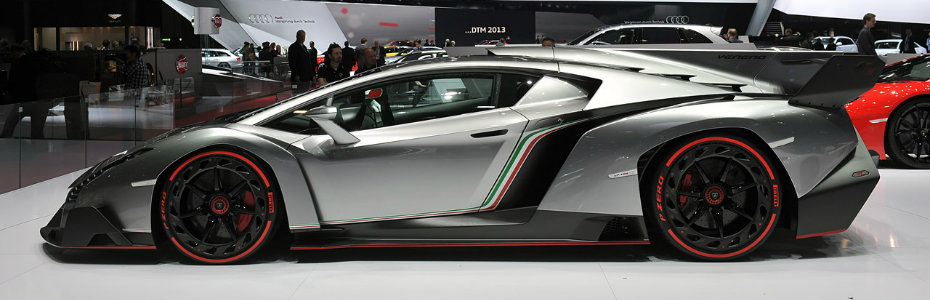
Lamborghini Veneno

Lamborghini's $4 Million Price Tag Veneno, only 3 of these bad boys were produced.

Bentley Motors

Bentley, the Definition of Luxury. What are there more to say?

Porsche 918 Spyder Concept

So, is the 918 Spyder everything it has been hyped up to be? Well, the picture speaks for itself.

Showing posts with label Mini. Show all posts

Monday, March 18, 2013

2014 Mini John Cooper Works GP


About three weeks prior to this brief yet balls-to-the-wall drive on the Spanish island of Mallorca, I saw that Mini USA announced pricing for the keenly anticipated Mini John Copper Works GP. And that number would be – *a-hem* – $39,950 for starters.

I am always intent upon finding the pinnacle of what a certain car promises me, and almost at any cost. Almost. When I think "steaming hatchback," I think of something exactly like this Mini GP, and the steep price doesn't squelch my pleasure. They're only building 2,000 of them anyway, and the units coming to the US will start arriving in owners' hands on March 16 of next year. These buyers will be extremely happy and remorse-free.

Five scorched laps at the very Mini-perfect Circuito Mallorca RennArena showed me all.

Driving Notes

- To me, the previous Mini JCW GP edition (the one I'm driving here is referred to by the development team as the "Mk II") came off as one of those well-meant but less-than-satisfying brand exercises – too soft and not separated enough from the stock JCW hatch.

- The 211 horsepower from the 1.6-liter turbocharged four-cylinder are just three horses better than the $30,800 standard Mini John Cooper Works, and the 207 pound-feet of overboost torque between 2,000 and 5,100 rpm remains the same.

- The claimed 165 pounds shaved off, adjustable coil-over competition-grade dampers, 17-inch high performance (and not run-flat) Kumho Ecsta tires on lighter dedicated alloys, sturdy cross-brace where the rear seats used to be, sport brake system and GP aero pieces all have their desired effect on the hottest Mini two-door.

- Acceleration is now estimated at 6.3 seconds to 62 mph (i.e. 100 kmh) and top speed is let out to 150 mph.

- I talked in the pit area prior to my laps with Mini GP head of development Jörg Weidinger and asked him point blank if this GP was a soft porker like the first one. He assured me that, no, this one was the real deal. He says the adjustable suspension is extraordinary on this edition and both wheel camber and toe-in front and rear have been radically adjusted to improve turn-in response and straight-line thrust.

- Latched in to the GP's cabin, I felt right at home and eagerly awaited my laps. Mini chose to have the laps policed by one of their champion Mini Challenge drivers from Germany in his own Challenge car, and it was just me and Racer Boy out there.

- I obediently performed Lap One at about eight-tenths and did the responsible display to one and all that safety comes first and I was not out there to race. I was already reminded again why I love this six-speed Getrag manual shifter so damned much.

- Laps Two through Four turned into a downright Mini Challenge race weekend. The boy in front of me was good and I was sure he wasn't giving it his absolute all, but we were certifiably rocketing along. In some ways, I can see that dynamically the GP street car is better than even the Challenge car. This setup is killer.

- Each time we passed the main straight and headed into two speed-shaving hairpins that fed us into a fantastic long and drawn-out descending right-hander at full throttle, nothing I felt made me think Mini could have done better than this.

- All of the chassis notes engineer Weidinger shared with me in the pits came true under pressure: There is a near total lack of understeer, and the hook-up and Velcro-like adherence of the Kumho tires is incredibly liberating. Losing the run-flats makes a huge difference.

- Heel-and-toeing is the order of the day and Mini knows about pedal placement. The coil-overs, too, are remarkable. I was cutting apexes immediately and with greater gusto on each successive lap. Coming down off the apex and back onto tarmac caused no jitter, no slide, and I didn't need to let up at all.

- The braking sections was where I got severe sphincter-pucker behind my German pal in the Challenge car, but the damned things kept on successfully reeling in all my straight-line enthusiasm.

- It's always difficult for me to tell whether or not all the aero dolling-up is actually helping me with downforce into curves or with neutral resistance on the straights. Some of the treatment seems a bit cosmetic.

My conclusion after this brief spin? We finally have a proper Mini GP car, kids. All of the tweaks do a soon-to-be-famous Mini make. It's no longer just a mild brand exercise.

Read more by Matt Davis at Autoblog.com

Sunday, March 17, 2013

2014 Mini John Cooper Works Paceman All4


It needs to be said: Mini using the Countryman as their World Rally Championship racer's bodystyle of choice has done them no favors on the marketing front. And that's what it's all about in motorsports these days: marketing and image. We have just driven the 2014 Mini John Cooper Works Paceman All4 through Frankfurt's surrounding rural areas, and even in thick snow where few souls dared to tread, it has singularly rekindled some faith in the John Cooper Works sub-brand – a glorious name whose credibility has been threatened by portly and somewhat pointless products like the JCW Countryman.

The JCW Paceman is a little quicker than its Countryman relative, a little lighter, hunkered down lower, and better looking. We can't say we're crazy anymore about the stock Chili Red details and black exterior they keep showing us at these launches, but that's just paint. Then there's that projected pricing of $36k-plus that puts us on the verge of yelling "¡No mas!" But the All4 system on our 215-horsepower Paceman worked extremely well when paired with a set of exceptional Pirelli Sottozero Winter 210 Serie II tires (sized 205/55 R17 91H all around). The combination of all-wheel drive and good rubber encouraged us to gradually up the average speed and enthusiasm the further we drove along.

And the JCW hunkers four-tenths of an inch lower on its standard sport-tuned dampers and springs. This is just the start of why the hip point and yaw point – and all those other points – render the Paceman JCW's driving so satisfying. Whereas the electro-assisted steering on some of the lower-slung Minis has suffered slightly since the very first incarnations of those models, the Paceman seems to work with it. We were forcing oversteer coming into several of the day's curves, and the steering and sheer physics of the chassis readily obliged. Just get your inner ear in sync with the 3,252-pounder's lateral momentum and you're golden. The odd center handbrake is calibrated not to really snap the car around at will, but we learned to muscle it and deal with the onboard chorus of chimes warning us that we were using the handbrake as a handbrake.

We didn't miss the optional Aisin six-speed automatic – in our book, it utterly defeats the purpose of JCW models – instead revelling in the heightened driving engagement and enjoyment of the manual. On our German jaunt, the six-speed Getrag stick proved to be a terrific tool for negotiating great slippery curves with heel-and-toe grace.

Then there's the sort of sporty Sport button. In this case, steering effort thickens, the exhaust crackles and pops when you lift off the gas, and the throttle itself tightens its sinews a bit. All of which is fine by us; toying with the suspension any more would hurt the car's balance. So, it's essentially an emotion button, and in that sense it does as much as the company ever promises it'll do. Mini has utterly nailed the JCW Paceman's sport exhaust – it adds just the right rally-highlight-film atmosphere.

A caveat: The regular Paceman comes standard everywhere outside North America with the lower and more rigid sport suspension, while ours is the only continent that goes against the grain and selects the comfort setup. Given our journalistic desire for all Minis to be dynamics powerhouses, the sport suspension is the only way to go, so thank heavens that JCW Minis cannot opt for the comfort chassis.

As on the JCW Countryman, this Paceman gets the uprated 1.6-liter turbocharged four-cylinder with 215 horsepower and 207 pound-feet of popping torque. Tapping into the overboost mode that provides 221 lb-ft between 2,100 and 4,500 rpm almost happens too readily when one's foot is on the floor. In fact, we did it often, if only to be bathed in the exhaust's crackling backdraft upon lifting said foot from said floor. Like the Sport button, the overboost is one more "fun" function that at least has the practical application of easing the overtaking of white-knuckled Swabians on snow days.

Inside, Mini has taken to oversaturating its opulent sea of plastics with chili red detailing and more oodles of sporty cuteness. Yes, all is functional, and we are very happy with the window switches now being located on the doors, but the factory-installed pimping kitsch has got to reach a limit at some point, no? We want a stripper JCW, and we don't mean a GP edition, which has its own particular strain of kitsch going on.

We will go out on a limb and say that dynamically this Paceman is one of the better JCW treatments, judging from our vigorous test drive in Germany's deserted winter hinterlands. Yet the monster trucklette arrives this month just in time for winter to melt away. Sort of a pity, that.

Thankfully, our few stints on the no-snow-drift Autobahn showed us that the hottest Paceman acquits itself nicely under everyday interstate-style cruising. Of course, we liberally explored the 127-mph top speed on the no-limit portions, but the versatile 1.6-liter turbocharged engine can average around 85 mph over long distances and feel right at home, too. Being on the 17-inch wintry Pirellis instead of the 18-inch standard run-flats proved to be a major bonus. That their more pliable sidewalls and compound would help curb impact noise and harshness was to be expected, but what we didn't foresee was their better directional stability.

After a hard day of driving, we came away authentically surprised at how much we enjoyed this hot edition of the seventh Mini. Now, if Oxford and Munich had only used this Paceman bodywork for their WRC effort instead of the Countryman tubster, perhaps they wouldn't have exited rally racing after only one year.

Read more by Matt Davis at Autoblog.com