TwitterFacebookGoogle PlusLinkedInRSS FeedEmail

Koenigsegg - Performance

When we speak performances, nothing would represent the word "PERFORMANCE" better than any Koenigsegg.

Benz McLaren

Mercedes-Benz - Made In German, the parents to the Silver Arrow McLaren.

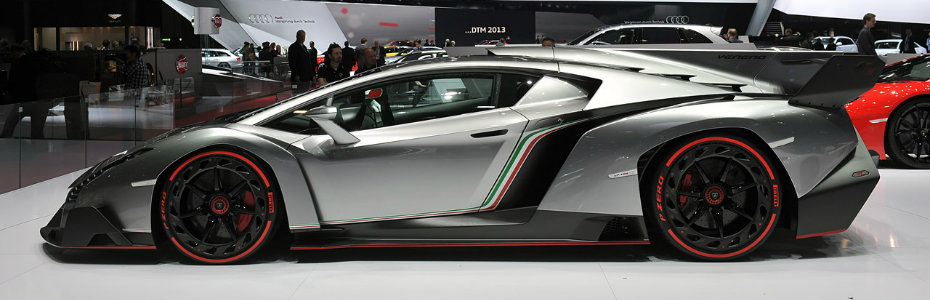
Lamborghini Veneno

Lamborghini's $4 Million Price Tag Veneno, only 3 of these bad boys were produced.

Bentley Motors

Bentley, the Definition of Luxury. What are there more to say?

Porsche 918 Spyder Concept

So, is the 918 Spyder everything it has been hyped up to be? Well, the picture speaks for itself.

Showing posts with label Porsche. Show all posts

Monday, March 18, 2013

2013 Porsche Cayenne S Diesel


Not so long ago, our Michael Harley drove the Porsche Cayenne Diesel up in flannel-lovin' Alaska, and he returned home safely from that expedition pretty well convinced that Porsche knows how to create a really heavy, mountain-topping 4x4. In fact, since the test for the first generation of the Cayenne Diesel back in 2008, it's been clear: The diesel version of the Spice Islands Porsche is among its very best.

I'm not taking away from the spectacularity of the latest Turbo S or GTS Cayennes, but when it comes to traditional 4x4 duties, a gnarly turbodiesel's progressive power delivery and spitting torque make for great satisfaction. And a 4.2-liter biturbo V8 diesel is just bound to do something right for you. Cue this drive of the Cayenne S Diesel.

Over the standard Cayenne Diesel, the S's horsepower is up by 137, torque is up by 221 pound-feet, and straight-line oil-burning acceleration to 60 miles per hour requires just 5.6 seconds, maybe less. For this additional chutzpah, you'd be staring at a window sticker with a starting price of around $71,500, or just over 25-percent more than seen on the monroney for the S-less Cayenne Diesel Michael left in Alaska.

If, that is, the Cayenne S Diesel was destined for the US, which it sadly is not.

Driving Notes

- Whether you really like or really hate the Cayenne, I have to say that since the first-generation packaging got itself fully sorted around 2006, this interior is about the most robust and finely crafted cabin in the automotive business. Not a flabby or overstuffed anything in sight, though; it's all muscle with an undeniable sense of premium quality.

- Check out the exhaust tips to hear the voice of the Cayenne S Diesel. As one Cayenne team member asked us, "It's not at all like a diesel, is it?" And it's almost entirely true that there's almost no hint of a diesel mill under the hood. Blipping the throttle and accelerating hard stresses this point even further. Pretty impressive.

- Whereas for the most part the exterior still gives me troubles, from certain angles, this thing looks pretty incredible. The front three-quarter view is the best angle on the Cayenne, while I feel the rear three-quarter could also be as great if it weren't for the taillight design on this generation.

- The 377 horsepower peaking at 3,750 rpm is impressive, but it's the towering 627 pound-feet of torque punching things forward between 2,000 and 2,750 rpm (almost all of it available from 1,650 rpm) that can separate my retinas.

- A 4,400-rpm redline is a reality on this 4.2-liter V8 biturbo diesel. That rev limit is no limitation at all, though, as far as holding the throttle in a given gear for a long time.

- The eight-speed Tiptronic S transmission's action and the Porsche Traction Management chassis has reached near perfection here. The half-step gears here help smooth things while also improving fuel efficiency for cruising.

- Despite this storm of energy and the vehicle's 5,005-pound curb weight, this SUV can easily return an average of 25 miles per gallon.

- The performance figures for this Cayenne S Diesel are well beyond the thrills experienced in the already good V6 diesel. Punching the throttle is simply vicious in the midrange.

- Recommended braked towing weight remains 7,700 pounds. It feels like the Cayenne S Diesel would prefer five passengers and about 12,000 pounds to tow. Uphill.

- European deliveries of this exceptional tank begin before the end of the year. Russia is foreseen as a huge market. What a surprise.

Read more by Matt Davis at Autoblog.com

2014 Porsche Cayman S


I need you to understand what it's like to drive this car. I'm not talking about your ability to comprehend the words on this page or process the figures that surround the 2014 Porsche Cayman S, but rather what it feels like to take control of a car conceived, designed, engineered and manufactured to set your prefrontal cortex alight with all the glee a Zippo typically reserves for pine needles marinated in jet fuel. From the instant you put your tail in the driver's seat, the Cayman sets about impregnating your veins with a full and varied spectrum of ludicrous emotion. It's not like taking the family pickup to market, I can tell you that much.

For 2014, the next-generation Cayman features many of the same styling tweaks first displayed on the coupe's drop-top cousin, the Boxster, though a spate of mechanical changes, more power, less weight and better efficiency join the party to further differentiate this model from its predecessor. And while additions like rev-matched downshifts and electronic power steering help push the Cayman into a new era, one fact remains unchanged: This is one of the best driving cars on the market. Period. Bear with me and I'll try to explain exactly why that is.

Engineers stretched the Cayman wheelbase by nearly 2.4 inches and widened the front track by 1.6 inches, and the result is a car with all four wheels pushed well to each corner. Thanks to shorter overhangs front and rear, total vehicle length has grown by a manageable 1.3 inches from stem to stern. That means it will take a keen eye to spot the machine's swell. Instead, onlookers are likely to first take note of the dramatic upkick from rocker panel to air inlet. Porsche calls the feature a "dynamic recess," and the contrasting black inlets really do shuttle air to the flat six mounted mid-ship.

Up front, the Cayman S splits from its more demure Cayman sibling with larger front air inlets framed by black plastic strakes instead of the standard body color treatment. Base models are left to suffer with a black front splitter while the S trim gets a bit of paint on the lower aero. Around back, the two can be separated via the exhaust outlet, where the Cayman uses one tip and S gets the double barrel treatment. Otherwise, the stern looks awfully familiar. Boxster fans will recognize the integrated lip spoiler stretching from tail lamp to tail lamp across the rear deck. The vehicle's mechanized spoiler, meanwhile, has grown in surface area by 40 percent to increase downforce at higher speeds.

Designers did move the windscreen forward by nearly four inches, resulting in a finished product that looks a bit less like someone simply tack welded a roof onto the company's entry convertible. Still, the two cars share more than a few strands of DNA, and despite protests from engineers and designers alike, shoppers will inevitably look at the pair's third generation as two shades of the same hue.

As if that were a slight. This car is drop-dead gorgeous in the flesh. With its lusty flanks and new, optional 20-inch wheels, the Cayman looks more mature than ever. While purists can hem and haw all they like, the truth is the youngest of the Porsche sisters is still the fairest of them all, 911 included.

Meanwhile, the cabin has remained largely untouched for 2014. Drivers will welcome the addition of new sport seats. The thrones manage to thumb that fragile line between support and comfort, serving up fantastic lateral support without cutting off circulation to the body's more sensitive environs over a long haul. If I could afford it, I'd have them for every seat in the house, toilet included. Standard trim serves up a set of manually adjustable buckets with Alcantara inserts, though our tester came rocking power adjustable seats dipped in leather. European buyers, meanwhile, get to option up to a set of carbon fiber, fixed-back race buckets capable of bonding the seat of your jeans to the car's chassis on a molecular level. Unfortunately, the gear doesn't pass crash safety in the US, though we hear Porsche is working on that one. Keep your fingers crossed.

Otherwise, the Cayman cabin features redesigned air vents, and the option sheet now comes packed with a 12-speaker Burmester sound system. By some engineering wizardry, the system turns out some 851 watts of power while tipping the scales at a scant 14.3 pounds. Regardless of whether or not you opt for the black-art stereo, odds are you'll appreciate the extra interior room over the second-gen Cayman. For 2014, the model boasts a total of 15 cubic feet of cargo area, up a little over half a cube overall. In addition, the longer wheelbase delivers a bit more leg room as well.

As with most Porsche products, it's what you don't see that separates Cayman generations, starting with the chassis itself. The body shell is now 44-percent aluminum for the first time. The move slashed body-in-white weight by some 103 pounds while increasing torsional rigidity by a baffling 40 percent. What does that mean, exactly? Porsche says the base Cayman is now twice as rigid as the Boxster and substantially stiffer than even the 911, making it one of the most rigid sports car chassis in the world.

Both the 2014 Cayman and Cayman S bring extra muscle to the table. Our S tester came with a 3.4-liter flat-six engine pumping out 325 horsepower at a screaming 7,400 rpm and 272 pound-feet of torque from between 4,500 and 5,800 rpm. More impressively, the six can wrap its tach all the way to 7,800 rpm before hitting the limiter. While a six-speed manual transmission is standard equipment, our machine came equipped with the nutty-good PDK dual-clutch seven-speed transmission. Those who stick with the row-your-own can now look forward to rev-matched downshifts when in Sport mode.

Engineers also turned a keen eye on helping the Cayman S get down from speed, and as a result, the coupe now features the same front brakes as the mighty 911 itself. With stiffer four-piston calipers, better cooling and larger 13-inch front discs, the clamps had no trouble shouldering two days of hard driving through the twisting hills of southern Portugal, complete with a morning of bashing around the Autodromo Internacional Agarve – a fiendish track used for Moto GP events and Formula One testing. Carbon ceramic brakes are also available, offering up lifetime durability in non-track use as well as a substantial cut in unsprung weight. Porsche says going for the carbon discs can pull as much as 52 pounds from the brake system's total mass.

But again, all that information doesn't so much as utter a syllable about how it feels to pilot this car. Slide into the driver's seat and the 2014 Cayman wastes no time in serving up what might be the perfect driving position. Those excellent buckets situate you high enough to deliver plenty of visibility with all but the tops of both fenders clear from view. Hit the key and that menacing flat six barks and snarls before settling into a smooth idle. If your heart hasn't started beating to match time with the flat six by now, you might want to get the organ checked.

Under civil driving conditions, the PDK gearbox is content to prattle along with nearly imperceptible shifts. Under deceleration, the drivetrain can also kick into a coast mode to save fuel, and an auto start stop system means the driveline keeps from sucking down gas while the car is at a stop. Kick the two-door into Sport mode, stiffen the optional adjustable suspension, crack open the available sports exhaust and the car opens up like the maw of some hyperactive sea beast, whipping from comfortable tourer to mountain crest hellion with a few button presses.

Diving into the throttle results in blistering response, and while the flat six doesn't exactly provide neck-snapping acceleration, thrusters kick in once the engine finally starts stirring up some torque. Officially, Porsche says the Cayman S can clip off a 0-60 run in a shave under 4.7 seconds on the way to a terminal velocity of 175 miles per hour. What's more, the company says it managed to whip around the infamous Nurburgring in 7 minutes, 55 seconds. That time is a full 11 seconds quicker than the second generation.

Clearly straight line punch isn't what the Cayman is about. Get off onto a tickling thread of asphalt and the car begins stroking your ego in earnest. The platform is nothing if not confidence-inspiring. With each bend and twist, a sultry German voice in the back of your skull whispers what you knew all along: You really were cheated out of a career in the World Rally Championship.

Those of you who started bellyaching when you first heard the Cayman now comes with electronic power steering can politely shut your faces. The tiller is as precise as you're likely to find on any machine, delivering excellent feedback with plenty of communication. If you don't know what the front wheels are doing in the Cayman S, you can't blame the car.

The PDK really is the only "automatic" transmission I've had my hands on that can accurately anticipate which gear I need to be in for whatever assault on proper driving I'm attempting to execute at that particular moment. The shift logic is something from another future, one where there's a little German gnome clinging to your brain stem and barking commands at the gearbox via HAM radio. Go for the wheel-mounted paddle shifters and the hardware pops off blistering shifts that hit like a telephone book to the lower back. As a die-hard defender of the manual transmission, I can honestly say this tech is driving bliss.

Get the Cayman S out on a track and it's immediately clear what Porsche has cooked up with this car. The platform is incredibly forgiving, turning even butter-fisted yokels like myself into competent lappers. With a little prompting, the Cayman will rotate in a nice, slow, even breakaway before squatting on its haunches and popping out of a corner. Those massive brakes tolerate regular sieges without drama or significant fade, providing a confident pedal with excellent initial bite. That's true even after a handful of hard laps trying to chase down a 911.

Read more by Zach Bowman at Autoblog.com

Tuesday, March 12, 2013

2014 Porsche Cayman Coupe


Some cars — namely the really good ones — have it all together right from the start: the moment you fire the engine, select 1st gear and set off down the road.

The new, second-generation 2014 Porsche Cayman S is one of those cars.

But you don't have to wait until you've unlocked the driver's door, slid your backside across the heavily contoured seat and turned the key to discover just what a compelling car it is.

Even before we had drawn the frameless door open and climbed in, we already had an inkling that the new two-seat coupe had what it would take to build on the haughty reputation of its predecessor, still one of the finest driver's cars going some 6.5 years after it was added to the Porsche lineup.

This Porsche Cayman Looks the Part

Up close in the metal, the 2014 Porsche Cayman S is stunning. The overall design is significantly more mature than on the first-generation Cayman, with superbly executed elements such as the crease line running through the door and the automatically deploying rear spoiler — all set to be mirrored on the upcoming 918 Spyder due out in September. Its confident and self-assured stance make this Cayman look exactly like a sports car should.

As with the latest Boxster, the new Porsche Cayman receives slightly altered proportions that serve to give it a more cab-forward silhouette. Length is up by 1.4 inches to 172.4 inches, width remains the same at 70.9 inches and height drops by 0.4 inch to 51 inches.

The new Porsche also rides on a chassis boasting a 1.2-inch-longer wheelbase at 97.4 inches and the tracks have been pushed out by 1.6 inches to 50.1 inches at the front and 0.7 inch to 60.6 inches at the rear to provide it with a significantly larger footprint. The wheelhouses are also bigger to swallow the standard 19-inch wheels with 235/40 tires in front and 265/40 tires in back.

Porsche has also revised the construction of the Cayman in a bid aimed at offsetting the increase in dimensions with a reduction in weight. As with the new Boxster, the body is no longer made exclusively out of steel. Instead, it uses a combination of aluminum, magnesium and steel, which drops the overall weight of the car to 2,976 pounds, a 55-pound reduction versus the previous Cayman S.

The Flat-6s Remain

As with the first-generation Porsche Cayman, buyers have an initial choice of two naturally aspirated horizontally opposed water-cooled six-cylinder engines. The $52,600 Cayman base model receives a newly developed 2.7-liter unit complete with direct fuel injection that boosts power output to 275 horsepower at 7,400 rpm, a 10 hp bump up from the previous 2.9-liter base engine. Torque, however, drops by 7 pound-feet for a total of 214 lb-ft at 4,500 rpm.

The model driven here is the $63,800 Cayman S, which gets a revised 3.4-liter version of Porsche's classic boxer engine. Various tweaks to the induction system result in output numbers of 325 hp and 272 lb-ft of torque at 4,500 rpm.

Both engines come standard with a six-speed manual gearbox, although Porsche expects the optional seven-speed dual-clutch gearbox with steering-wheel-mounted paddle shifters will prove the more popular choice over time: and with good reason. The latest software update has improved the quality and speed of its shifts to a point where it is now one of the best units of its type in any car. Purists will still hanker for the manual, if only out of habit, but the dual-clutch gearbox is now clearly the better choice, both in everyday and track-oriented driving.

A Livelier Feel

The 3.4-liter engine really does deliver the best of both worlds, providing for docile part-throttle traits in an everyday city driving environment and captivating liveliness when the conditions allow, particularly above 4,000 rpm where the camshaft profile is noticeably altered and it really begins to deliver.

Significantly, the points at where peak power and torque are delivered have risen by 700 rpm and 1,300 rpm respectively, endowing the revised engine with a slightly peakier delivery than in the old Cayman S. Its character hasn't changed in any great way, but there is now even more reason to explore the upper end. The best attribute, the one that sticks in your memory well after you've climbed out, remains the sound it makes at wide-open throttle. Changes to the induction and exhaust system have enhanced what was already a stirring soundtrack, providing the Cayman S with the aural attributes to back up its exceptional dynamic characteristics.

It is not supercar quick in a straight line, but the performance you get for the money with the 2014 Porsche Cayman S is rather compelling. Porsche claims zero to 62 mph in 4.7 seconds in combination with the dual-clutch gearbox and Sport Chrono package, which brings a launch control feature. This is 0.4 second faster than the old model and just 0.1 second shy of a similarly specified 911 Carrera, which runs the same engine but in a slightly higher state of tune. Top speed extends to 175 mph, achieved at the 7,600 rpm redline in 6th gear owing to the widely overdriven 0.62:1 ratio used in the seven-speed dual-clutch gearbox.

A More Modern Chassis

With its engine mounted low down wholly within the wheelbase and the majority of its weight concentrated over the rear wheels, the Cayman has never lacked for traction. However, Porsche has seen ways to improve it. The new model receives a revised version of its predecessor's stability control function and, for the first time, an optional torque-vectoring system. It's capable of juggling the amount of drive being sent to each of the rear wheels as part of a rear locking differential that offers 27 percent lockup under load and 22 percent lockup under deceleration.

As with much of the new Cayman save for its driveline, the chassis has been heavily updated. It continues to use a suspension with struts both front and rear, although they have been redesigned, making them more compact, stiffer and better able to maintain a constant camber for more precise handling. The subframes to which the suspension is attached are also new, offering greater dispersion of shock throughout the body structure, which is claimed to boast an impressive 40 percent increase in overall rigidity.

Other changes include an improved optional active suspension management system. With four vertical sensors, it provides faster and more intuitive changes in damping control. The driver can choose between Normal and Sport, which provide moderate and higher damping forces, respectively. A bigger change is the adoption of electromechanical steering in place of the wonderfully communicative hydraulic-mechanical setup used on the old Cayman.

Bigger Size Doesn't Compromise Handling

The lingering concern was that in adopting a larger chassis — and with it larger wheels, tires and brakes — the Cayman may lose some of its valued intimacy. However, this proves unfounded. The new model is, if nothing else, more encouraging to drive, both in an everyday sense and close to its dynamic limit. There is a completeness to its handling repertoire that makes the new car special. In isolation it feels more engaging than the 911 Carrera, at least in Cayman S form.

The steering, for a start, is wonderfully weighted, if slightly lacking in ultimate feedback. But it is the chassis that really shines, as its actions are superbly responsive. There's proper compliance and it is never harsh, even on badly pitted pavement when the dampers are switched to Sport mode. You can feel the detail of the engineering that has gone into it with every turn of the steering wheel. The brakes, with optional 13.8-inch carbon-ceramic rotors grabbed by a new six-piston caliper up front and four-piston caliper at the rear on our test car, are beyond criticism, providing stunning stopping power at any speed.

This Cayman hasn't lost any of its ability to entertain, either. Switch off the stability control system and it will oblige, with progressive drifts there for the taking in the right conditions. It takes a fair bit of provocation to get the rear end to really step out, though. Could it handle more power? Of course, the chassis feels to have loads in reserve. Just don't expect the Cayman to encroach too much upon the 911 for outright firepower any time soon. Porsche policy has always been to keep the two firmly separated.

Read more by Andreas Stahl at Edmunds.com

2012 Porsche 911 Carrera Cabriolet


Honesty time: Much like Editor-in-Chief John Neff, convertibles aren't really my thing. Oh sure, I love having a good droptop for a week every now and then, but I just can't see myself ever plunking down the cash to own one.

But whereas Neff cites specific areas of compromise as the big reason for not owning a cabrio, my argument lies mostly with design. Simply put, I can't think of a single convertible on the market that doesn't somehow look slightly worse than its coupe kin. Exceptions can be made for droptop-only models like the BMW Z4, Mercedes-Benz SLK and the lovely Mazda MX-5 Miata, but again, there are no dedicated hardtop versions of those cars to compare them to. And when you're working with a shape as iconic and precision-cut as thePorsche 911, lopping the roof off just doesn't do it for me.

So while I would never buy this Cabriolet over the beautiful coupe, there's still a lot to love about the wind-in-your-hair 911 experience. And as I learned over the course of a week, there's a whole lot of praise to be given to the Porsche's base powertrain, as well.

Driving Notes

- I've spent a bit of time with the Carrera S and its 3.8-liter direct-injected flat-six, but even with 50 less horsepower and 38 fewer pound-feet of torque on hand, this 3.4-liter mill is still quite impressive. Even in 3,197-pound, two-wheel-drive Cabriolet form, the smaller engine's 350 hp and 287 lb-ft are more than enough to keep things interesting.

- That's especially true when paired with the seven-speed manual transmission. I was initially worried that I'd be spending a lot of time changing gears, but thankfully, there's enough power available in each gear for most passing situations. Even so, with a nicely weighted clutch and a gearbox that's perfectly placed for quick steering-wheel-to-shifter movements, frequent use of the seven-speed stick is quite sweet.

- One more word about that seven-speed unit: The actual action of shifting into seventh gear is neat, but the weirder feeling is downshifting into sixth. And since seventh gear really acts as a full-on overdrive, seven-to-five shifts are more appropriate for moments of power on demand.

- The chassis of this 911 Cabriolet feels every bit as solid as the Carrera S coupe I drove earlier this year. Sporting convertibles are tricky business, but Porsche has absolutely nailed it here with this 991 generation. You really don't feel any sort of dynamic sacrifice by losing the added rigidity of the hardtop.

- The best part about the roof-removed experience is being able to hear the 911's excellent exhaust note at full volume, especially with the sport exhaust in full swing. Push the button on the right side of the center console and you'll be treated to nothing but aural delight during acceleration, as well as that snap-crackle-grumble-burble wind-down when you let off the throttle. It's simply intoxicating.

- Overall, topless driving is actually quite pleasant. Don't want to be in a flurry of wind noise? Flip up the electronic windscreen and the front passenger compartment becomes a place where you can actually hold conversations with your shotgun-rider at higher speeds. And since those rear seats are really only usable as parcel shelves anyway, the screen gives added protection for your shopping bags, as well.

- Going back to my design discussion for a moment, the big area of offense is what happens to the coupe's sloping roofline when the top was chopped off. Basically, instead of a svelte, fluid design, you're left with a sort of hunchback over the engine when the soft top is folded. Things look fine with the cloth top in place, but if you are paying extra for the Cabriolet, you'd better be dropping that topas often as possible.

- That said, I think the 991 generation 911 might be my favorite yet. I love specific design elements like the slim taillamps and LED accents up front, and while the 20-inch Carrera Classic wheels($2,730) look one inch too large to my eyes, they're seriously handsome.

- As tested, this 911 Carrera Cabriolet stickers for $119,530 including $950 for destination. Yes, that price includes lavish options like the Guards Red seatbelts ($540) and full leather interior ($4,120!), but even so, the cost of entry is still $93,700.

- Considering the fact that you aren't really gaining any sort of functionality with those totally useless rear seats, I just don't see the argument for owning a 911 Cabriolet over a $60,990 Boxster S. It's arguably a more sporting performer – lighter, more powerful and will sprint to 60 miles per hour in the same 4.8 seconds as this 911 C2 Cabriolet – and with its two-seat roadster-only design, the whole package looks more appealing to my eyes, as well.

Read more by Steven J. Ewing at Autoblog.com