TwitterFacebookGoogle PlusLinkedInRSS FeedEmail

Koenigsegg - Performance

When we speak performances, nothing would represent the word "PERFORMANCE" better than any Koenigsegg.

Benz McLaren

Mercedes-Benz - Made In German, the parents to the Silver Arrow McLaren.

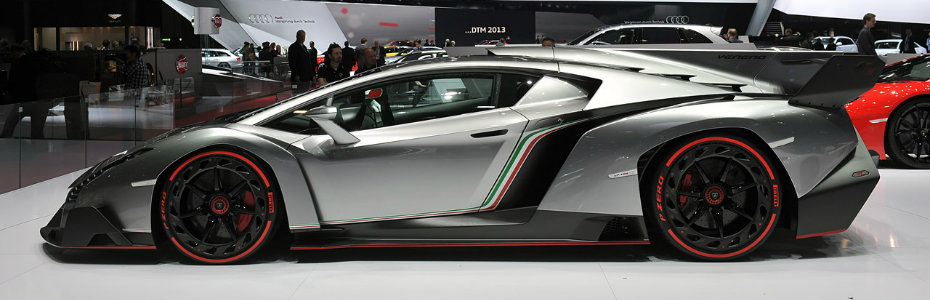
Lamborghini Veneno

Lamborghini's $4 Million Price Tag Veneno, only 3 of these bad boys were produced.

Bentley Motors

Bentley, the Definition of Luxury. What are there more to say?

Porsche 918 Spyder Concept

So, is the 918 Spyder everything it has been hyped up to be? Well, the picture speaks for itself.

Showing posts with label Quick Spins. Show all posts

Monday, March 18, 2013

2014 Mini John Cooper Works GP


About three weeks prior to this brief yet balls-to-the-wall drive on the Spanish island of Mallorca, I saw that Mini USA announced pricing for the keenly anticipated Mini John Copper Works GP. And that number would be – *a-hem* – $39,950 for starters.

I am always intent upon finding the pinnacle of what a certain car promises me, and almost at any cost. Almost. When I think "steaming hatchback," I think of something exactly like this Mini GP, and the steep price doesn't squelch my pleasure. They're only building 2,000 of them anyway, and the units coming to the US will start arriving in owners' hands on March 16 of next year. These buyers will be extremely happy and remorse-free.

Five scorched laps at the very Mini-perfect Circuito Mallorca RennArena showed me all.

Driving Notes

- To me, the previous Mini JCW GP edition (the one I'm driving here is referred to by the development team as the "Mk II") came off as one of those well-meant but less-than-satisfying brand exercises – too soft and not separated enough from the stock JCW hatch.

- The 211 horsepower from the 1.6-liter turbocharged four-cylinder are just three horses better than the $30,800 standard Mini John Cooper Works, and the 207 pound-feet of overboost torque between 2,000 and 5,100 rpm remains the same.

- The claimed 165 pounds shaved off, adjustable coil-over competition-grade dampers, 17-inch high performance (and not run-flat) Kumho Ecsta tires on lighter dedicated alloys, sturdy cross-brace where the rear seats used to be, sport brake system and GP aero pieces all have their desired effect on the hottest Mini two-door.

- Acceleration is now estimated at 6.3 seconds to 62 mph (i.e. 100 kmh) and top speed is let out to 150 mph.

- I talked in the pit area prior to my laps with Mini GP head of development Jörg Weidinger and asked him point blank if this GP was a soft porker like the first one. He assured me that, no, this one was the real deal. He says the adjustable suspension is extraordinary on this edition and both wheel camber and toe-in front and rear have been radically adjusted to improve turn-in response and straight-line thrust.

- Latched in to the GP's cabin, I felt right at home and eagerly awaited my laps. Mini chose to have the laps policed by one of their champion Mini Challenge drivers from Germany in his own Challenge car, and it was just me and Racer Boy out there.

- I obediently performed Lap One at about eight-tenths and did the responsible display to one and all that safety comes first and I was not out there to race. I was already reminded again why I love this six-speed Getrag manual shifter so damned much.

- Laps Two through Four turned into a downright Mini Challenge race weekend. The boy in front of me was good and I was sure he wasn't giving it his absolute all, but we were certifiably rocketing along. In some ways, I can see that dynamically the GP street car is better than even the Challenge car. This setup is killer.

- Each time we passed the main straight and headed into two speed-shaving hairpins that fed us into a fantastic long and drawn-out descending right-hander at full throttle, nothing I felt made me think Mini could have done better than this.

- All of the chassis notes engineer Weidinger shared with me in the pits came true under pressure: There is a near total lack of understeer, and the hook-up and Velcro-like adherence of the Kumho tires is incredibly liberating. Losing the run-flats makes a huge difference.

- Heel-and-toeing is the order of the day and Mini knows about pedal placement. The coil-overs, too, are remarkable. I was cutting apexes immediately and with greater gusto on each successive lap. Coming down off the apex and back onto tarmac caused no jitter, no slide, and I didn't need to let up at all.

- The braking sections was where I got severe sphincter-pucker behind my German pal in the Challenge car, but the damned things kept on successfully reeling in all my straight-line enthusiasm.

- It's always difficult for me to tell whether or not all the aero dolling-up is actually helping me with downforce into curves or with neutral resistance on the straights. Some of the treatment seems a bit cosmetic.

My conclusion after this brief spin? We finally have a proper Mini GP car, kids. All of the tweaks do a soon-to-be-famous Mini make. It's no longer just a mild brand exercise.

Read more by Matt Davis at Autoblog.com

2013 Mazda MX-5 Miata Club


In what could have been my final time reviewing a current-generation Mazda MX-5 Miata, I'll have to say it was like saying a bittersweet farewell to an old friend. You see, the third-generation Miata (NC) is my favorite iteration of the fun little roadster, and with the next Miata being co-developed with Alfa Romeo, I fear the car might lose some of the "jinba ittai" that has made it incredible track car for the last 23 years. If this was to be my last extended drive in the MX-5 Miata, I couldn't have asked for a better send-off with it being a black-on-red tester with a soft top, manual transmission and the all-new Club trim level.

Perhaps as a tip of its proverbial hat to the car's cult following among club racers, the 2013 model year for the MX-5 Miata sees the new Club model replace the Touring trim level in the middle of the car's lineup. This new model should also be a welcomed sight for buyers who were late in snagging one of the 450 Miata Special Edition units that were sent to the US this year, and with a starting price of $26,705, it is substantially less than the Special Edition car. Like the Special Edition, though, the Club comes with black wheels and black door mirrors, and other key elements helped give the car an eye-catching look that got the car noticed almost everywhere I took it.

Driving Notes

- The first thing I notice every time I drive a Miata is how balanced the car feels. A low curb weight (less than 2,500 pounds) and an almost perfectly even weight distribution make the car fun to drive in just about any conditions.

- More fun, of course, is driving with the top down, and the Miata's manual soft top has to be one of the simplest tops to operate in the history of convertibles. One central latch holds it in place, and it is light and hassle-free to raise and lower. You can even just reach back while at a stop light and raise the roof in about five seconds with one hand.

- The six-speed manual transmission not only makes the Miata more engaging to drive, it also gives the car more power. Cars equipped with the automatic transmission are rated at 158 horsepower and those with the manual get 167 ponies under the hood, and while I've yet to drive an automatic Miata, at no point does the manual's power feel insufficient. Even better, it is still decent on gas with fuel economy numbers 21 miles per gallon city and 28 highway; I had no problems hitting either number even with a healthy dose of spirited driving.

- Aside from maybe a Tesla Roadster, there are few cars on the road that feel as small as the Miata. To some, this might be a good thing, but when the average SUV bumper is at face level and getting into and out of the car feels like it should be a part of the Insanity Workout, the Miata might not be an ideal primary vehicle.

- The 2013 Miata Club represents a slight price increase ($875) over the 2012 Miata Touring, but what you get is a truly unique look without having to make any modifications yourself. The Gunmetal Black 17-inch wheels do a lot for the car, but the Club also gets black side stripes, black headlights, a front lip spoiler, rear diffuser, "Club" fender badges and chrome trunk brackets; inside, the instrument panel gets a new body-color-matching insert and red stitching to accent the black seats.

- In today's tech-savvy world, the Miata's option list is devoid of many options available on most entry-level cars, but for a car that shouldn't even have cupholders (especially on the manual-equipped models), the lack of technology inside the Miata makes the car feel even more raw and refreshing.

Read more by Jeffrey N. Ross at Autoblog.com

2013 Audi S5 Coupe


It's hard to believe, but 2013 marks the sixth model year for the Audi S5 (it launched as a 2008 model). I've loved this coupe since the day it debuted, but if I'm honest, the thing that really made the S5 special at launch was its awesome 4.2-liter naturally aspirated V8. You know, the one from the old RS4. And the R8.

Audi started building S5 Cabriolet models with a 3.0-liter supercharged V6 starting in 2010, and for 2013, that super-six is the only engine available for both models. Don't get me wrong, I like the 3.0T engine. (Oh hey, Audi, please stop calling it a 3.0T. There isn't anything 'T' about it.) And I've said plenty of nice things about this engine in my reviews of the A6 and A8. But do those same sentiments carry over to the S5?

Driving Notes

- In terms of power, there's nothing to complain about here. The 3.0T Quattro engine makes 333 horsepower and 325 pound-feet of torque – the same numbers as all other 3.0T-equipped cars. Compared to the old 4.2-liter, that's down 21 horsepower (the torque number remains unchanged), but fuel economy is improved by three miles per gallon in the city and four mpg highway.

- Despite the reduction of 21 horses, Audi still claims a 4.9-second 0-60 time for the 2013 model – same as a 2012 S5 with the 4.2-liter.

- That said, getting to 60 miles per hour isn't nearly as dramatic in the new car. Perhaps the best part about the S5 4.2 package was the fact that you could rev the naturally aspirated engine all the way up to 7,000 rpm, and the noise it made was awesome. There wasn't a ton of low-end power, but that engine was seriously fun to play around with, especially above 3,500 rpm.

- I do like that with Audi Drive Select (part of the $3,250 Driver Assist package), one of the things you can adjust in the 2013 S5 is the exhaust note. In Dynamic mode there's definitely an audible grumble, and it sounds really good if you're hard on the throttle. It doesn't quite have the same roar as that old V8, but it's a lot better than what originally came on the 3.0T Cabriolet. There's a whole lot more low-end torque with this new engine, though it doesn't rev quite as high.

- The S5 isn't quite as tantalizing with its more flaccid mill, but it's hardly impotent on the road. The Quattro all-wheel-drive formula is still top-notch, and the optional 19-inch wheels and summer tires of this test car ($800) improve grip while cornering.

- With the car's other adjustable functions in Dynamic mode – powertrain, steering, etc. – the S5 is fantastic to drive. The steering has great weight and crisp turn-in (though it does feel a bit dead on-center), and the suspension damping isn't at all harsh but offers lots of feedback. The brakes are great, and though there's a good deal of travel to the clutch pedal, the six-speed manual transmission is still all sorts of sweet to use.

- Inside, there's more to love. Quality and materials are top notch, and the seats are both comfortable and supportive, while looking great too.

- Audi hasn't yet updated the A5/S5 with its new MMI Touch interface, but the navigation system in our Prestige model did have the cool Google Earth mapping display. We've played with this before, but it still has that gee-whiz coolness about it, simply because no other automaker is offering something like it.

- Other updates for 2013 include the revised front fascia with new headlamp clusters. Audi pioneered the LED daytime running light hotness, and the new shape to the front graphic is pretty great. LED lights are fitted out back, as well. Also of note is the new Estoril Blue paint color seen in these photos. It's damn pretty, and photos don't do it justice.

- The 2013 S5 is still a truly sweet package, but at $66,570 fully loaded, people seeking a true enthusiast machine would do better with a lighter, quicker, more powerful BMW M3. But with the beauty of Quattro on hand, handsome good looks and a high-quality interior, the S5 has a lot going for it. Now if it just had the 4.2...

Read more by Steven J. Ewing at Autoblog.com

2014 Ford Fiesta 1.0-liter EcoBoost


There's an analogy to diesel engines hiding in the new Ford Fiesta with the 1.0-liter EcoBoost powerplant. There's still a segment of the population that has bad memories of diesel engines, and that makes it harder for Audi or Volkswagen to sell their new clean diesels in the US today. Not impossible, but more of a challenge than it needs to be. In the same way, ask any car geek if they've had good experiences with three-cylinder engines, and the response is likely to be a flashback to a bad ride in a Geo Metro.

But, if no one were to tell you that the new Fiesta 1.0-liter EcoBoost is rocking three cylinders, you'd probably be hard pressed to notice. The engine has already found a home in the Ford Focus (read our Quick Spin) and, after driving about 100 miles around Los Angeles and the Malibu hills in a Euro-spec Fiesta equipped with one, we can safely say that this is a solid B-segment car – one that happens to get over 40 miles per gallon (city) without a hybrid powertrain. Here's what we learned about the car and Ford's plans to bring it to the US.

Driving Notes

- The Fiesta with a 1.0-liter EcoBoost engine is already on sale in Europe, and will come to the US in about a year, in late 2013. There will be a few little changes (the Econetic badges will be replaced with the EcoBoost wording that we have here) and what we think is a big one. Specifically, auto start-stop, which is available on the European model, will not be an option for Americans. The reason, we were told, is that B-segment customers are extremely price sensitive, and spending a few hundred extra bucks on this technology – which the EPA tests still don't quite understand – is something Ford doesn't expect them to do. There is still a chance this will change, though.

- Still, at an estimated 40+ mpg, this flavor of the Fiesta will likely be the "most fuel-efficient, non-hybrid vehicle sold in North America." The current high-mileage Fiesta SFE model gets 40 on the highway (and 33 combined, 29 city). Ford is not talking about combined or city mpg estimates for the new Fiesta just yet.
It bears repeating that you do not feel that this is a shaky three-cylinder engine. The power – 123 horses – is there when you want it, with plenty of low-end torque. Some people on our drive were bothered by noise from the high-speed turbocharger that spins up to 248,000 rpm "almost instantaneously," but this is not enough to detract many points from the overall package.

- Also, since a three-cylinder engine is inherently imbalanced, Ford optimized the engine mounts and made other adjustments to decouple engine shaking forces for "extreme smoothness." It worked.

- For shorter people, the low placement of the side mirrors, especially on the passenger side, might be a problem. I'm about 5'9", and it was fine, but my co-pilot on this drive was a few inches shorter and she could not easily use the mirrors. They do sit awfully low, as you can see here.

- Going around tight corners, the Fiesta 1.0-liter EcoBoost feels a heckuva lot better than the Honda Fit in the same situation, but we found it roughly the same as the new Chevrolet Spark, two vehicles it will compete against for frugal-minded city drivers.

- Some of the other ways the new Fiesta will try to set itself apart is the big "40+ mpg!" sign that's sure to be emblazoned all over the dealership, the connectivity of Sync and MyFordTouch (with a new, 6.5-inch touch screen) and Sony HD radio.

- Jim Farley, executive vice president of global marketing, sales, service and Lincoln, said the new Fiesta is part of Ford's new high-mpg line-up, making fuel economy a reason to buy a Ford. It used to be, he said, "when people thought fuel economy, they did not think of Ford. We have made a tremendous amount of progress in the last few years of changing that perception."

- Put all this together and you've got a compelling "smaller is better" package that we need more details on to properly assess (price is a big one). For years, people have been asking for the Euro-spec Fiesta in the US. Well, we're going to get it, start-stop excluded.

Read more by Sebastian Blanco at Autoblog.com

2013 Porsche Cayenne S Diesel


Not so long ago, our Michael Harley drove the Porsche Cayenne Diesel up in flannel-lovin' Alaska, and he returned home safely from that expedition pretty well convinced that Porsche knows how to create a really heavy, mountain-topping 4x4. In fact, since the test for the first generation of the Cayenne Diesel back in 2008, it's been clear: The diesel version of the Spice Islands Porsche is among its very best.

I'm not taking away from the spectacularity of the latest Turbo S or GTS Cayennes, but when it comes to traditional 4x4 duties, a gnarly turbodiesel's progressive power delivery and spitting torque make for great satisfaction. And a 4.2-liter biturbo V8 diesel is just bound to do something right for you. Cue this drive of the Cayenne S Diesel.

Over the standard Cayenne Diesel, the S's horsepower is up by 137, torque is up by 221 pound-feet, and straight-line oil-burning acceleration to 60 miles per hour requires just 5.6 seconds, maybe less. For this additional chutzpah, you'd be staring at a window sticker with a starting price of around $71,500, or just over 25-percent more than seen on the monroney for the S-less Cayenne Diesel Michael left in Alaska.

If, that is, the Cayenne S Diesel was destined for the US, which it sadly is not.

Driving Notes

- Whether you really like or really hate the Cayenne, I have to say that since the first-generation packaging got itself fully sorted around 2006, this interior is about the most robust and finely crafted cabin in the automotive business. Not a flabby or overstuffed anything in sight, though; it's all muscle with an undeniable sense of premium quality.

- Check out the exhaust tips to hear the voice of the Cayenne S Diesel. As one Cayenne team member asked us, "It's not at all like a diesel, is it?" And it's almost entirely true that there's almost no hint of a diesel mill under the hood. Blipping the throttle and accelerating hard stresses this point even further. Pretty impressive.

- Whereas for the most part the exterior still gives me troubles, from certain angles, this thing looks pretty incredible. The front three-quarter view is the best angle on the Cayenne, while I feel the rear three-quarter could also be as great if it weren't for the taillight design on this generation.

- The 377 horsepower peaking at 3,750 rpm is impressive, but it's the towering 627 pound-feet of torque punching things forward between 2,000 and 2,750 rpm (almost all of it available from 1,650 rpm) that can separate my retinas.

- A 4,400-rpm redline is a reality on this 4.2-liter V8 biturbo diesel. That rev limit is no limitation at all, though, as far as holding the throttle in a given gear for a long time.

- The eight-speed Tiptronic S transmission's action and the Porsche Traction Management chassis has reached near perfection here. The half-step gears here help smooth things while also improving fuel efficiency for cruising.

- Despite this storm of energy and the vehicle's 5,005-pound curb weight, this SUV can easily return an average of 25 miles per gallon.

- The performance figures for this Cayenne S Diesel are well beyond the thrills experienced in the already good V6 diesel. Punching the throttle is simply vicious in the midrange.

- Recommended braked towing weight remains 7,700 pounds. It feels like the Cayenne S Diesel would prefer five passengers and about 12,000 pounds to tow. Uphill.

- European deliveries of this exceptional tank begin before the end of the year. Russia is foreseen as a huge market. What a surprise.

Read more by Matt Davis at Autoblog.com

2013 Jaguar XJ AWD


Even though this year's winter has gotten off to an abnormally slow start for most of North America, Jaguar has shown the world it means business by launching its all-new Instinctive All Wheel Drive system in Montreal, Canada. Designed primarily for consumers in the Northern US and Canada, Jaguar put us on the same snowy, slushy and icy roads that many of its buyers will have to deal with. Rather than making declawed versions of the XJ and XF, Jag says this system enhances the performance abilities of its sedans when desired while still making them as fun to drive as their rear-wheel-drive counterparts. We had a chance to test out both the XF AWD and XJ AWD, but we spent most of our time behind the wheel of the flagship XJ, driving it on the open roads as well as a few closed courses.

Considering the lengthy and convoluted history of the Jaguar brand – including a stint as a member of Ford's defunct Premier Automotive Group alongside Volvo and Aston Martin – it is rather surprising that the automaker is just now getting around to introducing an all-wheel-drive system intended for widespread use, but the new Instinctive AWD will finally allow the XF, XJ and other future products to better compete against the likes of Mercedes-Benz 4Matic, BMW xDrive and Audi Quattro. In the XJ, Jaguar expects the AWD models to account for around 40 percent of the product mix nationwide and a little bit more (50 percent) for the XF, but in the northern states, it expects around 80 percent of XF sales to be AWD variants.

- Instinctive AWD is rear-biased and operates as full rear-wheel drive in good weather, but when the road conditions turn slick, the system can split engine power 50:50 between front and rear axles using a center transfer case.

- In addition to driving the XJ AWD on the street, we had a chance to test out its abilities at the Mecaglisse motorsports complex – about an hour and a half north of Montreal. On separate tracks normally used for motorcycle and rally car racing, Jaguar let us test out the XJ AWD and XF AWD for accelerating, braking and cornering on snow- and ice-covered asphalt and dirt tracks. Both of these circuits demonstrated the two different attitudes these cars can exhibit. With Winter mode on, the system does a great job of nannying the driver making sure the car keeps its footing and remains on the road, but staying true to Jag's motorsports heritage, the system can also be set to Dynamic to improve the performance of the car in bad weather giving the driver fewer safety nets to rely on. The complex also had courses set up for snowy slaloms and an icy, drift-friendly skidpad.

- Rather than being a part of an expensive option package, each AWD version of the XJ and XF will be an individual model. This means that getting the added benefit of all-wheel traction doesn't require buyers to opt for other unrelated packages (such as a cold-weather or technology package, for example) that some automakers force on buyers. On the XJ, AWD is offered on both regular and long-wheelbase XJL models.

- Neither the XJ nor the XF architectures were originally designed to accept all-wheel-drive, so Jaguar made extensive changes to parts of the car most people will never see, including the suspension, front floorboard and even some of the engine components. For example, to keep the engine low in the engine bay for optimal balance, the front driveshaft is actually built into the oil pan. All of the changes and added AWD parts increase the XJ's curb by less than 300 pounds.

- As the new base engine in the XJ, Instinctive AWD can only be had on cars equipped with the new 3.0-liter supercharged V6 engine. While this engine lacks the throaty exhaust note of the 5.0-liter V8, at virtually no point can its performance be faulted especially when factoring in the car's curb weight of just over two tons.

- The XJ AWD comes standard with Continental all-season tires, but Jaguar equipped our test cars with Pirelli M+S winter tires. While this certainly helped the cars handle better in the snow, Jaguar representatives noted this was done so to abide by Quebec law – and besides, these tires are available as an option.

- I was able to learn firsthand just how far the system allows the car to be pushed, too. In my first lap around the snow-covered off-road course in Winter mode, the Instinctive AWD and its associated systems interjected frequently to slow the car and help keep it on its intended path. On the ensuing laps, in Dynamic mode, things got a little hairier. With an instructor riding shotgun shouting driving instructions like a rally car co-pilot (to fully exhibit the car's potential in a short period of time), I spent most of the next two laps doing my best trying to go as quickly as possible while keeping the car on the track. I almost made it. On one portion, the surface was too icy and the dirt embankment just a bit too close. Egos and lower fascia were bruised, proving that not even winter tires and great AWD system can always save you from Mother Nature.

Read more by Jeffrey N. Ross at Autoblog.com

2013 AEV Brute Double Cab


These are the guys who bring an M777 howitzer to a knife fight. In terms of overall rugged utility, the all-new 2013 Brute Double Cab from American Expedition Vehicles (AEV) is about as overkill as they come, and we can't seem to get enough of the beasts that this company produces. Unlike most aftermarket firms, always striving to lower cost and increase volume (but at the expense of quality), Michigan-based AEV takes pride in its OEM-quality design, engineering, manufacturing and testing. Everything is as good, or better, than the stuff from the factory, and they have been doing it this way for more than 15 years.

Launched at the recent 2012 SEMA show was the 2013 AEV Brute Double Cab. Its debut marked the company's expansion to a four-door Brute on the newer JK platform (drawing inspiration from the Land Rover Defender 130). I recently spent a few hours with the new truck in sunny Southern California, though unfortunately, due to time constraints, I was limited to pavement-only driving impressions.

Driving Notes

- The vehicles are assembled in a facility in Wixom, Michigan. To build the Brute Double Cab, AEV stretches the chassis of a four-door JK Wrangler by 23 inches and extends the rear frame to accommodate its custom composite honeycomb pickup bed. Overall vehicle length grows by 30 inches, to bring it to 216 inches overall.

- Unlike AEV's first vehicles, designed to appeal to off-road enthusiasts seeking something different, the Double Cab targets those seeking the same capability but with added interior room and more room for cargo, all with the improved capabilities of the JK platform. It is not meant to replace a traditional pickup, but rather serve the overland market with more utility than a Jeep.

- My red test vehicle was a Jeep Wrangler Unlimited Rubicon 4x4 ($35,090) fitted with AEV's DC350 package – basically the same as the JK350 package, but on the Brute chassis ($39,999). In addition, it was equipped with a snorkel ($534), splash guards ($114), Warn winch ($250), 37-inch tire upgrade ($400), 4.5-inch suspension upgrade ($100), beadlock wheel upgrade ($850) and a rear slider ($311). Figure about $77,650 for its as-tested price.

- Upon close scrutiny, it appeared that AEV's craftsmanship and materials were top-notch and the fit and finish of the company's assembly work was impeccable. Note the little details like the fresh water storage tank in the rear bumper and the beautifully integrated engine intake snorkel.

- As expected from a vehicle raised considerably higher than stock, the step-in is a stretch and the driving position is commanding. Despite its high center of gravity, the Double Cab didn't feel tipsy or nervous during maneuvers. Handling is secure, but a wheelbase stretched to 139 inches all but destroys the stock Jeep's turning radius.

- The 3.6-liter V6, making about 285 horsepower, was mated to a five-speed automatic transmission. The added weight from the conversion and oversized tires do slow acceleration. While still perfectly adequate for on-road performance, those wanting more power for deep sand, snow drifts or more challenging conditions should consider AEV's 6.4-liter Hemi conversion.

- Our spectacular pictures don't do the Double Cab justice – it looks impressive brightly polished, but even better caked in mud. Next time.

Read more by Drew Phillips at Autoblog.com

2013 Ford F-150 Limited


The Ford F-150 received yet another new model for the 2013 model year, the Limited trim, bringing the ways you can order this country's most popular vehicle to a grand total of 10. There really is an F-150 to suit any need now, and the Limited variant slots in at the very top of the range, above the already pampering Platinum model.

While normally I would admit that I'm the least-appropriate person to test a pickup, the fact that this particular trim places a much higher premium on luxury than anything with a bed and Blue Oval badge before it means that I don't need the workman chops of a skilled tradesman to judge how well this truck meets its true aim.

Driving Notes

- With a base price of $52,895, the F-150 Limited is the most expensive half-ton Ford truck you can buy. Our tester came with the few options that don't come standard, including White Platinum Metallic Tri-Coat paint ($495), a pickup bed extender ($250), tailgate step ($375) and spray-in bed liner ($475), bringing the final tally with a $995 delivery charge to $55,045.

- The polished aluminum wheels on the Limited model are 22 inches in diameter, a full two inches larger than what's fitted to the Platinum model. They sure are pretty, though appear appropriate for on-road use only, lest you want to scratch and nick their polished finish. Other filigree on the truck includes the single-tip chrome exhaust, 'LIMITED' lettering along the box sides, the bold three-bar grille and body-colored everything.

- Curiously, while you can have the less expensive Platinum model with your choice of three engines and two bed lengths, the Limited is only available with the twin-turbocharged EcoBoost 3.5-liter V6 engine and 5.5-foot box. Both trims, however, are limited to the four-door SuperCrew cab style only. It's not clear why Ford went with the EcoBoost engine only in the Limited, but with 365 horsepower and 420 pound-feet of torque, the engine is up to the task and relatively efficient.

- Speaking of which, remember a few years ago when the F-150 required a special SFE model to reach 21 miles per gallon on the highway? The F-150 Limited can technically achieve the same feat, despite all of its luxury trappings and lack of aero aids. The EPA estimates 17 mpg city and 21 mpg highway, and I managed to reach and sustain that number, though not on the highway. It was on a long stretch of 35-mph road with few lights and stop signs. On the highway traveling between 60-70 mph, the F-150 and its EcoBoost V6 still returned a respectable 16-17 mpg.

- The headlights on the Limited model are segment-first HID lamps. They are incredibly powerful and cut a very wide swatch with sharply delineated edges. From the driver's seat, it's as if the truck has two poles sticking out either side of the front end with a bunch of lights hanging from them pointing forward. That said, the F-150 Limited rides high and I know those powerful low beams were at times bouncing off the rear and sideview mirrors of the cars I was following.

- This truck is surprisingly easy to drive. Even though I feel it would be silly for someone like me, who only has the occasional need for a truck, to buy and use an F-150 Limited as a daily driver, I easily could. It's like a truck, a minivan and a luxury sedan rolled into one – eminently capable, comfortable and cool.

- Its ride is composed and relatively smooth, though can be skittish over rough pavement. That said, this truck emits nary a squeak, noise or rattle no matter how hard the suspension and frame are being hit.

- The level of luxury here is very high, with running boards that automatically deploy when the doors open, a red and black leather interior that both looks and feels rich, aluminum trim, ambient lighting and the very full suite of Ford infotainment electronics that includes Sync, MyFord Touch, an eight-inch main screen and 4.2-inch info screen between the gauges.

- At the end of my week with the pickup, I came around to the conclusion that buying an F-150 Limited makes as much sense as luxury car or sports car. All three appeal to what one wants more than what one needs. Do I need a $55k luxury pickup? No. But now I want one.

Read more by John Neff at Autoblog.com

2013 Mitsubishi Outlander GT


I'm not a gambling man, but if there were a pool for an automotive death watch, my money would be on Mitsubishi... Lincoln is a close second. To understand the plight of Mitsubishi, you only have to look at its current lineup; they all just look, feel and drive about 10 years older than they really are. With the departure of the Endeavor and merciful killing of the Eclipse (the Galant lives on, but is on hiatus for the 2013 model year), one of the worst remaining offenders is the Mitsubishi Outlander, which I recently drove in top-level GT trim for this Quick Spin.

If we had a time machine and took the 2013 Outlander GT back to 1998, it would be revolutionary. If we could take it back to 2004, it might be near the top of its class. But in the current highly competitive crossover segment of today, the Outlander just falls short. Yes, the all-new 2014 Outlander is on its way later this year, but from what we've seen both inside and out, the new design would look great in 2008. That being said, spending a week with any vehicle can point out surprising highs as well as lows, and there are still plenty of reasons to enjoy Mitsu's midsize CUV.

Driving Notes

- Unfortunately, I have to kick off my driving impressions on a negative note. There are few utility vehicles on the market that make the third row an enviable seating position, but the Outlander GT's rear-most seat is downright insulting. Not only is this the worst third-row seat currently on the market, it could very well be the worst ever created – that includes the uncomfortable rear-facing third row of a certain 1977 Impala station wagon I was relegated to as a kid during family road trips. The operation is clunky, the padding is lacking and the snap-on headrests are as tall as the seat back itself.

- On the opposite end of the scale, the best part about the Outlander GT is its drivetrain and platform. Replacing the base four-cylinder engine and continuously variable transmission, the GT trim level brings a well-aged 3.0-liter V6 paired to a six-speed automatic transmission. Since it shares its underpinnings with the Mitsubishi Lancer, the Outlander also has a pretty good ride quality in just about any road condition.

- My tester was equipped with Mitsubishi's dynamic Super All-Wheel Control (S-AWC) sending the engine's 230 horsepower to all four wheels, improving traction or performance depending on which driver-selectable mode has been chosen (Tarmac or Snow), and there is also an active front differential that that splits engine torque across the front axle or fully locks (in Lock setting) for better off-road performance. I didn't have the chance to do any serious off roading in Outlander, but I was able to test out the S-AWC along sandy, gravelly roads, which the Outlander handled like a champ.

- Thanks to a 2010 styling refresh, the Outlander is one of the better-looking budget crossovers on the market. With its gaping grille and angular HID headlights, the Outlander GT has a pretty imposing face, and the clear-lensed LED taillights are also a stylish touch to the overall look of the Outlander. While this tester's dark blue color didn't do its lines any favors, it's is still a reasonably handsome midsize CUV.

- Try as it may to look like the Lancer Evolution, the Outlander does not live up to its "GT" trim. Its car-based platform and raised stance just make it feel like a tall car rather than a sporty crossover. I didn't have the time to put the performance aspect of S-AWC to the test, but you can tell that the Outlander is designed to be the budget-minded crossover in its segment rather than performance-minded. Speaking of budgets, the Outlander GT's fuel economy rating of 19 miles per gallon city and 25 mpg highway is about par for V6-powered vehicles in this segment, but it also requires premium gasoline.

- Aside from the after-thought of a third-row seat, the rest of the Outlander's interior isn't all that bad. Front occupants can enjoy heated seats (with the button buried between the seat and the center console) and Mitsubishi's easy-to-use Fuse hands-free system as standard equipment. Even the middle row provides a surprising level of comfort with a 60/40 split seat that can slide and recline allowing ample legroom and space for the unfortunate passengers in the way back. Another quirky benefit of the Outlander is the fold down tailgate that sits flat with the cargo floor making it easier to load and unload bulky items.

- Then there's the matter of price. Even though the Outlander starts at a reasonable $22,695, this GT tester came practically fully loaded with a $2,500 Touring Package and a $2,000 Navigation Package, which boosted the as-tested price to $33,920. You can get a lot more utility from a more stable brand for that much or lower.

Read more by Jeffrey N. Ross at Autoblog.com

2014 Mazda CX-5 with 2.5-liter Skyactiv engine


Back in October, we compared the relative merits of two new and very good small crossovers: the 2013 Ford Escape and 2013 Mazda CX-5. The CX-5 we tested then had Mazda's 2.0-liter Skyactiv-G engine under its hood, and it managed to just edge out the EcoBoosted Ford despite being down by some 23 horsepower and 34 pound-feet of torque. Had it been available, the 2.5-liter Skyactiv engine that we recently had the opportunity to try out in the 2014 Mazda CX-5, it may have made that comparison even easier to call in the Japanese CUV's favor.

Clearly, if you're in the market for a reasonably sized crossover, the CX-5 should, at the very least, be on your test-drive list. The new engine offering will let buyers opt for a stronger powerplant, with 184 hp and 185 lb-ft on tap. On our second day in Austin's Hill Country – the first was spent quick-spinning the 2014 Mazda6 i Sport, you'll recall – we covered a couple of hundred miles and put the new CX-5 through its paces; here's what we turned up.

Driving Notes

- The extra half-liter of Skyactiv displacement, resulting in 29 more horsepower and 35 more pound-feet of torque than in the 2.0-liter model, is satisfying in this new CX-5. With the larger engine, the CX-5's 0-60 time falls to about 7.2 seconds (Mazda's estimate) from just under 9 seconds in the 2.0-liter version. Those numbers are borne out in real-world feel, too, where the new CX-5 absolutely feels quicker away from a stoplight and less strained when passing slower folks at highway speeds. The 2.5 engine sounds a bit better, too – offering a mildly enthusiastic growl up around 5,000 rpm and onward.

- Every other piece of the dynamic driving experience is more or less exactly the same with the 2.5-liter engine as it was with the smaller powerplant. Mazda only had CX-5s with the new engine on hand at our drive event in Austin, and it's possible that driving both versions, back-to-back, could reveal some mild handling differences. But with only a few months separating our last seat time in the 2.0-liter car from this drive, we feel safe saying that the more-potent CX-5 is every bit the nimble handler as its slightly lighter sibling.

- With the added thrust and equal handling taken as read then, what exactly is the give/get situation relative to the smaller-engine CX-5? The larger-engined vehicle gains about 100 pounds, trim-for-trim. The 2.0-liter is the only 2014 CX-5 that can be had with Mazda's very good six-speed manual transmission, meanwhile, though product planners hinted that we may be seeing a 2.5L/6MT combo later in the model year. (We know from the Mazda6 that the engine and manual transmission work nicely together.) Impressively, the 2.5L CX-5 only loses one mile per gallon in the city versus the smaller displacement engine (25 versus 26 mpg), and the highway ratings stay exactly the same (32 mpg). Towing capacity stays steady at a modest 2,000-pound maximum for all CX-5 models.

- With such stellar comparative specifications versus its 2.0-liter brother, the determining factor for opting-in to a 2.5-liter CX-5 is essentially only cost. For 2014, Mazda is only offering the 2.0-liter engine in Sport (read: base) models – both all-wheel-drive and front-wheel-drive flavors – while the 2.5-liter engine starts at the plusher Touring trim in both driveline configurations. That means while a true apples-to-apples comparison isn't possible, you will have to pony up about $2,000 to get into the larger mill. A front-wheel-drive CX-5 Sport 2.0 6AT starts at $22,595, while the FWD CX-5 Touring 2.5 6AT asks $24,615 (all models have identical $795 destination charges). For AWD models, the difference between the Sport and Touring is an identical $2,020 gap – MSRPs of $23,845 and $25,865, respectively.

- Here's a little model-year 2014 trivia for future members of the CX-5 enthusiast clubs: This year sees three new colors (Soul Red, Jet Black, Meteor Gray) replacing three old colors (Zeal Red, Black Mica, Metropolitan Gray). The new red is a $300 option. Last year's blue plastic engine cover has been replaced with a black plastic engine cover. Mazda's Smart City Brake Support, which automatically brakes the vehicle in low-speed, crash-imminent maneuvers, is now standard with the Touring and Grand Touring tech pack, while the burglar alarm has been deleted from those packages. Got all of that? We'll have a quiz next week.

Read more by Seyth Miersma at Autoblog.com

2013 Dodge Durango R/T


Not too long ago, Chevrolet got itself into some trouble by throwing the SS badge on just about everything it produced, so I've always been a little hesitant about the seemingly excessive use of the R/T nameplate on Dodge vehicles. For the 2013 model year, practically every model in Dodge's lineup has an R/T trim level from the Avenger all the way up to the Durango. Although the R/T name used to signified models made for road and track, I doubt anyone would be delusional enough to assume the Durango – and some of the other models wearing this badge – are suited for any sort of track duty.

Still, when this 2013 Dodge Durango R/T rolled up for me to drive for the week, I couldn't help but take in its big, mean and imposing stance. Sure, if I had my choice of buying any of the Dodge R/T products, the Charger and Challenger would be my top picks for sure, but it's easy to say that the Durango would be a close third – far above the R/T versions of the Avenger, Journey and Grand Caravan.

Driving Notes

- Not that the current Durango was a bad-looking SUV to begin with, but the R/T package gives it more aggressive styling thanks to a monochromatic look. With the removal of just about all the chrome that comes on a Durango, this tester even looked good in what would normally be a boring shade of silver thanks to the body-colored front fascia, smoked headlights, 20-inch wheels and the sporty-looking rear fascia with dual exhaust outlets.

- The styling might be there to back up the badge, but there is no extra power under the hood of the R/T. In possibly one of the best moves Dodge made with this particular model, the only engine offered is the 5.7-liter Hemi V8. The 360-horsepower, 390 pound-feet of torque engine feels adequate perfectly for this 5,331-pound utility. This is the only model of the Durango lineup that comes standard with the six-speed automatic transmission, too.

- Fuel economy is about what you'd expect from a V8-powered SUV weighing as much as the Durango does, with EPA estimates of 13 miles per gallon in the city and 20 mpg on the highway. During my week with the R/T, this tester returned 15.5 mpg.

- The Hemi is equipped with cylinder deactivation, which feels clunky at times when it switches from V8 to V4 power, with an ever-so-slight delay when the cylinders reengage once again. The only bypass for the system is just to be sure that you're right foot stays planted whenever possible.

- Chrysler says the Durango R/T comes with a sport suspension, but aside from the bigger standard wheels, I felt no difference between this and any other Durango I've driven in the past. If you're really looking for a sporty, family-sized (three-row) SUV, you're probably going to want to check out the new Explorer Sport.

- The best part of the Durango R/T might be its exhaust system. Yes, the dual pipes poking through the rear fascia give it an aftermarket look, but it's the exhaust note that makes the R/T thrilling. Dodge gave the Durango R/T unique mufflers, pipes and resonators for a deep, throaty note, which makes the package a little more distinctive.

- Similar to the exterior styling, the R/T's interior has a sportier look and feel with plenty of red accents on the standard black leather throughout the cabin. This particular model came with the center-row captain seats limiting the overall seating capacity to just six, but it made accessing the third-row seat much easier. Not surprisingly, as the innovator of third-row seating for non-fullsize SUVs, the Durango's rearmost accommodations are spacious enough for two adults and can also fold completely flat quickly and easily.

- The R/T trim level sits just under the Citadel as the top Durango model, and as such, it isn't a cheap SUV. Starting at $35,995 in base form, this all-wheel-drive 2013 Durango R/T was optioned up quite impressively, bringing with it a hefty as-tested price of $45,360.

- What you get for that high price, though, is plenty of optional goodies including leather-wrapped door panels, heated steering wheel, heated and ventilated front seats, adaptive cruise control and Chrysler's Uconnect navigation system. This test vehicle may very well have been completely fully loaded, and while it'd be a hard financial pill to swallow, it's certainly easy enough to option rivals to the same level.

- Yes, the third-gen Durango is no longer body on frame, but proving that it hasn't completely lost touch with its SUV roots, the Durango is still rear-wheel drive in base form, even though it's now competing against a newer breed of three-row utilities like the Chevy Traverse, Nissan Pathfinder and the Ford Explorer. Unlike its corporate cousin, the Jeep Grand Cherokee, the Durango is not offered with a multi-mode off-road system, but it did handle itself quite well while driving on the loose sand of a northeast Florida beach.

Read more by Jeffrey N. Ross at Autoblog.com

2014 Mazda6 Skyactiv-D Wagon


This was sort of a quirky surprise drive opportunity. I've been over here in Italy for a while now, and Mazda Italia contacted me seemingly out of the blue to drive test some version of the Mazda6 with a diesel engine. Supremo. The Mazda6 is a sexy everyday beast and I have been digging their SkyActiv-D engines for a while now. Very spirited units.

My contact phones me the day of, and says he can come by with the car, and then we'll head off to some sort of special spot for dynamics testing and technical conversation. Nice deal, say I.

My guy Ernesto pulls up outside of the house and – lo and behold – it's a dang Mazda6 station wagon with the very most recent 2.2-liter SkyActiv-D motor good for 148 horsepower and healthy 280 pound-feet of torque. The wee four-banger with 14.0:1 compression ratio hauls this 3,260-pound wagon around with the best of them. A decent 0-to-60-mph time of 8.7 seconds, too.

Best touch? This one had the standard six-speed manual gearbox. We at Autoblog know how we bend a few noses the wrong way with our open cravings for exactly this sort of un-American car setup. But, oh my, did we have a good day together.

Driving Notes

- First off, the Mazda6 sedan we just tested is a fine-looking conveyance. But if you like wagons like I do, this 2013 Mazda6 wagon is even finer. To my eyes, it doesn't overdo it like some Infiniti models or the Nissan Juke, and any references to the swoopy Fisker Karma soon fade away. Mazda's "Kodo" ("Soul of Motion") design approach just works.

- I was so geeked that this was a wagon. And the six-speed manual mated with the SkyActiv-D engine just took it over the top. Before hopping in, I noticed the optional set of really nice 19-inch wheels wrapped in Bridgestone Turanza T001 treads, the latest vintage of this fine rubber.

- Ernesto tells me that I am the very first in all of Italy to drive this engine trim outside of the company testers. "What about the Italian journos?," I ask. He smiles and shrugs, meaning, "Too bad for them, I guess."

- This revvy and strong 2.2-liter turbodiesel is not the 173-hp tune that arrives in the U.S. later this year in the sedan, but it would do just fine on American roads. If the hp bump seems modest on the trim we'll get, well, the torque bump is also a mild 30 lb-ft. Acceleration to 60 mph will be only a half-second quicker and fuel use will increase, though it will still be good at about 30 miles per gallon city and 40 mpg highway.

- We pulled up outside of a go-kart track I know out in the middle of the northern Italian flatlands. Ernesto tells me this is the place. Seriously? Yes, seriously. Ever whipped a front-wheel-drive family wagon with manual shifter and small diesel engine around a karting circuit? Me either.

- The terrific Turanza tires were smoking freely under the cranking enthusiasm of the 2.2-liter four. All of the torque was there at 1,800 revs and the action of the manual shifter proved smooth and precise. It was easy to heel-and-toe at all times – this, on an extremely tight kart track, not an open road with time to think built in.

- The wagon handled my induced-oversteer moves well, with superb steering and exceptional weight transfers. (It's like this on almost any hopped-up wagon I've driven even a little like this. For instance, I prefer the Mini Cooper S JCW Clubman on a hot circuit versus the hatchback for this very reason).

- All traction nannies were off and Ernesto and I were having a little more fun than I think his bosses had in mind. I started in with the Scandinavian handbraking, a technique that invariably enters the equation on such tracks, and we were giggling like school girls in short order.

- The Mazda6's rear suspension setup's lateral arms do not, as many do, err forward and higher than the wheel hub. Instead they attach low, below the wheel center. This results in an extremely sporting attitude over twisty roads as the arms push at the rear wheel down lower and closer to the center line. This was most noticeable on track.

For the moment, no wagons are promised for the US, sadly. That's a serious bummer for all of us; this Mazda6 wagon is a brilliantly executed design. Pretty damn good on a kart track, too.

Read more by Matt Davis at Autoblog.com

2013 Mercedes-Benz SL65 AMG


Make way for the 2013 Mercedes-Benz SL65 AMG, the most wonderfully preposterous car I have ever driven.

There is absolutely no reason why any two-seat roadster should be fitted with a twin-turbocharged 6.0-liter V12 developing 621 horsepower and 738 pound-feet of torque, but I sure am glad that Mercedes-Benz doesn't see things that way.

Drop into the leather-lined cockpit of this $213,145 provocateur, floor the accelerator pedal as I did over and over again, and 60 miles per hour falls in a traction-limited 3.9 seconds. Top speed has been electronically held to 186 mph (this apparently saves Gulfstream jet owners from embarrassment). Forget the SL550 and SL63 AMG, the valets will trip over themselves attending to the tycoon driving this thoroughbred – it's the real deal.

Driving Notes

- The handcrafted 36-valve V12 returns with a new internal designation of M279 (replacing the M275) and a matte carbon-fiber engine cover. Mercedes-Benz has updated the powerplant's turbochargers and improved engine airflow for the 2013 model year. This explains the 17-horsepower improvement and efficiency gains over its predecessor. The venerable five-speed automatic was also replaced with AMG's Speedshift seven-speed transmission (offering electronically controlled Efficiency, Sport, Sport Plus and Manual modes), and the SL65 AMG now features an engine start-stop function.

- Acceleration rates normally flatten as aerodynamic drag rises. The SL65 AMG seems to do just the opposite as it picks up speed like a rocket leaving the earth's pull of gravity. Full throttle applications release a throaty growl from the quad exhaust, accompanied by spine-chilling burbles as the transmission catches each gear. Downshifts are equally as pleasing as the V12 cackles and pops as each gear falls. Yet, during steady cruising the exhaust note is perfectly tame and proper.

- Despite is substantial physical size, the SL65 AMG is surprisingly agile. It tracks well and the new electrically boosted steering is precise and nicely weighed. Cornering is flat, thanks to Active Body Control (offering both Sport and Comfort settings). The 19-inch wheel and upgraded monobloc brake package (lifted right off the enthusiast-tuned SL63 AMG), does its job commendably.

- The cabin is a smart mix of luxury and sport. What leather doesn't cover is made of either woven carbon-fiber or brushed aluminum. The infinitely adjustable quilted seats are heated and equipped with the automaker's neck-heating Airscarf. The meaty three-spoke flat-bottom steering wheel is wrapped in smooth leather with grippy Alcantera sides and aluminum wheel-mounted paddle shifters are standard. The convertible hard top, with its lightweight magnesium frame encircling the automaker's trick Magic Sky Control dimming feature, can be raised or lowered in about 20 seconds at the touch of a button.

- Don't confuse the SLS AMG GT Roadster with the SL65 AMG, as each has very different role. The SLS is a true sports car, with a mission-appropriate ride, gnarly exhaust snarl and a moderate level of amenities. The SL65, on the other hand, is a luxury grand tourer engineered to make miles pass effortlessly beneath it chassis. One does not replace the other – a true boss owns both.

Read more by Drew Phillips at Autoblog.com

Sunday, March 17, 2013

2013 Jaguar XF Sportbrake


Editor's Note: Our reporter was anxious to get some time behind the wheel of the XF Sportbrake, even though Jaguar only had a very small window available for us to drive it. As a result, we weren't able to capture our usual original images to go with the Quick Spin story. Please accept our regrets, and Jag's lovely stock photography, instead.

The last wagon attempt from Jaguar was the X-Type, built between 2003 and that model line's unceremonious end in 2009. That X-Type and its legacy represent a real dog of a chapter for Jaguar, and for the Halewood factory where the barker was built. It was the final joke told prior to the brand's proper rebirth phase – a phase we're enjoying the heck out of today.

Current magnanimous Jaguar owner Tata can be thanked for this new wagon, the XF Sportbrake. Like all newness coming from Jag these days, this new wagon also feels lightyears more serious an offering, ready to compete squarely with established premium wagon makers across Europe. A Jaguar wagon in America is a far-off priority for the company, frankly. Still we deserve to know what we're missing for the time being from this (sometimes overly) cherished British firm.

I was given a right-hand-drive 3.0-liter turbodiesel XF Sportbrake. Jaguar currently offers only diesel powerplants in the wagon due to the European market buying nearly 100 percent of its wagon bodies with the far more efficient powerplants. And on the 40 miles from Welshpool over to Bala at the edge of Wales' Snowdonia National Park, there's some driving to be done.

Driving Notes

- The very good folks of Jaguar's UK offices met me in the middle of just about nowhere for this special, short, but sweet drive cross the mossy hills. I hadn't yet been able to drive a Jaguar XF Sportbrake – a car that sort of came in announced softly and with zero fanfare – but where better to do this than here on its home turf?

- What's best about the Jag wagon is that it remains an inherently classy rarity, but thankfully this time Jaguar has really done its legwork. As with the distinctive feel of the big XJ sedan, this XF wagon is completely Jaguar-esque and not easily likened to others.

- The sweetest surprise was exactly how much fun it was to drive, thundering over hill and dale in a land of seemingly no traffic. This 3.0-liter turbodiesel V6 is Euro-wag paradise and I was soon chucking it around as though it weighed 500 pounds less, and had one fewer rows of seats.

- Granted, with this big motor I also got the eight-speed automatic. But there's nothing sluggish about this combo on a family hauler capable of hitting 60 miles per hour in 6.1 seconds or less. It certainly felt like less; the throttle response was really good.

- There is up to 59.2 cubic feet of cargo space available when obeying all regulations to keep the windows clear for visibility. Load the XF Sportbrake like a college kid might, and who knows the true volume in this gaping space. With the seats in place, five adults have plenty of headroom and enough legroom.

- The standard 20-inch wheels aboard my diesel S model transmitted surprisingly little road noise into the ample cabin, and same can be said for the two large-mouth exhaust tips. Fiddling with the Jaguar Drive Control via the rheostat selector is as easy as ever, even though I am not in love with the gratuitous spectacle of said selector rising up out of the "stage" every time I ignite the engine. Feels a tad 1970s to me.

- I was slightly wrapped up in the drive and unaware of exactly how spirited it may have been, until the Jaguar PR maestro with me said, "Well, I can sort of tell that you're enjoying yourself." I truly was, like rarely before in the more civilian trim Jags.

- Doing all of this and getting a return of something like 35 miles per gallon on average got me starting in on that old whine: "Why can't we get this brilliant sporty highway cruiser/hauler in the States?" It may be a wee bit too Euro, I understand, but this sophisticated low-revving style of sporting practicality, with a handsome exterior, suits me very well.

- As of right now, the XF Sportbrake is exclusively for European sale, hence the current two-engine diesel range. For the North American market, the next big push after the F-Type convertible and coupe (the latter based on the ultra-sexy C-X16 concept car) is the crossover/SUV, reportedly due out in 2016.

Read more by Matt Davis at Autoblog.com

2013 Land Rover Range Rover Sport


Truth be told, I have always considered the Range Rover Sport to be something of a poseur in the Land Rover lineup, but there's one big reason this SUV is so popular in chic cities like New York and Miami – it has the boxy, instantly recognizable looks of a classic Range Rover but with a sportier demeanor. In fact, if sister marque Jaguar ever does get around to building an SUV (as has been rumored for years), I have the feeling it will have the ride quality, performance and handling similar to the Range Rover Sport, albeit with a greater on-road emphasis.

Coming in at just under $80,000, the 2013 Land Rover Range Rover Sport is no easy financial pill to swallow, but even now, with its replacement waiting just off-stage, it's just hard to say anything that bad about an SUV that is equal parts off-road, luxury and performance. Land Rover has kept the Sport fresh with a mess of small tweaks (new wheel and interior color options, etc.), and we thought spending a week with this generation would be a fine sendoff before the all-new 2014 model arrives.

Driving Notes

- First and foremost, the performance of the Range Rover Sport Supercharged is a result of the supercharged 5.0-liter V8 under the hood cranking out 510 horsepower and 461 pound-feet of torque. That's enough power to get this almost-three-ton SUV to accelerate from 0-60 in just 5.9 seconds, which is not too far off the pace from a Porsche Cayenne S. Moving that kind of mass takes a lot of fuel, and the engine isn't afraid to suck down the octane – I averaged just over 11 mpg for the week in mostly city driving.

- My biggest disappointment with this Range Rover was how flat and uninspiring the exhaust note sounded (especially knowing how great the supercharged Jags sound using the same engine).

- It's very unlikely you're going to see a Range Rover Sport tackling any serious trails, but that's not because it can't. While most Range Rover Sport owners likely consider off-roading to consist of splashing through big puddles in NYC or kicking up sand blown onto Miami Beach's Ocean Drive, the Sport is no less capable off-road than its brethren thanks to its height-adjustable suspension and Terrain Response System. There's even an off-road screen that lets the driver know the articulation of each wheel, whether the differentials are locked and the angle of the front tires.

- Terrain Response takes the guesswork out of off-road driving by providing five simple modes that are all accessible at the push of a button (yes, the days of locking hubs and manual transfer cases are long gone for most modern off-roaders). Purists might take issue with this system – or similar ones used by Jeep and Ford – but it's hard to argue with the simplicity and user-friendliness that Terrain Response provides. Most of the Terrain Response settings are there to make off-roading easier, but the Range Rover Sport also comes with a Dynamic mode that tightens up the steering, throttle and transmission for a sportier feel.

- Most of the time while driving the Sport, every bit of its weight and size is felt –especially when it comes to fuel economy – but I was surprised on numerous occasions by its small turning radius. At a local parking lot where some smaller sedans require a three-point maneuver for turning around, the Range Rover Sport managed the deed in one fluid motion. Another time while testing the off-road capabilities in loose sand, the tight turning radius again came in handy as I was able to confidently make some sharp turns without slowing down or stopping – very important when driving in loose terrain such as sand or snow.

- Maybe it's the fact that I now live in Florida and have no need for a heated windshield, but my biggest pet peeve about current Jaguar and Land Rover vehicles is the tiny wires that run through the windshield for the heating elements. They are just small enough not to obstruct the driver's view but are also noticeable enough to be annoyingly distracting – especially at night when bright headlights are approaching. It's been years since I've had to worry about clearing thick ice from a windshield, so I'm not doubting this is a useful tool for owners in the North, but these thin, squiggly lines can sometimes be a distraction. Perhaps it should be an option.

- Speaking of distractions, one of my favorites on the Range Rover Sport comes courtesy of the $1,200 Vision Assist Package, which adds a five-camera view around the vehicle. In theory, this is an excellent tool for off-road driving as it allows you to see nearby obstacles without actually having to get out of the car, but for some reason, the cameras operate at any speed, making for a pretty tempting distraction while driving.

- An interesting part of the Range Rover Sport's design is that its instrument panel is actually positioned above the hood giving a commanding view of the road. Even with the seat in its lowest setting, I still felt like I was sitting up way too high. But this, along with Rover's relatively narrow window pillars, actually provided for excellent visibility while driving, a remnant of Land Rover's obsession with off-roading, where it's important to know exactly what immediately surrounds your vehicle.

- In most of these pictures, I photographed this tester's air suspension in Access suspension setting to give it a lowered look, but its main purpose is to making ingress and egress easier. For optimal off-roading, the air suspension can also be raised (as seen above), giving it ample ground clearance. The vehicle automatically reverts to normal ride height when speed tops 30 miles per hour.

Read more by Jeffrey N. Ross at Autoblog.com

2013 Dodge Charger SRT8 Super Bee


I can pinpoint the exact moment when I fell in love with this car. It was starting down a nearly straight entrance ramp at 15 miles per hour when I buried the throttle. In a moment, I was thrown back into my seat as the big SRT8's engine came to life with commensurate sound, fury and force, bringing me up to 75 mph in what felt like two blinks of an eye. This thing feels so much quicker than its 470 horsepower and 470 pound-feet of torque would lead you to believe. And mashing the right pedal never, ever gets old.

But beyond sheer speed, I found a whole lot to like about the Charger SRT8 during my week with the Pitch Black test car here in Detroit. And while the whole Super Bee kit isn't really my style, it's really easy to overlook those badges for a package that offers so much for so little.

Driving Notes

- Like I said, the 392 Hemi engine feels much more powerful than its numbers might suggest. Chrysler estimates that the car will rip off 0-60 times in the high-four-second range, and you'll pass the quarter mile just before the 13-second mark.

- And then there's the transmission. Dodge fits a five-speed automatic unit to its 6.4-liter Hemi here in the Charger, and while that's almost an archaic piece of technology by today's standards (and considering that the recently refreshed Jeep Grand Cherokee SRT with the same engine uses an eight-speed auto), it's still well-suited to the big motor. Shifts happen quickly, both up and down the range, and because there are only five ratios, there's less hunting around between cogs.

- There are steering wheel-mounted paddle shifters, but the transmission felt best when left to its own devices. Just hit the throttle when you want to go, and you'll go. There's no drama, just speed.

- The rub, though, is with fuel economy – at best, you'll manage 23 miles per gallon on the highway, and my average of 16 mpg fell just short of the estimated 17-mpg combined rating. Oh, well.

- But this thing is just so damn fun to drive. You can get the rear tires to spin at every stoplight, but in an incredibly manageable and playful fashion. Likewise, it's easy to nudge the rump out around turns, and the thick, leather-wrapped SRT steering wheel is a joy to toss back and forth.

- This is a big, heavy car, though, and you won't forget it from behind the wheel. At no point would I describe its handling as nimble or precise, but it's not nearly as tough to wrangle as you might imagine. There are big Brembo brakes to keep all that power in line, and you don't need to turn off the traction nannies to have a good time.

- Visually, the Super Bee kit offers unique, double-five-spoke 20-inch wheels, decals on the hood and rear quarter panel, and a small graphic next to the SRT badge in the grille. Inside, unique trim is found on the cloth seats and there's another Super Bee graphic on the dash. It's not what I'd spec, but to each their own. The Charger is still a great-looking car regardless.

- That said, this model, as-tested, was $44,435. Of course, that's without premium features like navigation, the awesome leather SRT thrones, HID headlamps, a sunroof, and so on, but it's a nice value. It's basically one of the new SRT Core models, but with some decals.

- This car offers a ton of bang for the buck in terms of performance, but it's easy to feel cheated inside, despite the spacious, quiet cabin. The standard 4.3-inch touchscreen display works well and is incredibly responsive, but combined with the large cubby underneath, it really reminds you that you didn't pony up for the big screen Uconnect system. And while the cloth seats are comfortable, they aren't nearly as supportive as the seats of the standard SRT8, and you can't get them with heat, either.

- If anything, this SRT8 Super Bee reminded me just how awesome the Charger SRT8 is as a whole. And by offering so much punch underhood, the Super Bee package strikes me as being an excellent bargain for people looking for no-frills high performance.

Read more by Steven J. Ewing at Autoblog.com

Tuesday, March 12, 2013

2012 Porsche 911 Carrera Cabriolet


Honesty time: Much like Editor-in-Chief John Neff, convertibles aren't really my thing. Oh sure, I love having a good droptop for a week every now and then, but I just can't see myself ever plunking down the cash to own one.

But whereas Neff cites specific areas of compromise as the big reason for not owning a cabrio, my argument lies mostly with design. Simply put, I can't think of a single convertible on the market that doesn't somehow look slightly worse than its coupe kin. Exceptions can be made for droptop-only models like the BMW Z4, Mercedes-Benz SLK and the lovely Mazda MX-5 Miata, but again, there are no dedicated hardtop versions of those cars to compare them to. And when you're working with a shape as iconic and precision-cut as thePorsche 911, lopping the roof off just doesn't do it for me.

So while I would never buy this Cabriolet over the beautiful coupe, there's still a lot to love about the wind-in-your-hair 911 experience. And as I learned over the course of a week, there's a whole lot of praise to be given to the Porsche's base powertrain, as well.

Driving Notes

- I've spent a bit of time with the Carrera S and its 3.8-liter direct-injected flat-six, but even with 50 less horsepower and 38 fewer pound-feet of torque on hand, this 3.4-liter mill is still quite impressive. Even in 3,197-pound, two-wheel-drive Cabriolet form, the smaller engine's 350 hp and 287 lb-ft are more than enough to keep things interesting.

- That's especially true when paired with the seven-speed manual transmission. I was initially worried that I'd be spending a lot of time changing gears, but thankfully, there's enough power available in each gear for most passing situations. Even so, with a nicely weighted clutch and a gearbox that's perfectly placed for quick steering-wheel-to-shifter movements, frequent use of the seven-speed stick is quite sweet.

- One more word about that seven-speed unit: The actual action of shifting into seventh gear is neat, but the weirder feeling is downshifting into sixth. And since seventh gear really acts as a full-on overdrive, seven-to-five shifts are more appropriate for moments of power on demand.

- The chassis of this 911 Cabriolet feels every bit as solid as the Carrera S coupe I drove earlier this year. Sporting convertibles are tricky business, but Porsche has absolutely nailed it here with this 991 generation. You really don't feel any sort of dynamic sacrifice by losing the added rigidity of the hardtop.

- The best part about the roof-removed experience is being able to hear the 911's excellent exhaust note at full volume, especially with the sport exhaust in full swing. Push the button on the right side of the center console and you'll be treated to nothing but aural delight during acceleration, as well as that snap-crackle-grumble-burble wind-down when you let off the throttle. It's simply intoxicating.

- Overall, topless driving is actually quite pleasant. Don't want to be in a flurry of wind noise? Flip up the electronic windscreen and the front passenger compartment becomes a place where you can actually hold conversations with your shotgun-rider at higher speeds. And since those rear seats are really only usable as parcel shelves anyway, the screen gives added protection for your shopping bags, as well.

- Going back to my design discussion for a moment, the big area of offense is what happens to the coupe's sloping roofline when the top was chopped off. Basically, instead of a svelte, fluid design, you're left with a sort of hunchback over the engine when the soft top is folded. Things look fine with the cloth top in place, but if you are paying extra for the Cabriolet, you'd better be dropping that topas often as possible.

- That said, I think the 991 generation 911 might be my favorite yet. I love specific design elements like the slim taillamps and LED accents up front, and while the 20-inch Carrera Classic wheels($2,730) look one inch too large to my eyes, they're seriously handsome.

- As tested, this 911 Carrera Cabriolet stickers for $119,530 including $950 for destination. Yes, that price includes lavish options like the Guards Red seatbelts ($540) and full leather interior ($4,120!), but even so, the cost of entry is still $93,700.

- Considering the fact that you aren't really gaining any sort of functionality with those totally useless rear seats, I just don't see the argument for owning a 911 Cabriolet over a $60,990 Boxster S. It's arguably a more sporting performer – lighter, more powerful and will sprint to 60 miles per hour in the same 4.8 seconds as this 911 C2 Cabriolet – and with its two-seat roadster-only design, the whole package looks more appealing to my eyes, as well.

Read more by Steven J. Ewing at Autoblog.com

Mazda MX-5 Miata Super20


The car you see above is the Mazda MX-5 Miata Super20, and as far as we know, it's the only one out on the road. Oh sure, people have been hotting-up Miatas since the little roadster's birth some two decades ago, but this Super20 is a hand-crafted Mazda original,first seen at the 2010 SEMA Show and the brought back out for the 2011 expo wearing the color scheme seen here.

It's very rare that we get to drive conceptual show cars outside of staged ride-and-drive events. Needless to say, when Mazda called and offered us a few days with its sweet little Super20 here in the Motor City, we immediately cleared our schedules.

Over the course of our week with the Super20, both Executive Editor Chris Paukert and I – Paukert being a second-generation (NB) Miata owner, for what it's worth – were able to flog the little yellow racer. Would this prove to be our favorite Miata yet?

Driving Notes

- First, let's get one thing out of the way: It's unclear exactly how much power is being produced by thesupercharged 2.0-liter MZR engine. Mazda's original press materials suggest somewhere around 250 horsepower for the Cosworth-supercharged mill – a full 83 hp more than the standard, naturally aspirated car. No torque specs were given, but it's easy to feel the extra thrust of power in the lower end of the powerband.

- "Despite having a lot more power, the engine is still working way too hard at highway speeds (a sensation amplified by the overly boomy aftermarket exhaust and lack of sound deadening). Time for a taller sixth gear," Paukert notes.

- Chris continues, "The ACT street clutch isn't as friendly in terms of modulation as the stock unit, but it's easy enough to get used to, and probably necessary considering the extra power the Cosworth supercharged MZR is kicking out."

- As for handling, having this extra grunt in the Super20 only proves how great the NC Miata's chassis is. The Super20 had no issues putting power to the ground with poise, still being immensely forgiving all the while. "It's enough to make one wish for an intermediate stability control setting with a broader degree of play," Paukert notes.

- This thing is a total attention-grabber, and not just because of the unique yellow-and-black color scheme. It's lower, wider, and looks downright mean because of it. Wherever we took it, the Super20 garnered all sorts of attention from people of all ages (and both sexes).

- We love the finger-pull door latches – paying a tribute to the ones used on the original NA Miata. A nice homage.

- Interior is your standard Miata fare, albeit with some suede inserts in the seats. That said, we'd love some more supportive chairs here, as the stock seats don't provide nearly enough lateral support, something we really noticed while flinging the supercharged Miata around.

- Weight has been saved throughout the car's interior, including the removal of the storage and roll bar compartment behind the front seats. A half-cage has been added, as well as a fixed hardtop. Notice how the fuel door release just sort of hangs outside of the center console.

- We won't fault the serious NVH issues of this car too much – it was designed to be a concept first and foremost, after all – but man, this thing is loud, and everything inside the car rattles. The fixed roof is no better for sound deadening than the normal soft top.

- All in, the Super20 makes us wish for a proper stripped-out track day special edition. An all-new Miata is still probably at least two years away, so a more hardcore version would certainly be enough to keep enthusiasts entertained until then.

Read more by Steven J. Ewing at Autoblog.com

2014 Mercedes-Benz E63 AMG S 4Matic


Maybe you saw our recent blog snippet on a bunch of US journos getting pulled over in the middle of nowhere in Catalunya, Spain, for driving a bunch of new 2014 Mercedes-Benz E63 AMG models. By all accounts, they weren't speeding – which makes me softly guffaw. I was there in that group, yet I had taken the more direct route into the mountains from Barcelona so that I could... well, so that I could go faster. No one hassled me and I had the Autovia all to myself. And it was the goodniks – the team players – who got nabbed because Spain had decided to suddenly enforce the never enforced "must carry an international driver's license" clause of the highway code.

The departing E63 AMG with 518 horsepower and 516 pound-feet of torque from its M157 5.5-liter biturbo V8 hasn't exactly been poorly received. It isn't as crisp as, nor as pleasantly evil as its C63 AMGkid brother, but we generally accept that the heavier and larger car will always feel, well, heavier and larger.

As part of the 2014 E-class mid-cycle redesign, Affalterbach decided to give its E63 AMG more power and torque for the occasion. The base car now gives off 550 hp and 531 lb-ft, while the hotter S version I tested (formerly the AMG Performance Pack) produces 577 hp and 590 lb-ft. The other big novelty is that E63 sedans will be available with both rear- and all-wheel drive, while all US-spec E63 wagons will be 4Matic equipped.

Driving Notes

- All S-trimmed AMGs come standard with 4Matic all-wheel drive, as well as an AMG-specific 4Matic clutch pack integrated neatly to the rear of the 7G-Tronic gearbox housing. This unit really alters the game of the E63.

- While the pumped-up standard E63 with rear-wheel drive now reels off 0-60 runs in an estimated 4.2 seconds, this E63 S with AMG 4Matic can straight-line to 60 mph in just 3.6. Compared to the non-S E63, this S rips it up at low revs when urged.

Not much has been altered for the chassis and suspension layout, so the ride and handling on the 19-inch Pirelli PZero treads – 255/35 front, 285/30 rear – and AMG sport suspension is entirely familiar. Merc knows how to coddle me Euro-style, even in an AMG model.

- Things do get pretty hardcore due to the constant fore/aft torque split percentages of 33/67 via the AMG-specific 4Matic. (Non-AMG 4Matic E-Class models run a default 45/55 split, and it varies depending on road and driving conditions.)

- Along with a completely new front axle to accommodate 4Matic and a more aggressive front wheel camber, there is a quicker 14.0:1 steering ratio versus standard E-class models at 17.4:1. The more hardcore AMG setup is programmed to be 25 percent heavier feeling than the Sport settings of the series car.

- The steering action while driving along those Spanish curves was impressive, assisted by the rear axle mechanical differential lock that is standard on S models. This, coupled with the throttle's newfound urgency, makes for a far more aggressive E-class AMG than I've ever experienced. It's almost more along the lines of a C63 Black Series, honestly, yet more predictable at the hardest speeds.

- The few tunnels that I shot through were perfect opportunities to shamelessly downshift and listen to the four-tip sport exhaust with the windows cranked down. (See our Short Cut video below.) The twin turbos make for a lower 6,500-rpm redline, but the rumble is as good as what we've come to expect from anything wearing an AMG badge.

- My only trouble came from the AMG Speedshift version of the 7G-Tronic semi-automatic transmission. In Sport Plus or Manual modes, this transmission as programmed is awkward at times. The trouble is the ultra-conservative settings for upshifts, downshifts, and throttle response when called upon to punch hard from low speeds or in transitions. It is reassuring that Benz promises they are working hard on exactly this issue.

- All of the redesigned E-class AMG models will arrive in August, and while Mercedes-Benz USA does not yet have exact pricing to announce, the rear-wheel-drive sedan should not vary greatly from its current price of $89,800 due to "current sensitivities in the marketplace." Adding 4Matic to the sedan and wagon (current base price $92,400) should set you back around $3,500. Want the S version in 4Matic sedan or wagon flavor? Be prepared for a further $15,000 hit.

Read more by Matt Davis at Autoblog.com

2013 Cadillac ATS Premium 2.0T 6MT


The new Cadillac ATS is an impressive sport sedan, often considered one of the most serious threats to the BMW 3 Series. Unlike GM's previous attempts, this four door brings aggressive styling, commendable chassis dynamics and class-leading handling to the highly competitive battle. And, like its daunting German foe, Cadillac offer several powertrain choices.

I recently spent time with the ATS 2.0T Premium on my home California turf. Fitted with a turbocharged 2.0-liter four-cylinder engine mated to a six-speed manual gearbox with a limited-slip rear differential, my tester was lightly optioned, with only a paint upgrade and a cold weather package. That brought the as-tested price to $46,305, configured the way I imagine most enthusiasts would prefer. This meant I fully expected to enjoy a week with a tossable sport sedan that boasted "fun-to-drive" as its middle name, but all was not well...

Driving Notes

- The ATS' stiff chassis, strong brakes and upscale interior were my favorite attributes. A close second would be the extraordinary styling that manages to be sporty and bold, yet classy and timeless at the same time.

- Cadillac's innovative touchscreen CUE interface with haptic feedback may work well in the showroom, but at least for this journo, its application in a bouncy and vibration-laden automotive environment is a mistake. In addition to being slow to respond and frustrating to use, it is a hair-pulling experience trying to steady a pointer finger to touch the proper real estate whether that is a capacitive touch volume bar or greasy fingerprinted flat panel display. Cadillac actually provides a microfiber cloth in the glovebox to wipe it clean, but isn't that admitting a preexisting flaw (would you have confidence in an automaker who provided an oil drip pan with each new it car sold)?

- I am a huge fan of GM's magnetic ride control suspension, but I didn't like its tuning in this ATS. When pushed hard, the rear tires seemed to skip over imperfections in the pavement, meaning the rubber wasn't staying in contact with the undulations in the road. The two-mode damping was almost too firm in default setting and then harsh when configured to sport mode (the console-mounted button must inexplicably be pushed twice to toggle the suspension change).

- This segment is embracing 2.0-liter four-cylinder engines for their excellent combination of power and fuel efficiency, but I found little to like with the turbocharged engine in the ATS. It felt and sounded buzzy, with nothing but racket coming from under the hood. Plus, it ran out of steam well before redline and fuel economy on my enthusiastically driven watch was not spectacular (16 mpg around town and 26 mpg on the highway). While it did provide decent power, especially in the thick of its torque band, it desperately needs a sporty exhaust note to bring a bit more excitement to the game.

- I generally prefer manual transmissions, yet the traditional six-speed gearbox in the ATS didn't impress me one bit. Its gearing is too short (60 mph requires a shift to third) and its throws are very mechanical in feel. In execution, the shifts cannot be hurried as it only results in a rubbery response from the driveline. Many of my peers say the 3.6-liter V6 mated to a six-speed automatic (as we reviewed in our First Drive) is a much better powertrain choice. The driver in me finds that a bummer.

Read more by Michael Harley at Autoblog.com