TwitterFacebookGoogle PlusLinkedInRSS FeedEmail

Koenigsegg - Performance

When we speak performances, nothing would represent the word "PERFORMANCE" better than any Koenigsegg.

Benz McLaren

Mercedes-Benz - Made In German, the parents to the Silver Arrow McLaren.

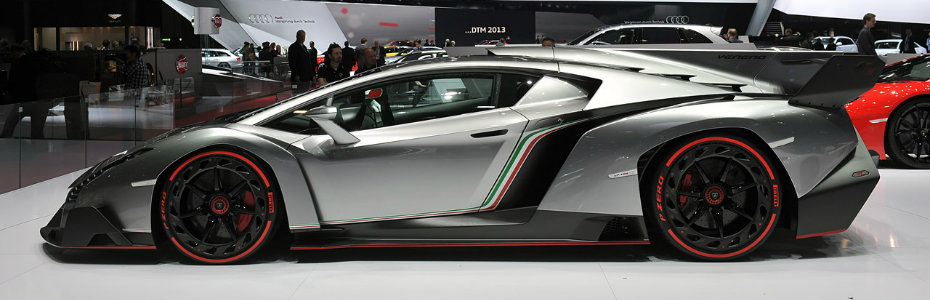
Lamborghini Veneno

Lamborghini's $4 Million Price Tag Veneno, only 3 of these bad boys were produced.

Bentley Motors

Bentley, the Definition of Luxury. What are there more to say?

Porsche 918 Spyder Concept

So, is the 918 Spyder everything it has been hyped up to be? Well, the picture speaks for itself.

Showing posts with label Jeep. Show all posts

Monday, March 18, 2013

2012 Jeep Patriot


Seventy years ago, the Jeep Patriot would have been amazing. In 1941, the year the original Jeep was drawn up, the power windows, air conditioning and automatic transmission in this Patriot Latitude were features only available in cars like Packards.

The Patriot has features and dynamic capabilities unheard of back when the Jeep was an idea, not a brand. Seventy years of progress, perspective and turmoil has a way of turning the formerly amazing into the mundane. Since its introduction, along with its Compass close relation, this Illinois-built crossover has been viewed as the Fauxlex of Jeeps. It's based on the defunct Dodge Caliber, which itself shares the Mitsubishi GS platform, ensuring a complete lack of underlying Jeep DNA. The only link back to Karl Probst and his seminal design is some squared-off styling and the impression that the Patriot was also designed over a marathon weekend, just like that first Bantam proposal.

There have been a couple rounds of updates to the Patriot to address previous foibles including its former horror chamber-like interior, along with moves to banish the traces of econobox from its styling. We wanted to sample these changes and see just how far the Patriot can go on its reserve of charm.
The Patriot has always had Jeepy good looks. Boxy and reminiscent of the original Cherokee, the Patriot recently got subtle styling changes. These inconsequential tweaks follow an "If it ain't broke, add cladding and move the fog lamps" philosophy. There are some angles, like the rear three-quarter view where you can see through the sharply folded metalwork to the GS platform underneath. A redesigned lower rear fascia does a better job at hiding the muffler, a small change that pays off classy. For what it is, the Patriot pulls off looking like a Jeep.

The interior may trump the class of 1939, but it was massively upgraded for 2011. Better materials now cover the cleaned-up dashboard design, which has been improved ergonomically. Finally, after two revisions, the Patriot's interior has atoned for the original's shameful outfitting. Soft padding for the upper front door panels even helps the Patriot trump some of its hard-doored competition. The center armrest with two storage areas and a chunky steering wheel festooned with easy-to-master controls are also newer worthwhile enhancements. Compared to the original Patriot, standard upholstery is now premium cloth, door switches and ancillary controls are newly backlit and cruise control is standard, too.

Jeep has done its best with what it's got, but the low roof and smallish glass area still make the driver feel boxed in. Looking around, it's a reminder of how 1980s cars were put together, the Patriot's $17,695 base price is the reason behind its retro-style assembly. Comfort in the chair-height seats is good. They're minimally bolstered, but the 17-inch tires aren't grippy enough for that to matter.

Shortcomings aside, the Patriot's interior is a nice one in a class plagued by Cabinus Crappyitis. Just about everything is right. Three big knobs for climate adjustment could hardly be more clear. The gauges are equally intuitive, and the chunky leather-wrapped Chrysler corporate wheel with its slick back-of-spoke controls puts unexpected functionality literally at your fingertips. Latitude trim starts at $19,745 for a front-wheel drive model, and it carries significantly more equipment and a spendier bottom line than the $16,995 Patriot Sport. Most people are going to want the power windows, air conditioning, keyless entry and power heated mirrors that the Patriot Latitude comes with, but they may not want to have to pay four grand extra for them. Uconnect is, as always, incredibly usable and friendly, and would have seemed like super-advanced alien technology during the Apollo moon landing, let alone 1941.

The Patriot Latitude 4x4 we drove (a 2012 model, though there were no significant changes for 2013) has a starting price of $21,445, a number that sees this Jeep mini-ute wading into waters infested by the Honda CR-V, Toyota RAV-4 and even the new Ford Escape, all of which sell like gangbusters. Going with the all-wheel-drive Patriot nets the 2.4-liter four cylinder that cooks up 165 horsepower and 172 pound-feet of torque, which is what you want if picking either version of the Continuously Variable Transmission. Ours arrived with the CVT2 with Autostick manual control, but without the low-range of the CVT2L that's also available. This setup, called Freedom Drive I, is essentially all-wheel drive with a locking feature. Freedom Drive II adds the crawl range and extra skid plates underneath. You'll be able to spot those models by the Trail Rated badges on their front fenders.

In 1940, the 2.4-liter engine would have seemed almost as incredible as a nuclear reactor under the hood. There's an aluminum block, four valves per cylinder and variable valve timing on both camshafts. The intake manifold is molded polymer and its specific output is higher than any mass-produced automobile engine was capable of 70 years ago. It's a modern engine that's not at all like the Willys "Go Devil" side-valver in the first Jeeps. None of that, however, makes it as smooth or refined as the class leaders. This is a growly mill.

Back then, most drivers would have chosen the five-speed manual transmission and marveled at it an age of three speeds. Drivers going for this CVT would have hated it as much, possibly more, than we currently do. To many of us on staff, CVTs are the devil. Some are better than others, but the Patriot feels sluggish and slow-witted with this transmission, and the engine drones on as endlessly as an intoxicated uncle during the holidays, and it's even less appealing to listen to. (Rumors suggest the Patriot will broom the belts in favor of a traditional automatic soon).

The ride and handling of the Patriot would have been a revelation during the WWII era, and they're not bad now. There's good compliance in the suspension, and the impression from behind the wheel is one of sufficient solidity. Pitch it into a corner hard, and the Patriot leans over enough to let you know that you really shouldn't be doing what you're doing. That's okay in this instance, because you can nudge this little crossover box off the pavement and it'll more than hold its own, especially with the Trail Rated chassis enhancements. Braking, however, is an experience lifted directly from the 1940s – not really, but there is a surprising lack of effectiveness when you step on the brake.

Try too much maneuvering with the Patriot, and you may end up with a few carsick passengers, especially the ones hanging out on the exceptionally squishy-foamed rear seat that's sort of like perching on an overturned bucket. What the Patriot lacks in wheelbase, it makes up for vertically, so at least the footwells seem very deep. Behind the rear seat is a decently sized cargo area, and one nice touch is an integrated flashlight that can be popped out and used when needed, then snapped back in to recharge.

The Jeep Patriot's utility is there, mainly because it's a squared-off little wagon, and there's also a smart roof-rail system that seems ready to have your stuff lashed to it. The small crossover segment has really heated up, though, and where the Patriot was once doing battle with the old versions of the Escape, RAV-4, CR-V, Hyundai Tucson and Kia Sportage, all of those vehicles have been redesigned. The Jeep may still have it in the woods, but on the road, there's a lot of newer and more refined choices. The Patriot remains the only way to get into something with Jeep looks and character for this kind of money, so some of the rough edges are likely to be forgiven by those who just really want to get into something with a seven-slot grille. Whether you're one of them or not will be clear by how charmed you are after a drive.

Read more by Dan Roth at Autoblog.com

2013 AEV Brute Double Cab


These are the guys who bring an M777 howitzer to a knife fight. In terms of overall rugged utility, the all-new 2013 Brute Double Cab from American Expedition Vehicles (AEV) is about as overkill as they come, and we can't seem to get enough of the beasts that this company produces. Unlike most aftermarket firms, always striving to lower cost and increase volume (but at the expense of quality), Michigan-based AEV takes pride in its OEM-quality design, engineering, manufacturing and testing. Everything is as good, or better, than the stuff from the factory, and they have been doing it this way for more than 15 years.

Launched at the recent 2012 SEMA show was the 2013 AEV Brute Double Cab. Its debut marked the company's expansion to a four-door Brute on the newer JK platform (drawing inspiration from the Land Rover Defender 130). I recently spent a few hours with the new truck in sunny Southern California, though unfortunately, due to time constraints, I was limited to pavement-only driving impressions.

Driving Notes

- The vehicles are assembled in a facility in Wixom, Michigan. To build the Brute Double Cab, AEV stretches the chassis of a four-door JK Wrangler by 23 inches and extends the rear frame to accommodate its custom composite honeycomb pickup bed. Overall vehicle length grows by 30 inches, to bring it to 216 inches overall.

- Unlike AEV's first vehicles, designed to appeal to off-road enthusiasts seeking something different, the Double Cab targets those seeking the same capability but with added interior room and more room for cargo, all with the improved capabilities of the JK platform. It is not meant to replace a traditional pickup, but rather serve the overland market with more utility than a Jeep.

- My red test vehicle was a Jeep Wrangler Unlimited Rubicon 4x4 ($35,090) fitted with AEV's DC350 package – basically the same as the JK350 package, but on the Brute chassis ($39,999). In addition, it was equipped with a snorkel ($534), splash guards ($114), Warn winch ($250), 37-inch tire upgrade ($400), 4.5-inch suspension upgrade ($100), beadlock wheel upgrade ($850) and a rear slider ($311). Figure about $77,650 for its as-tested price.

- Upon close scrutiny, it appeared that AEV's craftsmanship and materials were top-notch and the fit and finish of the company's assembly work was impeccable. Note the little details like the fresh water storage tank in the rear bumper and the beautifully integrated engine intake snorkel.

- As expected from a vehicle raised considerably higher than stock, the step-in is a stretch and the driving position is commanding. Despite its high center of gravity, the Double Cab didn't feel tipsy or nervous during maneuvers. Handling is secure, but a wheelbase stretched to 139 inches all but destroys the stock Jeep's turning radius.

- The 3.6-liter V6, making about 285 horsepower, was mated to a five-speed automatic transmission. The added weight from the conversion and oversized tires do slow acceleration. While still perfectly adequate for on-road performance, those wanting more power for deep sand, snow drifts or more challenging conditions should consider AEV's 6.4-liter Hemi conversion.

- Our spectacular pictures don't do the Double Cab justice – it looks impressive brightly polished, but even better caked in mud. Next time.

Read more by Drew Phillips at Autoblog.com

2014 Jeep Grand Cherokee SRT


We'll start with the styling. "Aggressive" is the word that best describes the 2014 Jeep Grand Cherokee SRT, from its massive 20-inch wheels – a different pattern than last year's controversial "Spider Monkey" alloys is now available – wrapped in Pirelli P-Zero P295/45/ZR20 tires (Pirelli Scorpion Verde all-seasons are also available) to the unique blacked-out front fascia dominated by Jeep's traditional seven-slat grille. Viewed in profile, there aren't too many clues to the casual onlooker, besides the massive wheels, of course, that this isn't your average SUV. But look a little closer and you'll see details like blacked-out headlight clusters with LED surrounds and a deeply scooped hood with functional heat extractors – telltale signs that this mule is built to haul.

Even if you happen to be behind this brutish 'ute, it will be impossible to miss Jeep's SRT – if the unique rear fascia doesn't tip you off, the rumble emanating from the dual exhaust tips is sure to seal the deal. The soundtrack belted out by the massive 6.4-liter Hemi V8 will stir the souls of all those enamored with big displacement and natural aspiration – you can count us among that group – just as surely as it will irritate your grandparents on long highway slogs.

If nothing else, looking at and listening to the Jeep Grand Cherokee SRT proves that SRT CEO Ralph Gilles isn't just blowing smoke when he says that the brand is "Unapologetically selling high performance."
It's also worth noting that the rear glass is no longer separate from the rest of the tailgate. Jeep says the change makes the piece lighter while improving rear visibility. That's all true, but the ability to stick long objects out the back without a fully erect lid is now lost, though that may at least partially be forgiven since the tailgate is now power operated.

The look inside the cabin has also been fine-tuned for performance drivers. Carbon fiber trim replaces the wood accents found in less powerful Grand Cherokee models, and the so-called Laguna leather and suede seating surfaces are nice and grippy. New for the model year is a dual-pane panoramic sunroof option. Oh, don't forget the bright red engine start/stop button. Racy!

SRT's new-for-2014 steering wheel deserves mention. According to Gilles, the automaker purchased wheels of high-performance models hailing from the likes of Audi, BMW and Porsche to make sure its wheel, one of the most tactile parts of the driving experience, is truly world class. As far as we're concerned, SRT has nailed it – the wheel is nice and meaty where your hands want to rest, and the buttons and controls don't get in the way while driving. Similarly, the big metal paddle shifters on either side of the wheel are easy to locate and feel good to the touch.

Along with the new transmission comes a new shifter. Shaped like a traditional T, the lever is now fully electronic, with separate detents when moving from Park to Reverse, Neutral or Drive. As with all such doohickeys, this one takes some time getting comfortable with, but it eventually becomes a non-issue. Directly behind the shifter is a rotating knob with settings labeled Track, Sport, Auto, Snow and Tow, and just to the right of that is a button labeled Launch. We'll talk more about these bits and pieces later.

The biggest changes to the interior are the new 8.4-inch Uconnect central infotainment system, of which many Autoblog staffers voted tops in its category when it won the AOL Technology of the Year Award for 2012, and the seven-inch customizable display in the gauge cluster.

For the 2014 model year, Chrysler is introducing Uconnect Access Via Mobile, which includes navigation and apps like Aha Radio, Pandora, iHeart Radio and Slacker, plus safety features that include an embedded cellular chip that can contact emergency services; remotely lock, unlock or start the car; and alert the owner of a possible theft.

The entire Uconnect system can now be activated using voice commands, from switching radio stations, changing climate settings, answering or making phone calls or calling upon the cloud using Bing search for directions, places of interest or phone numbers. Drivers can also send and receive text messages if they have connected their phone via Bluetooth.

Since this is an SRT model, the center screen also displays performance data. For instance, the driver can call upon a series of gauges to monitor the vehicle's vital signs, a graphic display of the car showing the g-forces from every direction, lap times or current and best acceleration and braking figures.

Directly in front of the driver is a new seven-inch instrument cluster screen that can electronically display things like the car's speed, current powertrain and suspension settings, trip information, fuel economy, radio settings and plenty more.

Now that we're familiar with our surroundings, it's finally time to hit that big red button to start the engine.

You might think that driving the 2014 Grand Cherokee SRT is all about the engine... and you wouldn't necessarily be wrong. The grunt underhood does indeed dominate the driving experience, and we mean that in the best way possible. Acceleration from a dead stop is effortless up to freeway speeds and beyond, though you won't be lighting up the rear tires as with other products from SRT. Instead, instant all-wheel-drive traction is the name of the game, and holeshot starts are as easy as touching the Launch button we mentioned earlier.

One press puts the car into a predetermined mode that optimizes everything for straight-line acceleration. The suspension hunkers down, the transmission goes into its sportiest programming mode and the engine settles into a 2,000-rpm hum. Let your foot off the brake while mashing the throttle, and you'll be to 60 mph in well under five seconds, each and every time, so long as you're not driving on something as slick as snow, mud, snot or marbles.

Assuming you're interested in more than just pin-your-passengers-back antics, we suggest you investigate the dial to the right of the Launch button. If you're driving at a track, there's a dedicated mode that takes as many of the electronic nannies away as Jeep's engineers felt was safe, including the removal of anything that would take full power away from the engine, along with a torque split that sends 70 percent to the rear tires. There's still roll mitigation and some small level of traction control, however, and that's likely a good thing for everyone but professional race car drivers.

Sport mode adds some of those failsafe features back into the mix, but still allows enough wheelspin to make an aggressive driver feel fast while still being under control with a 65-percent rearward torque bias. This is probably where you'll want to keep the knob pointed on the street. Auto mode is self explanatory, as are Snow and Tow, but you may be interested to know that Auto provides the cushiest ride while Snow and Tow modes lock the torque distribution at 50/50 front to rear.

We already talked a bit about how the eight-speed transmission improves performance, but it's also worth mentioning that the gearbox now includes rev matching, meaning the throttle is automatically blipped when downshifting for smoother and quicker shifting. All in, Jeep says its test drivers shaved six-tenths of a second off their lap times due to the upgraded transmission at Nelson Ledges Road Course in Ohio. That's a massive improvement when talking all-out hot laps.

Braking performance is also very good. Jeep quotes a stopping distance of 116 feet from 60 mph along with a 0-100-0 time of 16.3 seconds. We were only given the opportunity to take the SRT around COTA for two laps at a time, so we can't say if brake fade will be a significant issue. We can say, though, that the 15-inch rotors with six-piston Brembo calipers at the front and 13.78-inch rotors with four-piston Brembo calipers stopped the heavy SUV with authority over the course of our track time, limited as it was.

Steering the Grand Cherokee SRT, we were reminded how polished the final generation of hydraulic power steering systems have been... because this Jeep is still fitted with one in lieu of the electronic units that are becoming commonplace. As such, you won't find driver adjustable steering feel or any changes in ratio, which is locked in at 17.5:1. That's just fine and dandy, though, because the settings chosen by SRT's engineers for the rack-and-pinion work perfectly well.

Read more by Jeremy Korzeniewski at Autoblog.com

2014 Jeep Grand Cherokee EcoDiesel


Jeep has got you covered. We can say this without even having to know what it is you want, because there's hardly an option or configuration that you won't find in the 2014 Grand Cherokee. There are three different engines, three different four-wheel-drive systems (plus rear-wheel drive), four different trim levels – not counting SRT – two different suspension setups and five different settings for various off-road terrain conditions. If you happen to check the box for Quadra-Lift, you'll also have five different ride-height settings for the driver-selectable air suspension.

As you might expect with so many customization possibilities, the way a buyer checks the options sheet can have a profound effect on the final product and its capabilities, to say nothing of its price. Nowhere is that more true than with the Grand Cherokee's choice of engines, with the brand-new 3.0-liter EcoDiesel V6 stealing the spotlight from the still excellent gasoline-fueled 3.6-liter Pentastar V6 and 5.7-liter Hemi V8 powerplants that carry over from last year. No matter which engine you choose, though, it will be paired up with Jeep's new standard eight-speed automatic transmission from ZF. This, ladies and gentlemen, is very good news indeed.

We took to the ranch lands surrounding Austin, Texas at Jeep's invitation to put the 2014 Grand Cherokee through its paces, both on road and off. Read on for our initial report card.

Before we get to the 2014 Grand Cherokee's slightly revised styling, let's break down the most salient reasons why the new diesel engine is so important for Jeep. First, with 240 horsepower and 420 pound-feet of torque, this oil-burning mill, which is manufactured in Italy by well-known supplier VM Motori, has the guts needed to get the Grand going in fine fashion. The fact that it does so with minimal sound intrusion, no in-cabin rattling or shaking to speak of and instantaneous startup thanks to new ceramic glow plugs is icing on the cake. And the cherry on top? Up to 30 miles per gallon on the highway – 28 with four-wheel drive.

Just as impressively, the new Grand Cherokee EcoDiesel has earned city ratings of 22 mpg with rear-wheel drive or 21 with power to all four wheels. Real-world mileage should prove to be the best of any off-road capable luxury SUV in the world – when switching from the Hemi to the diesel on back-to-back driving loops, our average mpg jumped from 14 to 24. A full tank of fuel will enable the Jeep to travel a whopping 730 miles before requiring a refill, and both oil changes and urea refills should be about 10,000 miles apart.

Opting for the diesel won't bring any compromises in utility, either. Both the V8 and EcoDiesel models can tow up to 7,400 pounds (four-wheel drive drops all ratings by 200 lbs, and the the V6 manages up to 6,200), and while acceleration from the oil-burner may not match that of the Hemi and its 360 hp and 390 lb-ft, it's certainly no slouch. It's also worth mentioning that the base gasoline V6 engine is perfectly adequate as well, with the eight-speed making the most of the Pentastar's 290 hp and 260 lb-ft.

Naturally, there's a dollars-and-cents penalty for all that diesel-fied performance, and we'll get to that a little later. Suffice it to say, though, that we're smitten with the engine/transmission combo and would have to think twice, and maybe even a third time, before buying a Grand Cherokee without it.

Now that the engine talk is over (for now), let's talk style. The Grand Cherokee is available in four different trim levels. In order of price, they are Laredo, Limited, Overland and Summit, which is standard with just about everything and new for 2014.

No matter which model you choose, all of Jeep's traditional elements are here, including the seven-slat grille and squared-off wheel arches, but it's all been smoothed out a bit for the new year. The grille itself has shrunk in height, as have the headlamps, which now feature LED elements. At the rear, the tailgate is now one piece – no more separate opening for the glass – and there's a new aerodynamic spoiler at the top and larger taillamp clusters on each side. The changes are indeed subtle, but they're enough to make the 2014 model stand apart from the 2013.

Each individual trim level gets unique exterior bits. Laredo models come with a body-color grille, side mirrors, door handles and chrome headlight trim. The lower cladding is dark gray. Seventeen-inch wheels come standard, and 18-inchers are optional. At the rear, a lone exhaust outlet peeks through the lower valance.

Limited models step up the style game with chrome grille slot frames, side mirrors and door handles. LED lighting elements are optional. More chrome surrounds the lower fascia up front, and dual exhausts add some flair to the rear. Standard wheels are 18-inch satin chrome alloys and polished 20-inchers are optional.

Step up to the Overland model and you're rewarded with standard LED lighting, chrome tow hooks and body-color trim all around that replaces the dark gray. Wheels are standard 20-inch five spokes, polished with mineral gray highlights. The top-of-the-line Summit model gets a lot of unique detailing that includes chrome mesh grilles, a larger front bumper, body-color wheel arch moldings and contrasting dark gray rocker moldings with chrome trim, rectangular exhaust openings and unique satin clear coat wheels measuring 20-inches in diameter.

Inside, Jeep has added a dual-pane sunroof that it's calling CommandView (oh, how they love their marketing monikers...) on the Overland and Summit machines, with the more traditional single-panel sunroof offered on Laredo. Limited models can be optioned with either sunroof.

More interestingly, Jeep's designers have created different interior color and trim treatments for each model level. Laredo and Limited models were "inspired by the cultures and environments of Morocco and New Zealand." The Jeep Brown and Indigo Blue scheme of the Overland was "inspired by the blue-hued dark gray walls of Mount Vesuvius" while the Jeep Brown and Light Frost motif was "derived from the geographic diversity found in the Asian country of Nepal. Summit models come in either black or Jeep Brown with copper accents, inspired by the Grand Canyon and seen in our gallery of images.

Overland and Summit models step up their game with open-pore wood in a differing shades, which we greatly prefer over the high-gloss lacquered pieces more common in the auto industry, and the Summit goes one step further still with an Alcantara-like material covering the A-pillars and headliner. The overall interior ambience changes between all of the available models, and, plain-Jane Laredo aside, they all look and feel like premium spaces with a clear design direction.

All models offer up 35.1 cubic feet of space behind the rear seats, or 68.7 cubes with those seats folded down. More from the measuring tape: you'll find 40.3 inches of legroom up front and 38.6 in the rear between its 114.8-inch wheelbase. You won't find a third row of seats in the Grand Cherokee, so if your clan is larger than five, you'll have to look elsewhere.

Tech-junkies will be happy to note that the 2014 Grand Cherokee is the first Jeep vehicle offered with Chrysler's latest Uconnect Access system. An embedded cellular chip allows remote connectivity from the road for safety purposes, such as to contact 911 or remotely lock or unlock the vehicle, and a mobile app can be used with a smartphone or tablet for a number of unique uses. Voice commands are new for 2014 and can be used to operate the navigation system or any number of apps like Pandora, iHeart Radio and Slacker. Users can also send and receive text messages or use their new Grand Cherokee as a wireless hot spot.

Besides price, if there's any real drawback to offering such technology and its attendant 8.4-inch screen, it's that models without the equipment are forced to fill that space with a smaller five-inch touchscreen and plenty of plastic trim that doesn't exactly scream "premium."

Our advice is to get the Uconnect system to go along with the seven-inch LCD set into the gauge cluster directly in front of the driver. Between the two screens, the Grand Cherokee can display a huge amount of data to its occupants, from the current configuration of the four-wheel-drive system to the car's ride height, navigation or radio information. There are also screens to help the driver track the car's off-road capabilities, showing such useful information as the angle of its front wheels or the current articulation of its suspension.

We took the Grand Cherokee off the beaten path a few times and consistently came away with the feeling that there probably isn't a more capable sport utility vehicle on the market today, save Jeep's own Wrangler and possibly something from Land Rover. With the Quadra-Lift air suspension in its uppermost setting, there's 11.3 inches of ground clearance to go along with a 35.8-inch approach angle, a 29.6-inch departure angle and 23.5-degree breakover angle. Said another way, there are very few situations likely to be encountered by a properly equipped 2014 Grand Cherokee driver that they won't have the ability to conquer, including passage of the famed Rubicon Trail.

Making life easier on the driver is Jeep's Selec-Terrain traction control system with factory predetermined settings for sand, mud, snow or rock crawling. Auto mode can be used the rest of the time, and a Sport mode can be selected from the shift lever.

Three different four-wheel-drive technologies exist that make off-roading a safer and more enjoyable experience. Quadra-Trac I is the base system, and it's always engaged with no input from the driver. There's no low range for serious off-road work, and the Selec-Terrain knob isn't included. Stepping up to Quadra-Trac II adds a two-speed transfer case and the traction control dial, and the system is smart enough to send up to 100 percent of torque to whichever axle has the most traction. The top-level Quadra-Drive system is even smarter, being able to send all available torque to whichever individual wheel has the best traction. Low range for both Quadra-named packages is improved for 2014, boasting a crawl ratio of 44.1:1 as compared to the last generation's 30.2:1 ratio.

Read more by Jeremy Korzeniewski at Autoblog.com