TwitterFacebookGoogle PlusLinkedInRSS FeedEmail

Koenigsegg - Performance

When we speak performances, nothing would represent the word "PERFORMANCE" better than any Koenigsegg.

Benz McLaren

Mercedes-Benz - Made In German, the parents to the Silver Arrow McLaren.

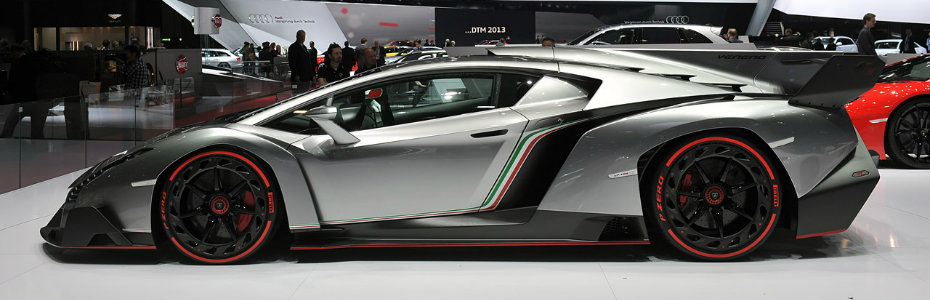
Lamborghini Veneno

Lamborghini's $4 Million Price Tag Veneno, only 3 of these bad boys were produced.

Bentley Motors

Bentley, the Definition of Luxury. What are there more to say?

Porsche 918 Spyder Concept

So, is the 918 Spyder everything it has been hyped up to be? Well, the picture speaks for itself.

Showing posts with label Toyota. Show all posts

Monday, March 18, 2013

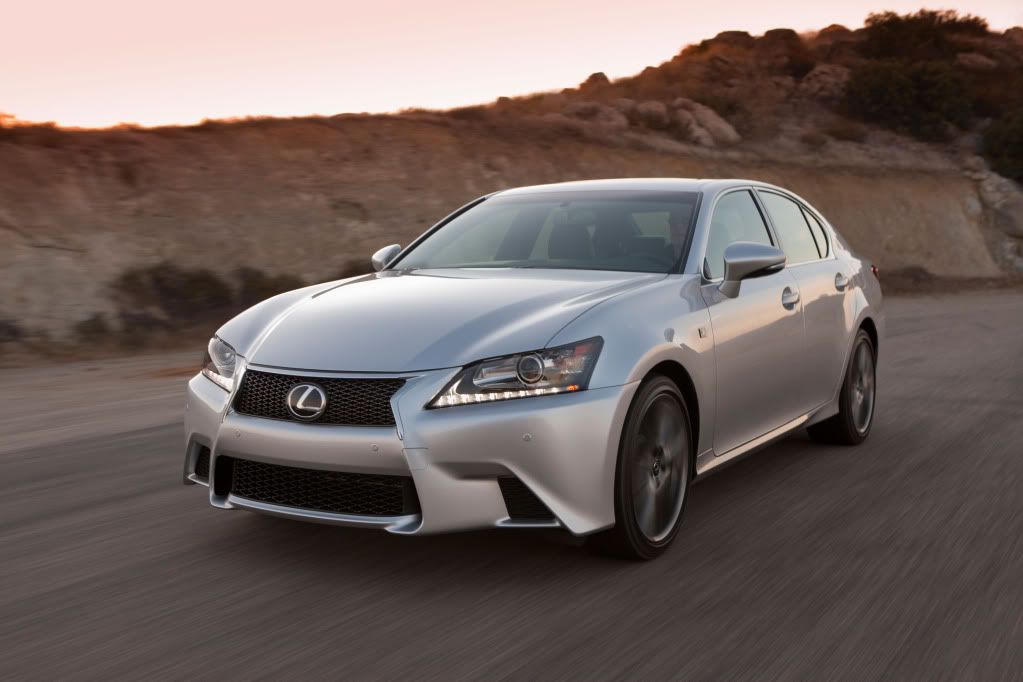
2013 Lexus GS 350 F Sport


The Lexus GS has been chasing the BMW 5 Series for more than two decades. This year, it may have finally leapfrogged its benchmark prey.

Rewind your clock back to the late 1980s, when the midsize four-door sport sedan segment was dominated by BMW. The Bavarian automaker was selling rear-wheel-drive sedans (with manual transmissions, no less) that were every bit as powerful and agile as they were luxurious and comfortable – the best of both worlds, felt many buyers. Of course, it didn't take long for other automakers to get in on the action.

Lexus made its first legitimate attempt at the segment in 1998, with the introduction of its second-generation GS sedan. Despite many accolades, the sporty four-door arrived just in time to compete against BMW's E39, a 5 Series platform that was arguably one of its all-time best. Even after the third-generation GS (2006-2011) went head-to-head with BMW's Bangle-styled E60, the Lexus was still playing catch-up despite its strong performance and loads of new and innovative technology.

But today things are very different. There are now a handful of genuine players in the segment, including very capable sport sedans from Audi, Infiniti and Mercedes-Benz. BMW recently released its sixth-generation F10 5 Series, but the applause has been notably muted. Will that automaker's arguable misstep allow the all-new third-generation Lexus GS to capture the lead? We spent a week with the Japanese sport sedan to find out.

After a slew of early teasers and leaks, Lexus officially introduced its all-new 2013 GS 350 at Pebble Beach in August of 2011. Its bold new appearance (complete with the automaker's new signature spindle grille) hid a sophisticated new platform even more rigid than its predecessor. The track was also widened and the suspension redesigned to further improve handling. While the V6 engine was only slightly massaged and the V8 was dropped completely, the clean-sheet interior would be almost unrecognizable to a previous-generation GS driver.

First out the gate at the Concourse event was the rear-wheel-drive GS 350, fitted with a 3.5-liter V6 rated at 306 horsepower. It was soon followed at the 2012 Frankfurt Motor Show by the GS 450h, a gasoline-electric hybrid with a total system power of 338 horsepower, and then came all-wheel-drive variants. Most interesting to us, however, were the enthusiast-tuned F Sport models that debuted the following month at SEMA.

The F Sport models, in the words of Lexus, are "designed to engage driving enthusiasts with factory engineering and the ability to take performance to an entirely new level." To accomplish this mechanically, GS F Sports are fitted with 19-inch alloy wheels with performance tires, F Sport-tuned Adaptive Variable Suspension (AVS), upgraded suspension bushings, thicker anti-roll bars and larger front brakes with high-performance brake pads. Rear-wheel-drive models also gain the automaker's Variable Gear Ratio Steering (VGRS).

Cosmetically, the GS F Sport models are visually identified by their distinctive sport front bumper (with unique mesh grille inserts) and rear lower valance. There is also a rear lip spoiler on the trunk decklid and F Sport badging on each front quarter panel. Inside the cabin, the performance tuned models feature 16-way power driver's sport seats and other minor cosmetic upgrades, including available Cabernet Red leather.

Our test car, a 2013 Lexus GS 350 F Sport, was painted Liquid Platinum over black leather with Striated Aluminum trim. It arrived carrying a base MSRP of $46,900 and its costliest option was the F Sport package ($5,690), including 19-inch staggered alloy wheels, Adaptive Variable suspension (AVS), Variable Gear Ratio Steering (VGRS), upsized brakes, F Sport driver's seat, black headliner, F Sport aerodynamic package and more. The Mark Levinson Premium Surround Sound Audio System ($1,380) added a 17-speaker, 835-watt sound package and the Navigation package ($1,735) introduced the 12.3-inch high-resolution split-screen display. Lastly, our car was fitted with Intuitive Park Assist ($500) and an Accessory package ($242) with trunk mat, cargo mat and locking wheel locks. Add in the destination fee ($875), and our total was $57,332. Sadly, our test car was missing the Lexus Dynamic Handling System, including its rear steering actuator that is capable of turning the wheels up to two degrees to improve handling.

Its aggressive pricing structure places the Lexus right where it needs to be when pitted against the pricing sought for its sporty competitive set such as the Infiniti M37 (base price $48,200), Audi A6 3.0T ($50,400), Mercedes-Benz E350 ($51,000) and the BMW 535i ($53,100) – we don't need to remind anyone that there isn't a single poor choice on that list.

After more than a year, we have had plenty of time to get used to the GS's bold new look. Whether one approves of it or not, it is unquestionably aggressive and sporty from just about every angle. And, to the designer's credit, it has lost none of its trademark "Lexus" profile. The F-Sport enhancements integrate well with the design, serving to improve its overall appearance without looking forced, cheap or aftermarket. The staggered wheels (painted a hue that hides brake dust) are also attractive and the rear spoiler blends cleanly with lines of the trunk.

On paper, the new GS 350 F Sport reads like a midsize sport sedan champ – especially in specification.

Carried forward from last year with only a few tweaks is a naturally aspirated all-aluminum 3.5-liter V6. The four-valve engine takes advantage of the automaker's dual Variable Valve Timing with intelligence (VVT-i) to generate 303 horsepower at 6,200 rpm and 274 pound-feet of torque at 3,600 rpm. A six-speed automatic transmission (Toyota's A760E) delivers power to the rear wheels in one of three electronically controlled modes (Eco, Normal and Sport). Despite a lack of launch control on the traditional torque converter gearbox, the 3,795-pound sedan will still break the 60 mph benchmark in about 5.7 seconds. Keep your right foot planted and the Lexus won't run out of steam until about 142 mph.

Underpinning the redesigned sport sedan is an all-new suspension engineered to improve cornering precision and respond better to irregularities in the road surface. Up front, the upper and lower control arms are cast in lightweight aluminum, while the rear multi-link setup (mounted in a completely redesigned subframe) uses the same alloy in its control arms. Even the oil within the dampers has been changed to a lower viscosity in an effort to improve its responsiveness. Standard on the F Sport is the AVS with driver-selectable shock absorber damping.

The front brakes utilize four-piston calipers over ventilated rotors and there are single-piston sliding calipers over ventilated rotors on the rear. The F Sport also wears upgraded 19x8-inch cast aluminum alloy wheels at all four corners. For grip, Lexus had configured our test vehicle with Bridgestone Potenza RE050A summer tires (265/35YR19), but production rubber will also be supplied from Dunlop, Michelin and Yokohama.

Before pressing the 'Start/Stop' button, drivers should familiarize themselves with the four different driving configurations offered by the new Lexus Drive Mode Selector, which is located just behind the traditional console-mounted transmission lever (PRND+/-). In a nutshell, the engineers have incorporated a slew of electronically controlled performance settings into the vehicle that may be accessed through the puck-sized round dial.

By default, the system reverts to Normal mode (blue dash illumination, standard throttle mapping, comfort-oriented gearshifts, standard AVS damping and full power to all accessories) when the vehicle is started or the button is pushed straight down. Those seeking a bit more dance in their step will need to turn the dial to the right to activate Sport S mode (red dash illumination, quicker throttle mapping, firmer AVS damping and full power to all accessories).

If that doesn't get juices flowing, some models (including our high-end GS) also allow yet another turn to the right for enthusiast-tuned Sport S+ mode (red dash illumination, sport throttle mapping, sport AVS damping, sport steering effort, sport VSC logarithms and other powertrain enhancements), On the complete opposite side of the spectrum, a turn of the dial to the left will initiate ECO mode (blue dash illumination, slow throttle mapping, reduced seat heating and reduced climate control operation). Understandably, ECO mode is configured for those who are most concerned with reducing fuel consumption.

Lexus has done a fine job with its GS passenger cabin as it is roomy for up to five passengers and very comfortable. Gone is any hint of wrap-around styling, but the 90-degree panel angles are fresh, stylish and well... youthful. The primary instrument cluster, with its two large Optitron analog dials (tachometer and speedometer) and a TFT multi-function display, remains familiar. Not so for the truly massive 12-inch split-screen infotainment display on the center console. It is positively eye-opening, and in a very good manner. Everyone marveled at the colorful and easy-to-read display, although it does take some time to become familiar with its joystick-like interface – now controlled via the current Lexus Remote Touch haptic joystick on the center console – and not everyone will like the amount of light pollution the large screen puts out at night, even on its dimmest setting.

Read more by Michael Harley at Autoblog.com

2013 Toyota RAV4


These are Japanese terms we heard quoted by Toyota representatives when describing its 2013 RAV4. Apparently the first one means "go and see for yourself" and the second means "heart pumping, adrenaline racing."

Nice expressions, but not exactly the ones we'd choose. So we'll introduce one of our own: "Same same but different."

The latest version of Toyota's compact crossover follows the same basic outline of models past. As ever, its on-road ride and handling are competent but not sporty, the powertrain is smooth and efficient and the price is reasonable. It's a tried-and-true formula, but over the last few years, new competitors like the Honda CR-V and Ford Escape have stolen the thunder of Toyota's original cute ute, leading the automaker to refine the mix of ingredients that go into the RAV4 in an effort to take back the compact crossover crown. Read on to see what's new.

Let's talk style. As in, this Toyota has some. Much has been made of Akio Toyoda's corporate mandate that the automaker make no more boring cars, and the last few releases (most recently the redesigned Avalon) from the Japanese automaker have indeed offered more style and substance than in the last several decades. The new RAV4 is no different.

Up front, Toyota has adopted a split upper grille with attractive chrome accents that artfully extend into the headlight clusters. There are sharp creases along either side of the front fascia that, along with large fog lamps and sweeping bumper protrusion, form a distinctive face. The body sides also feature plenty of metal sculpting, and somewhat surprisingly, even though there are swage lines flowing in several different directions – downward-sloping through the roofline, upward along the window line and the lower doors and flatly horizontal through the tops of the doors – the overall look is cohesive.

That stylish togetherness ends at the rear, however, with funky shelf-shaped taillamps that protrude from the body and an oversize spoiler above the rear window. One other noteworthy change for 2013: A regular liftgate is present instead of the swinging tailgate, a design made possible by the inclusion of an internal space-saver spare instead of the exterior-mounted units of all RAV4s past.

Adding that liftgate has allowed Toyota to offer optional power assist on Limited models, featuring a memory system that allows the owner to limit the height of the gate's upward swing – useful when parking in garages where vertical space is at a premium. And unlike systems offered by other automakers, it doesn't just default to fully open and three-quarter height positions. See the video demonstrated in our Short Cut video below.

Moving the party inside, the biggest change to the 2013 Toyota RAV4 is the deletion of the optional third row. We asked Toyota about the switch from seven passengers to five and were told that having a third row in the compact RAV4 wasn't a priority. For the most part, we agree, as the way-back in the RAV4 was pretty tiny and uncomfortable for normal-size adults. In any case, there are plenty of three-row crossovers on the market, including Toyota's own Highlander, catering to those who need more room than the compact ute has to offer.

The five remaining seats can be covered in two fabric types or a synthetic leather substitute that Toyota calls Softex. After sampling all options, we definitely prefer the cloth – we find it hard to believe anyone will be fooled by the imitation leather. Sadly, opting for Limited trim necessitates the Softex interior treatment.

Toyota wanted to "add to the RAV4's sportiness" by making a "driver-centric seating area." We're not so sure it was successful – though all the switchgear, LCD screens and driver touch points are within easy reach, there doesn't seem to be any specific sportiness to the overall look and feel of the cockpit. What the interior can be, though, is bold. Toyota has gone with a so-called color block concept inside the RAV4, with large swaths of contrasting materials that can be had in a somewhat jarring Terra Cotta finish on Limited models. It's more mundane in black, gray and beige, but still effective at breaking up the monotony.

Materials are of average quality for this class, though there are a bunch of colors and finishes that don't really match, such as the plastic surrounding the center stack being a different metallic bronze shade than the horizontal trim running atop the dash. We also don't like the criss-cross plastic pattern used around the shifter and on the door panels front and rear. It's so hard we could file our fingernails on it.

There's a bit more room inside the 2013 RAV4 for the driver than last year. Toyota has added an extra 0.8 inches of travel at the back of the seat rail, along with an additional 0.6-inch of height adjustment that allows the driver to sit lower in the car. Add those important adjustments to the taller seatback and longer seat cushion and the end result is a comfy pair of seats.

Considering the deletion of the third row, it's somewhat incongruous that rear-seat passengers have 1.1 fewer inches of legroom (37.2 inches) and 3.5 fewer inches of hip room (48.9) than the outgoing model. We assume moving the space-saver spare tire from the outside of the tailgate to a space under the cargo floor has something to do with this otherwise unexplainable reduction of interior space. In any case, we were still able to fit two occupants comfortably in the back seat even with the front chairs in adult-size positions, but not a third.

Standing outside the 2013 RAV4, it's clear that Toyota has brought its compact crossover closer to the ground. A look at the spec sheet reveals an overall height of 65.4 inches, a reduction of about an inch from 2012. Ground clearance has fallen from 7.5 inches to a sedan-like 6.3 inches, which is probably fine since the RAV4 isn't really intended to travel very far off the beaten path. Inside, headroom is down an inch (without the moonroof) with 39.8 inches available. Adding the moonroof subtracts about an inch of headroom.

We also can't explain why the 2013 RAV4 weighs more than its predecessor. At 3,435 pounds with front-wheel drive, the 2013 model weighs 75 pounds more than the 2012. A loaded-up Limited model with all-wheel drive tips the scales at 3,610 pounds.

There's one good bit of interior usefulness to report: Cargo volume is up to 73.4 cubic feet with the second row folded, which is a best-in-class figure, and there's a reasonable 38.4 cu-ft available behind the rear seat.

As far as technology goes, Toyota has seen fit to offer its touchscreen Display Audio system as standard equipment, along with a backup camera integrated into its 6.1-inch display. That means all 2013 RAV4s will have an auxiliary jack, a USB port, hands-free phone capability and music streaming via Bluetooth. Navigation and Entune are optionally available on XLE and Limited trim levels, and a JBL sound system with 11 GreenEdge speakers can be had on the Limited. It's a fine audio system that offers plenty of volume, which is good, since there isn't going to be a beautiful soundtrack from the engine.

Stability control, traction control, anti-lock brakes, electronic brake-force distribution, brake assist and smart stop technology, each with its appropriate acronym, make up Toyota's Star Safety System, which comes standard on the 2013 RAV4. Optional on Limited models is a blind spot monitor with rear cross-traffic alert. When so equipped, the driver will be warned of oncoming vehicles when the RAV4 is in reverse. Irritatingly, desirable bits and pieces like sun visor extensions (seriously, why are these not standard?), a smart key, heated seats and the aforementioned power liftgate come only with the Limited model, which also means accepting the fake leather Softex upholstery.

LE models come equipped with 17-inch five-spoke steel wheels with "alloy-like wide vent" wheel covers which do a surprisingly convincing job of looking like alloys at a distance. XLE and Limited models are equipped with alloy wheels in 17-inch and 18-inch sizes, respectively.

Under the hood, buyers will find a 2.5-liter four-cylinder engine offering up 176 horsepower and 172 pound-feet of torque. This engine carries over from 2012 with only a few updates designed to improve efficiency, but the big news is a move out of Ye Olden Days in the transmission department. A six-speed automatic has finally replaced the old four-speed unit. Hooray! With two extra gears comes improved fuel economy of 24 miles per gallon city, 31 highway and 26 combined with front-wheel drive or 22/29/25 with all-wheel drive, increases of one to three miles per gallon across the board. What's more, the 0-60 run now takes 8.9 seconds, a drop of well over a second from the 2012 model with the same engine, and there's much better spacing between gears on mid-speed roads.

Toyota's six-speed automatic gearbox also includes AI-SHIFT control, which attempts to deliver the kind of shift feel that the driver and road conditions dictate, and a Sport mode with Dynamic Rev Management that allows smoother and quicker shifting when activated. There's also an ECO mode that kills driver involvement at roughly the same rate as it improves fuel efficiency. We engaged it, then immediately turned it off it.

The 2013 RAV4's all-wheel-drive system is more sophisticated than before, with a computer-controlled electromagnetic coupling transferring power front to rear as required. Up to 50 percent of the engine's torque can be sent to the rear wheels, and the system can be locked at speeds under 25 miles per hour. When set to Sport mode, RAV4 models with all-wheel drive now feature all kinds of computer trickery to help reduce understeer.

Adding all-wheel drive to any RAV4 model will likewise add $1,400 to the sticker price. Base LE models begin at $23,300, while mid-grade XLE trim models start at $24,290. Opting for the top-level Limited brings with it a window sticker of $27,010. Toyota expects the XLE to make up 40 percent of RAV4 sales, with the other 60 percent divided equally between LE and Limited trims. A heart-of-the-market, all-wheel-drive XLE with navigation and Entune will cost $26,720. If Toyota's calculations prove correct, about two-thirds of the 200,000 RAV4s it hopes to sell in 2013 will be equipped with all-wheel drive. That sales goal, by the way, would represent an increase of about 30,000 units over the sales peak in 2007 that was nearly matched in 2010 before dropping to 132,000 in 2011. Ambitious plans, it seems.

On the road, we could definitely feel the high-tech AWD drivetrain helping out when the road turned twisty, actively rotating the rear of the vehicle through the corner. Enthusiast drivers take note: we suggest you test drive the all-wheel-drive RAV4 even if you don't expect to drive in adverse weather conditions, and don't forget to select Sport mode.

The RAV4's suspension has received plenty of tuning adjustments, but it's still geared toward smooth running in lieu of sporty handling and road feel. Similarly, the electronic power steering delivers reasonable response and effort for a compact crossover, but don't expect to feel much feedback from the road. Fortunately, big impacts are very well damped by the moving bits below, and we'd describe overall handling as pleasantly predictable.

Four-wheel disc brakes (ventilated up front) are standard, though we find it a bit odd that the LE model is fitted with smaller (10.8-inch diameter, .98-inch thickness) units than XLE and Limited models (11.7-inch and 1.1-inch). Rear brakes are the same all around, measuring 11.1 inches in diameter and .472 inches in thickness. Regardless of size disparities, we found the brakes perfectly adequate during our drive.

In fact, the descriptors "pleasantly predictable" and "perfectly adequate" pretty much sum up our opinion of the 2013 RAV4. Thing is, the same could be said of the 2012 RAV4 as well. We appreciate the updates Toyota has made to keep the compact crossover competitive, and we don't really mind the deletion of the V6 engine option and the seriously cramped third row of the past. Whether or not Toyota's comprehensive refresh of the 2013 RAV4 is enough to put it atop the Honda CR-V and Ford Escape is another matter entirely.

Read more by Jeremy Korzeniewski at Autoblog.com

Tuesday, March 12, 2013

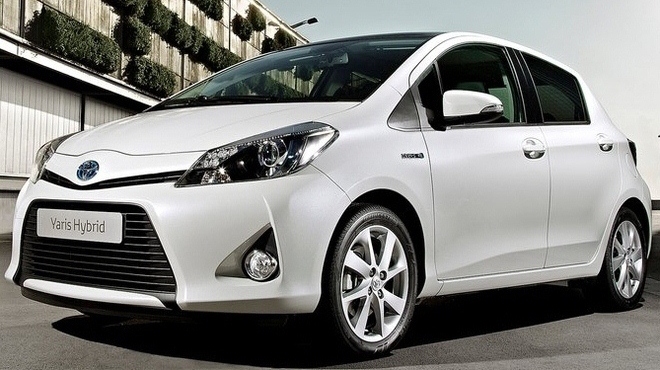
2013 Toyota Yaris


What's New for 2013

Other than some minor revisions to its standard features, the 2013 Toyota Yaris is unchanged.

Introduction

If you're shopping for a car to provide pure driving excitement, chances are you're not looking at a subcompact. If you are shopping for a subcompact, you're probably more focused on a reasonable purchase price, excellent fuel economy and low operating costs. Some versatility and an iron-clad reputation for reliability wouldn't hurt either, would it? After last year's total redesign, the 2013 Toyota Yaris can check all of those boxes. It's the Toyota of economy cars, which is hard to ignore, and the recently re-engineered 2013 Yaris is vastly more competitive by almost any measure.

Once the doormat among a crop of very good, recently redesigned small cars, the Yaris now is one of the newest, offering a blend of attributes that makes it much more worthy of consideration. It's almost 3 inches longer, which translates to a noticeable difference for backseat occupants and creates more room in the cargo area. Meanwhile, the driving dynamics are sharper and the ride is refreshingly supple and free of the harshness of the previous model.

If you want a traditional sedan, however, the Yaris can't help; the lineup comprises only hatchbacks, with either two or four doors. The upside: This and Toyota's deliberate strategy to keep a lid on option combinations means that it's pretty easy to buy a Yaris. And the other plus of the downsized options menu means that there's a healthy amount of standard equipment for every Yaris.

True to Toyota's practice, the Yaris' engine isn't the raciest. The 1.5-liter four-cylinder's 106 horsepower is about class-average and falls well short of boisterous power plants such as the2013 Hyundai Accent's 138-hp four-cylinder. But the Yaris still gets great fuel economy. We wish Toyota would cut loose the Yaris' dated four-speed automatic transmission, though, and can only wonder what kind of fuel economy is achievable with a six-speed automatic that's increasingly common among its contemporaries.

There are suddenly a lot of excellent subcompact cars worth considering. The 2013 Ford Fiesta is a favorite for those who prize sharp responses, and the 2013 Chevrolet Sonic is a versatile package, offering the options of a sedan body and an entertaining turbocharged engine. But after its recent redesign, the 2013 Toyota Yaris is an excellent all-around choice, particularly when you throw in the undeniable assets of Toyota reliability and resale value.

Body Styles, Trim Levels, and Options

The 2013 Toyota Yaris is a subcompact economy car available as either a two- or four-door hatchback. The L and LE trims are offered in both these configurations, while the sporty SE trim is offered only as a four-door.

Standard features on the L include 15-inch steel wheels, a rear windshield wiper, power door locks, air-conditioning, four-way-adjustable front seats, a tilt steering wheel, a trip computer, a fold-down rear bench seat, a cargo cover, Bluetooth phone connectivity and audio streaming and a six-speaker sound system with a CD player, HD radio, an auxiliary audio jack and a USB/iPod interface.

With the LE, you also get power windows, remote keyless entry, cruise control, a six-way-adjustable driver seat, auxiliary steering-wheel-mounted audio controls, upgraded interior trim and a 60/40-split fold-down rear seat. Those who opt for the SE trim get a sport-tuned suspension, 16-inch alloy wheels, sportier tires, four-wheel disc brakes, a unique grille, foglamps, a leather-trimmed steering wheel and upgraded cloth upholstery.

Powertrains and Performance

The front-wheel-drive 2013 Toyota Yaris is powered by a 1.5-liter inline-4 engine with an output of 106 hp and 103 pound-feet of torque. A five-speed manual transmission is standard, with a four-speed automatic available as an option. Edmunds tested a Yaris SE with the manual transmission and it required 9.3 seconds to reach 60 mph, a slightly quicker time than average for this class. An automatic-equipped car needs another second and a half to get to 60 mph from a standstill.

EPA estimates for the manual-equipped Yaris are 30 mpg city/37 mpg highway and 33 mpg combined; with the automatic, these numbers dip to 30/36/32 mpg. These numbers are solid, but not class-leading, as the Yaris lacks some of the more sophisticated drivetrain hardware that allows rivals to do better.
Safety

Standard safety features include antilock brakes (rear drums for all models except the SE, which gets four-wheel discs), traction and stability control, active front head restraints, front seat side airbags, front and rear side curtain airbags and a driver knee airbag. In Edmunds brake testing, the Yaris stopped from 60 mph in 121 feet, an average distance for this segment.

In government crash testing, the Yaris four-door hatchback received four out of five stars for overall crash protection, with four stars for total frontal-impact protection and five stars for total side-impact protection. The Insurance Institute for Highway Safety gave the Yaris its highest possible rating of "Good" in the frontal-offset, side and roof strength tests.

Interior Design and Special Features

The Yaris' interior couldn't be simpler or easier to use; there are just a couple of gauges to read and most will appreciate that the large speedometer is placed directly in front of the driver, rather than in the center of the dash as in the previous Yaris. Those worried about a subcompact car affording a low view of the road will find the high-mounted front seats help provide fairly high sight lines, though the lack of a telescoping steering wheel can be a problem for taller drivers. The new-generation Yaris' extra length means there's a refreshing amount of rear-seat legroom, while even those of above-average height will find acceptable headroom in back.

Although the plastics and upholstery in the 2013 Toyota Yaris aren't exceptional, the materials are reasonably well-finished and assembled and look durable enough, even if that durability does come at the expense of some hardness to the touch. Toyota really upped this small car's game in terms of infotainment capability by including the complete suite of features from the Tech Audio package as standard. With the exception of navigation (unavailable at any price), the standard infotainment capability in the 2013 Yaris matches that of much pricier vehicles.

The hatchback body style always means extra versatility, but the split-folding rear seat of the LE and Sport trims helps make the hatchback particularly useful. And where the Yaris once trailed other subcompacts in terms of rear-seat and cargo room, there's now noticeably more of both: The four-door Yaris now has 15.6 cubic feet of cargo space, about the same as the Fiesta. But you'll find a good bit more in Honda's Fit (20.6 cubic feet) or the Hyundai Accent (21.2 cubic feet).

Read more at Edmunds

2013 Honda Accord vs. 2012 Toyota Camry Comparison Test


Admit It. You Love This Rivalry

We switch to a different coffee shop the same week that we drive the 2013 Honda Accord EX and 2012 Toyota Camry LE. Our new place serves up double ristretto espressos for the same price as the single shots at our old watering hole, and we swear the foamed milk is denser and more flavorful.

In reality, of course, we're patronizing two coffee chains that are serving up pretty much the same product. Likewise, Honda and Toyota are trying to sell you, me, your dad, your boss's niece and 300,000 other people similar family cars for a similar price.

As in our latte, though, it's the details in these midsize sedans that matter. Subtle things that an ordinary person might overlook are everything to a car guy with a commute.

Honda made dozens of small improvements to the Accord for 2013, and in our full test, we found that they really changed the car for the better. But we already own a 2012 Toyota Camry and enjoy driving it to work. Although we suspect these family sedans may still be the same cup of Folgers, we won't know for sure without a head-to-head taste test.

So You Want To Spend $25,000

Your typical midsize sedan shopper envisions spending $25,000 before tax. That target necessitates a four-cylinder engine rather than a V6, and some self control when optioning the car.

Our 2013 Honda Accord EX has no extras other than a continuously variable transmission (CVT), an $800 option over the standard six-speed manual gearbox, resulting in a total price with destination of $26,195.

That's $320 more than the 2012 Accord EX from our last midsize sedan comparison test ($25,875) and there are more amenities here. Finally, we can make a hands-free call without an aftermarket earpiece, plus we can start the car with the key fob in our pocket (yes, it has a keyless ignition). We don't mind the standard back-up camera, either, even with the Accord's good sight lines, and having another tiny camera on the passenger-side mirror to help us check our blind spot is useful, too.

Tracking down a 2012 Toyota Camry (the 2013 model isn't out yet) that matches the 2013 Accord EX's equipment list proves to be a fool's errand, however. Actually, such a car does exist — it would be an SE model with the optional Convenience package, moonroof, power driver seat and floor mats, and a theoretical price tag of $26,755. Toyota doesn't have such a car to lend us, though, and our own navigation-equipped Camry SE is too expensive ($28,658). Instead, we settle on a Camry LE with the power driver seat ($440) and an as-tested price of $23,925. We would have taken a moonroof ($915) and 17-inch alloy wheels ($799), but it isn't to be.

Apart from its lack of cameras, though, the Camry LE has you covered in the key areas. True, there's no dual-zone climate control like there is in the Accord (as Toyota limits this luxury to the XLE model), but our interpersonal relationship with a significant other perseveres nevertheless, as we are able to negotiate a mutually acceptable fan speed with our better half. We don't have the Honda's trial XM subscription or Pandora integration either, but we can still stream Bluetooth audio or hook up to the Camry's USB port. Poor man's AM radio comes in fine in both cabins, though Dodgers announcer Vin Scully sounds more lifelike through the Accord's speakers.

One Is Quicker and More Efficient

Usually, our friends chuckle when we start describing the adequate acceleration of four-cylinder midsize sedans.

Nevertheless, there's plenty going on between the 2013 Honda Accord and 2012 Toyota Camry. See, Honda has replaced its usual automatic with a CVT. But you won't dread this one. Oh, the revs climb when we floor the throttle on the on-ramps, but as soon as we lift, our desired speed achieved, the engine rpm drops back without the usual CVT springiness as if we've just gotten an upshift from a conventional automatic. Also, Honda's new direct-injected, 2.4-liter four-cylinder has a smooth power delivery, and although its sound is unmemorable, it's not unpleasant.

And while this Honda Accord EX is only rated at 185 horsepower — 5 fewer horses than the last EX we tested — it feels stronger. Torque is the reason, as the 2013 EX's inline-4 is rated at 181 pound-feet at 3,900 rpm versus 162 lb-ft at 4,400 rpm for the 2012 version. This makes the 2013 Accord one of the quickest four-cylinder models in the class (non-turbocharged) with its 7.8-second 0-60-mph time and quarter-mile of 15.8 seconds at 91.2 mph.

Meanwhile, the Camry's 178-hp, port-injected 2.5-liter engine provides more off-the-line grunt in spite of its lower torque rating of 170 lb-ft at 4,100 rpm. But move out for a pass on the freeway or some back road and the six-speed automatic makes you wait around for downshifts. This is a well-tuned automatic, mind you, but it's up against Honda's unexpectedly good CVT, which is quicker at processing requests. The Camry LE reaches 60 mph in 8.4 seconds (8.0 with a foot of rollout as on a drag strip) and the quarter-mile in 16.1 seconds at 88.2 mph.

Honda has also gained the upper hand in fuel economy, as the 2013 Accord has a 30 mpg combined EPA rating to the Camry's 28 mpg combined rating. During our comparison test, the Accord averaged 26.3 mpg to the Camry's 24.9.

You Care About Handling

Handling still matters in a front-drive midsize sedan — if only because a well-damped ride and good steering feel will keep you from dozing off mid-commute.

And if that's the goal, the 2013 Honda Accord EX is the car to get. It's highly controlled as it goes down the freeway, and should you end up on a road with a bunch of turns, the Honda is actually kind of fun. Its new electric power steering might initially catch you off-guard with its light effort, but soon you realize the steering action is precise and also surprisingly informative.

In contrast, the Camry LE's electric steering isn't particularly accurate and has little to say. This is also true of our long-term Camry's steering, but our SE is otherwise amenable to cornering. Not so with this LE, which has a softer suspension calibration and smaller, all-season P205/65R16 Firestone Affinity Touring S4 tires. The car is slow to change heading and generally unhappy when the road isn't straight.

Slalom and skid pad performance reflect these differences. The 2013 Accord goes through the slalom at an impressive 65.5 mph, while the Camry is down at 61.0 mph. For reference, a four-cylinder Camry SE goes through the cones at 65 mph even. On the skid pad, the Accord manages 0.83g on its 215/55R17 Michelin Primacy MXV4 tires, while the Camry LE tops out at 0.77g.

Braking is a wash. The Toyota has a firmer pedal, which we like, but its 129-foot 60-0-mph stopping distance is long for this class. So is the Accord's 128-foot braking distance.

If you're fanatical about ride comfort, you'll prefer the Camry LE, which is noticeably more compliant than the Accord and our Camry SE. Like its predecessor, the Accord EX rides smoothly, but there's a firmness that your dad might not like. Cabin noise levels are comparable, as the Accord registers 62.0 decibels at 70 mph versus 62.5 in the Camry.

Same Cabin, Different Interior Decorators

On a functional level, the 2013 Honda Accord and 2012 Toyota Camry are equally good. They have the same wheelbase and track, and their passenger volume and trunk capacity are within 1 cubic foot of each other. They even have the same size gas tank. So if you're looking for gobs of rear legroom or an easy car seat installation, they've both got you covered.

Yet we'd rather sit in the 2013 Accord EX. Honda paid more attention to interior materials and design (particularly the center stack) in this latest redesign, and the result is a genuinely upscale ambience, even in a working man's Accord with cloth seats. The Honda's driver seat is better shaped and more supportive, too.

There's nothing seriously flawed about the Camry's design, but as in our SE, the mix of materials feels disjointed and some of the plastics aren't up to snuff for this class. The touchscreen audio interface isn't as slick, either, and we wish there were external AM and FM buttons for switching between sources.

A Matter of Taste

"Most automakers would kill for a car to feel this good at the beginning of its life cycle, and the Accord is at the end."

We wrote that in the logbook during our last midsize sedan comparison. And yes, the 2012 Accord was a good car. It handled well, its huge backseat accommodated 6-footers no questions asked, and its handsome, relaxed-fit sheet metal had a timeless appeal. But it was also slow for its class, and its drab interior had too few amenities to keep you busy during long commutes. So it didn't win that test.

Now the Honda Accord is back at the beginning, and it wins this test easily. As usual, it's the total package that makes this car special. The new four-cylinder engine and CVT work incredibly well together, providing usable performance and a real-world improvement in fuel consumption. Honda also improved the look and feel of the cabin, while adding the tech features that have become important in this class. In the midst of checking all those boxes, company executives didn't lose sight of details like handling and steering feel — key ingredients in the character of Accords past and present.

Next to the Accord, the 2012 Toyota Camry LE is down on flavor. It's every bit as useful as the Honda on the inside, but on the road, it's slower and wholly uninterested in doing anything other than taking you to work in comfort. For some, that's enough, especially given this LE model's competitive price tag.

But we'll pay a bit more for the 2013 Honda Accord's tastier brew. For the moment, it's the car to have in the four-cylinder midsize sedan class.

Read more by Erin Riches at Edmunds.com

Could The Scion FR-S Get A Hybrid Version For More Performance?


Go ahead and sit down if you aren't already, because I have some news that may upset you: it is possible that our beloved Toyota GT-86 (aka Scion FR-S, aka Subaru BRZ, aka The Toyobaru) could get a hybrid version in the near future. Gasp!

That's what the UK's Autocar is reporting, anyway. They spoke to chief engineer Tetsuya Tada, who said he is exploring all possibilities for improving the car's performance. That could include forced induction, but it could also include electric motor assistance. Here's what he said:

“I’ve been asked a lot about a turbocharging,” Tada told us. “We are already working on a mid-life facelift for the car, and we are investigating both turbocharging and supercharging too,” he added. “But an electric motor assistance solution is also possible, and would bring benefits that forced induction does not.”

Okay, more power for the Toyobaru. Enthusiasts have been clamoring for that since then beginning, although I have driven it and I don't feel like it needs it all that much. Tada adds this, and I think it's an important point.

"But we must guard against compromising any of the key virtues of the standard GT86 in the pursuit of more power.”

I'm glad Tada sees that. He probably knows better than anyone that one of the best things about the Toyobaru is its purity, its unabashed old-school-ness. Do they really want to mess with that in the pursuit of power?

On the other hand, let's play devil's advocate. Nearly all of the hypercars we saw at Geneva this week have hybrid systems to boost power and efficiency, one way or another. Now we could also see that on an affordable sportscar most of us love already.

Does this mean that hybrids have finally arrived for people like you and me? That they aren't just for Priuses and Insights anymore? Tell us what you think this means, and if the Toyobaru should go hybrid or not.

Read more by Patrick George at Jalopnik.com

2013 Subaru BRZ


Last December, our wandering man of intrigue Jonathan Ramsey drove a Subaru BRZ prototype at Japan's Tochigi circuit under somewhat controlled conditions and was nonetheless very impressed. Then, in that same month, SoCal lad Michael Harley – he who knows a thing or two about hot-footing it on closed circuits – took the practically identical Scion FR-S for many unfettered laps on the island's short and sweet Sodegaura Forest Raceway. He, too, was left extremely enthused by the experience.

My turn now. We needed a real road test of the Subaru BRZ just to see if this car really does merit the "zenith" part of its name represented by its final letter. Can the stellar handling and light weight we've already raved about translate into something you could happily drive every day?

The roads on which Subaru sent me with their new star pupil could not be more appropriate: the ominous Route Napoleon in southern France. This is perfect, because the number of new car drives following the Geneva Motor Show has been mind numbing, and I frankly needed a spectacular car-and-road pairing to recharge my enthusiasm. I can think of no better combo for this than a promising sports car and this insanely technical French two-lane. I am here to find out if, in the real sporting car world, 200 horsepower and 151 pound-feet of torque are enough to keep the fire burning in me.

f I'm being flat-out honest, only the Subaru WRX STI and 2.5 RS before it have ever inspired me much when it comes to Fuji Heavy Industries' body of work. Everything else they have done until now has always been appreciated, even the Brat and the Baja in their own particular weird ways. But for me, they have all, to a greater or lesser degree, felt like cars built by robot people for robot people. I enjoy it when the vehicle wrapped around me shows signs of body heat, of cardiac and pelvic passions, of risks to be taken. I love what the Japanese do for our industry, but the Europeans and Americans have generally cornered the market on flagrant driving machismo.

Approaching the first long drive of the Subaru BRZ, all of this is going through my head, together with the preceding opinions from Messrs. Ramsey and Harley, plus a chorus of other career opinioneers. Will the power/torque numbers be enough? Will the 215-width Michelin summer tires feel like too small a footprint for consistent hookup through and out of the hundreds of incredible curves that await me? Is the handling of the BRZ indeed spectacular but the lower revs exhaust voice too plain? Do I even care about trying the six-speed Aisin automatic transmission with paddles and Sport mode?

For the entire day, as it turned out, my drive partner and I greedily protected our silver Subaru BRZ Limited with six-speed manual, also by Aisin. We did this because after just ten or so miles of driving, we both realized that this BRZ with its short-throw shifter was destined to be even more of a great car moment in our lives than we had anticipated.

 Talk to any driving enthusiast who's been lucky enough to have spent a day on the Route Napoleon and they'll go on breathlessly about the road. But they will also frequently state that they "just wish" they'd had this or that other car rather than the one they actually had. Well, we hauled Gunma butt for roughly 200 miles with rarely a straight or flat section for pausing and collecting our thoughts. It's telling that at no point did I wish I was in any other car, because the BRZ, while certainly not the all-time quickest over this route, would prove to be the absolute epitome of this type of sports car. Get my drift here?

 Read more by Matt Davis at Autoblog.com

2013 Toyota Camry Hybrid


"Vanilla." Taken in modern context, that's not a compliment, but it should be. Vanilla actually has exotic origins, and as spices go, only saffron is more costly. Despite the realities, calling something "vanilla" is not whistling in admiration. The Toyota Camry has been called "vanilla" countless times since its debut, but both the car and the bean have something up their sleeves.

Scoff all you want, but vanilla is the most popular ice cream flavor, and there is no mainstream sedan that outsells the Camry. Apparently, vanilla has an underlying tinge of filthy lucre. We didn't feel rich, exactly, wheeling around in the Camry Hybrid, but we came away impressed, nonetheless.

"When I go to an ice cream parlor for the first time, I always order their vanilla," says Ralph Hannabury. Why vanilla? "When you're making ice cream, everything builds off vanilla. If they have that right, you know they know what they're doing," Ralph explained. Who is Ralph Hannabury? For more than two decades, he made ice cream for Russo's Candy House in Saugus, Massachusetts. Ralph knows vanilla, and good vanilla is hard.

It's the same thing with cars. Supercars are easy compared to a good, bland sedan that starts faithfully every day for hundreds of thousands of miles and exhibits none of the bad habits that are "features" when you're talking exclusive machinery. The Camry is a riot of dispassion to car people, and the Hybrid only moreso with its Hybrid Synergy Drive sopping up whatever visceral treats you can find in the standard Camry.

Keeping the recipe metaphor going, even the best ingredients can't stand up to a poor chef. If the seasoning is overbearing or cooking technique flawed, you'll ruin expensive raw materials. With the Camry Hybrid, Toyota proves its skill at making the tricky Hybrid Midsize Sedan Souflee.

The Camry Hybrid is understated about its fuel efficiency. Look once, it's a Camry, just like the thousands of other Camrys that Toyota sells every couple of days. Look twice, it's still just like every other Camry and it's got extra little badges on its front quarter panels. Look a third time and you might notice the Hybrid-specific 17-inch tire and wheel package, but probably not.

The Camry Hybrid interior is more distinctive, with its own gauge cluster, different plastic trim replacing the fake-wood-patterned standard trim, and Hybrid-specific seat fabric in quick-to-dinge ivory or light gray. The Camry Hybrid shares its acoustic glass windshield with the V6 model to keep noise out, and our car had the JBL GreenEdge audio system for making it. Just like every Camry audio system, this one had an unpleasant trebly edge that was only somewhat mitigated by selecting analog-only radio reception instead of the HD Radio default.

Our test car was also equipped with navigation and the Entune multimedia system. Entune is Toyota's answer to SYNC and MyFord Touch from Ford, with app support (apparently using Bing, making restaurant reservations with OpenTable and using movietickets.com to secure access to a matinee) plus weather, traffic, stocks and sports. With all those distractions pumping at you from the 6.1 inch LCD, it's a good thing the Camry Hybrid also has 10 airbags, high strength steel in the B-pillar and rocker panels, electronic nannies like stability control, radar-based Blind Spot Monitor and Safety Connect to call for help when you do wreck.

The tech isn't quite as easy to use as systems like Chrysler UConnect or even the half-reviled MyFord Touch, but it becomes an innocuous part of the experience quickly. Except for that horrible-sounding audio system. It's like they designed in tinnitus from the start. The rest of the interior impressions are the same as other Camrys. The seats are comfortable and decently supportive, thedashboard is topped with stitching in an attempt to class up the joint, though the panel doesn't blend into the doors gracefully and there are a lot of hard plastics around. It's roomy, comfortable, and the trunk doesn't even take much of a hit with the addition of the 244-volt hybrid battery pack, and it's in fact up 2.1 cubic feet over the last-gen Camry Hybrid.

Driving the Camry Hybrid is not going to light any enthusiasts' hair on fire, though it'll put electrons and molecules to work when you mash the throttle all the way to the carpet for a 7.6-second run to 60 miles per hour, slotting neatly between the more-than-fine four-cylinder model and bonkers-rocketship V6. Low-rolling-resistance tires are also low capability tires, so there's little point in trying to achieve thrilling cornering speeds. Driven like a normal person, of course, the dynamic compromises Toyota made for the Camry Hybrid were the right ones.

Read more by Dan Roth at Autoblog.com

2013 Lexus ES350


In its equivalent world of breakfast foods, the Lexus ES350 is unquestionably the pancake. While its siblings may offer more interesting textures, flavors and consistencies – a generally more exciting culinary experience – the four-door ES is designed with 'indistinct' as its middle name. Its objective is to please just about every entry-level luxury buyer once it ends up on their plate.

Even after a complete redesign for the 2013 model year, the sixth-generation Lexus ES350 emerges every bit as family-friendly and non-polarizing as its predecessors. It is the everyman's luxury sedan, offering attractive pricing and a satisfying fill of amenities and features with the sweetness of a long warranty and polished customer service to back things up.

As a result of its overall wholesomeness and demeanor, the ES350 sells like hotcakes, too. Last year, 56,158 customers took delivery, thus allowing the five-passenger sedan to continue its reign as the highest sales volume Lexus passenger car (it outsells the bigger LS nearly seven-to-one).

To learn more about the all-new ES, and take our own taste of its goodness, we recently spent a week with the midsize luxury sedan in Southern California.

It is no secret that the Lexus ES has always shared platforms with the Toyota Camry. Even though there is nothing particular amiss with that arrangement – it has served the automaker well for more than two decades – the relationship with Toyota's volume family vehicle has forced the Lexus to consistently assume a soft and gentle demeanor reinforced by its transverse-mounted V6 and front-wheel drive powertrain. For five consecutive generations, the ES has been well accepted as a gussied-up Camry with a stronger guarantee and white-glove dealer treatment.

But things have changed rather significantly for 2013. The automaker has introduced an all-new ES model on a larger platform that's not shared directly with the Camry this time, but built on an extended version shared with the Toyota Avalon. The longer wheelbase (increased about 1.8 inches) pushes out the exterior dimensions only marginally (about an inch in overall length), but it does wonders for interior room and passenger comfort. Lexus says rear headroom is increased by 0.8 inches, knee room is increased by 2.8 inches and second row legroom is lengthened by 4.1 inches. Plus, there is even more space below the front two seats to give rear passengers much-appreciated toe room.

Before diving into the styling and cabin appointments, let's take a look under the hood and at its underpinnings.

The engine is carried over to the new platform with only a few tweaks. The gasoline-only ES350 (Lexus is also offering a hybrid gasoline-electric variant this year) features a naturally aspirated 3.5-liter V6 sending its power to the front wheels through an electronically controlled six-speed automatic transmission. The engine is rated at 268 horsepower at 6,200 rpm and 248 pound-feet of torque at 4,700 rpm. It isn't a rocketship, but a 0-60 time of about seven seconds is more than adequate for this segment. Thanks to revised gearing compared to last year's model (a slightly taller final drive), the EPA rates the 2013 Lexus ES350 at 21 mpg city and 31 mpg highway on regular unleaded fuel. That's an improvement of about 10 percent over its predecessor.

The suspension is comprised of MacPherson struts up front and dual-link MacPherson struts in the rear, while the level of damping is fixed. The steering is traditional rack-and-pinion, now with electric assist, and there are disc brakes at all four corners. Standard wheels are 17-inch alloys, but our test model was fitted with optional 18-inch wheels wrapped in 225/45VR18 Michelin Primacy MXM4 all-season tires. The curb weight of the ES350 is 3,549 pounds, with 61-percent of its mass over the front wheels.

Last year's ES350 looks lifeless when compared side-by-side to this year's all-new sedan. Sculpted with an aggressive, almost sporty appearance, the new ES has adopted the brand's signature spindle grille up front. Overall, the presentation is good... but therein lays a problem. Unfortunately, and we pointed this out in our first drive, it looks far too much like the GS sedan – even we would be hard-pressed to tell the two apart at a distance (a spotter's guide says the front headlights of the GS are slightly more angular and the ES is missing the GS's front lower fascia brake intakes).

Our test model, wearing Deep Sea Mica paint over Parchment leather with Espresso Bird's Eye Maple wood trim, started with a base price of $36,100. Lexus had packed on its Ultra Luxury package (for another $11,180) that included just about every amenity and convenience known to the automotive industry. The comprehensive list included upgraded semi-aniline perforated leather, blind spot monitor, panorama moonroof, manual rear door window sunshades, Mark Levinson premium audio, Pre-Collision System (PCS) with Dynamic Radar cruise control, power trunk, heated steering wheel and more. With the $895 delivery fee included, our bottom line came in at $48,175.

Read more by Michael Harley at Autoblog.com

Monday, March 11, 2013

2013 Scion FR-S


Let me tell you about a man named Larry. Larry works for a company called STI Fleet Services, one of a few companies that are responsible for the cleaning, prepping, maintaining, scheduling, delivering and picking up of the cars we test on a weekly basis, not to mention a whole slew of other duties. STI and its competitors are the silent heroes of this whole automotive journalism biz. Larry is one of the guys responsible for a lot of the grunt work – he's been delivering cars to me for nearly seven years now, and because of that, we've developed a bit of a rapport. Now that I think about it, my history with Larry goes back farther than several of my friendships, as well as every romantic relationship I've ever had... combined.

With that much history behind us, Larry knows my taste in cars pretty well. And even though he doesn't voice his own opinions about what's being delivered to me, Larry silently knows when he's about to hand me keys to something truly special. When Larry arrived at my door with a bright red 2013 Scion FR-S, I tried to play it cool. But Larry knows me better than that.

"This is your car, man. It's all you."

Larry is right, too. I've been salivating over the Scion FR-S and its Subaru BRZ counterpart since the first set of spy shots landed in our inbox so many moons ago. And while a few of my coworkers had already driven these coupes in various locales (I am still so very jealous of Managing Editor Jeremy Korzeniewski and hisIsle of Man rampage), this would be my first stint behind the wheel of the manual-equipped Toyobaru. (Full disclosure: I had already driven an automatic BRZ prior to this.)

I'll be honest, though. The FR-S isn't the one I'd have. Park it next to a Subaru BRZ and most people will have a hard time spotting all of the differences, but they're certainly there. And I notice. And for some reason – it could be the LEDs in the front fascia or even the subtle spoiler out back – the BRZ just turns the "want" factor up to 11 for me.

But that isn't to say the Scion isn't an attractive car. It's wonderful to see just how much of the original FR-S concept's design has carried over to the production model, including the sculpted front fascia with wheel arches that extend up beyond the relatively flat hood and the sloping roofline that flows into a clean, chopped off rear deck. No, the bold 20-inch wheels of the concept didn't carry over to the street-legal car, but the 17-inch rollers seen here do fill out the wheel wells enough to give the car an appropriately aggressive stance. The wheels themselves aren't particularly emotional or evocative in terms of design, but they're nice. And besides, that's what the aftermarket is for.

Overall size and proportions are where the FR-S gets really attractive, though. A lot of comparisons have slotted this car in with the Mazda MX-5 Miata and Hyundai Genesis Coupe, and in terms of its overall dimensions, the Scion is basically smack dab in the middle of the two. For another perspective, know that the FR-S is 11 inches shorter in length, an inch wider and 4.5 inches shorter in height than a Honda Civic Coupe. It's a short, squat little thing, and it's damn pretty.

That size comparison is a good way to describe interior dimensions as well. It's certainly not as cramped as a Miata, but a Genesis Coupe feels immensely more spacious by comparison. Taller passengers will certainly have a hard time getting comfortable in the Toyobaru – there isn't a ton of headroom, and even though the steering wheel does telescope some, you'll be doing your best Stretch Armstrong impression if you have to slide the seat back to accommodate longer legs.

But for those of us not in the 90th percentile of height, the FR-S fits like a glove. Despite having a rather complicated audio control setup (wait and see just how long it takes you to adjust the bass/treble – seriously), the center console functions are very simply laid out and easy to use. It's all you need and nothing you don't – three dials to control the heating/cooling; simple stalks coming out of the steering column to manage your wipers, headlights and turn signals; and a center console free of any clutter except for a tall, well-positioned six-speed manual shifter front and center.

The cabin isn't uncomfortable, either. The front seats provide ample support, both in terms of overall butt-cushioning and lateral bolstering, and for two people, the interior is spacious enough that you won't want to kill each other on long trips. Those rear seats, however, are basically useless for anything resembling a human adult.

Read more by Steven J. Ewing at Autoblog.com