TwitterFacebookGoogle PlusLinkedInRSS FeedEmail

Koenigsegg - Performance

When we speak performances, nothing would represent the word "PERFORMANCE" better than any Koenigsegg.

Benz McLaren

Mercedes-Benz - Made In German, the parents to the Silver Arrow McLaren.

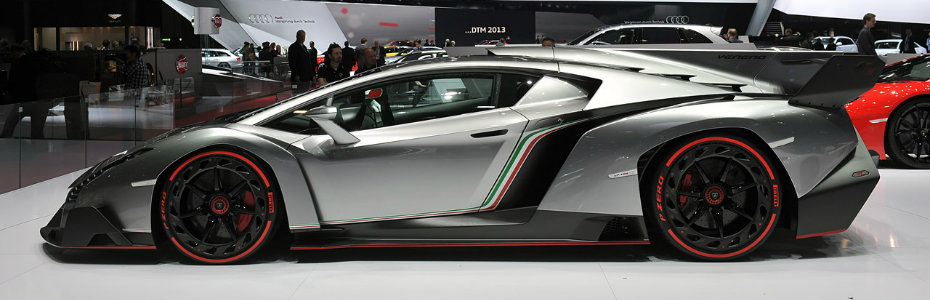
Lamborghini Veneno

Lamborghini's $4 Million Price Tag Veneno, only 3 of these bad boys were produced.

Bentley Motors

Bentley, the Definition of Luxury. What are there more to say?

Porsche 918 Spyder Concept

So, is the 918 Spyder everything it has been hyped up to be? Well, the picture speaks for itself.

Showing posts with label Dodge. Show all posts

Monday, March 18, 2013

2013 Dodge Dart


The 2013 Dodge Dart is the most visible manifestation of the still-new monogamous relationship between Chrysler and Fiat, the Pentastar's savior from the depths of government-sponsored bankruptcy (or worse). If you'll recall, one of the big problems pundits, management and government officials identified with Chrysler's US lineup was its complete lack of competitive small cars.

Now would be a good time to mention that Dodge had a good thing with the original Neon. Not only did the little subcompact sell in conspicuously high numbers, it was also pretty fun to drive, especially in 150-horsepower ACR Coupe trim. In fact, so entertaining was the little two-door coupe, powered as it was by a dual-overhead-cam version of Chrysler's 2.0-liter four cylinder, that it spawned its very own racing series.

The successful Neon got a redesign in the year 2000, and as has so often been the case, the Pentastar Crew didn't do nearly enough to keep it competitive amidst a sea of Civics and Corollas, save the way-too-quick-for-its-own-good Neon SRT4, that is. The response to lagging market share? The Dodge Caliber, introduced in 2007. Suffice it to say that the Caliber was not the answer small-car buyers were looking for.

Enter the Dart. Is this compact the small-car savior Chrysler envisioned when it paired with Italy's Fiat? Let's take a closer look.

If an automobile is going to compete in the hotly contested compact car market in America, it's got to look good. Fortunately, the Dart delivers with styling that won't be mistaken for anything else in its segment. Up front is Dodge's familiar grille, with cross-shaped elements in either black or body color finish. The overall design manages to be both aggressive and curvaceous, due in part to the angular fascia and details like (optional) dual exhaust outlets, blacked-out trim and a distinct lack of chrome. In profile, the Dart is pretty much the exact opposite of the Caliber it replaces, and that's a good thing in the eyes of most consumers – though some will surely miss the utility available only in a hatchback.

At the rear, Dodge has implemented a unique version of its signature racetrack-shaped taillight array, made up in this case of 152 individual LED bulbs (available on R/T, SXT, Rallye and Limited trims). We like the effect of the racetrack taillamp array at night, and we appreciate its availability on the entry-level Dart.

Wheels can be had in 16-, 17- or 18-inch varieties, in bright silver, satin silver, polished or in a so-called Hyper Black finish on the R/T and Rallye models.

A few of the Dart's unique styling elements carry over into the interior. First and foremost is the racetrack-mimicking light strip surrounding the gauge cluster and top of the center stack. There are also plenty of piano-black trim pieces, which match the exterior bits seen on the Rallye model, and though the shiny surfaces are more than a little overdone, at least there's an alternative to the painted silver seen on every one of its competitors. Illuminated cup holders are a nice touch, as is the class-exclusive storage compartment hidden beneath the front passenger seat cushion.

Interior plastics and the fabric seating surfaces in our test car were well chosen, though not what we'd consider class leading – the Ford Focus and Chevrolet Cruze offer generally nicer duds. Most of the touch points have soft coatings applied that make them feel more upscale than past Dodge efforts, and the availability of 14 different cabin and trim combinations means buyers can individualize their Darts to their liking far better than most of its classmates.

Dodge has seen fit to offer its excellent 8.4-inch Uconnect in-dash technology in the Dart, and for that, we're thankful. It's quick, intuitive and powerful, and nothing else in the compact sedan class has any infotainment tech that's anywhere near as competent. Also worth mentioning is the available seven-inch TFT gauge cluster, which offers up a slew of driver-configurable screens that include multiple speedometers, navigation information, economy readouts, vehicle information updates and even a flower that grows or wilts based on your fuel-minded driving habits. Yeah, we could do without that last little bit, too.

Roominess is something of a mixed bag. There's 42.2 inches of legroom up front and 35.3 in the back; hip room in the rear seat measures 52.6 inches while shoulder room comes in at 56.1. The trunk measures 13.1 cubic feet. Basically, what we have in these dimensions is a full serving of competitive. Based on the Dart's exterior dimensions, however, we were hoping for more – the Dart, measuring 184 inches stem to stern with a 106.4-inch wheelbase and 72 inches in width, is the longest and widest car in its class. We're neither engineers nor math majors, which might explain why we're left scratching our heads as to where those extra potential cubic feet went off to.

Even more concerning, however, is the Dart's relative heft. The lightest Dart Dodge sells is still a heifer at nearly 3,200 pounds. The Honda Civic and Hyundai Elantra weigh a shade over 2,600 lbs, the Toyota Corolla and Mazda3 come in near 2,800 lbs, the Ford Focus is 2,960 lbs and the Chevy Cruze, once considered the porker of the segment, tips the scales at a bit under 3,100 pounds. Put another way, the Dart, without a single passenger, weighs as much as a Honda Civic with four 150-pound occupants.

Three engine options are available (or at least will be available once the delayed R/T model hits dealerships), including a standard 2.0-liter naturally aspirated mill, a 1.4-liter turbocharged and intercooled unit that leads the pack in efficiency and a 2.4-liter with 184 horsepower and 171 pound-feet of torque for those looking for the most powerful option. We drove a Dart with the standard 2.0-liter engine mated to a six-speed automatic for a week, then sampled the 1.4-liter turbo with a six-speed manual. Both engines move the Dart with competence through traffic. Horsepower for both the 2.0 and 1.4 engines comes in at 160, but the turbo's 184 lb-ft handily outdoes the base engine's 148.

If it were our hard-earned bucks on the line, we'd definitely opt for the smaller turbocharged engine, which, while balky at low-rpm takeoffs, is genuinely spritely once the tach swings near 3,000 rpm. What's more, it's the 1.4 liter that earns the highest fuel economy figures, with an estimated 27 miles per gallon in the city and 39 on the highway. Add the optional Aero pack, which includes active grille shutters and other slippery tweaks, and highway mileage jumps to 41 when mated to the six-speed manual gearbox. Choose the six-speed automatic and you'll get 28 city, 40 highway. Sadly, the turbo mill requires premium gasoline, negating some of the mpg benefits. For reference, Chevy's turbocharged 1.4 earns similar EPA figures on regular-grade fuel, though its 138 horses and 148 lb-ft are way down on the Dodge.

Behind the wheel, the Dart's Italian DNA is only somewhat apparent. Yes, the car is based on a platform originally developed by Fiat for Alfa Romeo, but it's been stretched like silly putty in every direction for the States and the suspension is tuned for American drivers on American roads. As such, it's soft enough to deal with horrid roadway surfaces and quiet enough to take your parents out to dinner. Fortunately, when you decide it's time to have some fun, the chassis is ready to play. Steering feel is quite good, and the fun-to-drive quotient on the street is right up with the Ford Focus and Mazda3, which we consider to be best-in-class in this regard.

Little things like the engine note and the way the Dart responds to quick steering inputs make for an entertaining car to drive aggressively, but full at-the-limit handling is much messier, with plenty of body roll to go along with the tire squeal. In other words, don't expect the Dart to carry you to any track-day glory as the Neon once did.

The six-speed automatic that can be had with the base 2.0-liter engine is smooth enough that it mostly went unnoticed. Like most modern cars, the tranny's electronic brain wants to shift to the next highest gear as soon as possible for fuel-economy purposes, but that's a disease inflicting most machinery these days.

Rowing through the six-speed manual gearbox isn't as fun as it should be. The shifter isn't as crisp as competitors from Honda or Mazda, and the throws are longer than we'd like. Complicating matters is a clutch that has a somewhat odd engagement. Our staff is divided on how bothersome the shift-for-yourself Dart experience really is, so we suggest you take one for a test drive before signing on the dotted line. In any case, buyers of the row-your-own model with the turbo engine better get used to rowing, as the little engine falls flat on its face at low rpm. Best to keep the mill spinning in the middle reaches of the tach.

Read more by Jeremy Korzeniewski at Autoblog.com

2013 Dodge Durango R/T


Not too long ago, Chevrolet got itself into some trouble by throwing the SS badge on just about everything it produced, so I've always been a little hesitant about the seemingly excessive use of the R/T nameplate on Dodge vehicles. For the 2013 model year, practically every model in Dodge's lineup has an R/T trim level from the Avenger all the way up to the Durango. Although the R/T name used to signified models made for road and track, I doubt anyone would be delusional enough to assume the Durango – and some of the other models wearing this badge – are suited for any sort of track duty.

Still, when this 2013 Dodge Durango R/T rolled up for me to drive for the week, I couldn't help but take in its big, mean and imposing stance. Sure, if I had my choice of buying any of the Dodge R/T products, the Charger and Challenger would be my top picks for sure, but it's easy to say that the Durango would be a close third – far above the R/T versions of the Avenger, Journey and Grand Caravan.

Driving Notes

- Not that the current Durango was a bad-looking SUV to begin with, but the R/T package gives it more aggressive styling thanks to a monochromatic look. With the removal of just about all the chrome that comes on a Durango, this tester even looked good in what would normally be a boring shade of silver thanks to the body-colored front fascia, smoked headlights, 20-inch wheels and the sporty-looking rear fascia with dual exhaust outlets.

- The styling might be there to back up the badge, but there is no extra power under the hood of the R/T. In possibly one of the best moves Dodge made with this particular model, the only engine offered is the 5.7-liter Hemi V8. The 360-horsepower, 390 pound-feet of torque engine feels adequate perfectly for this 5,331-pound utility. This is the only model of the Durango lineup that comes standard with the six-speed automatic transmission, too.

- Fuel economy is about what you'd expect from a V8-powered SUV weighing as much as the Durango does, with EPA estimates of 13 miles per gallon in the city and 20 mpg on the highway. During my week with the R/T, this tester returned 15.5 mpg.

- The Hemi is equipped with cylinder deactivation, which feels clunky at times when it switches from V8 to V4 power, with an ever-so-slight delay when the cylinders reengage once again. The only bypass for the system is just to be sure that you're right foot stays planted whenever possible.

- Chrysler says the Durango R/T comes with a sport suspension, but aside from the bigger standard wheels, I felt no difference between this and any other Durango I've driven in the past. If you're really looking for a sporty, family-sized (three-row) SUV, you're probably going to want to check out the new Explorer Sport.

- The best part of the Durango R/T might be its exhaust system. Yes, the dual pipes poking through the rear fascia give it an aftermarket look, but it's the exhaust note that makes the R/T thrilling. Dodge gave the Durango R/T unique mufflers, pipes and resonators for a deep, throaty note, which makes the package a little more distinctive.

- Similar to the exterior styling, the R/T's interior has a sportier look and feel with plenty of red accents on the standard black leather throughout the cabin. This particular model came with the center-row captain seats limiting the overall seating capacity to just six, but it made accessing the third-row seat much easier. Not surprisingly, as the innovator of third-row seating for non-fullsize SUVs, the Durango's rearmost accommodations are spacious enough for two adults and can also fold completely flat quickly and easily.

- The R/T trim level sits just under the Citadel as the top Durango model, and as such, it isn't a cheap SUV. Starting at $35,995 in base form, this all-wheel-drive 2013 Durango R/T was optioned up quite impressively, bringing with it a hefty as-tested price of $45,360.

- What you get for that high price, though, is plenty of optional goodies including leather-wrapped door panels, heated steering wheel, heated and ventilated front seats, adaptive cruise control and Chrysler's Uconnect navigation system. This test vehicle may very well have been completely fully loaded, and while it'd be a hard financial pill to swallow, it's certainly easy enough to option rivals to the same level.

- Yes, the third-gen Durango is no longer body on frame, but proving that it hasn't completely lost touch with its SUV roots, the Durango is still rear-wheel drive in base form, even though it's now competing against a newer breed of three-row utilities like the Chevy Traverse, Nissan Pathfinder and the Ford Explorer. Unlike its corporate cousin, the Jeep Grand Cherokee, the Durango is not offered with a multi-mode off-road system, but it did handle itself quite well while driving on the loose sand of a northeast Florida beach.

Read more by Jeffrey N. Ross at Autoblog.com

Sunday, March 17, 2013

2013 Dodge Charger SRT8 Super Bee


I can pinpoint the exact moment when I fell in love with this car. It was starting down a nearly straight entrance ramp at 15 miles per hour when I buried the throttle. In a moment, I was thrown back into my seat as the big SRT8's engine came to life with commensurate sound, fury and force, bringing me up to 75 mph in what felt like two blinks of an eye. This thing feels so much quicker than its 470 horsepower and 470 pound-feet of torque would lead you to believe. And mashing the right pedal never, ever gets old.

But beyond sheer speed, I found a whole lot to like about the Charger SRT8 during my week with the Pitch Black test car here in Detroit. And while the whole Super Bee kit isn't really my style, it's really easy to overlook those badges for a package that offers so much for so little.

Driving Notes

- Like I said, the 392 Hemi engine feels much more powerful than its numbers might suggest. Chrysler estimates that the car will rip off 0-60 times in the high-four-second range, and you'll pass the quarter mile just before the 13-second mark.

- And then there's the transmission. Dodge fits a five-speed automatic unit to its 6.4-liter Hemi here in the Charger, and while that's almost an archaic piece of technology by today's standards (and considering that the recently refreshed Jeep Grand Cherokee SRT with the same engine uses an eight-speed auto), it's still well-suited to the big motor. Shifts happen quickly, both up and down the range, and because there are only five ratios, there's less hunting around between cogs.

- There are steering wheel-mounted paddle shifters, but the transmission felt best when left to its own devices. Just hit the throttle when you want to go, and you'll go. There's no drama, just speed.

- The rub, though, is with fuel economy – at best, you'll manage 23 miles per gallon on the highway, and my average of 16 mpg fell just short of the estimated 17-mpg combined rating. Oh, well.

- But this thing is just so damn fun to drive. You can get the rear tires to spin at every stoplight, but in an incredibly manageable and playful fashion. Likewise, it's easy to nudge the rump out around turns, and the thick, leather-wrapped SRT steering wheel is a joy to toss back and forth.

- This is a big, heavy car, though, and you won't forget it from behind the wheel. At no point would I describe its handling as nimble or precise, but it's not nearly as tough to wrangle as you might imagine. There are big Brembo brakes to keep all that power in line, and you don't need to turn off the traction nannies to have a good time.

- Visually, the Super Bee kit offers unique, double-five-spoke 20-inch wheels, decals on the hood and rear quarter panel, and a small graphic next to the SRT badge in the grille. Inside, unique trim is found on the cloth seats and there's another Super Bee graphic on the dash. It's not what I'd spec, but to each their own. The Charger is still a great-looking car regardless.

- That said, this model, as-tested, was $44,435. Of course, that's without premium features like navigation, the awesome leather SRT thrones, HID headlamps, a sunroof, and so on, but it's a nice value. It's basically one of the new SRT Core models, but with some decals.

- This car offers a ton of bang for the buck in terms of performance, but it's easy to feel cheated inside, despite the spacious, quiet cabin. The standard 4.3-inch touchscreen display works well and is incredibly responsive, but combined with the large cubby underneath, it really reminds you that you didn't pony up for the big screen Uconnect system. And while the cloth seats are comfortable, they aren't nearly as supportive as the seats of the standard SRT8, and you can't get them with heat, either.

- If anything, this SRT8 Super Bee reminded me just how awesome the Charger SRT8 is as a whole. And by offering so much punch underhood, the Super Bee package strikes me as being an excellent bargain for people looking for no-frills high performance.

Read more by Steven J. Ewing at Autoblog.com

Tuesday, March 12, 2013

2013 Dodge Charger AWD Sport


We won't beat around the bush: The all-wheel-drive Dodge Chargeris not a brand new car. This generation launched in 2011, AWD models and all. But for 2013, Chrysler has added an optional sport package to the AWD model, available with both the 3.6-liter Pentastar V6 or the sweet, sweet 5.7-liter Hemi V8. The upgrades for this new sport pack are mainly cosmetic; a gloss black grille, new 19-inch alloy wheels and body-colored rear spoiler make up the list of exterior changes. Inside, there are new sport seats and paddle shifters, and the eight-speed automatic transmission has been reflashed for better performance.

But because vehicles like the Dodge Charger mainly stick out in our minds as being rear-drive bruisers, Chrysler wanted to give us the opportunity to test out the LX platform's foul-weather prowess. And perhaps no place more appropriate to test such a system was way up in Michigan's Upper Peninsula in the dead of winter.

Driving Notes

- It's not a new formula by any means, but we still adore the 5.7-liter Hemi V8 under the hood of the Charger. 370 horsepower and 395 pound-feet of torque are more than enough motivation to get this hefty (4,450-pound) sedan up and moving with a quickness, even with all-wheel drive.

- We also had a chance to drive the AWD Sport pack on a Charger with the 3.6-liter Pentastar V6, and the new eight-speed automatic 'box is really slick. Unlike other eight-cog units, you won't find the transmission frequently jumping back and forth between gears.

- Fuel economy isn't anything stellar back in the V8 model, though. Combined with all-wheel drive, the Charger R/T AWD Sport achieves 15 miles per gallon in the city or 23 mpg on the highway. Still, that's about par for the class – a two-wheel-drive Hyundai Genesis with the 5.0-liter V8 achieves 16/25 mpg.

- On our drive through Michigan's Upper Peninsula, we mostly encountered long stretches of two-lane backroads that, while throwing the occasional curve our way, were mostly straight and flat. This is ideal Charger territory, as the big sedan is perfectly poised to be a solid, comfortable highway cruiser above all.

- We had the chance to pilot the Charger AWD Sport around a few handling courses in the snow, and there, the car offered safe amounts of fun. The Charger uses a rear-biased AWD system that only sends power to the front wheels when moments of slip or poor traction are encountered, but this means enthusiasts who like a bit of tail-wagging hooliganism in the snow will be very happy.

- Even with that rear bias, the big Dodge never failed to snap itself back into line when we intentionally tried to break its butt loose. And since we were able to drive the Charger on a number of snowy, icy test courses, it was easy to see that this AWD system works well in all types of road conditions.

- After so many years of lackluster cabins, it's nice to be able to praise Chrysler interiors. Here in the Charger, we found both the sport cloth and leather seats to be immensely comfortable, and the overall fit and finish to the interior is quite nice. We especially like the carbon fiber-look trim pieces added to the Sport model for 2013.

- Perhaps the best thing about the Charger's interior is the Chrysler UConnect system – there's a reason why it's an award-winning piece of technology. The 8.4-inch screen is super easy to navigate, but this system's biggest win is just how responsive it is to touch commands. Other automakers really should take note.

- What's great about this whole package is that the fullsize, loaded sedan tops out under the $40,000 mark. That's comparable to fully optioned midsize sedans these days (like a Ford Fusion Titanium, for instance). Yes, those smaller cars are no doubt better on fuel economy, but for bang-for-the-buck performance, the Charger is really something special.

Read more by Steven J. Ewing at Autoblog.com