TwitterFacebookGoogle PlusLinkedInRSS FeedEmail

Koenigsegg - Performance

When we speak performances, nothing would represent the word "PERFORMANCE" better than any Koenigsegg.

Benz McLaren

Mercedes-Benz - Made In German, the parents to the Silver Arrow McLaren.

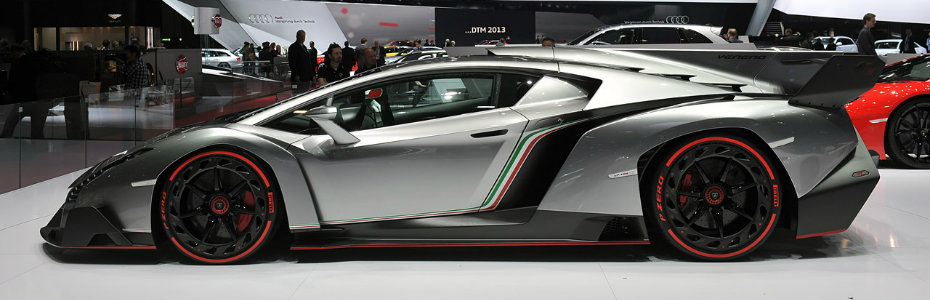
Lamborghini Veneno

Lamborghini's $4 Million Price Tag Veneno, only 3 of these bad boys were produced.

Bentley Motors

Bentley, the Definition of Luxury. What are there more to say?

Porsche 918 Spyder Concept

So, is the 918 Spyder everything it has been hyped up to be? Well, the picture speaks for itself.

Showing posts with label Audi. Show all posts

Monday, March 18, 2013

2013 Audi S5 Coupe


It's hard to believe, but 2013 marks the sixth model year for the Audi S5 (it launched as a 2008 model). I've loved this coupe since the day it debuted, but if I'm honest, the thing that really made the S5 special at launch was its awesome 4.2-liter naturally aspirated V8. You know, the one from the old RS4. And the R8.

Audi started building S5 Cabriolet models with a 3.0-liter supercharged V6 starting in 2010, and for 2013, that super-six is the only engine available for both models. Don't get me wrong, I like the 3.0T engine. (Oh hey, Audi, please stop calling it a 3.0T. There isn't anything 'T' about it.) And I've said plenty of nice things about this engine in my reviews of the A6 and A8. But do those same sentiments carry over to the S5?

Driving Notes

- In terms of power, there's nothing to complain about here. The 3.0T Quattro engine makes 333 horsepower and 325 pound-feet of torque – the same numbers as all other 3.0T-equipped cars. Compared to the old 4.2-liter, that's down 21 horsepower (the torque number remains unchanged), but fuel economy is improved by three miles per gallon in the city and four mpg highway.

- Despite the reduction of 21 horses, Audi still claims a 4.9-second 0-60 time for the 2013 model – same as a 2012 S5 with the 4.2-liter.

- That said, getting to 60 miles per hour isn't nearly as dramatic in the new car. Perhaps the best part about the S5 4.2 package was the fact that you could rev the naturally aspirated engine all the way up to 7,000 rpm, and the noise it made was awesome. There wasn't a ton of low-end power, but that engine was seriously fun to play around with, especially above 3,500 rpm.

- I do like that with Audi Drive Select (part of the $3,250 Driver Assist package), one of the things you can adjust in the 2013 S5 is the exhaust note. In Dynamic mode there's definitely an audible grumble, and it sounds really good if you're hard on the throttle. It doesn't quite have the same roar as that old V8, but it's a lot better than what originally came on the 3.0T Cabriolet. There's a whole lot more low-end torque with this new engine, though it doesn't rev quite as high.

- The S5 isn't quite as tantalizing with its more flaccid mill, but it's hardly impotent on the road. The Quattro all-wheel-drive formula is still top-notch, and the optional 19-inch wheels and summer tires of this test car ($800) improve grip while cornering.

- With the car's other adjustable functions in Dynamic mode – powertrain, steering, etc. – the S5 is fantastic to drive. The steering has great weight and crisp turn-in (though it does feel a bit dead on-center), and the suspension damping isn't at all harsh but offers lots of feedback. The brakes are great, and though there's a good deal of travel to the clutch pedal, the six-speed manual transmission is still all sorts of sweet to use.

- Inside, there's more to love. Quality and materials are top notch, and the seats are both comfortable and supportive, while looking great too.

- Audi hasn't yet updated the A5/S5 with its new MMI Touch interface, but the navigation system in our Prestige model did have the cool Google Earth mapping display. We've played with this before, but it still has that gee-whiz coolness about it, simply because no other automaker is offering something like it.

- Other updates for 2013 include the revised front fascia with new headlamp clusters. Audi pioneered the LED daytime running light hotness, and the new shape to the front graphic is pretty great. LED lights are fitted out back, as well. Also of note is the new Estoril Blue paint color seen in these photos. It's damn pretty, and photos don't do it justice.

- The 2013 S5 is still a truly sweet package, but at $66,570 fully loaded, people seeking a true enthusiast machine would do better with a lighter, quicker, more powerful BMW M3. But with the beauty of Quattro on hand, handsome good looks and a high-quality interior, the S5 has a lot going for it. Now if it just had the 4.2...

Read more by Steven J. Ewing at Autoblog.com

2013 Audi A5 2.0T Quattro


Any car tasked with taking on the BMW 3 Series has a tough road ahead of it – both in the showroom and, literally, on the road. Such is the fate the Audi A5 has faced since hitting the scene in 2008, going up against one of the most cheered and revered coupes on the market. To take on BMW's two-door titan (as well as a growing number of luxury coupes), Audi has spent every year since the A5's debut tweaking and changing it, giving the range a lineup of trims and models that has been simplified almost to perfection: Those who desire a great-looking luxury coupe with solid fuel economy can have the A5, while those who want more power can spend more money for the S5, and then, of course, there's the monstrous new-to-the-US RS5.

For 2013, changes to the A5 and its sportier derivatives have focused largely on the car's design, which is a pretty important factor since customers in this segment are likely putting style and luxury at the top of their checklists. The mildly updated A5 borrows heavily from some of the newer design cues found on other Audi models, including newly angular headlights and unmistakable LED running lamps, while other slight changes bring modest improvements to the interior and fuel economy. With a new BMW coupe hitting the scene next year (reportedly switching its name to 4 Series) and recent additions to the segment including the Cadillac CTS Coupe and Mercedes-Benz C-Class Coupe, we spent a week in the updated 2013 A5 to see if these changes will be enough to keep the five-year-old A5 relevant while going up against much younger models.

With just a nip here and a tuck there, the A5's facelift is effective in differentiating it from the previous design without straying too far from what made the original car look so darn good in the first place, and Audi has done this with a subtlety that few other automakers can pull off. The biggest change to the car's exterior styling is a reworked front end with edgier lines around the signature single-frame grille and new headlights showing off a more angular shape. Audi has made LED running lights into an art form, and the these new headlamps make the A5 look mean day or night. To a lesser degree, the taillights have also been updated with a different internal lighting setup that also gives the car a good nighttime appearance. Our Ibis White test car sported 18-inch wheels with a sharp V-spoke layout that has a design very similar to a jet engine's turbine blades.

On the opposite end of the spectrum from the A5's aggressive new exterior styling, the changes made inside this car are far more restrained. As a testament to how great this interior was back in 2008, Audi has only made small tweaks to the interior, such as a new three-spoke steering wheel, reworked gauge cluster and a more ergonomic shift lever. It remains one of the best interiors of just about any car on sale, both in terms of styling and ease of use. In a day when interiors are either cramming in too many buttons and switches or getting rid of conventional controls altogether, the A5 is surprisingly minimalistic without being confusing or complicated. Designed to be a driver's car, the cabin is obviously built around the pilot with a clean cockpit look, easy-to-see gauges and readouts, and easy-to-use controls, but the entire interior shows Audi's attention to detail with just about every surface decked out in soft-touch materials, soft leathers and real metal accents. The oversized sunroof finishes off the sporty and open atmosphere by bringing plenty of light into the cabin, but it only tilts up about an inch or so, and can't slide back.

From the driver's seat, it's hard to find many faults with the A5's cabin, and those that we could dig up felt more like nitpicks. A thicker-rimmed steering wheel would be great to give the cabin a sportier vibe, and while the placement and button layout of the audio controls on non-navi-equipped models (like our tester) could take a little getting used to for people not familiar with Audi products, the operation of these controls are ultimately simple and not distracting. Even without navigation, though, the A5 still receives the same large display screen to view information for the audio system, and between this screen and the smaller digital multifunction display in the gauge cluster, it's easy for the driver to view all pertinent vehicle information.

As nice as it is to occupy the driver's seat is in the A5, the rest of the car's cabin is more of the same in terms of remarkable materials, design and even some practicality. Yes, we just said that a coupe is practical. Surprisingly, the A5 doesn't give up much in terms of headroom or legroom compared to the A4 sedan, making it possible for four adults to fit in the car. While we wouldn't want to be seated in the rear seats for a lengthy road trip, it's good to know that if needed, the rear seats can accommodate adult passengers in reasonable comfort. The trunk space of the A5 is also only just fractionally smaller than its four-door counterpart, so there is room for plenty of luggage as well.

Speaking of space, we know there is enough room underhood for a V8, but since 2011, the standard engine for the A5 has been the 2.0-liter TFSI turbocharged, direct-injected inline four-cylinder that helps balance power and fuel economy. The engine's 211 horsepower and 258 pound-feet of torque are sent to the ground using Audi's Quattro all-wheel-drive system, and our tester came with the company's optional eight-speed Tiptronic automatic transmission. For hardcore enthusiasts about to cry foul that we didn't test the six-speed manual gearbox, just remember that the A5 Cabrio comes in standard trim with front-wheel drive that offers a Continuously Variable Transmission as an option. On top of that, this transmission is one of the best automatics used by the Volkswagen Group in terms of shift points and response, and for a sportier feel, it's easy enough to just knock the shift lever into Sport mode for a bit more excitement. Thanks to plenty of low-end of torque, the A5 is still a lot of fun to drive, even in Standard mode.

That being said, the A5 isn't the fastest or quickest car in its class, but it is very well-balanced, which is improved upon in 2013 with a new electric power-assisted steering system that helps make the car both more sporty and fuel efficient. On the driving side of things, the steering response of this new EPAS system is just about perfect, giving good feedback at speed without feeling too heavy at lower speeds. As for fuel economy, out tester with the eight-speed auto improved its EPA estimate on the highway up to 30 miles per gallon (+1 mpg compared to the 2012 A5), though oddly enough it's decreased by the same amount in the city with a rating of 20 mpg. During our week with the A5 2.0T, we generally saw around 25 mpg in mixed driving when avoiding Sport mode.

Strong fuel economy is nice, but the name of the game has always been balance when it comes to the A5, and the 2013 model still delivers. In addition to the new power steering, the A5's engine, transmission and braking system all operate in a manner that doesn't feel too sports-car jerky or luxury-car numb. Even the actual balance of the car feels perfectly distributed from front to rear, even though Audi doesn't actually list the A5's weight distribution. Despite weighing a couple hundred pounds more than a comparable 3 Series Coupe, the A5 might be its closest handling rival thanks to a wider stance (both its track and width are about three inches wider) and standard all-wheel drive. The A5 does, however, weigh about 400 pounds less than a comparable Cadillac CTS Coupe and around 150 pounds less than an Infiniti G37x Coupe. On paper, Audi claims the car's acceleration from zero to 60 miles per hour is 6.2 seconds, which is far from quick these days, but between the lag-free turbo engine and quick-shifting transmission, the A5 doesn't disappoint. Besides, if it's off-the-line performance you seek, Audi dealers will gladly show you to the S5 or RS5.

Many people perceive the A5 as a sporty car, but it still has all of the qualities that we expect from Audi luxury, such as a smooth ride and quiet interior. We can't remember the last time a car with frameless windows was as quiet as the A5, and between the compliant suspension and comfortable seats, this car would feel good whether being driven on a winding back road or long highway. Regardless of how it's used, though, the A5 definitely doesn't look or feel its age.

Read more by Jeffrey N. Ross at Autoblog.com

2014 Audi A3 Sportback


The (final) final decision on whether or not we will get the second-generation Audi A3 Sportback in the US has yet to be handed down by the juries in Ingolstadt and Herndon (Virginia, corporate seat for Audi USA). But that doesn't mean we can't head to the roads of the Monte Carlo Rally in this car's most powerful and accoutered trim three months before European customers take deliveries in late February. Our ride for the day? The A3 Sportback 2.0 TDI Quattro S-line with the beefy six-speed S-tronic, a car good for 181 horsepower and 280 pound-feet of torque between 1,750 and 3,000 rpm. If it came available in the US, we anticipate pricing would begin around $34,500 for this topmost trim.

When we get a shot to drive on these utterly spectacular roads, the assumption would be that our Audi of choice would be an RS trim with a chassis set up for our usual abuses. Such was not the case this time, however, as our tester did not even benefit from the optional Audi Magnetic Ride dampers that are now available on the A3. Audi Drive Select is standard at this engine and trim level (we had the European "Ambition" trim, which equates roughly to Premium Plus in the States), and this does provide for the recalibration of several dynamic bits between Efficiency, Comfort, Auto, Dynamic and Individual modes. With the six-speed S-tronic gearbox, ADS takes care of shift responses, as well.

Although this A3 Sportback was not like an RS3 by a longshot on our route, we simply toned down our rate to match what might be the driving attitude of a typical owner. Taken as such, this top tune of the 2.0 TDI engine, plus all of our model's premium touches inside, made for a thoroughly satisfying experience on roads any enthusiast would never want to leave. Conditions were ideal, as there was literally zero traffic to disturb our exploration of this latest Sportback.

The everyday sensation while simply cruising along the highway is, as we experienced recently on the latest Volkswagen Golf that shares its chassis with the A3, is more like the drive of a well-dressed A4. Riding here on optional top-level S-line 18-inch wheels and tires on this trim's standard dynamic suspension with newly engineered rear multi-link axle, this Sportback body comes off even more capable and sophisticated than other models we've tested using Volkswagen Group's new MQB modular architecture.

A chief reason for the even greater maturity of the ride on this A3 Sportback is that one of the benefits of the new architecture is the ease with which it can be elongated or shortened to fit a particular model. While the overall length of the Sportback body adds just .7 of an inch over the three-door A3 we tested earlier this year, the rear wheels on their axle are simply shifted back 1.4 inches, thereby creating a larger footprint while giving both rear passengers and cargo more space to occupy. The new Sportback wheelbase is a full 2.3 inches longer than that of the outgoing model, which is darn near a lightyear in compact car terms.

It's a pity that Audi seems to be leaning toward not submitting this new A3 Sportback for its immigration papers. According to A3 marketing guru Patrick Rismont, the A3 Sportback in its first generation has barely managed to exceed the company's humble sales expectations in America, and that lack of a boffo hit has thrown the A3 Sportback's North American future into question. The feeling in the air is that Audi wants to pummel us rather with the forthcoming A3 sedan and ragtop convertible, the former in its production trim scheduled for public unveiling at the Shanghai Motor Show next April. We know that this is probably the easiest and most practical move, but we are great lovers of Audi's sportbacks, so hope springs eternal they'll keep us supplied with five-doors – especially since this latest edition is so much better than the first one.

Perhaps due to the sheer physics of size and weight, the electro-mechanical steering of the A3 Sportback feels spot-on, and putting it into Dynamic mode tightens things up quite nicely when the road gets twisty. It is eerily smooth, of course, and feedback from the asphalt is not immediate, but we'll hold off whining on that note until the new S3 and RS3 models bless us with their presence. In this trim the steering feel is exactly as it should be.

We tried our best to shove the A3 Sportback around for cornering photographs and whatnot (stability control all the way off), but whatever natural lateral give there was felt less like oversteer and more like purposeful sideways squish. This redone A3 model weighs between 100 and 165 pounds less than last generation, which is still on sale in the US, and because of that, this aforementioned dynamic squishing can be let to run its natural course through the curve, even allowing us to stay judiciously on throttle. We're not talking body roll here, just a forceful and not altogether unpleasant sideways scooching while holding the good steering rack steady and eyeing the road ahead. Such is the world of your typical Quattro chassis, only now lighter.

To our eyes, this new A3 Sportback, along with the TT, A4 and A5, is solidly in sweet zone for the Audi's most recent styling language. The five-door A3 now looks far more interesting than its three-door counterpart. As on all MQB-based models, too, practically all things you can opt for on larger Audis are now available on the A3 family. There is Audi Pre Sense for avoiding lower speed accidents, Audi Side Assist, lane assist, traffic sign recognition, adaptive cruise control, and several other usual suspects.

The latest MMI Navigation Plus with touch pad also makes its Sportback debut, and when you add the Connect feature, your connectivity to the world takes you and your car to places never before known to this vehicle segment. An added compact-class first – shared with all MQB hatches launched so far, but with the most sophisticated treatment saved for Audi – is the full LED lighting front and rear, the front being of the adaptive sort. On the topic of lights, the cargo area – good for a minimum of 13.4 and up to 43.1 cubic feet and eminently flexible despite the lack of a perfectly flat floor – gets two ambient night lights for when you need to open up the panel covering the underfloor stowage space.

Diesel engine family EA288 has been completely redesigned to suit the MQB architecture and be more efficient. Way down low in the rev range, there is certainly some turbo lag before the diesel freight train effect takes hold. But hit the sweet spot starting at 1,750 rpm in second or third gear coming out of curves and the urgency is felt quite clearly. Plus, the noise it makes through the pair of exhaust pipes is pretty nice for a little diesel. Acceleration to 62 mph is estimated at 7.1 seconds, but based on the spirit with which we were dicing up the hills, we figure it's got to have a 6.8-second run in it. As far as economy goes, highway mileage in the US would peak somewhere around 45 miles per gallon.

As ever, we'd love to have a six-speed manual in this application, but Audi isn't planning to offer such a gearbox in the Quattro-equipped A3 at this top diesel power rating. The existing S-tronic dual-clutch gearbox is heavy and it behaves heavily at times. Here's hoping that the latest S-tronic design, as seen on the new R8 supercoupe, can somehow trickle down the lineup, because that quicker and more compact tranny really does work as promised... finally.

Equally important while shoving around any car is a good set of brakes since, aside from the famous curvy roads we drove, there are several spots in the vicinity where huge trucks have inexplicably been allowed inland from the seaside, and there is hardly enough room for their side-view mirrors to pass the local bar without nicking it. Luckily, the A3 Sportback's discs hauled us down from speed pretty well all day long, and with a bare minimum of nose dive and consequent passenger discomfort in the process.

We do hope Audi sees fit to keep one of its hatchback bodies in the US. If not, our lineup of cars from Audi will soon be nearly free of conventional wagons and hatchbacks. And that's not good – because this new Sportback certainly is.

Read more by Matt Davis at Autoblog.com

Tuesday, March 12, 2013

2014 Audi RS7


What's New for 2014

The 2014 Audi RS 7 is an all-new model.

Introduction

With the 2014 Audi RS 7, the German automaker turns up the wick on its coupe-styled luxury sedan. Joining the A7 and S7, the RS 7 will match up against competitors like the Mercedes-Benz CLS63 AMG.

The RS 7's most important distinction is its twin-turbocharged 4.0-liter V8 that develops a sinister 560 horsepower and 553 pound-feet of torque. Power transfers through an eight-speed automatic transmission and standard all-wheel drive. Audi says the V8 lifts the RS 7 from zero to 62 mph in 3.9 seconds, while engine stop-start and cylinder deactivation should help the RS 7 return a combined 24 mpg.

An optional adaptive air suspension system lowers the RS 7 nearly an inch for times when drivers want more aggressive handling. A dynamic steering system that allows varying degrees of steering effort is also available.

A quick glance at the RS 7's more aggressive front end, complete with vast expanses of honeycomb grille and lower air inlets, assures that this is indeed the alpha model in the lineup. Twenty-inch wheels are standard, while 21-inch wheels and LED headlights are available for a further statement of style. Other standard and optional features include xenon headlights, tri-zone air-conditioning, a head-up display, a premium Bang & Olufsen audio system, and a host of driving and safety aids including parking assist, adaptive cruise control, lane-keeping assist and night vision display.

One of the RS 7's more obvious advantages is its rear hatchback configuration, which results in easier cargo loading than with similar coupe-styled sedans. There are 19 cubic feet of room behind the rear seats -- more than in the CLS or Porsche Panamera -- and cargo space maxes out at 49 cubic feet. These are handy numbers if you make frequent runs to the grocery or home goods stores, but not so much if you routinely drive four adult passengers. The RS 7's raked design pinches rear headroom, but does manage to retain abundant legroom.

Audi has not announced pricing, but expect to start the discussion with your Audi dealer at around $100,000 when the 2014 Audi RS 7 arrives this fall. Check back for a full review of the RS 7, including specs, driving impressions and buying advice as it becomes available.

Source: Edmunds

Monday, March 11, 2013

2014 Audi RS5 Cabriolet


Everything we said after driving the RS5 coupe still rings true, even after Audi has gone and ripped off its metal roof, replaced it with a big cloth version, and tossed us the keys. The 2014 Audi RS5 Cabriolet is another bold, big-boned airmobile to make open-top lovers swoon. There is absolutely nothing revolutionary to speak of here versus its hardtop counterpart, frankly, but tear-assing through the southern French hills as the brilliant sun warmed us is plenty good reason to talk a lot about it anyway. And hey, it beats frigid January in Detroit, where the RS5 Convertible is shortly to receive its US introduction.

One issue that could corrupt things a bit is the convertible's added weight factor. It's one thing when an Audi TT removes its top and gains 176 pounds, or when a Porsche Cayman morphs into aBoxster and gains 66 pounds; the effect on dynamics will still be acceptable. But when it comes to a huge-roof coupe like the RS5, that gain in mass becomes 400-plus pounds in cabrio form, for a grand curb weight of 4,461 pounds. As a number attached to this size of a car that's also branded with an RS badge promising raciness, we admittedly fretted. Then we drove the Audi RS5 Cabriolet to cheer up.

Winter weather had moved in a touch at the highest points of our long loop through the Mediterranean Alps, necessitating some adjustments. For this, the optional low-profile Pirelli P Zero fair-weather treads on $1,000 20-inch wheels were wisely swapped out for optional 20-inch Dunlop Winter SP Sport 3D rubber, sized 275/30 R20 97W front and rear.

Would the combination of the added mass under momentum (4.6 seconds or better for acceleration to 60 miles per hour) and the less dynamic winter tires lessen our enjoyment?

Though it's possible to push around the seven-speed S-tronic dual-clutch transmission acceptably in more dynamic situations, the naturally aspirated 444-horsepower 4.2-liter V8 must be kept high in the rev band for best effect. The engine's torque peak of 317 pound-feet is up top, too, happening from 4,000 to 6,000 rpm, but at least the twist really doesn't lessen appreciably all the way to its generous 8,500-rpm redline.

It's no coincidence that this version of Audi's tried-and-true 4.2-liter V8 is known as HDZ for "high revving." Problems arise with timely downshifts, however, when the transmission's onboard brain tries to save the mechanical bits and fluid temperatures by ensuring the revs aren't too high. So the driver can either live with it and flap the paddle one, two, or three times before the downshift into the curve is allowed, or force the engine into lower revs by braking like a sledgehammer before entering and then downshifting. We stuck with the latter approach, which actually became entertaining, at least while driving solo. And neither was our test car gifted with the 15.0-inch $6,000 optional SGL ceramic front brake discs, though the standard compound lead-aluminum units worked fine all day.

Though it's possible to push around the seven-speed S-tronic dual-clutch transmission acceptably in more dynamic situations, the naturally aspirated 444-horsepower 4.2-liter V8 must be kept high in the rev band for best effect. The engine's torque peak of 317 pound-feet is up top, too, happening from 4,000 to 6,000 rpm, but at least the twist really doesn't lessen appreciably all the way to its generous 8,500-rpm redline.

It's no coincidence that this version of Audi's tried-and-true 4.2-liter V8 is known as HDZ for "high revving." Problems arise with timely downshifts, however, when the transmission's onboard brain tries to save the mechanical bits and fluid temperatures by ensuring the revs aren't too high. So the driver can either live with it and flap the paddle one, two, or three times before the downshift into the curve is allowed, or force the engine into lower revs by braking like a sledgehammer before entering and then downshifting. We stuck with the latter approach, which actually became entertaining, at least while driving solo. And neither was our test car gifted with the 15.0-inch $6,000 optional SGL ceramic front brake discs, though the standard compound lead-aluminum units worked fine all day.

Read more by Matt Davis at Autoblog.com