TwitterFacebookGoogle PlusLinkedInRSS FeedEmail

Koenigsegg - Performance

When we speak performances, nothing would represent the word "PERFORMANCE" better than any Koenigsegg.

Benz McLaren

Mercedes-Benz - Made In German, the parents to the Silver Arrow McLaren.

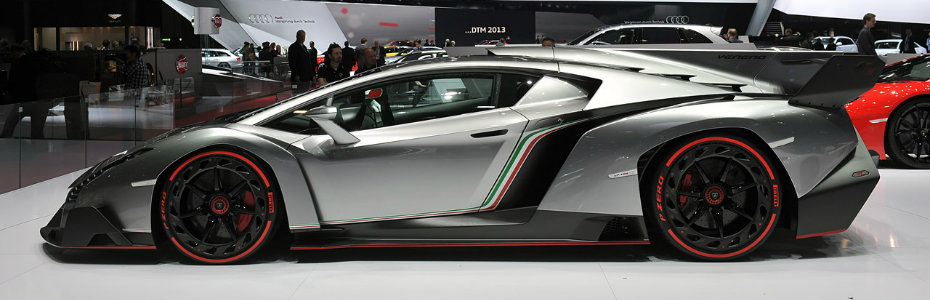
Lamborghini Veneno

Lamborghini's $4 Million Price Tag Veneno, only 3 of these bad boys were produced.

Bentley Motors

Bentley, the Definition of Luxury. What are there more to say?

Porsche 918 Spyder Concept

So, is the 918 Spyder everything it has been hyped up to be? Well, the picture speaks for itself.

Showing posts with label New Car Reviews. Show all posts

Monday, March 18, 2013

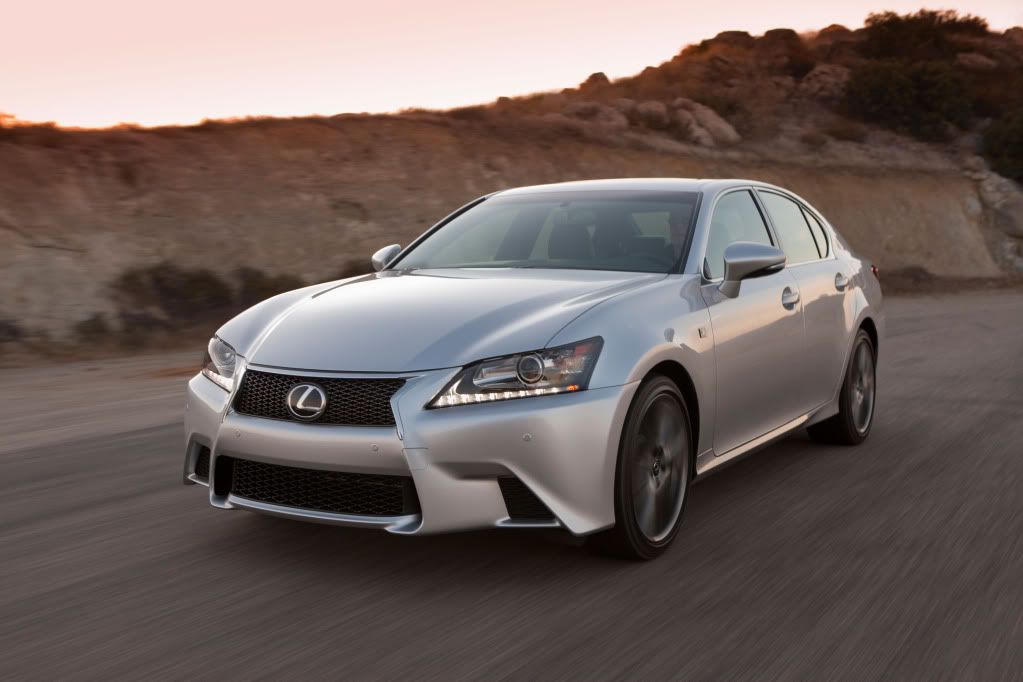
2013 Lexus GS 350 F Sport


The Lexus GS has been chasing the BMW 5 Series for more than two decades. This year, it may have finally leapfrogged its benchmark prey.

Rewind your clock back to the late 1980s, when the midsize four-door sport sedan segment was dominated by BMW. The Bavarian automaker was selling rear-wheel-drive sedans (with manual transmissions, no less) that were every bit as powerful and agile as they were luxurious and comfortable – the best of both worlds, felt many buyers. Of course, it didn't take long for other automakers to get in on the action.

Lexus made its first legitimate attempt at the segment in 1998, with the introduction of its second-generation GS sedan. Despite many accolades, the sporty four-door arrived just in time to compete against BMW's E39, a 5 Series platform that was arguably one of its all-time best. Even after the third-generation GS (2006-2011) went head-to-head with BMW's Bangle-styled E60, the Lexus was still playing catch-up despite its strong performance and loads of new and innovative technology.

But today things are very different. There are now a handful of genuine players in the segment, including very capable sport sedans from Audi, Infiniti and Mercedes-Benz. BMW recently released its sixth-generation F10 5 Series, but the applause has been notably muted. Will that automaker's arguable misstep allow the all-new third-generation Lexus GS to capture the lead? We spent a week with the Japanese sport sedan to find out.

After a slew of early teasers and leaks, Lexus officially introduced its all-new 2013 GS 350 at Pebble Beach in August of 2011. Its bold new appearance (complete with the automaker's new signature spindle grille) hid a sophisticated new platform even more rigid than its predecessor. The track was also widened and the suspension redesigned to further improve handling. While the V6 engine was only slightly massaged and the V8 was dropped completely, the clean-sheet interior would be almost unrecognizable to a previous-generation GS driver.

First out the gate at the Concourse event was the rear-wheel-drive GS 350, fitted with a 3.5-liter V6 rated at 306 horsepower. It was soon followed at the 2012 Frankfurt Motor Show by the GS 450h, a gasoline-electric hybrid with a total system power of 338 horsepower, and then came all-wheel-drive variants. Most interesting to us, however, were the enthusiast-tuned F Sport models that debuted the following month at SEMA.

The F Sport models, in the words of Lexus, are "designed to engage driving enthusiasts with factory engineering and the ability to take performance to an entirely new level." To accomplish this mechanically, GS F Sports are fitted with 19-inch alloy wheels with performance tires, F Sport-tuned Adaptive Variable Suspension (AVS), upgraded suspension bushings, thicker anti-roll bars and larger front brakes with high-performance brake pads. Rear-wheel-drive models also gain the automaker's Variable Gear Ratio Steering (VGRS).

Cosmetically, the GS F Sport models are visually identified by their distinctive sport front bumper (with unique mesh grille inserts) and rear lower valance. There is also a rear lip spoiler on the trunk decklid and F Sport badging on each front quarter panel. Inside the cabin, the performance tuned models feature 16-way power driver's sport seats and other minor cosmetic upgrades, including available Cabernet Red leather.

Our test car, a 2013 Lexus GS 350 F Sport, was painted Liquid Platinum over black leather with Striated Aluminum trim. It arrived carrying a base MSRP of $46,900 and its costliest option was the F Sport package ($5,690), including 19-inch staggered alloy wheels, Adaptive Variable suspension (AVS), Variable Gear Ratio Steering (VGRS), upsized brakes, F Sport driver's seat, black headliner, F Sport aerodynamic package and more. The Mark Levinson Premium Surround Sound Audio System ($1,380) added a 17-speaker, 835-watt sound package and the Navigation package ($1,735) introduced the 12.3-inch high-resolution split-screen display. Lastly, our car was fitted with Intuitive Park Assist ($500) and an Accessory package ($242) with trunk mat, cargo mat and locking wheel locks. Add in the destination fee ($875), and our total was $57,332. Sadly, our test car was missing the Lexus Dynamic Handling System, including its rear steering actuator that is capable of turning the wheels up to two degrees to improve handling.

Its aggressive pricing structure places the Lexus right where it needs to be when pitted against the pricing sought for its sporty competitive set such as the Infiniti M37 (base price $48,200), Audi A6 3.0T ($50,400), Mercedes-Benz E350 ($51,000) and the BMW 535i ($53,100) – we don't need to remind anyone that there isn't a single poor choice on that list.

After more than a year, we have had plenty of time to get used to the GS's bold new look. Whether one approves of it or not, it is unquestionably aggressive and sporty from just about every angle. And, to the designer's credit, it has lost none of its trademark "Lexus" profile. The F-Sport enhancements integrate well with the design, serving to improve its overall appearance without looking forced, cheap or aftermarket. The staggered wheels (painted a hue that hides brake dust) are also attractive and the rear spoiler blends cleanly with lines of the trunk.

On paper, the new GS 350 F Sport reads like a midsize sport sedan champ – especially in specification.

Carried forward from last year with only a few tweaks is a naturally aspirated all-aluminum 3.5-liter V6. The four-valve engine takes advantage of the automaker's dual Variable Valve Timing with intelligence (VVT-i) to generate 303 horsepower at 6,200 rpm and 274 pound-feet of torque at 3,600 rpm. A six-speed automatic transmission (Toyota's A760E) delivers power to the rear wheels in one of three electronically controlled modes (Eco, Normal and Sport). Despite a lack of launch control on the traditional torque converter gearbox, the 3,795-pound sedan will still break the 60 mph benchmark in about 5.7 seconds. Keep your right foot planted and the Lexus won't run out of steam until about 142 mph.

Underpinning the redesigned sport sedan is an all-new suspension engineered to improve cornering precision and respond better to irregularities in the road surface. Up front, the upper and lower control arms are cast in lightweight aluminum, while the rear multi-link setup (mounted in a completely redesigned subframe) uses the same alloy in its control arms. Even the oil within the dampers has been changed to a lower viscosity in an effort to improve its responsiveness. Standard on the F Sport is the AVS with driver-selectable shock absorber damping.

The front brakes utilize four-piston calipers over ventilated rotors and there are single-piston sliding calipers over ventilated rotors on the rear. The F Sport also wears upgraded 19x8-inch cast aluminum alloy wheels at all four corners. For grip, Lexus had configured our test vehicle with Bridgestone Potenza RE050A summer tires (265/35YR19), but production rubber will also be supplied from Dunlop, Michelin and Yokohama.

Before pressing the 'Start/Stop' button, drivers should familiarize themselves with the four different driving configurations offered by the new Lexus Drive Mode Selector, which is located just behind the traditional console-mounted transmission lever (PRND+/-). In a nutshell, the engineers have incorporated a slew of electronically controlled performance settings into the vehicle that may be accessed through the puck-sized round dial.

By default, the system reverts to Normal mode (blue dash illumination, standard throttle mapping, comfort-oriented gearshifts, standard AVS damping and full power to all accessories) when the vehicle is started or the button is pushed straight down. Those seeking a bit more dance in their step will need to turn the dial to the right to activate Sport S mode (red dash illumination, quicker throttle mapping, firmer AVS damping and full power to all accessories).

If that doesn't get juices flowing, some models (including our high-end GS) also allow yet another turn to the right for enthusiast-tuned Sport S+ mode (red dash illumination, sport throttle mapping, sport AVS damping, sport steering effort, sport VSC logarithms and other powertrain enhancements), On the complete opposite side of the spectrum, a turn of the dial to the left will initiate ECO mode (blue dash illumination, slow throttle mapping, reduced seat heating and reduced climate control operation). Understandably, ECO mode is configured for those who are most concerned with reducing fuel consumption.

Lexus has done a fine job with its GS passenger cabin as it is roomy for up to five passengers and very comfortable. Gone is any hint of wrap-around styling, but the 90-degree panel angles are fresh, stylish and well... youthful. The primary instrument cluster, with its two large Optitron analog dials (tachometer and speedometer) and a TFT multi-function display, remains familiar. Not so for the truly massive 12-inch split-screen infotainment display on the center console. It is positively eye-opening, and in a very good manner. Everyone marveled at the colorful and easy-to-read display, although it does take some time to become familiar with its joystick-like interface – now controlled via the current Lexus Remote Touch haptic joystick on the center console – and not everyone will like the amount of light pollution the large screen puts out at night, even on its dimmest setting.

Read more by Michael Harley at Autoblog.com

2013 Audi A5 2.0T Quattro


Any car tasked with taking on the BMW 3 Series has a tough road ahead of it – both in the showroom and, literally, on the road. Such is the fate the Audi A5 has faced since hitting the scene in 2008, going up against one of the most cheered and revered coupes on the market. To take on BMW's two-door titan (as well as a growing number of luxury coupes), Audi has spent every year since the A5's debut tweaking and changing it, giving the range a lineup of trims and models that has been simplified almost to perfection: Those who desire a great-looking luxury coupe with solid fuel economy can have the A5, while those who want more power can spend more money for the S5, and then, of course, there's the monstrous new-to-the-US RS5.

For 2013, changes to the A5 and its sportier derivatives have focused largely on the car's design, which is a pretty important factor since customers in this segment are likely putting style and luxury at the top of their checklists. The mildly updated A5 borrows heavily from some of the newer design cues found on other Audi models, including newly angular headlights and unmistakable LED running lamps, while other slight changes bring modest improvements to the interior and fuel economy. With a new BMW coupe hitting the scene next year (reportedly switching its name to 4 Series) and recent additions to the segment including the Cadillac CTS Coupe and Mercedes-Benz C-Class Coupe, we spent a week in the updated 2013 A5 to see if these changes will be enough to keep the five-year-old A5 relevant while going up against much younger models.

With just a nip here and a tuck there, the A5's facelift is effective in differentiating it from the previous design without straying too far from what made the original car look so darn good in the first place, and Audi has done this with a subtlety that few other automakers can pull off. The biggest change to the car's exterior styling is a reworked front end with edgier lines around the signature single-frame grille and new headlights showing off a more angular shape. Audi has made LED running lights into an art form, and the these new headlamps make the A5 look mean day or night. To a lesser degree, the taillights have also been updated with a different internal lighting setup that also gives the car a good nighttime appearance. Our Ibis White test car sported 18-inch wheels with a sharp V-spoke layout that has a design very similar to a jet engine's turbine blades.

On the opposite end of the spectrum from the A5's aggressive new exterior styling, the changes made inside this car are far more restrained. As a testament to how great this interior was back in 2008, Audi has only made small tweaks to the interior, such as a new three-spoke steering wheel, reworked gauge cluster and a more ergonomic shift lever. It remains one of the best interiors of just about any car on sale, both in terms of styling and ease of use. In a day when interiors are either cramming in too many buttons and switches or getting rid of conventional controls altogether, the A5 is surprisingly minimalistic without being confusing or complicated. Designed to be a driver's car, the cabin is obviously built around the pilot with a clean cockpit look, easy-to-see gauges and readouts, and easy-to-use controls, but the entire interior shows Audi's attention to detail with just about every surface decked out in soft-touch materials, soft leathers and real metal accents. The oversized sunroof finishes off the sporty and open atmosphere by bringing plenty of light into the cabin, but it only tilts up about an inch or so, and can't slide back.

From the driver's seat, it's hard to find many faults with the A5's cabin, and those that we could dig up felt more like nitpicks. A thicker-rimmed steering wheel would be great to give the cabin a sportier vibe, and while the placement and button layout of the audio controls on non-navi-equipped models (like our tester) could take a little getting used to for people not familiar with Audi products, the operation of these controls are ultimately simple and not distracting. Even without navigation, though, the A5 still receives the same large display screen to view information for the audio system, and between this screen and the smaller digital multifunction display in the gauge cluster, it's easy for the driver to view all pertinent vehicle information.

As nice as it is to occupy the driver's seat is in the A5, the rest of the car's cabin is more of the same in terms of remarkable materials, design and even some practicality. Yes, we just said that a coupe is practical. Surprisingly, the A5 doesn't give up much in terms of headroom or legroom compared to the A4 sedan, making it possible for four adults to fit in the car. While we wouldn't want to be seated in the rear seats for a lengthy road trip, it's good to know that if needed, the rear seats can accommodate adult passengers in reasonable comfort. The trunk space of the A5 is also only just fractionally smaller than its four-door counterpart, so there is room for plenty of luggage as well.

Speaking of space, we know there is enough room underhood for a V8, but since 2011, the standard engine for the A5 has been the 2.0-liter TFSI turbocharged, direct-injected inline four-cylinder that helps balance power and fuel economy. The engine's 211 horsepower and 258 pound-feet of torque are sent to the ground using Audi's Quattro all-wheel-drive system, and our tester came with the company's optional eight-speed Tiptronic automatic transmission. For hardcore enthusiasts about to cry foul that we didn't test the six-speed manual gearbox, just remember that the A5 Cabrio comes in standard trim with front-wheel drive that offers a Continuously Variable Transmission as an option. On top of that, this transmission is one of the best automatics used by the Volkswagen Group in terms of shift points and response, and for a sportier feel, it's easy enough to just knock the shift lever into Sport mode for a bit more excitement. Thanks to plenty of low-end of torque, the A5 is still a lot of fun to drive, even in Standard mode.

That being said, the A5 isn't the fastest or quickest car in its class, but it is very well-balanced, which is improved upon in 2013 with a new electric power-assisted steering system that helps make the car both more sporty and fuel efficient. On the driving side of things, the steering response of this new EPAS system is just about perfect, giving good feedback at speed without feeling too heavy at lower speeds. As for fuel economy, out tester with the eight-speed auto improved its EPA estimate on the highway up to 30 miles per gallon (+1 mpg compared to the 2012 A5), though oddly enough it's decreased by the same amount in the city with a rating of 20 mpg. During our week with the A5 2.0T, we generally saw around 25 mpg in mixed driving when avoiding Sport mode.

Strong fuel economy is nice, but the name of the game has always been balance when it comes to the A5, and the 2013 model still delivers. In addition to the new power steering, the A5's engine, transmission and braking system all operate in a manner that doesn't feel too sports-car jerky or luxury-car numb. Even the actual balance of the car feels perfectly distributed from front to rear, even though Audi doesn't actually list the A5's weight distribution. Despite weighing a couple hundred pounds more than a comparable 3 Series Coupe, the A5 might be its closest handling rival thanks to a wider stance (both its track and width are about three inches wider) and standard all-wheel drive. The A5 does, however, weigh about 400 pounds less than a comparable Cadillac CTS Coupe and around 150 pounds less than an Infiniti G37x Coupe. On paper, Audi claims the car's acceleration from zero to 60 miles per hour is 6.2 seconds, which is far from quick these days, but between the lag-free turbo engine and quick-shifting transmission, the A5 doesn't disappoint. Besides, if it's off-the-line performance you seek, Audi dealers will gladly show you to the S5 or RS5.

Many people perceive the A5 as a sporty car, but it still has all of the qualities that we expect from Audi luxury, such as a smooth ride and quiet interior. We can't remember the last time a car with frameless windows was as quiet as the A5, and between the compliant suspension and comfortable seats, this car would feel good whether being driven on a winding back road or long highway. Regardless of how it's used, though, the A5 definitely doesn't look or feel its age.

Read more by Jeffrey N. Ross at Autoblog.com

2013 Dodge Dart


The 2013 Dodge Dart is the most visible manifestation of the still-new monogamous relationship between Chrysler and Fiat, the Pentastar's savior from the depths of government-sponsored bankruptcy (or worse). If you'll recall, one of the big problems pundits, management and government officials identified with Chrysler's US lineup was its complete lack of competitive small cars.

Now would be a good time to mention that Dodge had a good thing with the original Neon. Not only did the little subcompact sell in conspicuously high numbers, it was also pretty fun to drive, especially in 150-horsepower ACR Coupe trim. In fact, so entertaining was the little two-door coupe, powered as it was by a dual-overhead-cam version of Chrysler's 2.0-liter four cylinder, that it spawned its very own racing series.

The successful Neon got a redesign in the year 2000, and as has so often been the case, the Pentastar Crew didn't do nearly enough to keep it competitive amidst a sea of Civics and Corollas, save the way-too-quick-for-its-own-good Neon SRT4, that is. The response to lagging market share? The Dodge Caliber, introduced in 2007. Suffice it to say that the Caliber was not the answer small-car buyers were looking for.

Enter the Dart. Is this compact the small-car savior Chrysler envisioned when it paired with Italy's Fiat? Let's take a closer look.

If an automobile is going to compete in the hotly contested compact car market in America, it's got to look good. Fortunately, the Dart delivers with styling that won't be mistaken for anything else in its segment. Up front is Dodge's familiar grille, with cross-shaped elements in either black or body color finish. The overall design manages to be both aggressive and curvaceous, due in part to the angular fascia and details like (optional) dual exhaust outlets, blacked-out trim and a distinct lack of chrome. In profile, the Dart is pretty much the exact opposite of the Caliber it replaces, and that's a good thing in the eyes of most consumers – though some will surely miss the utility available only in a hatchback.

At the rear, Dodge has implemented a unique version of its signature racetrack-shaped taillight array, made up in this case of 152 individual LED bulbs (available on R/T, SXT, Rallye and Limited trims). We like the effect of the racetrack taillamp array at night, and we appreciate its availability on the entry-level Dart.

Wheels can be had in 16-, 17- or 18-inch varieties, in bright silver, satin silver, polished or in a so-called Hyper Black finish on the R/T and Rallye models.

A few of the Dart's unique styling elements carry over into the interior. First and foremost is the racetrack-mimicking light strip surrounding the gauge cluster and top of the center stack. There are also plenty of piano-black trim pieces, which match the exterior bits seen on the Rallye model, and though the shiny surfaces are more than a little overdone, at least there's an alternative to the painted silver seen on every one of its competitors. Illuminated cup holders are a nice touch, as is the class-exclusive storage compartment hidden beneath the front passenger seat cushion.

Interior plastics and the fabric seating surfaces in our test car were well chosen, though not what we'd consider class leading – the Ford Focus and Chevrolet Cruze offer generally nicer duds. Most of the touch points have soft coatings applied that make them feel more upscale than past Dodge efforts, and the availability of 14 different cabin and trim combinations means buyers can individualize their Darts to their liking far better than most of its classmates.

Dodge has seen fit to offer its excellent 8.4-inch Uconnect in-dash technology in the Dart, and for that, we're thankful. It's quick, intuitive and powerful, and nothing else in the compact sedan class has any infotainment tech that's anywhere near as competent. Also worth mentioning is the available seven-inch TFT gauge cluster, which offers up a slew of driver-configurable screens that include multiple speedometers, navigation information, economy readouts, vehicle information updates and even a flower that grows or wilts based on your fuel-minded driving habits. Yeah, we could do without that last little bit, too.

Roominess is something of a mixed bag. There's 42.2 inches of legroom up front and 35.3 in the back; hip room in the rear seat measures 52.6 inches while shoulder room comes in at 56.1. The trunk measures 13.1 cubic feet. Basically, what we have in these dimensions is a full serving of competitive. Based on the Dart's exterior dimensions, however, we were hoping for more – the Dart, measuring 184 inches stem to stern with a 106.4-inch wheelbase and 72 inches in width, is the longest and widest car in its class. We're neither engineers nor math majors, which might explain why we're left scratching our heads as to where those extra potential cubic feet went off to.

Even more concerning, however, is the Dart's relative heft. The lightest Dart Dodge sells is still a heifer at nearly 3,200 pounds. The Honda Civic and Hyundai Elantra weigh a shade over 2,600 lbs, the Toyota Corolla and Mazda3 come in near 2,800 lbs, the Ford Focus is 2,960 lbs and the Chevy Cruze, once considered the porker of the segment, tips the scales at a bit under 3,100 pounds. Put another way, the Dart, without a single passenger, weighs as much as a Honda Civic with four 150-pound occupants.

Three engine options are available (or at least will be available once the delayed R/T model hits dealerships), including a standard 2.0-liter naturally aspirated mill, a 1.4-liter turbocharged and intercooled unit that leads the pack in efficiency and a 2.4-liter with 184 horsepower and 171 pound-feet of torque for those looking for the most powerful option. We drove a Dart with the standard 2.0-liter engine mated to a six-speed automatic for a week, then sampled the 1.4-liter turbo with a six-speed manual. Both engines move the Dart with competence through traffic. Horsepower for both the 2.0 and 1.4 engines comes in at 160, but the turbo's 184 lb-ft handily outdoes the base engine's 148.

If it were our hard-earned bucks on the line, we'd definitely opt for the smaller turbocharged engine, which, while balky at low-rpm takeoffs, is genuinely spritely once the tach swings near 3,000 rpm. What's more, it's the 1.4 liter that earns the highest fuel economy figures, with an estimated 27 miles per gallon in the city and 39 on the highway. Add the optional Aero pack, which includes active grille shutters and other slippery tweaks, and highway mileage jumps to 41 when mated to the six-speed manual gearbox. Choose the six-speed automatic and you'll get 28 city, 40 highway. Sadly, the turbo mill requires premium gasoline, negating some of the mpg benefits. For reference, Chevy's turbocharged 1.4 earns similar EPA figures on regular-grade fuel, though its 138 horses and 148 lb-ft are way down on the Dodge.

Behind the wheel, the Dart's Italian DNA is only somewhat apparent. Yes, the car is based on a platform originally developed by Fiat for Alfa Romeo, but it's been stretched like silly putty in every direction for the States and the suspension is tuned for American drivers on American roads. As such, it's soft enough to deal with horrid roadway surfaces and quiet enough to take your parents out to dinner. Fortunately, when you decide it's time to have some fun, the chassis is ready to play. Steering feel is quite good, and the fun-to-drive quotient on the street is right up with the Ford Focus and Mazda3, which we consider to be best-in-class in this regard.

Little things like the engine note and the way the Dart responds to quick steering inputs make for an entertaining car to drive aggressively, but full at-the-limit handling is much messier, with plenty of body roll to go along with the tire squeal. In other words, don't expect the Dart to carry you to any track-day glory as the Neon once did.

The six-speed automatic that can be had with the base 2.0-liter engine is smooth enough that it mostly went unnoticed. Like most modern cars, the tranny's electronic brain wants to shift to the next highest gear as soon as possible for fuel-economy purposes, but that's a disease inflicting most machinery these days.

Rowing through the six-speed manual gearbox isn't as fun as it should be. The shifter isn't as crisp as competitors from Honda or Mazda, and the throws are longer than we'd like. Complicating matters is a clutch that has a somewhat odd engagement. Our staff is divided on how bothersome the shift-for-yourself Dart experience really is, so we suggest you take one for a test drive before signing on the dotted line. In any case, buyers of the row-your-own model with the turbo engine better get used to rowing, as the little engine falls flat on its face at low rpm. Best to keep the mill spinning in the middle reaches of the tach.

Read more by Jeremy Korzeniewski at Autoblog.com

2013 BMW 750Li


For a while now, the absolute and rather uncontested king of big luxury executive sedan sales worldwide has been the Mercedes-Benz S-Class. Among the obvious competition, there has been an almost unspoken agreement that this is so, and that it shall remain so for our lifetimes. Clearly, this is regardless of the fact that the motoring press – i.e. we the so-called "experts" – have generally preferred this generation of Audi A8/S8, or the sporting BMW 7 Series in its various trims. But hey, what do we know?

Deliveries of this midlife-update BMW 750Li to US dealers began back at the end of September, and we waited deliberately until now to delve deeply into it. Visually, aside from some small aesthetic changes, there is little difference on the surface between this 2013 model and the 2012 model it replaces, the main change being that it gets the latest edition of BMW's iDrive system, which in software terms is version 4.2.

We'll get to that, but there have actually been upgrades to the twin-turbocharged V8 ("N63B44" to those in the know) that renders this big Bimmer more of a sports car in its class, even in the long-wheelbase form tested here. Output is up by over eleven percent to 443 horsepower at 5,500 rpm, torque now stands at 479 pound-feet for a more modest gain of just under seven percent between 2,000 and 4,500 revs. Acceleration to 60 miles per hour is claimed at 4.7 seconds using the eight-speed Steptronic automatic, a time that seems almost freakishly quick for a 4,660-pounder that stretches 17.1 feet from bumper to bumper.

As you have likely already assumed, our test car arrived fairly well stuffed with performance, aesthetic, comfort and convenience options, taking the ultimate sticker price a few thousand north of the $100k mark. This sort of pricing is fairly common at this tier, whether you want this rear-wheel-drive 750Li with its $3,300 M Sport Package, a Mercedes S550, Jaguar XJL Supercharged, Audi A8L 4.0 TFSI, or (for a little bit less) Lexus LS460 F Sport. Every single one of these models is very well executed and intensely interesting in its own right, but there's still something special about the Bavarian.

The interior is very nice on this 750Li, and the M Sport touches add some welcome attitude and tactile surfaces. The changes all work well with the car's most aggressive drive attitude, achievable through the Driving Dynamics Control on the center console. Go for Sport or Sport+, and the M-wearing 750Li gets pleasantly hungry in its throttle mapping, steering calibration and shift times. Our tester was also supplied with options like Integral Active Steering ($1,750) and Active Roll Stabilization ($2,500), assuring that our drive experience on California's finest sunny and dry roads was going to be entertaining.

Like all of the latest high-end onboard infotainment suites, iDrive 4.2 is all about ridiculous levels of connectivity, 3D graphics aplenty, choosing the most efficient route to the charcuterie shop and much wider use of the handy pie-style menus. The iDrive interface and functionality have come light years since that fateful September 2001 day in Frankfurt, when the new 7 Series was revealed with the groundbreaking, all-in-one controller for the first time. That first generation was one of the most hated devices ever seen in a new automobile, and the Chris Bangle design didn't exactly come in for a lot of praise at the time, either.

By comparison – and thanks to other manufacturers' systems like Audi's MMI that showed how to do the central control knob scheme better – today's BMW iDrive can duke it out with the absolute best. (Are you listening, Cadillac CUE?) A particular favorite feature of ours is the progressive quality of the 3D graphics when approaching a destination, usually in a city setting. Get within several blocks of where you're headed and the screen offers a street-level point-of-view in enlightening detail. This is a very helpful advancement of the already full-featured tech on board.

As this sort of long-wheelbase 7 Series frequently doubles as a mobile office, it's a good development that the frontiers of voice recognition and dictation are becoming so advanced. There is full-sync connectivity onboard for two smartphones as well, so not only the boss can stay connected and hands-free. BMW Apps subscriptions make sure the car's ConnectDrive capabilities actually enhance and outstrip those of your smartphone. Voice recognition software can quickly identify and adapt to six different languages, among them English and Spanish, of course. The editing tools via voice control can also help you perfect any text message or email before sending.

Back to the driving, though. With the main screen and the instrument cluster both displaying what mode the standard electronic damping system was set to, it was easy to keep tabs on the Dynamic Drive Control's mood. It was also easy to appreciate our tester's 20-inch Pirelli P Zero tires (245/40 R20 front, 275/35 R20 rear), which jacketed a handsome set of optional $1,300 twin-spoke M-specific alloys. With the Active Roll Control system governing the dynamic anti-roll bars to level out the corners, good handling was all but assured, but we were pleased that the 20-inch tire option didn't translate into a lot of extra road noise in the cabin. The added sound deadener in the middle and rear pillars, as well as the beefed-up window seals that are new to this midlife update all do their part to make sure peace is maintained inside.

Between the newly added Eco Pro powertrain mode and a new coasting mode while off-throttle between 30 and 100 mph, the Valvetronic-equipped V8 is said to be 25 percent more efficient than last year's model. The EPA sets 2013 city/highway ratings at 16 miles per gallon and 24 mpg, respectively, with a total range from the 21.1-gallon tank of 400 miles when driving the 750Li with restraint – something we found difficult on California's excellent roads.

This updated 2013 7 Series is more than equipped to win the proud Number Two rank in this class. An executive desiring this ride is likely to be more sport image-oriented than the comfort and luxo-liner reputation of the Mercedes S-Class, a positioning that suits us well. So, BMW is fine with the silver trophy... and we do love 7 Series. But then again, Mercedes is set to unveil an all-new S-Class sometime this auto show season, and the Audi A8 keeps getting better and better, too. It's an increasingly difficult scrap in the premium saloon boardroom, and continued fortifications like this mid-cycle updo are going to be necessary to keep BMW in the hunt.

Read more by Matt Davis at Autoblog.com

2012 Jeep Patriot


Seventy years ago, the Jeep Patriot would have been amazing. In 1941, the year the original Jeep was drawn up, the power windows, air conditioning and automatic transmission in this Patriot Latitude were features only available in cars like Packards.

The Patriot has features and dynamic capabilities unheard of back when the Jeep was an idea, not a brand. Seventy years of progress, perspective and turmoil has a way of turning the formerly amazing into the mundane. Since its introduction, along with its Compass close relation, this Illinois-built crossover has been viewed as the Fauxlex of Jeeps. It's based on the defunct Dodge Caliber, which itself shares the Mitsubishi GS platform, ensuring a complete lack of underlying Jeep DNA. The only link back to Karl Probst and his seminal design is some squared-off styling and the impression that the Patriot was also designed over a marathon weekend, just like that first Bantam proposal.

There have been a couple rounds of updates to the Patriot to address previous foibles including its former horror chamber-like interior, along with moves to banish the traces of econobox from its styling. We wanted to sample these changes and see just how far the Patriot can go on its reserve of charm.
The Patriot has always had Jeepy good looks. Boxy and reminiscent of the original Cherokee, the Patriot recently got subtle styling changes. These inconsequential tweaks follow an "If it ain't broke, add cladding and move the fog lamps" philosophy. There are some angles, like the rear three-quarter view where you can see through the sharply folded metalwork to the GS platform underneath. A redesigned lower rear fascia does a better job at hiding the muffler, a small change that pays off classy. For what it is, the Patriot pulls off looking like a Jeep.

The interior may trump the class of 1939, but it was massively upgraded for 2011. Better materials now cover the cleaned-up dashboard design, which has been improved ergonomically. Finally, after two revisions, the Patriot's interior has atoned for the original's shameful outfitting. Soft padding for the upper front door panels even helps the Patriot trump some of its hard-doored competition. The center armrest with two storage areas and a chunky steering wheel festooned with easy-to-master controls are also newer worthwhile enhancements. Compared to the original Patriot, standard upholstery is now premium cloth, door switches and ancillary controls are newly backlit and cruise control is standard, too.

Jeep has done its best with what it's got, but the low roof and smallish glass area still make the driver feel boxed in. Looking around, it's a reminder of how 1980s cars were put together, the Patriot's $17,695 base price is the reason behind its retro-style assembly. Comfort in the chair-height seats is good. They're minimally bolstered, but the 17-inch tires aren't grippy enough for that to matter.

Shortcomings aside, the Patriot's interior is a nice one in a class plagued by Cabinus Crappyitis. Just about everything is right. Three big knobs for climate adjustment could hardly be more clear. The gauges are equally intuitive, and the chunky leather-wrapped Chrysler corporate wheel with its slick back-of-spoke controls puts unexpected functionality literally at your fingertips. Latitude trim starts at $19,745 for a front-wheel drive model, and it carries significantly more equipment and a spendier bottom line than the $16,995 Patriot Sport. Most people are going to want the power windows, air conditioning, keyless entry and power heated mirrors that the Patriot Latitude comes with, but they may not want to have to pay four grand extra for them. Uconnect is, as always, incredibly usable and friendly, and would have seemed like super-advanced alien technology during the Apollo moon landing, let alone 1941.

The Patriot Latitude 4x4 we drove (a 2012 model, though there were no significant changes for 2013) has a starting price of $21,445, a number that sees this Jeep mini-ute wading into waters infested by the Honda CR-V, Toyota RAV-4 and even the new Ford Escape, all of which sell like gangbusters. Going with the all-wheel-drive Patriot nets the 2.4-liter four cylinder that cooks up 165 horsepower and 172 pound-feet of torque, which is what you want if picking either version of the Continuously Variable Transmission. Ours arrived with the CVT2 with Autostick manual control, but without the low-range of the CVT2L that's also available. This setup, called Freedom Drive I, is essentially all-wheel drive with a locking feature. Freedom Drive II adds the crawl range and extra skid plates underneath. You'll be able to spot those models by the Trail Rated badges on their front fenders.

In 1940, the 2.4-liter engine would have seemed almost as incredible as a nuclear reactor under the hood. There's an aluminum block, four valves per cylinder and variable valve timing on both camshafts. The intake manifold is molded polymer and its specific output is higher than any mass-produced automobile engine was capable of 70 years ago. It's a modern engine that's not at all like the Willys "Go Devil" side-valver in the first Jeeps. None of that, however, makes it as smooth or refined as the class leaders. This is a growly mill.

Back then, most drivers would have chosen the five-speed manual transmission and marveled at it an age of three speeds. Drivers going for this CVT would have hated it as much, possibly more, than we currently do. To many of us on staff, CVTs are the devil. Some are better than others, but the Patriot feels sluggish and slow-witted with this transmission, and the engine drones on as endlessly as an intoxicated uncle during the holidays, and it's even less appealing to listen to. (Rumors suggest the Patriot will broom the belts in favor of a traditional automatic soon).

The ride and handling of the Patriot would have been a revelation during the WWII era, and they're not bad now. There's good compliance in the suspension, and the impression from behind the wheel is one of sufficient solidity. Pitch it into a corner hard, and the Patriot leans over enough to let you know that you really shouldn't be doing what you're doing. That's okay in this instance, because you can nudge this little crossover box off the pavement and it'll more than hold its own, especially with the Trail Rated chassis enhancements. Braking, however, is an experience lifted directly from the 1940s – not really, but there is a surprising lack of effectiveness when you step on the brake.

Try too much maneuvering with the Patriot, and you may end up with a few carsick passengers, especially the ones hanging out on the exceptionally squishy-foamed rear seat that's sort of like perching on an overturned bucket. What the Patriot lacks in wheelbase, it makes up for vertically, so at least the footwells seem very deep. Behind the rear seat is a decently sized cargo area, and one nice touch is an integrated flashlight that can be popped out and used when needed, then snapped back in to recharge.

The Jeep Patriot's utility is there, mainly because it's a squared-off little wagon, and there's also a smart roof-rail system that seems ready to have your stuff lashed to it. The small crossover segment has really heated up, though, and where the Patriot was once doing battle with the old versions of the Escape, RAV-4, CR-V, Hyundai Tucson and Kia Sportage, all of those vehicles have been redesigned. The Jeep may still have it in the woods, but on the road, there's a lot of newer and more refined choices. The Patriot remains the only way to get into something with Jeep looks and character for this kind of money, so some of the rough edges are likely to be forgiven by those who just really want to get into something with a seven-slot grille. Whether you're one of them or not will be clear by how charmed you are after a drive.

Read more by Dan Roth at Autoblog.com

2012 Nissan Titan


Of all the segments in the American vehicle market, the full-size truck market has proven the most difficult to crack for foreign automakers. Blame the Chicken Tax, dyed-in-the-wool brand fanatics, decades of buying tradition or all three, but truck buyers have barely given Toyota and Nissan a fraction of the sales ladled onto Ford, Chevrolet and Ram. In fact, last year, Toyota saw just 82,908 Tundra units roll off of dealer lots. While that number seems astronomical compared to the 21,994 Titan models Nissan shifted during the same time period, both stats fall far behind even the third place Ram, which sold 257,610 units last year.

The easy assumption is that trucks like the Tundra and Titan simply lack the competitive capability to hold their heads high among their American counterparts. With offerings like the 2013 Ford F-150 EcoBoost and 2013 Ram 1500, modern domestic offerings are now more efficient than ever without sacrificing their already impressive tow ratings. Given just how long it's been since the Titan landed in showrooms, is there any reason at all to look outside of the Big Three for a pickup purchase? We decided to spend a week reacquainting ourselves with one to find out.

It's been eight years since the Titan first bowed, and the model has received remarkably few aesthetic adjustments in that time. Even so, the truck has aged well. On the street, the Titan is a handsome machine. Its chrome grille and bumper treatments are tasteful without straying into garishness, and the relatively short front overhang gives onlookers the impression this is a truck that will go where the driver points it, even if that means over the occasional Prius. The squared-off headlamp arrays still look fetching enough even after languishing on the front fascia for so many years, though we did find the area around the front tow hooks to be a bit too claustrophobic to easily hook up chunky tow straps or hefty chains. Leave the rescue operations to someone else.

Move to the truck's side, and it's easy to appreciate the functionality designers have incorporated into the Titan. The greenhouse features plenty of glass, yielding excellent visibility from the driver's seat. Expandable tow mirrors make it easy to keep an eye on trailer movement and the lockable in-bed storage compartment is a great place to store a tow strap, tie-downs and a set of gloves. With a configurable plastic shelf, the storage can be adjusted to accommodate a variety of small cargo, though we have to wonder why Nissan relegated the cabinet to just one side of the bed. Likewise, we were frustrated by the fact that the box can only be opened using the truck's key. You're simply out of luck if you need a buddy to grab something out of the cabinet while the engine is running.

If we can smother modern pickups as a whole under one blanket criticism, it's that the beasts have grown too tall to easily access cargo in the bed. Ram circumnavigates this dilemma with an expensive and complex air suspension. Nissan, meanwhile, has opted to give buyers the option of a retractable step positioned just under the driver's side bumper. Unlike the tailgate-integrated step system found in the Ford family, this one can be used regardless of whether there's a trailer hitched to the truck or not. Pretty handy.

Speaking of helpful, Nissan's Utilitrak in-bed tie down system is excellent. Fully customizable, unobtrusive and sturdy, the tie-downs are great for steadying motorcycles, ATVs or other top-heavy cargo. They can also be removed if the owner needs maximum bed space.

Our crew cab tester came with a sonar-based park-assist feature as part of the SV Value Truck package. Along with park assist, the pack throws in a Class IV hitch, seven-pin harness and pre-wiring for a trailer brake as well as various interior niceties. Unfortunately, the trailering equipment finds itself at odds with the park assist. Throw the Titan into reverse with a trailer attached and the sonar will beep its little head off until you deactivate it via the pushbutton to the left of the steering wheel. Shut the truck off, turn it back on and the sonar is ready to go all over again. Thank you, Titan, we know there's a trailer uncomfortably close to the back bumper. We put it there. Here's hoping the next-generation will deactivate the park assist when the seven-pin is in use.

Inside, the Titan can't help but feel comfortably Nissan. Those familiar with the automaker's interiors will feel right at home amongst the switchgear, and that's a good thing. Despite the fact that the Titan hasn't received any serious update love in its lifespan, the cockpit has aged far better than that of the soon-to-be-replaced Silverado. With nicer materials on the dash and door panels, better quality cloth seating and a well-sorted driving position, our tester felt both capable and well ahead of its General Motors rival, but that doesn't mean we came away thinking the cabin seemed worthy of the truck's $38,920 price tag.

There are issues indoors. For starters, the A-pillar trim on this tester came saddled with gaps large enough to effectively park this truck in, and the onboard tech more than leaves a little to be desired. Compared to the available TFT gauge cluster and massive Uconnect screen found on the 2013 Ram 1500, the 2012 Titan might as well be reading song titles via Pony Express. The interface may have been acceptable three years ago, but it feels ancient by today's standards. Want to hook up an iPod or charge your phone? Better have an AUX cable and a car charger handy, as there's no USB connection onboard. In a segment dominated by consumers who use their trucks as mobile workstations, that's a serious problem.

Then there's the stereo. Our truck came with an optional eight-speaker unit, complete with what may very well be the most overbearing subwoofer we've ever encountered. The system seemed content to pound us to death with bass no matter the setting or the music. Adjusting the four-way equalizer proved fruitless unless the woofer was disengaged entirely. Either we're getting too old, or our flat-brim quotient is dangerously low.

So, there's some rust on the edges of the Titan formula, but that's not saying this is a bad truck; far from it. This Titan benefits from the same 5.6-liter V8 engine that has powered it since time immemorial, and though it only musters up 317 horsepower and 385 lb-ft of torque, the eight cylinder does an fine job of pulling this big Japanese workhorse around town. The truck burbles with the delicious sound of available torque, all of which is on hand from 3,400 rpm. That's not terribly low, but on an engine that will happily reach all the way to 6,000 rpm, it isn't really a problem, either. Paired with a five-speed automatic transmission, dial-selectable four-wheel drive and an optional 3.357:1 final drive, the Titan has a solid (if unsophisticated) backbone.

Unfortunately, so do the rest of the trucks in this class. Both Ford and Ram are now getting very similar power figures from vastly more efficient V6 offerings, with the F-150 Ecoboost now delivering 365 hp while the 2013 Ram 1500 V6 serves up just 12 fewer horsepower than the V8 under the hood of the Titan. But as any truck owner will tell you, it's torque that makes a vehicle like this, and that's where those extra two cylinders in the Japanese V8 come into play. At over 115 more lb-ft than the Pentastar V6 found in the Ram, the Titan is a much more comfortable tow rig than its Mopar rival. The forced-induction Ford, meanwhile easily embarrasses the Titan with a heady serving of 420 lb-ft.

We loaded the Titan full with guys, tools and a massive stack of split-rim wheels with big bar tires and hooked a small military trailer filled to the brim with Dodge M37 drivetrain components for a quick sprint up I-75 out of Georgia. While we could certainly feel the added heft behind the pickup, the Titan never felt strained or harried, even during the steep climb out of Chattanooga. According to the local CAT scales, we stuffed around 1,626 pounds into the Japanese pickup and hooked another 3,380 to the hitch. We found that with Tow/Haul mode engaged, the transmission is happy to let the engine build revs until the eight-pot is making the power necessary to accelerate the truck/trailer combination with confidence.

That is, so long as you can afford to keep the machine fed. We saw 15 mpg highway during our time with the truck when it was unladen. Throw the extra load at the truck and that number slipped to just 12 mpg over a four-hour haul. We would hate to see the result of sticking the full towing capacity behind the truck. And that's the biggest hitch in the Titan's giddyup. Ford and Chrysler have made a concerted push to squeeze the most fuel economy possible from their full-size offerings, resulting in efficient V6 trucks. The 2013 Ram is good for up to 25 mpg highway while the F-150 can deliver a very respectable 23 mpg. Even by Environmental Protection Agency ratings, the Titan can only serve up 13 mpg city and 18 mpg highway.

And that's what's truly baffling about the Titan family. Whereas the Detroit Three are happy to offer you a truck with a capable and efficient V6 under the hood, there's simply no such option on the Nissan sheet. If you want this big bruiser, you have to buy it with the aging 5.6-liter V8. That's a crying shame, too, because Nissan has a perfectly capable V6 in its VQ family of engines.

Unfortunately for the Titan, trucks aren't just measured by how well they can tow a load. Fuel economy and connectivity play a significant role in how a machine performs for its buyer. Throw in the fact that the Titan is far from a bargain, and the argument for laying down your cash here instead of with one of Detroit's trucks becomes even dicier. While the Titan is a perfectly adequate partner in terms of capability, its lackluster fuel economy, ancient tech interface and hefty price tag all put it at the back of the pack. We've been told a successor to the Titan throne is coming in 2014. It can't happen soon enough.

Read more by Zach Bowman at Autoblog.com 

2012 Nissan Frontier Crew Cab 4x4


Sometime during the mid '90s, the Big Three stepped up the fullsize truck arms race in a serious way. While Chrysler, Ford and General Motors had always fought tooth and nail for every last possible customer, suddenly trucks began evolving into more than just utilitarian work horses. While the old payload and towing one-upmanship continued in earnest, pickup design began swelling with broad grilles, massive wheels and flanks to match. Option sheets suddenly glittered with choices previously confined to luxury vehicles, and MSRPs began covering wide territory as base models got cheaper and upper trims explored new fiscal heights.

With all of Detroit's resources going to the fullsize game, domestic midsize entries like the Ford Ranger, Dodge Dakota, GMC Canyon and Chevrolet Colorado were left to rot on the vine. After all, why would buyers want to pony up equivalent cash for a less capable truck? Because, as the 2012 Nissan Frontier quietly reminds us, getting a job done is never about having the biggest tool. It's about having the one that's right for the task at hand.

Make no mistake, the Frontier isn't some rosy-faced young gun. Nissan has left the truck largely unchanged since the current generation debuted in 2009. A new appearance package, complete with the saucy vinyl get up and the 19-inch Dark Hyper Silver finish wheels you see here, quietly sum up the width and breadth of the machine's evolution over the past three years, but that isn't such a bad thing. The Frontier still looks good with its purposeful grille and flared fenders. While the Toyota Tacoma received a mild facelift for 2012, the changes weren't enough to put the Taco leagues ahead of its Nissan rival aesthetically, though it does outsell the Frontier nearly 3-to-1.

We're particularly fond of the color-matched wheels and grille on our Frontier tester, and while the graphics are a bit too campy for our tastes, the truth is they provide a commendable link to the truck's early days as the loveable Hardbody.

The Frontier's Crew Cab configuration does trim the overall bed length down to just under five feet at 59.5 inches. That leaves the cargo area virtually square, serving up a total of 27.1 cubic feet of storage. The space isn't huge, but it's enough to cart around landscaping materials with ease, and we found it more than capable of hauling a set of fenders and a windshield frame for a project vehicle with space to spare. This setup clearly isn't for tackling serious tasks, but it's more than enough to handle light-duty suburban chores without subjecting a vehicle's interior to the slights of moving dirty or abrasive cargo.

Speaking of interiors, there is a surprising amount of space indoors. We comfortably fit four grown adults in the cab of the Frontier without issue, and while the back seat can be a bit stiff, it's more than adequate for hops of less than an hour. We doubt kids will mind the way back for longer treks. The rear bench does offer some clever folding solutions for storing or transporting larger items when you don't need the extra passenger space, and we appreciate the small storage cubbies with tie-down netting as well.

But the Frontier starts to show its age indoors. Hard plastic seems to have been the only material available to Nissan when designers were working up the bill of materials for the cockpit. The door panels, dash and center console are all vast wastelands of the stuff, and the center stack looks as if it would have earned a skeptical eye back in 2009. Three years later, the cabin simply looks aged. We're all for trucks being utilitarian, but our Frontier carried an MSRP of $29,085, including an $810 destination fee. That stack of cash will earn you one very well equipped Ford F-150 or a Ram 1500 with an interior as work oriented as it is comfortable and attractive.

That sticker price included the SV Sport Appearance Package, which included all sorts of gear hardly worth noting. In fact, we were more struck by what was missing from the list. Buyers won't find any sort of navigation system, satellite radio or meaningful smartphone integration, though Bluetooth hands-free calling is part of the party. With other manufacturers packing their equivalently priced fullsize rigs with equipment, Nissan is in sore need of upping its game on the Frontier.

The vehicle's mechanicals remain stout, though the hardware has greyed significantly. The 4.0-liter V6 engine in our tester served up 261 horsepower and 281 pound-feet of torque and came mounted to a five-speed automatic transmission and a two-speed transfer case. Those figures may have been adequate in 2009, but nearly four years later, the automotive world has grown to offer buyers forced-induction four-cylinders that offer that kind of grunt. Likewise, engines like the Chrysler Pentastar 3.6-liter V6 offer more horsepower and greater efficiency from less displacement.

And it's efficiency where the Frontier really suffers. With an Environmental Protection Agency rating estimated at 14 miles per gallon city and 19 mpg highway, the little Nissan drinks with all of the fervor of a fullsize truck. For comparison, the 5.0-liter V8-powered, four-wheel-drive 2013 Ford F-150 manages to match the Frontier in fuel economy while delivering nearly 100 additional horsepower and pound-feet of torque.

That's a damn shame, because we really enjoy the way the Frontier drives. While the SUV segment has been subjected to a crossoverification that will eventually see every high-rider handle like a 1998 Dodge Caravan, midsize trucks like the Frontier remain just that – trucks. Its live rear axle hops around over railroad tracks, and the body-on-frame jitters are all present and accounted for, but we wouldn't have it any other way. The Frontier offers great visibility for its size, and with appropriately weighted steering and confident brakes, we couldn't find a fault with the way the truck behaves on road.

More importantly, while bruisers like the Ram 1500, Ford F-150 and Chevrolet Silverado easily best the Frontier in every meaningful category, the little Nissan is considerably easier to drive. Whipping around parking garages, through crowded city centers or down a tight trail pose no threat to the appropriately sized pickup, and while that isn't quite enough to offset the vehicle's shortcomings for us, it certainly helps balance the ledger.

After our week with the Frontier, we found ourselves troubled by the feeling that Nissan is leaving its midsize pickup offering to wander down the same unfortunate trail blazed by the now-defunct Ford Ranger. The Ranger grew obsolete because Ford stopped significantly investing in the workhorse, choosing instead to focus its resources on the highly profitable fullsize game. The Frontier has found itself at an important crossroads. Nissan can either take the time to invest in more efficient, more capable powertrains or prepare to watch its sales disappear. As much as it pains us to say, obsolescence isn't some far-off future for the Frontier. It's knocking on the pickup's front door right now.

Read more by Zach Bowman at Autoblog.com

2013 Buick Verano Turbo


Those of you who still think of the Buick Verano as some sort of callously badge-engineered, gussied up version of the Chevrolet Cruze ("Why would anyone spend that much money on Buick's Cruze?" you may have been heard to mutter) have got the wrong idea. Entirely. Even in its most modest form, the Verano turns out to be a sedan that is feature-rich, insulated from wind and road noise in proper luxury car fashion, pretty good to drive and not bad to look at in the new school of high-nosed pedestrian-impact-regulated fashion. In a less modest form then, one that attaches the word "Turbo" to the moniker and plops a force-fed 2.0-liter four-cylinder under the hood, the Verano is downright interesting.

Of course, "interesting" is rarely a descriptor that fills one with lust – and so it goes with this example. There are two competing forces within this near-premium subcompact sedan, and the balance struck between them must resonate with any potential customer before the Verano Turbo can become a serious purchase consideration.

The first, and arguably most potent of these forces, is the overarching "new Buick" tuning and vibe that percolates through the Verano. The interior is clad in soft but not particularly rich leather; the seats are quite comfortable but a long way from sporting or very supportive in dynamic situations; the car is whisper quiet pretty much all of the time, even under full-throttle acceleration; and the sound system offers clear and bright audio, without an overabundance of power or depth. Everywhere we look and feel in the Verano, we're met by materials and workmanship that offer a clear cut above the average, without ever being truly exceptional.

The other force evident in the Turbo is headlined by the eponymous 2.0T engine, and to a lesser extent, in the case of our test car, the six-speed manual gearbox that manages its power. In the accessible, forceful thrust of this 250-horsepower, 260-pound-feet four-cylinder engine, we feel something that is pretty un-Buick-like – at least in terms of existing brand stereotypes. The company lists a 0-60 miles per hour time of 6.2 seconds, and we'd believe it if someone told us that a few tenths quicker than that is easily possible. And the run up to 60 mph is hardly the point with this mill. The real fun is had by way of its broad torque curve, at mid-range speeds (say, 50-70 mph), where just a few degrees of throttle has the Verano Turbo doing its best Mazdaspeed3 impression. Yes, that means it's pretty quick.

The aforementioned 6MT may not be a standout in the increasingly small world of do-it-yourself transmissions, but it's pretty slick. The short throws and positive, light action of the gear lever are bolstered by a clutch that is progressive with an easy-to-find take-up point. There's a fair amount of slop in the wide shift gates, but not so much that the overall shifting experience is spoiled for us. The engine and trans work well together, delivering a feeling of accessible enthusiasm with all of the sharp edges sanded down.

That elusive third pedal in this manual-trans sedan is also, we should say, the best of the trio in terms of feel. We were initially put off by the spongy feel of the brake pedal in slow-speed stopping situations, and grew to be legitimately annoyed by it when we starting hauling the Buick down from higher speeds. Outright stopping power wasn't the issue, the standard issue 16-inch units front/rear got the job done, but the rate at which we felt the initial bite of the brakes was disappointing. Similarly, the throttle response at low-revs was pretty lackluster for an engine this torquey – due in no small part to the long-travel of the unsporting gas pedal.

The car certainly benefits from having a well-tuned basic chassis to start with, especially because Buick hasn't really touched the underpinnings of the Verano for this go-fast iteration. The Turbo doesn't offer the same torque-steer reducing HiPer Struts of its big brother, the Regal GS, but its independently sprung MacPherson units still manage to keep the nose headed quickly in the requested direction. And, critically, they offer a smoothly modulated ride over bumps, swales and potholes. The Verano, as ever, feels particularly well balanced for a front-wheel-drive vehicle when moving from corner to corner, though the Turbo certainly does nothing to break new ground in the sport handling department.

By now, we'd be surprised if you weren't catching on to the head-scratching ambivalence that this small, quick Buick generated in us. At heart, it's a perfectly nice car in almost every area, fitted with a potent engine/transmission combination for this class, but without any trace of the involving character that would engender passion in someone who cares about driving for pleasure.

Part of the problem, we can't help thinking, is that, pushed in the "sport" direction, the Verano Turbo could be one hell of a Chevy Cruze SS. Stiffen the springs, quicken the steering, bolt on a throatier exhaust and tweak the throttle mapping a bit (don't forget bigger brakes), and you've got a hot-hatch-like sedan that would give every GTI, GLI, Speed3 and Focus ST a real scare if you also brought it down to Chevy-scale pricing.

Pushed towards the true luxury buyer, the Verano might shine brighter as well. We've mentioned that we do like the car's overall cabin design and suite of technology, but the truth is that a few more dollars spent on metal, leather and real wood (if you must) in the cabin would make it more of a credible premium space. A slightly glitzier center stack in place of the dull, button-heavy unit there now could potentially net Audi comparisons. Don't misunderstand – the Verano Turbo's insides offer quite a good luxury-like value, but that's a different thing than being luxurious.

Even as it stands now, though, the Turbo is a dominating competitor for cars that make very little noise in the US market like the Acura ILX 2.4 and the Audi A3 2.0T. In terms of both performance and specification, the Buick easily outpaces the few other quasi-luxury players in the country. In fact, the competitors that feel most closely aligned with the Verano Turbo in terms of size and performance are entry-lux stalwarts like the BMW 328i and the Audi A4 2.0T.

But the Buick brand is still so poorly defined and badly regarded by young, hip premium car buyers that we might be considered optimistic if we said the Verano is a "few generations" away from having the reputational chops to dice with those traditional luxury marques. And, as Acura has learned over the years, front-drive luxury cars are always going to be stigmatized as being somewhat second-rate compared to rear-drive and all-wheel-drive competitors.

The Verano Turbo, like the Regal GS introduced before it, will likely be pointed to as an example of Buick turning the corner, if, years from now, General Motors' most ill-understood brand can start to build a reputation for itself again amongst youngish American shoppers. Dual-natured though it may be, the high-po Verano is, quite honestly, entertaining to drive, and priced and spec'd very well against a pretty weak set of direct competitors. But that future is both uncertain and likely to be pretty far off.

As a proposition for buyers in the here and now, then, the confusing messages abound: Buick's core values have never really included having cars that are small, tech-laden, quick and fashion-forward – at least not all of those, all at once. (To both members of the Buick Reatta Fan Club, you have our sincerest apologies.) A semi-sporting, near-luxury subcompact Buick sedan (with optional manual transmission, don't forget) is anything but run of the mill, but it may not be the car that turns buyers out in droves, either.

Read more by Seyth Miersma at Autoblog.com

2013 Volkswagen Jetta Hybrid


Let's have some fun, and do some math. We're talking pretty rudimentary stuff, multiplication and division, to figure out if the upcoming Volkswagen Jetta Hybrid can make a baseline case for itself against two very strong competitors in this segment. The competitors in question, at least for now, are two more Jettas: the diesel-drinking TDI and the fit-for-the-masses SE with VW's long-serving 2.5-liter engine.

To keep the equations clean and simple (hey, we're writers), we'll calculate based on the most flattering EPA miles per gallon stat from highway driving for all cars, assume a healthy 20,000 miles driven per year, and factor in today's average cost for the respective fuels these three require: diesel (TDI), regular (SE) and premium (Hybrid). We'll also start with the base prices for all models.

With all of that info loaded into our mental hoppers, how much time does it take to make the 45-mpg fuel economy of the Jetta Hybrid offset its premium price? To refresh, the $24,995 Hybrid is $2,005 more than the TDI and a heady $6,000 more than the SE. With highway economy ratings of 43 mpg for the TDI and 48 for the Hybrid, even considering that diesel fuel is more expensive, it'd take you about seven years of Hybrid driving before you've paid off the technology premium. The regular-gas sipping SE is a still more compelling argument for the frugal, as you'll need to drive your hybrid for roughly 13 years to make up the sticker difference at today's fuel prices. Bring the miles driven down to a closer-to-average 12k per year, and the payback takes even longer.

So what? Run a similar thought experiment with any other sets of gasoline- and hybrid-powered models in the universe today and you're likely to come up with very similar results – hybrid technology is still too expensive to "pay for itself" in almost every instance. The difference here, especially striking to those enthusiasts (like us) that have driven and enjoyed TDI products in the past, is that VW has long seemed to be the anti-hybrid, high-mpg beacon of driving fun in a world that becomes more Prius-shaped each time we look up from the Porsche catalog long enough to wince at it. So going into this full-bore test drive of the Jetta Hybrid, we want both better mpg-performance and at least as much driving fun as the TDI, or, really, what's the point?

At the heart of the Volkswagen hybrid proposition is a powertrain comprised of a 1.4-liter turbocharged gas engine and a 20kW electric motor that draws power from a 220-volt, 60-cell lithium-ion battery pack. Total output for the system is 170 horsepower and 184 pound-feet of torque, with the electric motor good for a consistent 114 lb-ft of torque on its own, though the actual put-through number is electronically limited by the car's transmission.

The electric motor is also able to work on its own, in a fully electric mode, when state of charge and load demands allow, up to 37 miles per hour (or 44 mph when one has selected to drive in the more efficient "E-Mode"). In practice, we found it fairly difficult to use this EV mode much, even around town, unless we were very conscientious about maintaining an even, slow application of throttle. The EV mode will probably prove much more useful as an incremental addition to overall good fuel economy figures than it will contribute long periods of emissions-free driving.

Of course, the electric motor is also used in tandem with the turbo gas engine to offer more scoot during full-throttle runs. Here we were quite pleased with the overall torquey feeling of low-speed acceleration, as well as the ability to execute passing maneuvers at highway velocities. The Hybrid feels every ounce as quick as the 2.5-liter five-cylinder equipped Jettas we've driven en masse, though doesn't offer the torque punch that the TDI has in store.

With that said, and factoring in the ultra-smooth-shifting, seven-speed DSG gearbox with its attendant willingness to drop or add gears rapidly in either auto or manual modes, this Jetta is a far more fun-to-drive hybrid than most of its competitive set. Certainly mainstream Prius drivers would be likely to call the Jetta "sportier" than Toyota's segment leader, though we're not sure exactly how many mainstream buyers care about that capability.

Likewise, the ride and handling profile of the Jetta Hybrid is a bit crisper and more enthusiastic than your bog-standard compact gas-electric, though that's a bit like calling it "almost not boring." We found the suspension to be largely smooth and unfussed when dealing with poor road surfaces, and only moderately squishy when asked to take a corner at faster velocities than the posted limits would recommend. The front end of the car was somewhat willing to turn-in quickly, though the added weight of the Hybrid battery pack, along with the Jetta's natural tendency towards safety-first understeer anywhere near the limit, saw the front end pushing well wide of any apex we may have been foolish enough to aim it at. (Unless we aimed very slowly, of course.)

The car's controls, from the fuzzy-feedback steering experience to the non-linear grabiness of the regenerative brakes, were predictably not-crisp, sadly. The throttle was squishy in the first inch or so of travel, too. We adjusted to all of this, even the strange brakes, in just a few days of driving, but the point is that we were not exactly dazzled for a hybrid that may have been the enthusiast's answer to the run-of-the-mill.

The other critical expectation of the Jetta Hybrid, of course, is that it offers really kick-ass fuel economy. And here, we were disappointed. Our test of the car ran for more than 300 miles over a week of driving, including hundreds of miles on the freeway headed to and back from the west coast of Michigan. We ended up with a figure of 36.2 mpg for our total test period. Even if we take those numbers with a grain of salt – there was certainly a lot of fast driving when we were on back roads, and on the highway, our cruise control tended to be set at 75 mph or higher – they strike us as significantly less impressive than the last set we generated behind the wheel of a Jetta TDI, and less still than the Jetta Hybrid's EPA combined rating of 45 mpg.

With that, and considering that the Jetta Hybrid is almost a carbon-copy of every other Jetta from interior, fit/finish and exterior points of view (the car does have a snazzy set of optional wheels that are specific to the trim), we have to wonder who this new high-tech hybrid is aimed at.

Earlier we asked in a seemingly rhetorical fashion, "What's the point" of this Jetta Hybrid? A true answer to that question can be given in many ways, depending on who you are and what your priorities are. Certainly you can make environmentally responsible concessions for the lack of mpg-dominance for the car, based on its all-electric mode and quantifiable reduction in tailpipe emissions as a result. You could argue for convenience if there's a paucity of diesel pumps around your home court, or you may even claim a fondness for the slightly more refined running of the Hybrid's gas/electric operation. If you're a VW product planner, you will almost certainly point out that, with green American dollars being thrown at hybrid models in increasingly large volumes, it would be fiscally irresponsible not to be a player in the growing segment. (For what it's worth, Volkswagen estimates some five-percent of Jettas sold in the model year will be Hybrids.)

Realistically, there's not an ironclad case for ownership to be built here. You want what you want, and buy what you buy. A hybrid doesn't make any less sense than a GLI, for instance, it just makes sense in a different way, to a whole different set of shoppers. We'd still plunk our Jetta money down on the TDI model, probably ten times out of ten, if fuel economy is our jones. Not because the Jetta Hybrid isn't good to drive, and probably to own, it most certainly could be. It's just not as good, which is enough to make all of the difference.

Read more by Seyth Miersma at Autoblog.com

2013 Honda Civic


On some level, it's hard to blame Honda for the strategy it took with its new-for-2012 Civic. Executives looked at the key players on the market as the model was being developed, soaked in the growing global economic malaise, and decided that if they wanted to make decent money on their small car, they'd have to find creative ways to take cost out of its build. In light of the financial crisis, consumers and critics would surely understand some belt-tightening in order to secure the company's legendary reliability, resale value and ease-of-use, right?

So Honda took a pass on expensive new technology – more complex transmissions, forced induction, active aero, and so on. And it also substituted in some cheaper interior materials, skimped on sound deadening, creature comforts and found lots of little ways to save money. Surely in a segment where the frankly ancient and moth-eaten Toyota Corolla has consistently ranked among the sales leaders, nobody would care, eh?

Well, Honda was half right. After an unusually long product cycle with the eighth-generation Civic, loyal customers were all too eager to plunk down their hard-earned cash for a new model, with 2012 sales totaling well over 300,000 units. But the model's long-term prospects were less certain. That's because Honda miscalculated the strategies of its rivals, playing things close to the vest when others chose to double-down in the segment.

Between the time the 2012 Civic's design was locked in and the moment it hit the market, the compact car fray became exponentially more competitive. Ford took the wraps off of its sophisticated and tech-rich Focus. Hyundai rolled out its audaciously styled and value-laden Elantra. Mazda took its already great-driving Mazda3 and elevated its fuel economy with Skyactiv engineering. Even perennial small car backmarker General Motors put forth a high-quality effort with its mature new Chevrolet Cruze. Critics' reaction was no less swift and stern: Not only was the 2012 Civic a galactic comedown in terms of interior appointments and design, it wasn't as much fun to drive as its predecessor, nor was it the least bit innovative. For a company that made its nut – and its reputation – on the back of its engineering prowess, all of this was bitterly disappointing.

We're not sure whether it was enduring the media drubbing (that Consumer Reports fall-from-grace had to sting), looking around at its suddenly fierce competition, fielding embittered calls from its dealers or just a simple bit of soul searching that spurred Honda to react so quickly, but here we are, just one model year later and there's a surprisingly comprehensive update on sale. But is it an impressive about-face for Honda or just a bit of apple-polishing and slight-of-hand? We spent a week with a loaded EX-L to find out.

When we initially heard rumors of an "emergency refresh" coming for the 2013 Civic, we honestly didn't expect much – the era of massive year-over-year changes died decades ago, after all. But what arrived at November's Los Angeles Auto Show was a whole lot more comprehensive in scope than what we anticipated.

To begin with, the 2013 Civic's nose features a thoroughly updated look, with a more complex hood stamping, larger mesh grille opening framed by a chrome-edged smile, more expressive headlamps and a reworked lower fascia with a fillet of brightwork that does wonders to help the design look more upscale. In profile, with the exception of fresh wheel patterns, the look stays largely as it was for 2012, with the same aggressively raked greenhouse and fuss-free sheetmetal contours. Out back, a redesigned trunklid houses a better-integrated license plate pocket and a chrome trim strip is bookended by larger and more elaborate two-piece taillamps. Overall, we think the look is a major improvement, appearing far more sophisticated than the 2012 car, which was at best an incremental improvement over the admittedly radical eighth-generation model.

But the 2012 Civic's personal Waterloo wasn't really its exterior – it was inside where the car stumbled. A quick peek at Honda owner forums reveals that existing Civic drivers who came in looking to trade their cars for a 2012 model were disappointed with the noticeable cheapening of cabin materials. That's been rectified for 2013, with more soft-touch plastics, convincing faux stitching on the dashboard and doors, a richer headliner, nicer upholstery and, in general, a more premium aura.

The unique two-tier dashboard strategy remains, and while it looks busy, it's quite easy to get used to. Items like a backup camera, Bluetooth telephony/streaming audio and Pandora integration are welcome standard equipment additions, but the biggest improvement to the cabin isn't something you can put a finger on, because it lies beneath. A canopy of additional sound deadening has been added to the firewall, wheel wells and flooring, and a thicker windshield and front-row side windows further mute the outside world. Hondas have rarely been known for their noise abatement abilities, but the 2013 update helps bring a welcome composure to the Civic's cabin, cutting powertrain noise noticeably under acceleration, and road and wind noise everywhere else.

Speaking of the powertrain, it's untouched – no Earth Dreams here. You'll find the same 1.8-liter four-cylinder engine doling out 140 horsepower and 128 pound-feet of torque through either a five-speed manual or the five-speed automatic fitted to our test car. It continues to be a smooth-revving if unremarkable drive partner, more notable for the relative ease with which it hits its EPA fuel economy numbers of 28 city and 39 highway than anything else. Despite picking up a modest amount of weight thanks to its higher feature count and sound insulation (50 to 100 pounds, depending on specification), the Civic's mid-pack 0-60 time of 9.2 seconds is unchanged, yet the quieter accelerative experience is a lot more pleasant.

While Honda didn't spend its engineering resources on redressing the Civic's powertrain, it wisely focused on trying to restore some of the car's spunkiness, thickening the anti-roll bars both front and rear, quickening the steering rack by some seven percent and retuning the bushings, all in the name of better handling. Despite the sun-soaked images of our California photo car, our week with the Civic was spent in the greater Detroit area, snow and all. Thus, properly assessing the full measure of the car's handling envelope wasn't on the table, but the ride did seem less busy and turn-in perhaps a skosh quicker. And while the company's engineers were fiddling around with the car's greasy bits, they also reinforced the front body structure and tweaked the side airbags for better safety.

This panoply of improvements adds just $160 to the Civic's base MSRP. That's both impressive and troubling. Impressive in that so little buys so much – we're not sure a better $160 has been spent on a car – but troubling in that Honda didn't think to do all of this last year. Assuming the company is still making a profit, do Honda's beancounters really think so little of compact buyers that they assume consumers wouldn't have spent an extra $160 to get a much better vehicle?

The reality probably lies somewhere in the middle. It's more likely that the 2013 Civic's profit margins aren't as generous as those of its counterpart from last year (tellingly, the base DX model has been dropped), and besides, Honda would probably rather fortify the model's prospect for long-term competitiveness and improve its critical stature than make a few extra bucks. That sort of recalculation would make sense to us, but we also have to wonder if this redesign isn't the result of Honda just pulling ahead what was basically an already-in-the-can refresh that wasn't scheduled to hit for another couple of model years. If that's the case, does that leave the Civic with bare cupboards a few years from now?

In the end, while there are still better driver's cars to be had in the segment, it's hard not to be impressed with what this litany of little tweaks has done for the Civic, from its more expensive appearance to its suddenly class-competitive refinement and equipment levels. While we still dearly miss the days when Honda reveled in challenging its engineers to openly and freely innovate on even its most basic of models, the Civic is once again in the thick of the small car hunt.

Read more by Drew Phillips at Autoblog.com