TwitterFacebookGoogle PlusLinkedInRSS FeedEmail

Koenigsegg - Performance

When we speak performances, nothing would represent the word "PERFORMANCE" better than any Koenigsegg.

Benz McLaren

Mercedes-Benz - Made In German, the parents to the Silver Arrow McLaren.

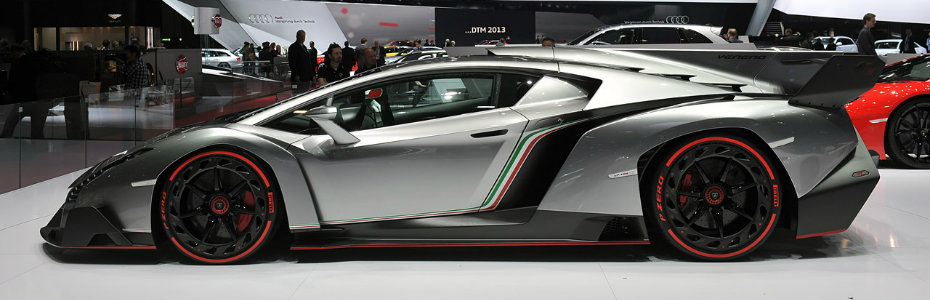
Lamborghini Veneno

Lamborghini's $4 Million Price Tag Veneno, only 3 of these bad boys were produced.

Bentley Motors

Bentley, the Definition of Luxury. What are there more to say?

Porsche 918 Spyder Concept

So, is the 918 Spyder everything it has been hyped up to be? Well, the picture speaks for itself.

Showing posts with label Europe. Show all posts

Monday, March 18, 2013

2013 Porsche Cayenne S Diesel


Not so long ago, our Michael Harley drove the Porsche Cayenne Diesel up in flannel-lovin' Alaska, and he returned home safely from that expedition pretty well convinced that Porsche knows how to create a really heavy, mountain-topping 4x4. In fact, since the test for the first generation of the Cayenne Diesel back in 2008, it's been clear: The diesel version of the Spice Islands Porsche is among its very best.

I'm not taking away from the spectacularity of the latest Turbo S or GTS Cayennes, but when it comes to traditional 4x4 duties, a gnarly turbodiesel's progressive power delivery and spitting torque make for great satisfaction. And a 4.2-liter biturbo V8 diesel is just bound to do something right for you. Cue this drive of the Cayenne S Diesel.

Over the standard Cayenne Diesel, the S's horsepower is up by 137, torque is up by 221 pound-feet, and straight-line oil-burning acceleration to 60 miles per hour requires just 5.6 seconds, maybe less. For this additional chutzpah, you'd be staring at a window sticker with a starting price of around $71,500, or just over 25-percent more than seen on the monroney for the S-less Cayenne Diesel Michael left in Alaska.

If, that is, the Cayenne S Diesel was destined for the US, which it sadly is not.

Driving Notes

- Whether you really like or really hate the Cayenne, I have to say that since the first-generation packaging got itself fully sorted around 2006, this interior is about the most robust and finely crafted cabin in the automotive business. Not a flabby or overstuffed anything in sight, though; it's all muscle with an undeniable sense of premium quality.

- Check out the exhaust tips to hear the voice of the Cayenne S Diesel. As one Cayenne team member asked us, "It's not at all like a diesel, is it?" And it's almost entirely true that there's almost no hint of a diesel mill under the hood. Blipping the throttle and accelerating hard stresses this point even further. Pretty impressive.

- Whereas for the most part the exterior still gives me troubles, from certain angles, this thing looks pretty incredible. The front three-quarter view is the best angle on the Cayenne, while I feel the rear three-quarter could also be as great if it weren't for the taillight design on this generation.

- The 377 horsepower peaking at 3,750 rpm is impressive, but it's the towering 627 pound-feet of torque punching things forward between 2,000 and 2,750 rpm (almost all of it available from 1,650 rpm) that can separate my retinas.

- A 4,400-rpm redline is a reality on this 4.2-liter V8 biturbo diesel. That rev limit is no limitation at all, though, as far as holding the throttle in a given gear for a long time.

- The eight-speed Tiptronic S transmission's action and the Porsche Traction Management chassis has reached near perfection here. The half-step gears here help smooth things while also improving fuel efficiency for cruising.

- Despite this storm of energy and the vehicle's 5,005-pound curb weight, this SUV can easily return an average of 25 miles per gallon.

- The performance figures for this Cayenne S Diesel are well beyond the thrills experienced in the already good V6 diesel. Punching the throttle is simply vicious in the midrange.

- Recommended braked towing weight remains 7,700 pounds. It feels like the Cayenne S Diesel would prefer five passengers and about 12,000 pounds to tow. Uphill.

- European deliveries of this exceptional tank begin before the end of the year. Russia is foreseen as a huge market. What a surprise.

Read more by Matt Davis at Autoblog.com

2014 Mazda6 Skyactiv-D Wagon


This was sort of a quirky surprise drive opportunity. I've been over here in Italy for a while now, and Mazda Italia contacted me seemingly out of the blue to drive test some version of the Mazda6 with a diesel engine. Supremo. The Mazda6 is a sexy everyday beast and I have been digging their SkyActiv-D engines for a while now. Very spirited units.

My contact phones me the day of, and says he can come by with the car, and then we'll head off to some sort of special spot for dynamics testing and technical conversation. Nice deal, say I.

My guy Ernesto pulls up outside of the house and – lo and behold – it's a dang Mazda6 station wagon with the very most recent 2.2-liter SkyActiv-D motor good for 148 horsepower and healthy 280 pound-feet of torque. The wee four-banger with 14.0:1 compression ratio hauls this 3,260-pound wagon around with the best of them. A decent 0-to-60-mph time of 8.7 seconds, too.

Best touch? This one had the standard six-speed manual gearbox. We at Autoblog know how we bend a few noses the wrong way with our open cravings for exactly this sort of un-American car setup. But, oh my, did we have a good day together.

Driving Notes

- First off, the Mazda6 sedan we just tested is a fine-looking conveyance. But if you like wagons like I do, this 2013 Mazda6 wagon is even finer. To my eyes, it doesn't overdo it like some Infiniti models or the Nissan Juke, and any references to the swoopy Fisker Karma soon fade away. Mazda's "Kodo" ("Soul of Motion") design approach just works.

- I was so geeked that this was a wagon. And the six-speed manual mated with the SkyActiv-D engine just took it over the top. Before hopping in, I noticed the optional set of really nice 19-inch wheels wrapped in Bridgestone Turanza T001 treads, the latest vintage of this fine rubber.

- Ernesto tells me that I am the very first in all of Italy to drive this engine trim outside of the company testers. "What about the Italian journos?," I ask. He smiles and shrugs, meaning, "Too bad for them, I guess."

- This revvy and strong 2.2-liter turbodiesel is not the 173-hp tune that arrives in the U.S. later this year in the sedan, but it would do just fine on American roads. If the hp bump seems modest on the trim we'll get, well, the torque bump is also a mild 30 lb-ft. Acceleration to 60 mph will be only a half-second quicker and fuel use will increase, though it will still be good at about 30 miles per gallon city and 40 mpg highway.

- We pulled up outside of a go-kart track I know out in the middle of the northern Italian flatlands. Ernesto tells me this is the place. Seriously? Yes, seriously. Ever whipped a front-wheel-drive family wagon with manual shifter and small diesel engine around a karting circuit? Me either.

- The terrific Turanza tires were smoking freely under the cranking enthusiasm of the 2.2-liter four. All of the torque was there at 1,800 revs and the action of the manual shifter proved smooth and precise. It was easy to heel-and-toe at all times – this, on an extremely tight kart track, not an open road with time to think built in.

- The wagon handled my induced-oversteer moves well, with superb steering and exceptional weight transfers. (It's like this on almost any hopped-up wagon I've driven even a little like this. For instance, I prefer the Mini Cooper S JCW Clubman on a hot circuit versus the hatchback for this very reason).

- All traction nannies were off and Ernesto and I were having a little more fun than I think his bosses had in mind. I started in with the Scandinavian handbraking, a technique that invariably enters the equation on such tracks, and we were giggling like school girls in short order.

- The Mazda6's rear suspension setup's lateral arms do not, as many do, err forward and higher than the wheel hub. Instead they attach low, below the wheel center. This results in an extremely sporting attitude over twisty roads as the arms push at the rear wheel down lower and closer to the center line. This was most noticeable on track.

For the moment, no wagons are promised for the US, sadly. That's a serious bummer for all of us; this Mazda6 wagon is a brilliantly executed design. Pretty damn good on a kart track, too.

Read more by Matt Davis at Autoblog.com

Sunday, March 17, 2013

2013 Jaguar XF Sportbrake


Editor's Note: Our reporter was anxious to get some time behind the wheel of the XF Sportbrake, even though Jaguar only had a very small window available for us to drive it. As a result, we weren't able to capture our usual original images to go with the Quick Spin story. Please accept our regrets, and Jag's lovely stock photography, instead.

The last wagon attempt from Jaguar was the X-Type, built between 2003 and that model line's unceremonious end in 2009. That X-Type and its legacy represent a real dog of a chapter for Jaguar, and for the Halewood factory where the barker was built. It was the final joke told prior to the brand's proper rebirth phase – a phase we're enjoying the heck out of today.

Current magnanimous Jaguar owner Tata can be thanked for this new wagon, the XF Sportbrake. Like all newness coming from Jag these days, this new wagon also feels lightyears more serious an offering, ready to compete squarely with established premium wagon makers across Europe. A Jaguar wagon in America is a far-off priority for the company, frankly. Still we deserve to know what we're missing for the time being from this (sometimes overly) cherished British firm.

I was given a right-hand-drive 3.0-liter turbodiesel XF Sportbrake. Jaguar currently offers only diesel powerplants in the wagon due to the European market buying nearly 100 percent of its wagon bodies with the far more efficient powerplants. And on the 40 miles from Welshpool over to Bala at the edge of Wales' Snowdonia National Park, there's some driving to be done.

Driving Notes

- The very good folks of Jaguar's UK offices met me in the middle of just about nowhere for this special, short, but sweet drive cross the mossy hills. I hadn't yet been able to drive a Jaguar XF Sportbrake – a car that sort of came in announced softly and with zero fanfare – but where better to do this than here on its home turf?

- What's best about the Jag wagon is that it remains an inherently classy rarity, but thankfully this time Jaguar has really done its legwork. As with the distinctive feel of the big XJ sedan, this XF wagon is completely Jaguar-esque and not easily likened to others.

- The sweetest surprise was exactly how much fun it was to drive, thundering over hill and dale in a land of seemingly no traffic. This 3.0-liter turbodiesel V6 is Euro-wag paradise and I was soon chucking it around as though it weighed 500 pounds less, and had one fewer rows of seats.

- Granted, with this big motor I also got the eight-speed automatic. But there's nothing sluggish about this combo on a family hauler capable of hitting 60 miles per hour in 6.1 seconds or less. It certainly felt like less; the throttle response was really good.

- There is up to 59.2 cubic feet of cargo space available when obeying all regulations to keep the windows clear for visibility. Load the XF Sportbrake like a college kid might, and who knows the true volume in this gaping space. With the seats in place, five adults have plenty of headroom and enough legroom.

- The standard 20-inch wheels aboard my diesel S model transmitted surprisingly little road noise into the ample cabin, and same can be said for the two large-mouth exhaust tips. Fiddling with the Jaguar Drive Control via the rheostat selector is as easy as ever, even though I am not in love with the gratuitous spectacle of said selector rising up out of the "stage" every time I ignite the engine. Feels a tad 1970s to me.

- I was slightly wrapped up in the drive and unaware of exactly how spirited it may have been, until the Jaguar PR maestro with me said, "Well, I can sort of tell that you're enjoying yourself." I truly was, like rarely before in the more civilian trim Jags.

- Doing all of this and getting a return of something like 35 miles per gallon on average got me starting in on that old whine: "Why can't we get this brilliant sporty highway cruiser/hauler in the States?" It may be a wee bit too Euro, I understand, but this sophisticated low-revving style of sporting practicality, with a handsome exterior, suits me very well.

- As of right now, the XF Sportbrake is exclusively for European sale, hence the current two-engine diesel range. For the North American market, the next big push after the F-Type convertible and coupe (the latter based on the ultra-sexy C-X16 concept car) is the crossover/SUV, reportedly due out in 2016.

Read more by Matt Davis at Autoblog.com

2013 Volkswagen Golf R Cabriolet


This was in the heart of the ultra-chic Côte d'Azur during winter. The car to be tested was the not-for-North America 2013 Volkswagen Golf R Cabriolet. Prevailing weather conditions here this time of year are bizarrely pleasant, as though a dome of Swarovski crystal has been placed over the entire region to protect it from any real winter spoiling things. And the zippy Golf R Cabriolet is a sports car designed precisely for this area's preciously narrow winding streets, as well as for the lofty budgets of its property owners.

So then why was it snowing like we were in northern Michigan? The weather front hit from the north like a swift kick to the Jordaches. The roof was open on this Candy White Golf R Cabrio and I, as is my wont, was determined through thick or thin to keep it retracted. It had been raining and sometimes sleeting like the End of Days, but I kept the lid cracked because the 261-horsepower cabrio – the most powerful convertible ever built by Volkswagen – was snipping along nicely as the bad weather blew over my head and wetted only the rear headrests.

Then, as also invariably happens here, the twisty road went single-file behind a massive Tonka truck carrying crushed, heavy stuff. This is not a great circumstance for a cabrio, especially in such weather. In eleven seconds the multi-layer cloth top was in place, a move you can make while traveling at speeds up to 18 miles per hour. Then all was cozy and warmish in this completely opted-out Golf R Cabriolet interior with its heated sport seats, full-on leather everywhere and cushy R-logo'd carpets.

The rain and sleet switched to perfect, clumpy, snowball-fight snow at around 800 feet up the massive coastal cliff face. Here was where the business case for this now-outgoing-generation Golf R, with a base price that would be in the realm of $37,000 in the US, starts to crumble. In short order, I was in a southern French blizzard, surrounded by scared French motorists, driving a fancy fru-fru convertible shod with optional 19-inch high-performance Dunlops (235/35 ZR rated). There was great feathering of this engine's eager 258 pound-feet of torque that stays eager even in Comfort mode, and with the gear lever of the six-speed dual-clutch in fully automatic Drive.

I swallowed my moxie and turned around. This was the right thing to do because the Golf R Cabriolet – unlike the all-wheel-drive Golf R hardtop – is front-wheel-drive only despite the higher sticker. More or less, this is a fully loaded, roofless Golf R treatment sitting atop the Euro-only Scirocco R chassis. And with the estimated 6.2 seconds it takes to get to 60 mph from a dead stop, this high-buck cabrio is nearly a full second slower than the all-wheel-drive hatchback. And there's less luggage space... to boot.

To make this business case work, one clearly has to put aside every practical thought in that sunbathed noggin and believe passionately in the cute and frivolous lifestyle provided by a cabrio that is nonetheless constructed well. Taken thusly, and with the bonus of the tautly assembled cabrio roof unit and R interior, any customer living in a sunny place – without freak snow showers – will be really very happy.

On the second day of this trip with Volkswagen, the weather stopped being life-threatening enough to resume my search for Golf R-worthy curves. Playing with the adaptive chassis, switching between Comfort, Normal and Sport modes, revealed a good platform with well-engineered brake-steer technology. That helps to minimize this front-driver's tendency to understeer through all these bends, and also helps keep the car's trajectory straight while accelerating out of corners.

I also had to accept the six-speed DSG transmission as a necessary lump of the luxo lazy life. Nothing would fit better in here, or in any Golf, than the company's tried and true six-speed manual transmission. Despite craving it, my wish would never come true. The DSGs are far better units than the Mercedes-Benz 7G family, for instance, but to really squeeze this powertrain's juices, a manual is needed.

This 2.0-liter TSI four-cylinder engine is one of the finest drivetrains ever placed in a car. It's just plain always at the ready, while being smooth about it and convincingly quick. Choosing between this setup and, say, the turbocharged 1.6-liter four-cylinder used in the Mini Cooper S Convertible, would be difficult since both are amazingly satisfying drives, and they both seem unduly tortured when coupled to their respective automatic gearboxes.

While, on the one hand, the Golf R Cabriolet's aggressive optional 19-inch wheel/tire set is probably overkill, the team developing this last farewell model for the Golf VI sadly decided to tone down the exhaust note versus the Golf R hatchback (booo, hisss). Now it just sounds pretty instead of pretty gnarly. Note also that the twin exhausts exit the rear scuttle at either corner and are not bunched together in the center as on the hotter hatch. They still look good, though.

To summarize, Volkswagen has issued a swan-song in this fully loaded Golf R Cabriolet trim with every significant option in the book aboard. The car is resting on the good but old PQ35 architecture, not the new and better MQB platform of the new Golf MkVII, Audi A3 et al., and is front-wheel-drive only instead of all-wheel-drive like the three-door Golf R. And it costs a few suitcases extra worth of cash. It's also a really odd duck in that it's being added to the lineup in Europe after the all-new Golf VII has already gone on sale.

Honestly, though, VW can do this with the Golf in Europe since the Golf VI is the most successful premium hatchback by far in Europe, even in the model's final year of production. At profit margins like this, what a luxury.

Read more by Matt Davis at Autoblog.com