TwitterFacebookGoogle PlusLinkedInRSS FeedEmail

Koenigsegg - Performance

When we speak performances, nothing would represent the word "PERFORMANCE" better than any Koenigsegg.

Benz McLaren

Mercedes-Benz - Made In German, the parents to the Silver Arrow McLaren.

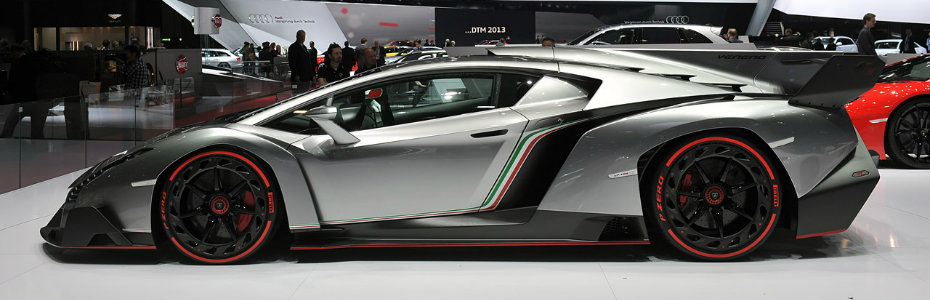
Lamborghini Veneno

Lamborghini's $4 Million Price Tag Veneno, only 3 of these bad boys were produced.

Bentley Motors

Bentley, the Definition of Luxury. What are there more to say?

Porsche 918 Spyder Concept

So, is the 918 Spyder everything it has been hyped up to be? Well, the picture speaks for itself.

Showing posts with label Hybrid. Show all posts

Monday, March 18, 2013

2013 BMW ActiveHybrid 3


The business case is pretty simple: BMW wants a green (or blue, if you like) "liaison" line of models between its standard lineup of cars and the upcoming mega-wow i models. This maximizes choices, fills all niches, and buys time while BMW waits to get those i cars just right before the start of deliveries.

These ActiveHybrid full parallel-hybrid electrics are also acting as the closest BMW can get to its amazing range of turbocharged diesel motors that not enough people want in North America and Asia. In European terms, there is no business case for these hybrid cars apart from curious and cash-heavy early technology adopters, since the EU is awash in BMW's wonderful oil-burners. Those beloved turbocharged diesels would be a far better product in North America and Asia as well, but, hey, let's not get all pipedream-y, now. And, no, we're not trolling here.

So BMW has created a lineup of pretty darn good heavier and pricier models, coining the new brand word ActiveHybrid with versions of the X6, 7 Series, 5 Series and now the 3 Series, called "F30h" internally in this case. The efficiencies gained by this powertrain are fairly good as well, so we'll try tempering our doubts.

Versus the 335i sedan, the ActiveHybrid 3 adds 305 pounds of curb weight for a grand total of 3,860 pounds. Most of that weight increase happens under the trunk floor thanks to the 96-cell lithium-ion battery pack between the rear wheel wells. This changes the fore:aft weight split from 51.5:48.5 percent in the 335i sedan to 49.7:50.3 percent in the ActiveHybrid 3. Seems small to notice, but it does change the comportment of the sedan to a more dynamically neutral feel. We also lose 3.2 cubic feet of trunk space.

While the electrical guts added pump up the curb weight, they also thankfully add some welcome juice to the throttle play. Versus the 302 horsepower and 295 pound-feet of torque of the 335i with the "N55" twin-scroll turbocharged inline six-cylinder engine, the ActiveHybrid 3 adds an electric motor integrated in the housing of the eight-speed Steptronic transmission. This e-motor by itself is good for 54 hp and 155 lb-ft of torque from the moment you graze the pedal. The actual power and torque numbers that result are exactly what we reported for the ActiveHybrid 5 back in January of this year: 335 hp and 332 lb-ft.

At least the ActiveHybrid 3 weighs 505 pounds less than its larger 5 Series sibling and therefore the overall drive experience is more suited to our expectations of a BMW carrying the 35i engine. We require at least a little "ultimate driving machine" in our ultimate driving machine, especially if we're paying a base price on delivery of $50,195 ($7,395 above the 335i) when the ActiveHybrid 3 leaves the lot for home. And the characteristic Liquid Blue metallic paint job that screams "ActiveHybrid"? Costs $550 extra right off the bat. Jet black or Alpine white are the only colors that cost zero dollars.

There are four separate model lines you can choose from to enhance your active hybridization – Sport, Modern, Luxury and M Sport – each of them prettying up both the exterior and interior. Ours was a Sport Line car (add $1,700) that stresses the color red, while Modern goes with shiny chrome details, Luxury with brushed chrome and M Sport runs with blue. Our car also had the no-cost optional 18-inch Streamline design alloy wheels that slightly enhance aerodynamics and brake cooling, plus they look very "AH".

As we said, this 3 Series setup with its ActiveHybrid powertrain and drivetrain is dynamically superior compared to the heavier and larger ActiveHybrid 5, so unless you absolutely need a larger car, stick with this smaller carriage. Besides, it's quicker off the line than its big brother – an estimated 5.2 seconds to 60 miles per hour against the Activehybrid 5's 5.3 seconds. Wow.

About all of the hybrid action that happens is dictated by the attitude you choose for the car through the touchy-feely-sounding Driving Experience Control to the left of the console lever for the eight-speed Steptronic transmission. While in Eco Pro and Comfort modes, the hybrid electric system is showing us everything it is programmed to do, including the standard Stop-Start function at intersections with red lights or in stop-and-go traffic. Once in Sport or Sport+, you in some ways have a heavy BMW 335i Sport Line on your hands, though some energy recuperation for the lithium-ion battery pack still happens as well as other small efficiency moves. And there is still the added boost at take-off of the parallel electric motor.

All else aside, though, this N55 six-cylinder is simply an exceptional motor, and using it as the base material for any car almost automatically makes that car really good. Even with the e-motor and/or N55 engine chiming in seamlessly and often (pure EV driving extends only to 2.5 miles max and at an average speed no greater than 22 mph before the internal combustion engine switches back on), the overall driving comfort of this hybrid design works extremely well. Fuel mileage per gallon with the ActiveHybrid tech on board is said to improve by an average of 25 percent over the stock 335i sedan. The car has an official EPA rating of 25 miles per gallon in the city and 33 on the highway, though, which likely underestimates how it will perform in the real world.

There is also a coasting mode for the drivetrain, a state of forward progress more fanciful companies call 'sailing'. When you let off the throttle on a downhill portion of the highway (only up to 100 mph while operating in Eco Pro mode), the internal combustion engine decouples from the driveshaft to the rear axle and shuts off, thus emitting no pollutants nor slowing the car down via the engine's own friction. It is a very interesting experience watching needles drop to zero. On some of the downhills we were actually gaining speed, so when they say decoupled, they mean it.

All the while, as you play with the various calibrations over different road situations, there is a small blue number readout at the base of the instrument cluster telling you how many "free" miles you are awarding yourself thanks to having bonded with the hybrid system.

Further, as on the ActiveHybrid 5 we tested, when you opt for the $2,150 Navigation Professional onboard system, its intelligent ECU syncs up with the car's ECU, the chief benefit being to chart out the entire mapped route and anticipate hills, descents and curves so as to maximize fuel savings at all times without slowing the journey. This feature also permits a fully accurate, instantaneous recalculation of true range when weighing remaining battery energy in parallel with the fuel supply over the chosen route.

To make certain the ActiveHybrid 3 can be more than just quick in a straight line despite all its green credentials, you can still opt for an M sport suspension calibration, variable sport steering ($1,000 together) and crisper shift mapping with the sport automatic that then gets a dedicated console lever design ($500).

It'll be very interesting to see for how long BMW carries on the ActiveHybrid offerings once plans for the opening salvo of BMW i models are all realized in a few years. That's the challenge with these nonetheless perfectly valid hybrid-electric Bimmers: It feels like a placeholder solution while Munich waits eagerly to start selling the dense i technologies it cares about more. This ActiveHybrid 3 really is as good as BMW needs it to be and, to their credit, they admit that the sales figures sought are "realistic".

A new-gen 330d and 335d would be exceptional, lighter and more efficient. Or even an ActiveHybrid diesel with these. But we'll leave the business case stuff to the experts.

Read more by Matt Davis at Autoblog.com

2013 Volkswagen Jetta Hybrid


Let's have some fun, and do some math. We're talking pretty rudimentary stuff, multiplication and division, to figure out if the upcoming Volkswagen Jetta Hybrid can make a baseline case for itself against two very strong competitors in this segment. The competitors in question, at least for now, are two more Jettas: the diesel-drinking TDI and the fit-for-the-masses SE with VW's long-serving 2.5-liter engine.

To keep the equations clean and simple (hey, we're writers), we'll calculate based on the most flattering EPA miles per gallon stat from highway driving for all cars, assume a healthy 20,000 miles driven per year, and factor in today's average cost for the respective fuels these three require: diesel (TDI), regular (SE) and premium (Hybrid). We'll also start with the base prices for all models.

With all of that info loaded into our mental hoppers, how much time does it take to make the 45-mpg fuel economy of the Jetta Hybrid offset its premium price? To refresh, the $24,995 Hybrid is $2,005 more than the TDI and a heady $6,000 more than the SE. With highway economy ratings of 43 mpg for the TDI and 48 for the Hybrid, even considering that diesel fuel is more expensive, it'd take you about seven years of Hybrid driving before you've paid off the technology premium. The regular-gas sipping SE is a still more compelling argument for the frugal, as you'll need to drive your hybrid for roughly 13 years to make up the sticker difference at today's fuel prices. Bring the miles driven down to a closer-to-average 12k per year, and the payback takes even longer.

So what? Run a similar thought experiment with any other sets of gasoline- and hybrid-powered models in the universe today and you're likely to come up with very similar results – hybrid technology is still too expensive to "pay for itself" in almost every instance. The difference here, especially striking to those enthusiasts (like us) that have driven and enjoyed TDI products in the past, is that VW has long seemed to be the anti-hybrid, high-mpg beacon of driving fun in a world that becomes more Prius-shaped each time we look up from the Porsche catalog long enough to wince at it. So going into this full-bore test drive of the Jetta Hybrid, we want both better mpg-performance and at least as much driving fun as the TDI, or, really, what's the point?

At the heart of the Volkswagen hybrid proposition is a powertrain comprised of a 1.4-liter turbocharged gas engine and a 20kW electric motor that draws power from a 220-volt, 60-cell lithium-ion battery pack. Total output for the system is 170 horsepower and 184 pound-feet of torque, with the electric motor good for a consistent 114 lb-ft of torque on its own, though the actual put-through number is electronically limited by the car's transmission.

The electric motor is also able to work on its own, in a fully electric mode, when state of charge and load demands allow, up to 37 miles per hour (or 44 mph when one has selected to drive in the more efficient "E-Mode"). In practice, we found it fairly difficult to use this EV mode much, even around town, unless we were very conscientious about maintaining an even, slow application of throttle. The EV mode will probably prove much more useful as an incremental addition to overall good fuel economy figures than it will contribute long periods of emissions-free driving.

Of course, the electric motor is also used in tandem with the turbo gas engine to offer more scoot during full-throttle runs. Here we were quite pleased with the overall torquey feeling of low-speed acceleration, as well as the ability to execute passing maneuvers at highway velocities. The Hybrid feels every ounce as quick as the 2.5-liter five-cylinder equipped Jettas we've driven en masse, though doesn't offer the torque punch that the TDI has in store.

With that said, and factoring in the ultra-smooth-shifting, seven-speed DSG gearbox with its attendant willingness to drop or add gears rapidly in either auto or manual modes, this Jetta is a far more fun-to-drive hybrid than most of its competitive set. Certainly mainstream Prius drivers would be likely to call the Jetta "sportier" than Toyota's segment leader, though we're not sure exactly how many mainstream buyers care about that capability.

Likewise, the ride and handling profile of the Jetta Hybrid is a bit crisper and more enthusiastic than your bog-standard compact gas-electric, though that's a bit like calling it "almost not boring." We found the suspension to be largely smooth and unfussed when dealing with poor road surfaces, and only moderately squishy when asked to take a corner at faster velocities than the posted limits would recommend. The front end of the car was somewhat willing to turn-in quickly, though the added weight of the Hybrid battery pack, along with the Jetta's natural tendency towards safety-first understeer anywhere near the limit, saw the front end pushing well wide of any apex we may have been foolish enough to aim it at. (Unless we aimed very slowly, of course.)

The car's controls, from the fuzzy-feedback steering experience to the non-linear grabiness of the regenerative brakes, were predictably not-crisp, sadly. The throttle was squishy in the first inch or so of travel, too. We adjusted to all of this, even the strange brakes, in just a few days of driving, but the point is that we were not exactly dazzled for a hybrid that may have been the enthusiast's answer to the run-of-the-mill.

The other critical expectation of the Jetta Hybrid, of course, is that it offers really kick-ass fuel economy. And here, we were disappointed. Our test of the car ran for more than 300 miles over a week of driving, including hundreds of miles on the freeway headed to and back from the west coast of Michigan. We ended up with a figure of 36.2 mpg for our total test period. Even if we take those numbers with a grain of salt – there was certainly a lot of fast driving when we were on back roads, and on the highway, our cruise control tended to be set at 75 mph or higher – they strike us as significantly less impressive than the last set we generated behind the wheel of a Jetta TDI, and less still than the Jetta Hybrid's EPA combined rating of 45 mpg.

With that, and considering that the Jetta Hybrid is almost a carbon-copy of every other Jetta from interior, fit/finish and exterior points of view (the car does have a snazzy set of optional wheels that are specific to the trim), we have to wonder who this new high-tech hybrid is aimed at.

Earlier we asked in a seemingly rhetorical fashion, "What's the point" of this Jetta Hybrid? A true answer to that question can be given in many ways, depending on who you are and what your priorities are. Certainly you can make environmentally responsible concessions for the lack of mpg-dominance for the car, based on its all-electric mode and quantifiable reduction in tailpipe emissions as a result. You could argue for convenience if there's a paucity of diesel pumps around your home court, or you may even claim a fondness for the slightly more refined running of the Hybrid's gas/electric operation. If you're a VW product planner, you will almost certainly point out that, with green American dollars being thrown at hybrid models in increasingly large volumes, it would be fiscally irresponsible not to be a player in the growing segment. (For what it's worth, Volkswagen estimates some five-percent of Jettas sold in the model year will be Hybrids.)

Realistically, there's not an ironclad case for ownership to be built here. You want what you want, and buy what you buy. A hybrid doesn't make any less sense than a GLI, for instance, it just makes sense in a different way, to a whole different set of shoppers. We'd still plunk our Jetta money down on the TDI model, probably ten times out of ten, if fuel economy is our jones. Not because the Jetta Hybrid isn't good to drive, and probably to own, it most certainly could be. It's just not as good, which is enough to make all of the difference.

Read more by Seyth Miersma at Autoblog.com

Tuesday, March 12, 2013

Could The Scion FR-S Get A Hybrid Version For More Performance?


Go ahead and sit down if you aren't already, because I have some news that may upset you: it is possible that our beloved Toyota GT-86 (aka Scion FR-S, aka Subaru BRZ, aka The Toyobaru) could get a hybrid version in the near future. Gasp!

That's what the UK's Autocar is reporting, anyway. They spoke to chief engineer Tetsuya Tada, who said he is exploring all possibilities for improving the car's performance. That could include forced induction, but it could also include electric motor assistance. Here's what he said:

“I’ve been asked a lot about a turbocharging,” Tada told us. “We are already working on a mid-life facelift for the car, and we are investigating both turbocharging and supercharging too,” he added. “But an electric motor assistance solution is also possible, and would bring benefits that forced induction does not.”

Okay, more power for the Toyobaru. Enthusiasts have been clamoring for that since then beginning, although I have driven it and I don't feel like it needs it all that much. Tada adds this, and I think it's an important point.

"But we must guard against compromising any of the key virtues of the standard GT86 in the pursuit of more power.”

I'm glad Tada sees that. He probably knows better than anyone that one of the best things about the Toyobaru is its purity, its unabashed old-school-ness. Do they really want to mess with that in the pursuit of power?

On the other hand, let's play devil's advocate. Nearly all of the hypercars we saw at Geneva this week have hybrid systems to boost power and efficiency, one way or another. Now we could also see that on an affordable sportscar most of us love already.

Does this mean that hybrids have finally arrived for people like you and me? That they aren't just for Priuses and Insights anymore? Tell us what you think this means, and if the Toyobaru should go hybrid or not.

Read more by Patrick George at Jalopnik.com

Volkswagen XL1


A Bunch Of Amazing Tech In The Volkswagen XL1 Is Coming To A Golf Near You

I’m a big fan of the Volkswagen XL1 that was officially unveiled at Geneva and I am still considering what I’d offer someone at VW in order to get behind the wheel of one. Do I have to jump out of a balloon?
But in less than 10 years, the Golf of that era might have a lot of the same tech and design touches of that are packed into the limited production XL1. At least that’s what the car’s engineer, Dr. Ulrich Hackenberg, says.

In an interview with CAR Magazine, Hackenberg proclaims the future really is in plug-in hybrids and we should all get used to that because it gives lower emissions in cities and stop-and-go traffic, while still allowing us to travel long distances without worrying about EV range. The lessons learned from the XL1 are designed to save the internal combustion engine, and even though we marvel at the competency of EVs today, I think we're all in agreement we don't want to see the engine vanish altogether.

What’s more interesting, though, is that the XL1 could be a breakthrough for the use of cameras to monitor blind spots rather than mirrors. The XL1 is a test bed for that technology in production cars and they’re essential to aerodynamics to give it the looks that make me instantly think of the GM EV1. But if the cameras prove successful in real-world situations, side mirrors could start disappearing from new car designs.

Oh, and somehow all of the extra carbon fiber, plug-in tech and cameras aren’t supposed to radically increase the price of a mainstream hatch. It’s the Germans, don’t ask how they do it.

If you’re fascinated by the XL1, check out the interview. Color me skeptical, but if this stuff is available on the Mk 8 Golf GTI, I will be seriously impressed.

Read more by Zac Estrada at Jalopnik.com

2013 Toyota Camry Hybrid


"Vanilla." Taken in modern context, that's not a compliment, but it should be. Vanilla actually has exotic origins, and as spices go, only saffron is more costly. Despite the realities, calling something "vanilla" is not whistling in admiration. The Toyota Camry has been called "vanilla" countless times since its debut, but both the car and the bean have something up their sleeves.

Scoff all you want, but vanilla is the most popular ice cream flavor, and there is no mainstream sedan that outsells the Camry. Apparently, vanilla has an underlying tinge of filthy lucre. We didn't feel rich, exactly, wheeling around in the Camry Hybrid, but we came away impressed, nonetheless.

"When I go to an ice cream parlor for the first time, I always order their vanilla," says Ralph Hannabury. Why vanilla? "When you're making ice cream, everything builds off vanilla. If they have that right, you know they know what they're doing," Ralph explained. Who is Ralph Hannabury? For more than two decades, he made ice cream for Russo's Candy House in Saugus, Massachusetts. Ralph knows vanilla, and good vanilla is hard.

It's the same thing with cars. Supercars are easy compared to a good, bland sedan that starts faithfully every day for hundreds of thousands of miles and exhibits none of the bad habits that are "features" when you're talking exclusive machinery. The Camry is a riot of dispassion to car people, and the Hybrid only moreso with its Hybrid Synergy Drive sopping up whatever visceral treats you can find in the standard Camry.

Keeping the recipe metaphor going, even the best ingredients can't stand up to a poor chef. If the seasoning is overbearing or cooking technique flawed, you'll ruin expensive raw materials. With the Camry Hybrid, Toyota proves its skill at making the tricky Hybrid Midsize Sedan Souflee.

The Camry Hybrid is understated about its fuel efficiency. Look once, it's a Camry, just like the thousands of other Camrys that Toyota sells every couple of days. Look twice, it's still just like every other Camry and it's got extra little badges on its front quarter panels. Look a third time and you might notice the Hybrid-specific 17-inch tire and wheel package, but probably not.

The Camry Hybrid interior is more distinctive, with its own gauge cluster, different plastic trim replacing the fake-wood-patterned standard trim, and Hybrid-specific seat fabric in quick-to-dinge ivory or light gray. The Camry Hybrid shares its acoustic glass windshield with the V6 model to keep noise out, and our car had the JBL GreenEdge audio system for making it. Just like every Camry audio system, this one had an unpleasant trebly edge that was only somewhat mitigated by selecting analog-only radio reception instead of the HD Radio default.

Our test car was also equipped with navigation and the Entune multimedia system. Entune is Toyota's answer to SYNC and MyFord Touch from Ford, with app support (apparently using Bing, making restaurant reservations with OpenTable and using movietickets.com to secure access to a matinee) plus weather, traffic, stocks and sports. With all those distractions pumping at you from the 6.1 inch LCD, it's a good thing the Camry Hybrid also has 10 airbags, high strength steel in the B-pillar and rocker panels, electronic nannies like stability control, radar-based Blind Spot Monitor and Safety Connect to call for help when you do wreck.

The tech isn't quite as easy to use as systems like Chrysler UConnect or even the half-reviled MyFord Touch, but it becomes an innocuous part of the experience quickly. Except for that horrible-sounding audio system. It's like they designed in tinnitus from the start. The rest of the interior impressions are the same as other Camrys. The seats are comfortable and decently supportive, thedashboard is topped with stitching in an attempt to class up the joint, though the panel doesn't blend into the doors gracefully and there are a lot of hard plastics around. It's roomy, comfortable, and the trunk doesn't even take much of a hit with the addition of the 244-volt hybrid battery pack, and it's in fact up 2.1 cubic feet over the last-gen Camry Hybrid.

Driving the Camry Hybrid is not going to light any enthusiasts' hair on fire, though it'll put electrons and molecules to work when you mash the throttle all the way to the carpet for a 7.6-second run to 60 miles per hour, slotting neatly between the more-than-fine four-cylinder model and bonkers-rocketship V6. Low-rolling-resistance tires are also low capability tires, so there's little point in trying to achieve thrilling cornering speeds. Driven like a normal person, of course, the dynamic compromises Toyota made for the Camry Hybrid were the right ones.

Read more by Dan Roth at Autoblog.com