TwitterFacebookGoogle PlusLinkedInRSS FeedEmail

Koenigsegg - Performance

When we speak performances, nothing would represent the word "PERFORMANCE" better than any Koenigsegg.

Benz McLaren

Mercedes-Benz - Made In German, the parents to the Silver Arrow McLaren.

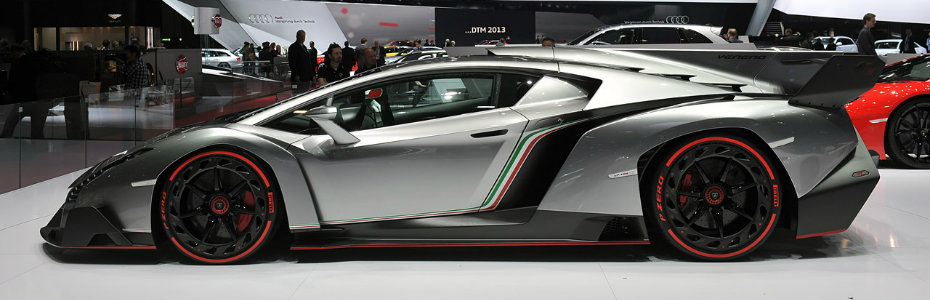
Lamborghini Veneno

Lamborghini's $4 Million Price Tag Veneno, only 3 of these bad boys were produced.

Bentley Motors

Bentley, the Definition of Luxury. What are there more to say?

Porsche 918 Spyder Concept

So, is the 918 Spyder everything it has been hyped up to be? Well, the picture speaks for itself.

Monday, March 18, 2013

2013 Buick Encore


We admit it. We have no earthly idea how this whole thing is going to shake out.

Typically, after driving a new car or truck, we come away prepared to hazard a guess as to whether said model has a good chance of being a sales success. We've amassed enough time watching the industry, scrutinizing the competitors, and so on, to make a reasonably educated bet. Yet here we are, days removed from driving the new 2013 Buick Encore, and we still have no bloody idea.

To be fair, we're in good company. Buick's perfectly capable public relations and marketing teams don't appear to entirely know what to expect from the Encore, either. They've had to strain to even find remote competitors to match their new baby against. BMW X1? Volkswagen Tiguan? Mini Countryman? All kinda-sorta-maybe rivals from our vantage point. Yet we can't necessarily provide better ones for this tiny semi-premium crossover, either. Fiscal cliff-discount Land Rover Range Rover Evoque? Uppity Hyundai Tucson? Nissan Juke ravished by Vilner? It's really rather hard to say what plays here. The above panoply of would-be rivals only hints at just how small the Encore is. At 168.5 inches long, it's the shortest Buick in memory – stubbier, remarkably, than such past Trishield outliers as the Skyhawk, Somerset and Reatta.

Yet none of this size discussion or the lack of a clearly defined competitive set is to say that the Encore won't be a resounding success. Early signs from dealers – whose initial orders have been six times company estimates – are more than positive, and certainly Buick could do with another crossover underneath its much larger Enclave.

Back to the size thing for a moment. Seeing the Encore away from the bright lights of its 2012 Detroit Auto Show reveal and on the street improved our initial impressions. When seen in its proper element, the city, the Encore's scale and proportions start to make a lot more sense, and standard 18-inch alloys do wonders for its presence. Even so, there's no doubt that traditional Buick hallmarks like the Encore's waterfall grille and hood-mounted Ventiports simply look better on larger-scale canvases. There's a faint whiff of children's dress-up here – the baby of the family wearing mom or dad's jewelry, trying to act all grown up. Making a form this small look upscale is no easy task, however, and Buick's stylists have done an admirable job overall.

The same goes for the interior, which, at least in full-house spec with optional niceties like leather and navigation, certainly looks the part. Oh, we could debate the merits of the glassy faux wood trim, the occasionally hokey-looking iconography on the seven-inch Intellilink infotainment screen and Buick's continued obsession with a carpet of center stack buttons, but overall, it's a comfortable, upscale place to be, particularly in our tester's saddle motif. In fact, allow us to take a moment to underline "comfortable" – the packaging here is pretty impressive. Despite being sandwiched in between a 100.5-inch wheelbase, we found plenty of space up front, with the power height-adjustable seats affording dining-chair like height and a surprisingly commanding view without grazing the headliner. The back seat is a bit narrow, but more accommodating than one might think – we even had an occasion where we had four full-size adults riding in relative comfort for a while.

Buick still has the market cornered on quiet – it has stuffed a ton of sound deadening in the Encore's nether reaches, added an acoustic-laminated windshield and thicker-than-normal side glass, along with a sound-absorbing headliner and whispering low-rolling resistance Continental rubber to keep things tranquil. Going one step beyond, the Encore also receives standard Bose Active Noise Cancellation, essentially a white noise generator that relies on three headliner-mounted microphones to detect and counter interior din. This is Buick's first application of the technology, but General Motors has employed ANC previously on the Chevrolet Equinox. Make no mistake, this isn't an indulgently scaled luxury sedan or SUV, but it's still a very civilized place in which to weather one's morning commute.

Forward visibility is good, and the aforementioned seat height helps the driver to see eye-to-eye with larger crossovers, furthering the illusion that the Encore is larger than it is. Rear visibility is less convincing, with thick C-pillars and a smallish rear window crimping one's view. At least there's a standard rearview camera, along with 10 airbags if you still fail to see something.

It's at this point in the program where the driving enthusiasts among you will probably want to tap out. Said plainly, while competent, this is not an entertaining vehicle to drive. Buick should offer no apologies for this reality, however – it's not the Encore's raison d'être. This cute ute's sole powertrain is the same 1.4-liter Ecotec turbocharged four cylinder found in the Chevrolet Sonic economy car. In truth, the two vehicles are only tangentially related, with the budget Bowtie riding atop GM's Gamma architecture and the Encore relying on the Gamma II underpinnings it shares with its twins the Opel/Vauxhall Mokka and Chevrolet Trax. The Sonic and the Encore don't actually share much underskin material, notes James Danahy, chief engineer on the Encore program. In fact, Danahy was quick to clarify that this Buick shares little beyond powertrain and seat frames with the Chevy, though "learnings" on things like crash energy dissipation have informed this crossover's development.

Like it is in the 2,700-pound Sonic, the 1.4 turbo is tuned to deliver 138 horsepower at 4,900 rpm and 148 pound-feet of torque at 1,850 rpm. While that's enough to make the humble Sonic a fun car, it's not exactly a groundswell of muscle for the heavier Encore, which starts at 3,190 pounds for a front-drive model like our tester. Informal acceleration runs on our part generated a best 0-60 time of 10.0 seconds with two aboard – we're guessing the official time will end up being somewhere in the high nines. More ominously, colleagues from other outlets reported 12-second times with three people and a bit of gear aboard an all-wheel-drive example. In either case, that means you'll be staring at the taillights of every other vehicle we've mentioned to this point – if indeed you're lucky enough to even see the taillights of the far costlier X1 at all; BMW says a base sDrive28i will do the job in 6.2 seconds (and it's usually conservative with its numbers). For further reference, the cheaper Hyundai Tucson will do the deed in about eight seconds. You're as likely as not to be in a dead heat with that hipster driving a Nissan Cube in the next lane. The Encore is not quick, friends.

Thank goodness it's smooth, then. The six-speed Hydramatic is an agreeable partner, and there's even a bit of innovation happening in the $1,500 optional Active-On-Demand AWD system. Unlike most such systems that funnel torque to the wheels when slippage is detected, AOD uses a magnetically actuated clutch to pre-load the rear wheels with torque at every stop, automatically disengaging if no loss of traction is detected. The Borg Warner-developed system is said to be lighter and quicker acting than traditional AWD setups. With 6.2 inches of ground clearance front and rear, the Encore won't be up for much more than the occasional muddy field or curb hopping, but that's probably all that will ever be asked of it.

We disembarked from the Encore's seemingly native habitat, Atlanta's posh Centennial Park outdoor mall, negotiated area traffic and headed out on the highway, intent on sampling Georgia's network of beautiful rolling country roads. Once up to speed on the superslab, the Encore was again pleasingly hushed in the Grand Buick Tradition, but merging onto the freeway and passing with any measure of authority required dropping down a cog or two, bringing with it the unmistakable auditory intrusion of four-cylinder strain. We weren't really put off by the Encore's highway comportment (in all honesty, it rides very well considering its short wheelbase), but we were less thrilled when it came to those bucolic two lanes. There are lots of hills in north central Georgia, and burdened by the Encore's luxury lashings, the Ecotec just ain't country strong. Combine a lack of power with this CUV's stubby dimensions, high center of gravity and precise-but-unengaging electric power steering, and there wasn't much incentive to press on.

Read more by Chris Paukert at Autoblog.com

2014 Maserati Quattroporte


The sixth-generation Maserati Quattroporte is big – and not just because it's 6.5 inches longer than before with a wheelbase that stretches 4.3 inches beyond its predecessor. The new Quattroporte is big also because it's a huge deal both for its segment and for Maserati. Just as FoMoCo is finally chucking $1 billion at Lincoln MoCo, so too is Fiat investing 1.2 billion euros ($1.55 billion at the time this writing) in Maser's future hopes of achieving the larger success we all have wished for it. And after a thorough drive over the intensely challenging mountain roads of France's Mediterranean coast, we can't deny that there's finally reason to put some faith in this long overdue investment.

The much-applauded outgoing Quattroporte enjoyed a reputation of being among the very fastest executive sedans of its day, all while delivering the sportiest overall ride and handling, even in base trims. Yet there was constant corporate-level dysfunction that kept all Maseratis from getting important upgrades or receiving much-needed investment support. So, the outgoing Quattroporte has up until now sort of languished nobly, largely resting on the laurels it earned when it launched way back in 2003.

With continued proper mother company support and ambitious marketing initiatives finally on the table, this all-new 2014 Maserati Quattroporte looks fit to help lead "Il Tridente" through some huge changes as the company prepares to celebrate its centenary in December of 2014. First off, from its current annual total sales figure of 6,000 or so units, Maserati is confident that its global sales will reach 50,000+ per annum by the end of 2015, thanks certainly to all-new product coming on soon like a house afire. Try not to scoff at that too much. Rather cheer when the lights hit the new Quattroporte this January at the 2013 Detroit Auto Show, knowing that new products are on the way to help the FourDoor and the Gran Turismo in their quest for this ambitious volume target.

The departing fifth-gen Quattroporte maxed out in $135,200 Sport GT S trim with 444 horsepower at 7,000 rpm and 376 pound-feet of torque at 4,750 rpm from its naturally aspirated, Ferrari-assembled 4.7-liter V8. The only transmission in North America to this point has been a standard six-speed ZF automatic that can be paddled at the steering column, and the departing model's curb weight totaled 4,375 pounds. For those documenting such things, 0-60 took 5.3 seconds en route to a top speed of 178 miles per hour. Those were nice numbers in 2003, but they're decidedly less so in 2013. What's more, the Quattroporte has only ever come in a standard length, 200.7 inches long, providing owners with 15.9 cubic feet of luggage room. These days, none of this is terribly competitive.

Right out of the gate, the V8 base model of the new Quattroporte hits 523 hp at 6,800 rpm and 524 pound-feet of overboost torque between 2,250 and 3,500 rpm, that power arriving courtesy of a bi-turbo 3.8-liter direct-injected V8, also built by Ferrari. There are now eight gears available from the standard ZF automatic and curb weight reads 4,189 lbs, so the new, bigger car is lighter, too. The 0-60 is now a game-changing 4.6 seconds and top speed hits 191 mph. Given that long-wheelbase versions of these big exec sedans sell far better worldwide, Quattroporte VI is now offered exclusively at 207.2 inches, and the wheelbase has been stretched from 120.6 inches to 124.9 inches. Luggage room with the rear seats up is also a much more acceptable 18.7 cubic feet. So, this Italian is again champing at the bit to compete, primed to land on more shopping lists at the very least.

The Quattroporte's all-important steering remains lovingly hydraulic, plus there's a new, very decent and truly adaptive Comfort/Sport suspension, a bit of tech that was glaringly absent before. Keeping all of this rightness in mind, we were set loose on a Monte Carlo Rally-style drive loop where almost any other extended-wheelbase sedan would never have been launched for fear of journalists coming away with a sideways first impression. Many of the most tortured alpine roads on our loop possess lanes not much wider than the new Quattroporte's 76.7-inch width, and there was usually a low rock wall to the outside, the sort that traditionally doesn't offer much give when hit.

About that steering and how it has gone a step better – one of the sensations that has been unique to this big Italian in a class utterly dominated by the Germans has been the Quattroporte's light-on-its-feet feeling when carving up roads as on our test route. A Porsche Panamera Turbo S or GTS comes close, but the manner in which we were able to toss this Quattroporte around would be likely not possible – at least not as confidently – with the weightier-feeling Teutons. This, Maserati technicians tell us, is partially due to the stressing of lateral acceleration forces, particularly at the rear wheels as the suspension guides them along. Switching off stability control doesn't really alter the situation all that much when the conditions are sunny and perfect, as they were for our drive. The Pirelli P Zero tires – 245/40 ZR20 99Y front and 285/35 ZR20 100Y rear – did a layman's fine job in every circumstance, through every transition and weight shift. About the design of our tester's alloy wheels, well, we leave you to your own thoughts. As a no-cost offering, buyers of this V8 model can also request 19-inch tires from the soon-to-follow V6 model for added ride comfort.

Just ambling along in the cash-drenched Riviera or cruising the French autoroutes, the Quattroporte's chassis and suspension continued to perform as anticipated – not as imperfection-numbing as the typically over-engineered German über sedan, but rather with a well-received sportiness. Said another way, you'll know you're in a Maserati, even though the standard adaptive suspension in Comfort is plenty compliant. The overall payoff for someone living with this new Quattroporte is that they'll have the finest driver feedback in this class, bar none. And this is just the base model of the V8 trim.

When setting off from idle, the compact bi-turbo V8 from Ferrari provides just a modicum of lag, though this feels right for the sort of automobile which, in many markets, will have His Lordship in the back seat. Get into the 1,500- to 2,000-rpm range, however, and the response of the throttle/engine and behavior of this new modular chassis are point-blank. Really, between about 1,800 and 4,000 revs, the powertrain's torquey character takes over, and from there, the power curve rolls right up to 6,800 revs. Redline is marked at 7,200 revs, but we rarely went there, as we were too busy playing incessantly with the really crisp eight-speed paddle shifters in Sport mode, taking gear changes in a solid fifteen-one-hundredths of a second.

The Maser's exhaust tone, whether set to normal or in Sport, just explodes at 4,200 rpm and above. The off-throttle popping and snarling is legendary stuff. It's so supremely mighty when compared to any other super sedan's base exhaust that it should come as no surprise that the pipework is supplied by current cobbler of great exhausts, Faurecia.

Eyeballing the Quattroporte, we couldn't help but stare at the brakeset, especially after studying the day's drive route map. Before taking the wheel, we asked Maserati product development boss Benedetto Orvietani why a massive set of profit-mongering carbon ceramic brake discs are still not even an option. He gave us that cheeky response of "Drive it first and then decide." After flying all day over brake-baking roads, the standard aluminum and lead drilled and vented Brembo performance brakes (15.0-inch front with six-piston calipers, 13.8-inch rear with four-piston pinchers) proved sufficient enough that we've stopped assuming the car needs $15,000 brakes to make it any better. Nonetheless, marketing people at Maserati tell us they're in deep discussions on the hot topic, and not just for the Quattroporte.

The exiting Quattroporte still on sale has a design that has aged. Pretty well, we must say, but still a little long in the tooth, so the 2014's completely fresh design from Pininfarina is good to see in person. From nose tip to rear cabin pillar, we knew they'd get it right. It was arguably the rear portion of the departing generation that aged most poorly. What we see now is a vastly improved approach that is also helped a lot by the larger proportions on display. The only possible dubious reaction, which just about everyone is having and rightly so, is that the rear fascia looks straight off of a new Audi A4 with a dash of Citroên C5 in the shaping thereof. We can't really turn that into a criticism, though, since we like those rear end executions a lot, and the Quattroporte is at least no longer featureless when viewed from behind.

The cabin is equally as revolutionary as the exterior, and it previews a really good, cleaner trend for Maseratis yet to come. Sit in any German big gun, any big Jaguar, or the Japanese competitors, and things have arguably gone a bit, well, pimpy. This overwrought style trend all works and reflects an abundance of onboard tech, but the trend is seemingly also meant to come off as some sort of showy flashbulb that adds value to one's large investment. But Maserati's designers and engineers have collaborated for a truly classy interior that doesn't overcook a thing. Spatially, you can assume more than sufficient passenger and cargo room now, but the surfacing and materials are also decidedly finer than ever before. The adjustable seating on the V8 is very good, providing decent support for when the hairpins hit or for when it's time to travel 400 miles. More sound enters this Maserati's interior than with any other competitor, but when it's such a great soundtrack, this isn't a complaint.

The controls on the middle dash and center console all make sense, giving us an immediately good feeling. Only one novelty really leapt out at us as a surprise, and it's placing the Start button to the left of and below the steering column, as if inspired by Porsche. Did we continually un-remember this and poke the lower right dash instead? You betcha. The seven-inch Maserati Touch Control (MTC) screen orchestrated by Garmin is hardly revolutionary stuff, but we enjoyed it, as it's fast and, again, simply makes sense all around. In fact, it's very close to state-of-the-art as is, so once more, Maserati has avoided an over-complicated solution. Hallelujah.

Read more by Matt Davis at Autoblog.com

2013 Porsche Cayenne S Diesel


Not so long ago, our Michael Harley drove the Porsche Cayenne Diesel up in flannel-lovin' Alaska, and he returned home safely from that expedition pretty well convinced that Porsche knows how to create a really heavy, mountain-topping 4x4. In fact, since the test for the first generation of the Cayenne Diesel back in 2008, it's been clear: The diesel version of the Spice Islands Porsche is among its very best.

I'm not taking away from the spectacularity of the latest Turbo S or GTS Cayennes, but when it comes to traditional 4x4 duties, a gnarly turbodiesel's progressive power delivery and spitting torque make for great satisfaction. And a 4.2-liter biturbo V8 diesel is just bound to do something right for you. Cue this drive of the Cayenne S Diesel.

Over the standard Cayenne Diesel, the S's horsepower is up by 137, torque is up by 221 pound-feet, and straight-line oil-burning acceleration to 60 miles per hour requires just 5.6 seconds, maybe less. For this additional chutzpah, you'd be staring at a window sticker with a starting price of around $71,500, or just over 25-percent more than seen on the monroney for the S-less Cayenne Diesel Michael left in Alaska.

If, that is, the Cayenne S Diesel was destined for the US, which it sadly is not.

Driving Notes

- Whether you really like or really hate the Cayenne, I have to say that since the first-generation packaging got itself fully sorted around 2006, this interior is about the most robust and finely crafted cabin in the automotive business. Not a flabby or overstuffed anything in sight, though; it's all muscle with an undeniable sense of premium quality.

- Check out the exhaust tips to hear the voice of the Cayenne S Diesel. As one Cayenne team member asked us, "It's not at all like a diesel, is it?" And it's almost entirely true that there's almost no hint of a diesel mill under the hood. Blipping the throttle and accelerating hard stresses this point even further. Pretty impressive.

- Whereas for the most part the exterior still gives me troubles, from certain angles, this thing looks pretty incredible. The front three-quarter view is the best angle on the Cayenne, while I feel the rear three-quarter could also be as great if it weren't for the taillight design on this generation.

- The 377 horsepower peaking at 3,750 rpm is impressive, but it's the towering 627 pound-feet of torque punching things forward between 2,000 and 2,750 rpm (almost all of it available from 1,650 rpm) that can separate my retinas.

- A 4,400-rpm redline is a reality on this 4.2-liter V8 biturbo diesel. That rev limit is no limitation at all, though, as far as holding the throttle in a given gear for a long time.

- The eight-speed Tiptronic S transmission's action and the Porsche Traction Management chassis has reached near perfection here. The half-step gears here help smooth things while also improving fuel efficiency for cruising.

- Despite this storm of energy and the vehicle's 5,005-pound curb weight, this SUV can easily return an average of 25 miles per gallon.

- The performance figures for this Cayenne S Diesel are well beyond the thrills experienced in the already good V6 diesel. Punching the throttle is simply vicious in the midrange.

- Recommended braked towing weight remains 7,700 pounds. It feels like the Cayenne S Diesel would prefer five passengers and about 12,000 pounds to tow. Uphill.

- European deliveries of this exceptional tank begin before the end of the year. Russia is foreseen as a huge market. What a surprise.

Read more by Matt Davis at Autoblog.com

2013 BMW ActiveHybrid 3


The business case is pretty simple: BMW wants a green (or blue, if you like) "liaison" line of models between its standard lineup of cars and the upcoming mega-wow i models. This maximizes choices, fills all niches, and buys time while BMW waits to get those i cars just right before the start of deliveries.

These ActiveHybrid full parallel-hybrid electrics are also acting as the closest BMW can get to its amazing range of turbocharged diesel motors that not enough people want in North America and Asia. In European terms, there is no business case for these hybrid cars apart from curious and cash-heavy early technology adopters, since the EU is awash in BMW's wonderful oil-burners. Those beloved turbocharged diesels would be a far better product in North America and Asia as well, but, hey, let's not get all pipedream-y, now. And, no, we're not trolling here.

So BMW has created a lineup of pretty darn good heavier and pricier models, coining the new brand word ActiveHybrid with versions of the X6, 7 Series, 5 Series and now the 3 Series, called "F30h" internally in this case. The efficiencies gained by this powertrain are fairly good as well, so we'll try tempering our doubts.

Versus the 335i sedan, the ActiveHybrid 3 adds 305 pounds of curb weight for a grand total of 3,860 pounds. Most of that weight increase happens under the trunk floor thanks to the 96-cell lithium-ion battery pack between the rear wheel wells. This changes the fore:aft weight split from 51.5:48.5 percent in the 335i sedan to 49.7:50.3 percent in the ActiveHybrid 3. Seems small to notice, but it does change the comportment of the sedan to a more dynamically neutral feel. We also lose 3.2 cubic feet of trunk space.

While the electrical guts added pump up the curb weight, they also thankfully add some welcome juice to the throttle play. Versus the 302 horsepower and 295 pound-feet of torque of the 335i with the "N55" twin-scroll turbocharged inline six-cylinder engine, the ActiveHybrid 3 adds an electric motor integrated in the housing of the eight-speed Steptronic transmission. This e-motor by itself is good for 54 hp and 155 lb-ft of torque from the moment you graze the pedal. The actual power and torque numbers that result are exactly what we reported for the ActiveHybrid 5 back in January of this year: 335 hp and 332 lb-ft.

At least the ActiveHybrid 3 weighs 505 pounds less than its larger 5 Series sibling and therefore the overall drive experience is more suited to our expectations of a BMW carrying the 35i engine. We require at least a little "ultimate driving machine" in our ultimate driving machine, especially if we're paying a base price on delivery of $50,195 ($7,395 above the 335i) when the ActiveHybrid 3 leaves the lot for home. And the characteristic Liquid Blue metallic paint job that screams "ActiveHybrid"? Costs $550 extra right off the bat. Jet black or Alpine white are the only colors that cost zero dollars.

There are four separate model lines you can choose from to enhance your active hybridization – Sport, Modern, Luxury and M Sport – each of them prettying up both the exterior and interior. Ours was a Sport Line car (add $1,700) that stresses the color red, while Modern goes with shiny chrome details, Luxury with brushed chrome and M Sport runs with blue. Our car also had the no-cost optional 18-inch Streamline design alloy wheels that slightly enhance aerodynamics and brake cooling, plus they look very "AH".

As we said, this 3 Series setup with its ActiveHybrid powertrain and drivetrain is dynamically superior compared to the heavier and larger ActiveHybrid 5, so unless you absolutely need a larger car, stick with this smaller carriage. Besides, it's quicker off the line than its big brother – an estimated 5.2 seconds to 60 miles per hour against the Activehybrid 5's 5.3 seconds. Wow.

About all of the hybrid action that happens is dictated by the attitude you choose for the car through the touchy-feely-sounding Driving Experience Control to the left of the console lever for the eight-speed Steptronic transmission. While in Eco Pro and Comfort modes, the hybrid electric system is showing us everything it is programmed to do, including the standard Stop-Start function at intersections with red lights or in stop-and-go traffic. Once in Sport or Sport+, you in some ways have a heavy BMW 335i Sport Line on your hands, though some energy recuperation for the lithium-ion battery pack still happens as well as other small efficiency moves. And there is still the added boost at take-off of the parallel electric motor.

All else aside, though, this N55 six-cylinder is simply an exceptional motor, and using it as the base material for any car almost automatically makes that car really good. Even with the e-motor and/or N55 engine chiming in seamlessly and often (pure EV driving extends only to 2.5 miles max and at an average speed no greater than 22 mph before the internal combustion engine switches back on), the overall driving comfort of this hybrid design works extremely well. Fuel mileage per gallon with the ActiveHybrid tech on board is said to improve by an average of 25 percent over the stock 335i sedan. The car has an official EPA rating of 25 miles per gallon in the city and 33 on the highway, though, which likely underestimates how it will perform in the real world.

There is also a coasting mode for the drivetrain, a state of forward progress more fanciful companies call 'sailing'. When you let off the throttle on a downhill portion of the highway (only up to 100 mph while operating in Eco Pro mode), the internal combustion engine decouples from the driveshaft to the rear axle and shuts off, thus emitting no pollutants nor slowing the car down via the engine's own friction. It is a very interesting experience watching needles drop to zero. On some of the downhills we were actually gaining speed, so when they say decoupled, they mean it.

All the while, as you play with the various calibrations over different road situations, there is a small blue number readout at the base of the instrument cluster telling you how many "free" miles you are awarding yourself thanks to having bonded with the hybrid system.

Further, as on the ActiveHybrid 5 we tested, when you opt for the $2,150 Navigation Professional onboard system, its intelligent ECU syncs up with the car's ECU, the chief benefit being to chart out the entire mapped route and anticipate hills, descents and curves so as to maximize fuel savings at all times without slowing the journey. This feature also permits a fully accurate, instantaneous recalculation of true range when weighing remaining battery energy in parallel with the fuel supply over the chosen route.

To make certain the ActiveHybrid 3 can be more than just quick in a straight line despite all its green credentials, you can still opt for an M sport suspension calibration, variable sport steering ($1,000 together) and crisper shift mapping with the sport automatic that then gets a dedicated console lever design ($500).

It'll be very interesting to see for how long BMW carries on the ActiveHybrid offerings once plans for the opening salvo of BMW i models are all realized in a few years. That's the challenge with these nonetheless perfectly valid hybrid-electric Bimmers: It feels like a placeholder solution while Munich waits eagerly to start selling the dense i technologies it cares about more. This ActiveHybrid 3 really is as good as BMW needs it to be and, to their credit, they admit that the sales figures sought are "realistic".

A new-gen 330d and 335d would be exceptional, lighter and more efficient. Or even an ActiveHybrid diesel with these. But we'll leave the business case stuff to the experts.

Read more by Matt Davis at Autoblog.com

2013 BMW 750Li


For a while now, the absolute and rather uncontested king of big luxury executive sedan sales worldwide has been the Mercedes-Benz S-Class. Among the obvious competition, there has been an almost unspoken agreement that this is so, and that it shall remain so for our lifetimes. Clearly, this is regardless of the fact that the motoring press – i.e. we the so-called "experts" – have generally preferred this generation of Audi A8/S8, or the sporting BMW 7 Series in its various trims. But hey, what do we know?

Deliveries of this midlife-update BMW 750Li to US dealers began back at the end of September, and we waited deliberately until now to delve deeply into it. Visually, aside from some small aesthetic changes, there is little difference on the surface between this 2013 model and the 2012 model it replaces, the main change being that it gets the latest edition of BMW's iDrive system, which in software terms is version 4.2.

We'll get to that, but there have actually been upgrades to the twin-turbocharged V8 ("N63B44" to those in the know) that renders this big Bimmer more of a sports car in its class, even in the long-wheelbase form tested here. Output is up by over eleven percent to 443 horsepower at 5,500 rpm, torque now stands at 479 pound-feet for a more modest gain of just under seven percent between 2,000 and 4,500 revs. Acceleration to 60 miles per hour is claimed at 4.7 seconds using the eight-speed Steptronic automatic, a time that seems almost freakishly quick for a 4,660-pounder that stretches 17.1 feet from bumper to bumper.

As you have likely already assumed, our test car arrived fairly well stuffed with performance, aesthetic, comfort and convenience options, taking the ultimate sticker price a few thousand north of the $100k mark. This sort of pricing is fairly common at this tier, whether you want this rear-wheel-drive 750Li with its $3,300 M Sport Package, a Mercedes S550, Jaguar XJL Supercharged, Audi A8L 4.0 TFSI, or (for a little bit less) Lexus LS460 F Sport. Every single one of these models is very well executed and intensely interesting in its own right, but there's still something special about the Bavarian.

The interior is very nice on this 750Li, and the M Sport touches add some welcome attitude and tactile surfaces. The changes all work well with the car's most aggressive drive attitude, achievable through the Driving Dynamics Control on the center console. Go for Sport or Sport+, and the M-wearing 750Li gets pleasantly hungry in its throttle mapping, steering calibration and shift times. Our tester was also supplied with options like Integral Active Steering ($1,750) and Active Roll Stabilization ($2,500), assuring that our drive experience on California's finest sunny and dry roads was going to be entertaining.

Like all of the latest high-end onboard infotainment suites, iDrive 4.2 is all about ridiculous levels of connectivity, 3D graphics aplenty, choosing the most efficient route to the charcuterie shop and much wider use of the handy pie-style menus. The iDrive interface and functionality have come light years since that fateful September 2001 day in Frankfurt, when the new 7 Series was revealed with the groundbreaking, all-in-one controller for the first time. That first generation was one of the most hated devices ever seen in a new automobile, and the Chris Bangle design didn't exactly come in for a lot of praise at the time, either.

By comparison – and thanks to other manufacturers' systems like Audi's MMI that showed how to do the central control knob scheme better – today's BMW iDrive can duke it out with the absolute best. (Are you listening, Cadillac CUE?) A particular favorite feature of ours is the progressive quality of the 3D graphics when approaching a destination, usually in a city setting. Get within several blocks of where you're headed and the screen offers a street-level point-of-view in enlightening detail. This is a very helpful advancement of the already full-featured tech on board.

As this sort of long-wheelbase 7 Series frequently doubles as a mobile office, it's a good development that the frontiers of voice recognition and dictation are becoming so advanced. There is full-sync connectivity onboard for two smartphones as well, so not only the boss can stay connected and hands-free. BMW Apps subscriptions make sure the car's ConnectDrive capabilities actually enhance and outstrip those of your smartphone. Voice recognition software can quickly identify and adapt to six different languages, among them English and Spanish, of course. The editing tools via voice control can also help you perfect any text message or email before sending.

Back to the driving, though. With the main screen and the instrument cluster both displaying what mode the standard electronic damping system was set to, it was easy to keep tabs on the Dynamic Drive Control's mood. It was also easy to appreciate our tester's 20-inch Pirelli P Zero tires (245/40 R20 front, 275/35 R20 rear), which jacketed a handsome set of optional $1,300 twin-spoke M-specific alloys. With the Active Roll Control system governing the dynamic anti-roll bars to level out the corners, good handling was all but assured, but we were pleased that the 20-inch tire option didn't translate into a lot of extra road noise in the cabin. The added sound deadener in the middle and rear pillars, as well as the beefed-up window seals that are new to this midlife update all do their part to make sure peace is maintained inside.

Between the newly added Eco Pro powertrain mode and a new coasting mode while off-throttle between 30 and 100 mph, the Valvetronic-equipped V8 is said to be 25 percent more efficient than last year's model. The EPA sets 2013 city/highway ratings at 16 miles per gallon and 24 mpg, respectively, with a total range from the 21.1-gallon tank of 400 miles when driving the 750Li with restraint – something we found difficult on California's excellent roads.

This updated 2013 7 Series is more than equipped to win the proud Number Two rank in this class. An executive desiring this ride is likely to be more sport image-oriented than the comfort and luxo-liner reputation of the Mercedes S-Class, a positioning that suits us well. So, BMW is fine with the silver trophy... and we do love 7 Series. But then again, Mercedes is set to unveil an all-new S-Class sometime this auto show season, and the Audi A8 keeps getting better and better, too. It's an increasingly difficult scrap in the premium saloon boardroom, and continued fortifications like this mid-cycle updo are going to be necessary to keep BMW in the hunt.

Read more by Matt Davis at Autoblog.com

2013 Toyota RAV4


These are Japanese terms we heard quoted by Toyota representatives when describing its 2013 RAV4. Apparently the first one means "go and see for yourself" and the second means "heart pumping, adrenaline racing."

Nice expressions, but not exactly the ones we'd choose. So we'll introduce one of our own: "Same same but different."

The latest version of Toyota's compact crossover follows the same basic outline of models past. As ever, its on-road ride and handling are competent but not sporty, the powertrain is smooth and efficient and the price is reasonable. It's a tried-and-true formula, but over the last few years, new competitors like the Honda CR-V and Ford Escape have stolen the thunder of Toyota's original cute ute, leading the automaker to refine the mix of ingredients that go into the RAV4 in an effort to take back the compact crossover crown. Read on to see what's new.

Let's talk style. As in, this Toyota has some. Much has been made of Akio Toyoda's corporate mandate that the automaker make no more boring cars, and the last few releases (most recently the redesigned Avalon) from the Japanese automaker have indeed offered more style and substance than in the last several decades. The new RAV4 is no different.

Up front, Toyota has adopted a split upper grille with attractive chrome accents that artfully extend into the headlight clusters. There are sharp creases along either side of the front fascia that, along with large fog lamps and sweeping bumper protrusion, form a distinctive face. The body sides also feature plenty of metal sculpting, and somewhat surprisingly, even though there are swage lines flowing in several different directions – downward-sloping through the roofline, upward along the window line and the lower doors and flatly horizontal through the tops of the doors – the overall look is cohesive.

That stylish togetherness ends at the rear, however, with funky shelf-shaped taillamps that protrude from the body and an oversize spoiler above the rear window. One other noteworthy change for 2013: A regular liftgate is present instead of the swinging tailgate, a design made possible by the inclusion of an internal space-saver spare instead of the exterior-mounted units of all RAV4s past.

Adding that liftgate has allowed Toyota to offer optional power assist on Limited models, featuring a memory system that allows the owner to limit the height of the gate's upward swing – useful when parking in garages where vertical space is at a premium. And unlike systems offered by other automakers, it doesn't just default to fully open and three-quarter height positions. See the video demonstrated in our Short Cut video below.

Moving the party inside, the biggest change to the 2013 Toyota RAV4 is the deletion of the optional third row. We asked Toyota about the switch from seven passengers to five and were told that having a third row in the compact RAV4 wasn't a priority. For the most part, we agree, as the way-back in the RAV4 was pretty tiny and uncomfortable for normal-size adults. In any case, there are plenty of three-row crossovers on the market, including Toyota's own Highlander, catering to those who need more room than the compact ute has to offer.

The five remaining seats can be covered in two fabric types or a synthetic leather substitute that Toyota calls Softex. After sampling all options, we definitely prefer the cloth – we find it hard to believe anyone will be fooled by the imitation leather. Sadly, opting for Limited trim necessitates the Softex interior treatment.

Toyota wanted to "add to the RAV4's sportiness" by making a "driver-centric seating area." We're not so sure it was successful – though all the switchgear, LCD screens and driver touch points are within easy reach, there doesn't seem to be any specific sportiness to the overall look and feel of the cockpit. What the interior can be, though, is bold. Toyota has gone with a so-called color block concept inside the RAV4, with large swaths of contrasting materials that can be had in a somewhat jarring Terra Cotta finish on Limited models. It's more mundane in black, gray and beige, but still effective at breaking up the monotony.

Materials are of average quality for this class, though there are a bunch of colors and finishes that don't really match, such as the plastic surrounding the center stack being a different metallic bronze shade than the horizontal trim running atop the dash. We also don't like the criss-cross plastic pattern used around the shifter and on the door panels front and rear. It's so hard we could file our fingernails on it.

There's a bit more room inside the 2013 RAV4 for the driver than last year. Toyota has added an extra 0.8 inches of travel at the back of the seat rail, along with an additional 0.6-inch of height adjustment that allows the driver to sit lower in the car. Add those important adjustments to the taller seatback and longer seat cushion and the end result is a comfy pair of seats.

Considering the deletion of the third row, it's somewhat incongruous that rear-seat passengers have 1.1 fewer inches of legroom (37.2 inches) and 3.5 fewer inches of hip room (48.9) than the outgoing model. We assume moving the space-saver spare tire from the outside of the tailgate to a space under the cargo floor has something to do with this otherwise unexplainable reduction of interior space. In any case, we were still able to fit two occupants comfortably in the back seat even with the front chairs in adult-size positions, but not a third.

Standing outside the 2013 RAV4, it's clear that Toyota has brought its compact crossover closer to the ground. A look at the spec sheet reveals an overall height of 65.4 inches, a reduction of about an inch from 2012. Ground clearance has fallen from 7.5 inches to a sedan-like 6.3 inches, which is probably fine since the RAV4 isn't really intended to travel very far off the beaten path. Inside, headroom is down an inch (without the moonroof) with 39.8 inches available. Adding the moonroof subtracts about an inch of headroom.

We also can't explain why the 2013 RAV4 weighs more than its predecessor. At 3,435 pounds with front-wheel drive, the 2013 model weighs 75 pounds more than the 2012. A loaded-up Limited model with all-wheel drive tips the scales at 3,610 pounds.

There's one good bit of interior usefulness to report: Cargo volume is up to 73.4 cubic feet with the second row folded, which is a best-in-class figure, and there's a reasonable 38.4 cu-ft available behind the rear seat.

As far as technology goes, Toyota has seen fit to offer its touchscreen Display Audio system as standard equipment, along with a backup camera integrated into its 6.1-inch display. That means all 2013 RAV4s will have an auxiliary jack, a USB port, hands-free phone capability and music streaming via Bluetooth. Navigation and Entune are optionally available on XLE and Limited trim levels, and a JBL sound system with 11 GreenEdge speakers can be had on the Limited. It's a fine audio system that offers plenty of volume, which is good, since there isn't going to be a beautiful soundtrack from the engine.

Stability control, traction control, anti-lock brakes, electronic brake-force distribution, brake assist and smart stop technology, each with its appropriate acronym, make up Toyota's Star Safety System, which comes standard on the 2013 RAV4. Optional on Limited models is a blind spot monitor with rear cross-traffic alert. When so equipped, the driver will be warned of oncoming vehicles when the RAV4 is in reverse. Irritatingly, desirable bits and pieces like sun visor extensions (seriously, why are these not standard?), a smart key, heated seats and the aforementioned power liftgate come only with the Limited model, which also means accepting the fake leather Softex upholstery.

LE models come equipped with 17-inch five-spoke steel wheels with "alloy-like wide vent" wheel covers which do a surprisingly convincing job of looking like alloys at a distance. XLE and Limited models are equipped with alloy wheels in 17-inch and 18-inch sizes, respectively.

Under the hood, buyers will find a 2.5-liter four-cylinder engine offering up 176 horsepower and 172 pound-feet of torque. This engine carries over from 2012 with only a few updates designed to improve efficiency, but the big news is a move out of Ye Olden Days in the transmission department. A six-speed automatic has finally replaced the old four-speed unit. Hooray! With two extra gears comes improved fuel economy of 24 miles per gallon city, 31 highway and 26 combined with front-wheel drive or 22/29/25 with all-wheel drive, increases of one to three miles per gallon across the board. What's more, the 0-60 run now takes 8.9 seconds, a drop of well over a second from the 2012 model with the same engine, and there's much better spacing between gears on mid-speed roads.

Toyota's six-speed automatic gearbox also includes AI-SHIFT control, which attempts to deliver the kind of shift feel that the driver and road conditions dictate, and a Sport mode with Dynamic Rev Management that allows smoother and quicker shifting when activated. There's also an ECO mode that kills driver involvement at roughly the same rate as it improves fuel efficiency. We engaged it, then immediately turned it off it.

The 2013 RAV4's all-wheel-drive system is more sophisticated than before, with a computer-controlled electromagnetic coupling transferring power front to rear as required. Up to 50 percent of the engine's torque can be sent to the rear wheels, and the system can be locked at speeds under 25 miles per hour. When set to Sport mode, RAV4 models with all-wheel drive now feature all kinds of computer trickery to help reduce understeer.

Adding all-wheel drive to any RAV4 model will likewise add $1,400 to the sticker price. Base LE models begin at $23,300, while mid-grade XLE trim models start at $24,290. Opting for the top-level Limited brings with it a window sticker of $27,010. Toyota expects the XLE to make up 40 percent of RAV4 sales, with the other 60 percent divided equally between LE and Limited trims. A heart-of-the-market, all-wheel-drive XLE with navigation and Entune will cost $26,720. If Toyota's calculations prove correct, about two-thirds of the 200,000 RAV4s it hopes to sell in 2013 will be equipped with all-wheel drive. That sales goal, by the way, would represent an increase of about 30,000 units over the sales peak in 2007 that was nearly matched in 2010 before dropping to 132,000 in 2011. Ambitious plans, it seems.

On the road, we could definitely feel the high-tech AWD drivetrain helping out when the road turned twisty, actively rotating the rear of the vehicle through the corner. Enthusiast drivers take note: we suggest you test drive the all-wheel-drive RAV4 even if you don't expect to drive in adverse weather conditions, and don't forget to select Sport mode.

The RAV4's suspension has received plenty of tuning adjustments, but it's still geared toward smooth running in lieu of sporty handling and road feel. Similarly, the electronic power steering delivers reasonable response and effort for a compact crossover, but don't expect to feel much feedback from the road. Fortunately, big impacts are very well damped by the moving bits below, and we'd describe overall handling as pleasantly predictable.

Four-wheel disc brakes (ventilated up front) are standard, though we find it a bit odd that the LE model is fitted with smaller (10.8-inch diameter, .98-inch thickness) units than XLE and Limited models (11.7-inch and 1.1-inch). Rear brakes are the same all around, measuring 11.1 inches in diameter and .472 inches in thickness. Regardless of size disparities, we found the brakes perfectly adequate during our drive.

In fact, the descriptors "pleasantly predictable" and "perfectly adequate" pretty much sum up our opinion of the 2013 RAV4. Thing is, the same could be said of the 2012 RAV4 as well. We appreciate the updates Toyota has made to keep the compact crossover competitive, and we don't really mind the deletion of the V6 engine option and the seriously cramped third row of the past. Whether or not Toyota's comprehensive refresh of the 2013 RAV4 is enough to put it atop the Honda CR-V and Ford Escape is another matter entirely.

Read more by Jeremy Korzeniewski at Autoblog.com

2013 Jaguar XJ AWD


Even though this year's winter has gotten off to an abnormally slow start for most of North America, Jaguar has shown the world it means business by launching its all-new Instinctive All Wheel Drive system in Montreal, Canada. Designed primarily for consumers in the Northern US and Canada, Jaguar put us on the same snowy, slushy and icy roads that many of its buyers will have to deal with. Rather than making declawed versions of the XJ and XF, Jag says this system enhances the performance abilities of its sedans when desired while still making them as fun to drive as their rear-wheel-drive counterparts. We had a chance to test out both the XF AWD and XJ AWD, but we spent most of our time behind the wheel of the flagship XJ, driving it on the open roads as well as a few closed courses.

Considering the lengthy and convoluted history of the Jaguar brand – including a stint as a member of Ford's defunct Premier Automotive Group alongside Volvo and Aston Martin – it is rather surprising that the automaker is just now getting around to introducing an all-wheel-drive system intended for widespread use, but the new Instinctive AWD will finally allow the XF, XJ and other future products to better compete against the likes of Mercedes-Benz 4Matic, BMW xDrive and Audi Quattro. In the XJ, Jaguar expects the AWD models to account for around 40 percent of the product mix nationwide and a little bit more (50 percent) for the XF, but in the northern states, it expects around 80 percent of XF sales to be AWD variants.

- Instinctive AWD is rear-biased and operates as full rear-wheel drive in good weather, but when the road conditions turn slick, the system can split engine power 50:50 between front and rear axles using a center transfer case.

- In addition to driving the XJ AWD on the street, we had a chance to test out its abilities at the Mecaglisse motorsports complex – about an hour and a half north of Montreal. On separate tracks normally used for motorcycle and rally car racing, Jaguar let us test out the XJ AWD and XF AWD for accelerating, braking and cornering on snow- and ice-covered asphalt and dirt tracks. Both of these circuits demonstrated the two different attitudes these cars can exhibit. With Winter mode on, the system does a great job of nannying the driver making sure the car keeps its footing and remains on the road, but staying true to Jag's motorsports heritage, the system can also be set to Dynamic to improve the performance of the car in bad weather giving the driver fewer safety nets to rely on. The complex also had courses set up for snowy slaloms and an icy, drift-friendly skidpad.

- Rather than being a part of an expensive option package, each AWD version of the XJ and XF will be an individual model. This means that getting the added benefit of all-wheel traction doesn't require buyers to opt for other unrelated packages (such as a cold-weather or technology package, for example) that some automakers force on buyers. On the XJ, AWD is offered on both regular and long-wheelbase XJL models.

- Neither the XJ nor the XF architectures were originally designed to accept all-wheel-drive, so Jaguar made extensive changes to parts of the car most people will never see, including the suspension, front floorboard and even some of the engine components. For example, to keep the engine low in the engine bay for optimal balance, the front driveshaft is actually built into the oil pan. All of the changes and added AWD parts increase the XJ's curb by less than 300 pounds.

- As the new base engine in the XJ, Instinctive AWD can only be had on cars equipped with the new 3.0-liter supercharged V6 engine. While this engine lacks the throaty exhaust note of the 5.0-liter V8, at virtually no point can its performance be faulted especially when factoring in the car's curb weight of just over two tons.

- The XJ AWD comes standard with Continental all-season tires, but Jaguar equipped our test cars with Pirelli M+S winter tires. While this certainly helped the cars handle better in the snow, Jaguar representatives noted this was done so to abide by Quebec law – and besides, these tires are available as an option.

- I was able to learn firsthand just how far the system allows the car to be pushed, too. In my first lap around the snow-covered off-road course in Winter mode, the Instinctive AWD and its associated systems interjected frequently to slow the car and help keep it on its intended path. On the ensuing laps, in Dynamic mode, things got a little hairier. With an instructor riding shotgun shouting driving instructions like a rally car co-pilot (to fully exhibit the car's potential in a short period of time), I spent most of the next two laps doing my best trying to go as quickly as possible while keeping the car on the track. I almost made it. On one portion, the surface was too icy and the dirt embankment just a bit too close. Egos and lower fascia were bruised, proving that not even winter tires and great AWD system can always save you from Mother Nature.

Read more by Jeffrey N. Ross at Autoblog.com