TwitterFacebookGoogle PlusLinkedInRSS FeedEmail

Koenigsegg - Performance

When we speak performances, nothing would represent the word "PERFORMANCE" better than any Koenigsegg.

Benz McLaren

Mercedes-Benz - Made In German, the parents to the Silver Arrow McLaren.

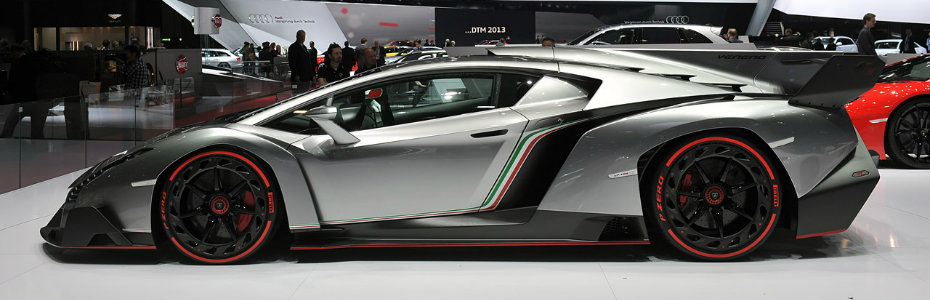
Lamborghini Veneno

Lamborghini's $4 Million Price Tag Veneno, only 3 of these bad boys were produced.

Bentley Motors

Bentley, the Definition of Luxury. What are there more to say?

Porsche 918 Spyder Concept

So, is the 918 Spyder everything it has been hyped up to be? Well, the picture speaks for itself.

Monday, March 18, 2013

2014 Ford Fiesta 1.0-liter EcoBoost


There's an analogy to diesel engines hiding in the new Ford Fiesta with the 1.0-liter EcoBoost powerplant. There's still a segment of the population that has bad memories of diesel engines, and that makes it harder for Audi or Volkswagen to sell their new clean diesels in the US today. Not impossible, but more of a challenge than it needs to be. In the same way, ask any car geek if they've had good experiences with three-cylinder engines, and the response is likely to be a flashback to a bad ride in a Geo Metro.

But, if no one were to tell you that the new Fiesta 1.0-liter EcoBoost is rocking three cylinders, you'd probably be hard pressed to notice. The engine has already found a home in the Ford Focus (read our Quick Spin) and, after driving about 100 miles around Los Angeles and the Malibu hills in a Euro-spec Fiesta equipped with one, we can safely say that this is a solid B-segment car – one that happens to get over 40 miles per gallon (city) without a hybrid powertrain. Here's what we learned about the car and Ford's plans to bring it to the US.

Driving Notes

- The Fiesta with a 1.0-liter EcoBoost engine is already on sale in Europe, and will come to the US in about a year, in late 2013. There will be a few little changes (the Econetic badges will be replaced with the EcoBoost wording that we have here) and what we think is a big one. Specifically, auto start-stop, which is available on the European model, will not be an option for Americans. The reason, we were told, is that B-segment customers are extremely price sensitive, and spending a few hundred extra bucks on this technology – which the EPA tests still don't quite understand – is something Ford doesn't expect them to do. There is still a chance this will change, though.

- Still, at an estimated 40+ mpg, this flavor of the Fiesta will likely be the "most fuel-efficient, non-hybrid vehicle sold in North America." The current high-mileage Fiesta SFE model gets 40 on the highway (and 33 combined, 29 city). Ford is not talking about combined or city mpg estimates for the new Fiesta just yet.
It bears repeating that you do not feel that this is a shaky three-cylinder engine. The power – 123 horses – is there when you want it, with plenty of low-end torque. Some people on our drive were bothered by noise from the high-speed turbocharger that spins up to 248,000 rpm "almost instantaneously," but this is not enough to detract many points from the overall package.

- Also, since a three-cylinder engine is inherently imbalanced, Ford optimized the engine mounts and made other adjustments to decouple engine shaking forces for "extreme smoothness." It worked.

- For shorter people, the low placement of the side mirrors, especially on the passenger side, might be a problem. I'm about 5'9", and it was fine, but my co-pilot on this drive was a few inches shorter and she could not easily use the mirrors. They do sit awfully low, as you can see here.

- Going around tight corners, the Fiesta 1.0-liter EcoBoost feels a heckuva lot better than the Honda Fit in the same situation, but we found it roughly the same as the new Chevrolet Spark, two vehicles it will compete against for frugal-minded city drivers.

- Some of the other ways the new Fiesta will try to set itself apart is the big "40+ mpg!" sign that's sure to be emblazoned all over the dealership, the connectivity of Sync and MyFordTouch (with a new, 6.5-inch touch screen) and Sony HD radio.

- Jim Farley, executive vice president of global marketing, sales, service and Lincoln, said the new Fiesta is part of Ford's new high-mpg line-up, making fuel economy a reason to buy a Ford. It used to be, he said, "when people thought fuel economy, they did not think of Ford. We have made a tremendous amount of progress in the last few years of changing that perception."

- Put all this together and you've got a compelling "smaller is better" package that we need more details on to properly assess (price is a big one). For years, people have been asking for the Euro-spec Fiesta in the US. Well, we're going to get it, start-stop excluded.

Read more by Sebastian Blanco at Autoblog.com

Retrobuilt 1969 Mustang Fastback


Blink your eyes and take another look. While all visual cues may be telling your brain that you are staring at a near-pristine 1969 Ford Mustang Mach 1 Fastback, it's all a carefully crafted illusion – a very clever façade.

Hidden beneath that glistening Yellow Blaze paint, below the sculpted fiberglass and steel body panels, is a 2013 Ford Mustang GT. The retro-coupe features power-operated sport buckets with lumbar support, ice-cold air conditioning, six airbags and a full factory warranty. Lest anyone forget, it also comes with a modern fuel-injected 5.0-liter V8 generating 420 horsepower.

The team at Retrobuilt, out of Lamar, Missouri, is known for recreating Carroll Shelby's iconic cars of yesteryear. Yet instead of restoring worn classics to like-new condition, a process that delivers an immaculate muscle car yet retains all of its undesirable traits, they fabricate classics on current-generation Ford S197-platforms. In their own words, they "allow auto enthusiasts to benefit from the technology and manufacturing of a modern Ford Mustang while combining the classic styling of 1969 muscle cars."

Retrobuilt recently invited us to drive its 1969 Fastback mere days after its debut at the 2012 Specialty Equipment Market Association's trade show (SEMA) in Las Vegas. To make things a bit more interesting, and gauge public opinion, we chose to meet them at the entrance to Southern California's famed Mulholland Highway.

It doesn't take a rocket scientist to understand why this company is selling cars as quickly as they can make them. Old muscle cars are undoubtedly cool, but they are also temperamental, thirsty and uncomfortable when the weather isn't cooperating. The team at Retrobuilt, passionate about the classics but tired of the inconveniences, decided to marry the best of both worlds – thus its 197-based program was launched in 2009.

Retrobuilt works with Ford's S197 chassis, meaning candidates come from the current fifth-generation Mustang platform (2005-present). While some conversion companies purchase bodies-in-white from automakers, Retrobuilt relies on used cars (including those cosmetically damaged in hailstorms or tornados) or brand-new showroom stock vehicles. This particular build started as a brand-new 2013 Ford Mustang GT with a 5.0-liter V8, but it could have just as easily been a 2005 Mustang Coupe with a 4.0-liter V6, or a 2013 Shelby GT500 boasting a supercharged 5.8-liter V8. It is, ultimately, the customer's choice. (The company prefers to start with a vehicle painted black, as the dark sheetmetal under the hood is color correct for the era.)

Before the rebuild process begins, the steel hood and front quarter panels are removed from the donor. It is much the same story with the front and rear urethane bumpers, door handles, exterior mirrors and wheels, as they are all pulled off and set aside.

The front hood and quarter panels are replaced with fiberglass reproductions, sized to the dimensions of the slightly larger chassis (the '13 Mustang is about 13.5 inches longer and four inches wider than a '69 Mustang). The Ford's original steel door skins, steel roof and steel rear decklid remain in place, but fiberglass skins are placed over them to give the body a proper retro-styled figure.

Basic muscle-car stature in place, the period-look front and rear fascias are added. A new hand-crafted grille, aluminum brightwork and chrome bumpers, all looking as if they are straight out of the '60s (yet each custom-made for Retrobuilt) are bolted in place. The reproduction chromed steel bumpers, like the other parts, are slightly wider to fit the modern vehicle's dimensions. The details are impressive, as the reproduction mirrors, chrome door handles and other badging are all painstakingly period-correct. The hood pins are redundant (the OEM latching is retained), yet they are fully functional after the primary and secondary latches are released.

The stock engine, a naturally aspirated Coyote 5.0-liter V8 rated at 420 horsepower, is retained and customers are offered a choice between a six-speed manual gearbox and a traditional torque-converter six-speed automatic transmission (most choose the manual, but our test car was fitted with the slushbox). The hood scoop is functional, engineered to supplement the factory airbox with a fresh blast of outside air courtesy of a custom "Y-pipe" in the engine bay. An aftermarket exhaust, manufactured by MagnaFlow, is bolted in place after the catalytic converters, thus retaining all emissions equipment.

Springs and sway bars are replaced with an Eibach Pro-Plus suspension kit before one-piece aluminum alloy 18-inch American Racing wheels are bolted to all four corners (machined to look as if they have hub spinners from a distance). The wheels are wrapped in Nitto NT 555 Extreme ZR summer performance tires with a treadwear rating of 300. The brakes, single-piston sliding calipers over ventilated disc rotors, are left stock (our test car had alloy covers over the hardware to make them appear... well, upgraded).

Bodywork and painting is all done at the Retrobuilt facility. After the customer's choice of color is applied, a final clearcoat goes over the graphics. (The trademarked 'Boss 302' graphics on our test car were added by the owners, as the company doesn't want to get itself into hot water with Ford.) Finally, after a six-week wait, the vehicle is delivered to the customer.

Pressing the retro-cool thumb button on the door handle may set up those drooling over the exterior for disappointment, as the interior is left completely bone stock – there isn't even a Retrobuilt badge on the dashboard – exactly as it left Ford's factory. Then again, providing late-model comfort and reliability is the object here, not a 1960s-era interior.

We spent a few hours with the 1969 Fastback just north of Los Angeles in our own backyard. All visual cues aside, the coupe is basically a rebodied 2013 Mustang with an aftermarket suspension and exhaust. We expected it to drive like any lightly modified late-model Pony Car – as we would discover, that was mostly the case.

Settled into the familiar cabin, we ignited the V8 and it roared to life. The MagnaFlow exhaust really opens up the engine's lungs, and the exhaust settled down to a very throaty idle. Outward visibility is challenged, especially with the aluminum slat louvers on the rear window, but the vehicle retains its parking sensors, so low speed maneuvering isn't too difficult.

Despite its 40-year-old appearance, the Retrobuilt Fastback is every bit as comfortable as its donor was (that shouldn't come as any surprise). Everyone within the cabin will enjoy modern climate systems, satellite-based navigation and iPod-integrated infotainment. The seats are comfortable, the dashboard illumination is bright and crystal clear and there are plenty of cup holders. The stock Mustang is nice, so we had nary a complaint in this area.

Read more by Michael Harley at Autoblog.com

2013 Volkswagen Beetle TDI Convertible


Want proof that diesel is finally taking hold in North America? Look no further than this 2013 Volkswagen Beetle Convertible. For a while now, it's become easier to understand why more automakers are opting to pair their large-volume models with diesel, but it's only when a given technology or feature starts to infiltrate the industry's smaller segments that we can argue that something has truly taken hold. After an agonizingly slow buildup, we're prepared to say that the high-mileage fuel has finally come of age here, and the evidence is right under this VW's bulbous hood.

Consider this: Diesel has become so viable that it's trickled down to this car, a niche-within-a-niche-within-a-niche model. Niche number one? The Beetle is a retro-styled spinoff of VW's volume hatchback, the Golf. Niche number two? It's a convertible. It isn't until we get to niche number three that we even discuss its oil-burning nature. In fact, if you want to get even more stratified, the Tornado Red tester seen before you has a manual transmission, itself a lamentably narrow sliver of the marketplace. Yes, the outgoing New Beetle was offered here with TDI power, but its convertible variant never was. We've watched for years as Europe has played host to a whole mess of diesel droptops, but we simply can't remember the last time one was offered here.

That Volkswagen is bringing this triple-specific model to its North American dealers not only says a lot about the confidence it has in its TDI powertrains, it also says something about the company's relentless drive for volume, a fever pitch that seemingly cannot abide any white space left unfulfilled.

We've seen dodgy nichemobiles in the past – hell, the automotive landscape is littered with them – particularly convertibles. Thankfully, this Beetle is something of a sweetheart, with an easy charm and a flexible, efficient heart that just happens to burn oil.

Of course, for the less adventuresome, VW will happily sell you a gasoline-fed Beetle Convertible motivated by its enduring 2.5-liter five-cylinder with 170 horsepower and 177 pound-feet of torque, or its 2.0-liter turbocharged TSI four with 200 hp and 207 lb-ft. Both are reasonable alternatives – the 2.5 is a lazy revver with a funky soundtrack and a standard automatic, but it makes for a perfectly serviceable (if uninspiring) cruiser, and the 2.0T delivers additional fun thanks to its added power, flatter torque curve, sport suspension and manual or dual-clutch gearbox ($1,100) choices. But despite monumental dynamic improvements over their New Beetle predecessors, neither model is really likely to make an enthusiast's shopping list.

Truthfully, even with a heaping 236 lb-ft dollop of torque and 140 horses, this 2.0-liter TDI isn't going to set the performance world on fire. But it really doesn't have to – that's not the Beetle's primary mission in life. And paradoxically, the addition of diesel motivation really helps this car come into its own. For one, it's well in line with the bubble-body's offbeat and frugal hippy ethos. For another, its peak torque chips in from just 1,750 rpm to readily facilitate the sort of leisurely, low-rev open-air cruising that the lidless Beetle just begs for.

We were admittedly concerned that clatter from the TDI might be off-putting in a model with no roof, but the engine is so well behaved that passengers probably won't even notice that your ride gets fuel from those other pumps. The TDI Beetle's method of internal combustion is generally only noticeable if you're standing next to it at idle, or from inside when pulling away from a stop light with the top down. Even then, it's only a momentary distraction, one not much more unpleasant than the base 2.5's low-rev acoustic wobble. Oh, if you really want to pile on the revs, you'll hear more of the engine, but with markedly better torque than either of the range's two gas-powered offerings, you won't need to dip into the throttle deeply as often, let alone depress the easily modulated clutch.

In addition to the TDI's torque windfall, its primary benefit is a matter of economy. The EPA rates this manual transmission model at 28 miles per gallon city and a whopping 41 mpg highway, the latter being the best efficiency figure you can get in a convertible. If you're the shiftless sort, VW will happily sell you a DSG dual-clutch example with 28 city and 38 hwy ratings, but we liked out tester's six-speed self-stirrer just fine, and our drive loops emanating from around hilly Santa Monica suggest the Fed's fuel economy figures will be easy to attain.

We'd be remiss if we didn't note that we never really warmed to piloting its predecessor, the New Beetle – its cartoonish proportions made for a strangely unrewarding driving experience. The car's oversized, half-moon greenhouse offered tremendous headroom, but also placed the windshield way out front like a minivan, seemingly well ahead of the driver's feet. This made the New Beetle somewhat dimensionally tough to grasp, hurting the driver's confidence when placing it in aggressive corners. But there's no such problem here – like its hardtop counterpart, the new model now incorporates a flatter roofline and repositioned windscreen that not only gives the VW more traditional proportions top-up or top-down, it helps the driver feel more in control behind the wheel.

Aiding that new sensation is the Beetle's chassis, which is longer, lower and wider than its predecessor, not to mention stiffer – VW officials tell us that key reinforcements have been made all over, including the A-pillars and front roof crossmembers, along with the lower bodysides and between the B-posts. Altogether, the changes account for a 20-percent increase in rigidity, though there's a weight penalty. As a result of those strengthening measures and the one-touch power top mechanism, curb weights start at just over 3,200 pounds, representing a 220-pound increase. The result is worth it, though, at least over the LA Basin's well-tended roads riding on 17-inch rubber. The Beetle Convertible delivers a smooth ride with almost no perceptible cowl or steering column shake. There's also surprisingly eager turn-in thanks to the adeptly tuned front strut and rear multilink suspension and new electric power steering (the base 2.5 model sticks with hydraulic assist, but it's no more or less engaging). The 2.0T model receives an XDS electric limited-slip differential, inch-larger rubber and a bigger front antiroll bar – all of which make it the better handler – but the truth is that all models are plenty enjoyable for the type of driving this car character engenders.

As with the hardtop model, the Beetle's interior is fine work for the money, with genuine flair and a surprising amount of utility thanks to the new generation's larger dimensions. There's none of the decontented, built-to-a-price feel that mars the current Jetta – the cabin is notable for its robust switchgear and nice textures, along with its more supportive seats. Things can get predictably Germanic dour if opting for a black interior, but there are other choices available, including the painted body-color accents on our tester. We'd probably forego the optional navigation system, as the touchscreen is small and the menu logic not our favorite.

Thankfully, there's plenty of room up front for drivers of all statures, and the rear seats can actually a pair of grown adults surprisingly well, though the rear seatback is a bit upright. The latter split and fold to offer a decent-sized pass-through to the trunk, which has grown to 7.1 cubic-feet, a major improvement over the outgoing model's miserly 5.0 cubes. Behind the rear headrests is a new pyrotechnic pop-up roll bar system, a welcome bit of safety equipment not often seen on convertibles of this price point.

The three-layer top feels reassuringly stout, opening in 9.5 seconds and closing in 11 at speeds up to 31 mph, and it does a nice job sealing off the outside world when the weather isn't cooperative – this is a true four-season car. Just like it always has, the top furls up in a pram-like heap behind the rear headrests, but the stack is low enough that it doesn't compromise the driver's rear view – that demerit is reserved for the rear headrests, which really ought to be shingle-style for visibility's sake.

Read more by Chris Paukert at Autoblog.com

2013 Dodge Dart


The 2013 Dodge Dart is the most visible manifestation of the still-new monogamous relationship between Chrysler and Fiat, the Pentastar's savior from the depths of government-sponsored bankruptcy (or worse). If you'll recall, one of the big problems pundits, management and government officials identified with Chrysler's US lineup was its complete lack of competitive small cars.

Now would be a good time to mention that Dodge had a good thing with the original Neon. Not only did the little subcompact sell in conspicuously high numbers, it was also pretty fun to drive, especially in 150-horsepower ACR Coupe trim. In fact, so entertaining was the little two-door coupe, powered as it was by a dual-overhead-cam version of Chrysler's 2.0-liter four cylinder, that it spawned its very own racing series.

The successful Neon got a redesign in the year 2000, and as has so often been the case, the Pentastar Crew didn't do nearly enough to keep it competitive amidst a sea of Civics and Corollas, save the way-too-quick-for-its-own-good Neon SRT4, that is. The response to lagging market share? The Dodge Caliber, introduced in 2007. Suffice it to say that the Caliber was not the answer small-car buyers were looking for.

Enter the Dart. Is this compact the small-car savior Chrysler envisioned when it paired with Italy's Fiat? Let's take a closer look.

If an automobile is going to compete in the hotly contested compact car market in America, it's got to look good. Fortunately, the Dart delivers with styling that won't be mistaken for anything else in its segment. Up front is Dodge's familiar grille, with cross-shaped elements in either black or body color finish. The overall design manages to be both aggressive and curvaceous, due in part to the angular fascia and details like (optional) dual exhaust outlets, blacked-out trim and a distinct lack of chrome. In profile, the Dart is pretty much the exact opposite of the Caliber it replaces, and that's a good thing in the eyes of most consumers – though some will surely miss the utility available only in a hatchback.

At the rear, Dodge has implemented a unique version of its signature racetrack-shaped taillight array, made up in this case of 152 individual LED bulbs (available on R/T, SXT, Rallye and Limited trims). We like the effect of the racetrack taillamp array at night, and we appreciate its availability on the entry-level Dart.

Wheels can be had in 16-, 17- or 18-inch varieties, in bright silver, satin silver, polished or in a so-called Hyper Black finish on the R/T and Rallye models.

A few of the Dart's unique styling elements carry over into the interior. First and foremost is the racetrack-mimicking light strip surrounding the gauge cluster and top of the center stack. There are also plenty of piano-black trim pieces, which match the exterior bits seen on the Rallye model, and though the shiny surfaces are more than a little overdone, at least there's an alternative to the painted silver seen on every one of its competitors. Illuminated cup holders are a nice touch, as is the class-exclusive storage compartment hidden beneath the front passenger seat cushion.

Interior plastics and the fabric seating surfaces in our test car were well chosen, though not what we'd consider class leading – the Ford Focus and Chevrolet Cruze offer generally nicer duds. Most of the touch points have soft coatings applied that make them feel more upscale than past Dodge efforts, and the availability of 14 different cabin and trim combinations means buyers can individualize their Darts to their liking far better than most of its classmates.

Dodge has seen fit to offer its excellent 8.4-inch Uconnect in-dash technology in the Dart, and for that, we're thankful. It's quick, intuitive and powerful, and nothing else in the compact sedan class has any infotainment tech that's anywhere near as competent. Also worth mentioning is the available seven-inch TFT gauge cluster, which offers up a slew of driver-configurable screens that include multiple speedometers, navigation information, economy readouts, vehicle information updates and even a flower that grows or wilts based on your fuel-minded driving habits. Yeah, we could do without that last little bit, too.

Roominess is something of a mixed bag. There's 42.2 inches of legroom up front and 35.3 in the back; hip room in the rear seat measures 52.6 inches while shoulder room comes in at 56.1. The trunk measures 13.1 cubic feet. Basically, what we have in these dimensions is a full serving of competitive. Based on the Dart's exterior dimensions, however, we were hoping for more – the Dart, measuring 184 inches stem to stern with a 106.4-inch wheelbase and 72 inches in width, is the longest and widest car in its class. We're neither engineers nor math majors, which might explain why we're left scratching our heads as to where those extra potential cubic feet went off to.

Even more concerning, however, is the Dart's relative heft. The lightest Dart Dodge sells is still a heifer at nearly 3,200 pounds. The Honda Civic and Hyundai Elantra weigh a shade over 2,600 lbs, the Toyota Corolla and Mazda3 come in near 2,800 lbs, the Ford Focus is 2,960 lbs and the Chevy Cruze, once considered the porker of the segment, tips the scales at a bit under 3,100 pounds. Put another way, the Dart, without a single passenger, weighs as much as a Honda Civic with four 150-pound occupants.

Three engine options are available (or at least will be available once the delayed R/T model hits dealerships), including a standard 2.0-liter naturally aspirated mill, a 1.4-liter turbocharged and intercooled unit that leads the pack in efficiency and a 2.4-liter with 184 horsepower and 171 pound-feet of torque for those looking for the most powerful option. We drove a Dart with the standard 2.0-liter engine mated to a six-speed automatic for a week, then sampled the 1.4-liter turbo with a six-speed manual. Both engines move the Dart with competence through traffic. Horsepower for both the 2.0 and 1.4 engines comes in at 160, but the turbo's 184 lb-ft handily outdoes the base engine's 148.

If it were our hard-earned bucks on the line, we'd definitely opt for the smaller turbocharged engine, which, while balky at low-rpm takeoffs, is genuinely spritely once the tach swings near 3,000 rpm. What's more, it's the 1.4 liter that earns the highest fuel economy figures, with an estimated 27 miles per gallon in the city and 39 on the highway. Add the optional Aero pack, which includes active grille shutters and other slippery tweaks, and highway mileage jumps to 41 when mated to the six-speed manual gearbox. Choose the six-speed automatic and you'll get 28 city, 40 highway. Sadly, the turbo mill requires premium gasoline, negating some of the mpg benefits. For reference, Chevy's turbocharged 1.4 earns similar EPA figures on regular-grade fuel, though its 138 horses and 148 lb-ft are way down on the Dodge.

Behind the wheel, the Dart's Italian DNA is only somewhat apparent. Yes, the car is based on a platform originally developed by Fiat for Alfa Romeo, but it's been stretched like silly putty in every direction for the States and the suspension is tuned for American drivers on American roads. As such, it's soft enough to deal with horrid roadway surfaces and quiet enough to take your parents out to dinner. Fortunately, when you decide it's time to have some fun, the chassis is ready to play. Steering feel is quite good, and the fun-to-drive quotient on the street is right up with the Ford Focus and Mazda3, which we consider to be best-in-class in this regard.

Little things like the engine note and the way the Dart responds to quick steering inputs make for an entertaining car to drive aggressively, but full at-the-limit handling is much messier, with plenty of body roll to go along with the tire squeal. In other words, don't expect the Dart to carry you to any track-day glory as the Neon once did.

The six-speed automatic that can be had with the base 2.0-liter engine is smooth enough that it mostly went unnoticed. Like most modern cars, the tranny's electronic brain wants to shift to the next highest gear as soon as possible for fuel-economy purposes, but that's a disease inflicting most machinery these days.

Rowing through the six-speed manual gearbox isn't as fun as it should be. The shifter isn't as crisp as competitors from Honda or Mazda, and the throws are longer than we'd like. Complicating matters is a clutch that has a somewhat odd engagement. Our staff is divided on how bothersome the shift-for-yourself Dart experience really is, so we suggest you take one for a test drive before signing on the dotted line. In any case, buyers of the row-your-own model with the turbo engine better get used to rowing, as the little engine falls flat on its face at low rpm. Best to keep the mill spinning in the middle reaches of the tach.

Read more by Jeremy Korzeniewski at Autoblog.com

2014 Audi A3 Sportback


The (final) final decision on whether or not we will get the second-generation Audi A3 Sportback in the US has yet to be handed down by the juries in Ingolstadt and Herndon (Virginia, corporate seat for Audi USA). But that doesn't mean we can't head to the roads of the Monte Carlo Rally in this car's most powerful and accoutered trim three months before European customers take deliveries in late February. Our ride for the day? The A3 Sportback 2.0 TDI Quattro S-line with the beefy six-speed S-tronic, a car good for 181 horsepower and 280 pound-feet of torque between 1,750 and 3,000 rpm. If it came available in the US, we anticipate pricing would begin around $34,500 for this topmost trim.

When we get a shot to drive on these utterly spectacular roads, the assumption would be that our Audi of choice would be an RS trim with a chassis set up for our usual abuses. Such was not the case this time, however, as our tester did not even benefit from the optional Audi Magnetic Ride dampers that are now available on the A3. Audi Drive Select is standard at this engine and trim level (we had the European "Ambition" trim, which equates roughly to Premium Plus in the States), and this does provide for the recalibration of several dynamic bits between Efficiency, Comfort, Auto, Dynamic and Individual modes. With the six-speed S-tronic gearbox, ADS takes care of shift responses, as well.

Although this A3 Sportback was not like an RS3 by a longshot on our route, we simply toned down our rate to match what might be the driving attitude of a typical owner. Taken as such, this top tune of the 2.0 TDI engine, plus all of our model's premium touches inside, made for a thoroughly satisfying experience on roads any enthusiast would never want to leave. Conditions were ideal, as there was literally zero traffic to disturb our exploration of this latest Sportback.

The everyday sensation while simply cruising along the highway is, as we experienced recently on the latest Volkswagen Golf that shares its chassis with the A3, is more like the drive of a well-dressed A4. Riding here on optional top-level S-line 18-inch wheels and tires on this trim's standard dynamic suspension with newly engineered rear multi-link axle, this Sportback body comes off even more capable and sophisticated than other models we've tested using Volkswagen Group's new MQB modular architecture.

A chief reason for the even greater maturity of the ride on this A3 Sportback is that one of the benefits of the new architecture is the ease with which it can be elongated or shortened to fit a particular model. While the overall length of the Sportback body adds just .7 of an inch over the three-door A3 we tested earlier this year, the rear wheels on their axle are simply shifted back 1.4 inches, thereby creating a larger footprint while giving both rear passengers and cargo more space to occupy. The new Sportback wheelbase is a full 2.3 inches longer than that of the outgoing model, which is darn near a lightyear in compact car terms.

It's a pity that Audi seems to be leaning toward not submitting this new A3 Sportback for its immigration papers. According to A3 marketing guru Patrick Rismont, the A3 Sportback in its first generation has barely managed to exceed the company's humble sales expectations in America, and that lack of a boffo hit has thrown the A3 Sportback's North American future into question. The feeling in the air is that Audi wants to pummel us rather with the forthcoming A3 sedan and ragtop convertible, the former in its production trim scheduled for public unveiling at the Shanghai Motor Show next April. We know that this is probably the easiest and most practical move, but we are great lovers of Audi's sportbacks, so hope springs eternal they'll keep us supplied with five-doors – especially since this latest edition is so much better than the first one.

Perhaps due to the sheer physics of size and weight, the electro-mechanical steering of the A3 Sportback feels spot-on, and putting it into Dynamic mode tightens things up quite nicely when the road gets twisty. It is eerily smooth, of course, and feedback from the asphalt is not immediate, but we'll hold off whining on that note until the new S3 and RS3 models bless us with their presence. In this trim the steering feel is exactly as it should be.

We tried our best to shove the A3 Sportback around for cornering photographs and whatnot (stability control all the way off), but whatever natural lateral give there was felt less like oversteer and more like purposeful sideways squish. This redone A3 model weighs between 100 and 165 pounds less than last generation, which is still on sale in the US, and because of that, this aforementioned dynamic squishing can be let to run its natural course through the curve, even allowing us to stay judiciously on throttle. We're not talking body roll here, just a forceful and not altogether unpleasant sideways scooching while holding the good steering rack steady and eyeing the road ahead. Such is the world of your typical Quattro chassis, only now lighter.

To our eyes, this new A3 Sportback, along with the TT, A4 and A5, is solidly in sweet zone for the Audi's most recent styling language. The five-door A3 now looks far more interesting than its three-door counterpart. As on all MQB-based models, too, practically all things you can opt for on larger Audis are now available on the A3 family. There is Audi Pre Sense for avoiding lower speed accidents, Audi Side Assist, lane assist, traffic sign recognition, adaptive cruise control, and several other usual suspects.

The latest MMI Navigation Plus with touch pad also makes its Sportback debut, and when you add the Connect feature, your connectivity to the world takes you and your car to places never before known to this vehicle segment. An added compact-class first – shared with all MQB hatches launched so far, but with the most sophisticated treatment saved for Audi – is the full LED lighting front and rear, the front being of the adaptive sort. On the topic of lights, the cargo area – good for a minimum of 13.4 and up to 43.1 cubic feet and eminently flexible despite the lack of a perfectly flat floor – gets two ambient night lights for when you need to open up the panel covering the underfloor stowage space.

Diesel engine family EA288 has been completely redesigned to suit the MQB architecture and be more efficient. Way down low in the rev range, there is certainly some turbo lag before the diesel freight train effect takes hold. But hit the sweet spot starting at 1,750 rpm in second or third gear coming out of curves and the urgency is felt quite clearly. Plus, the noise it makes through the pair of exhaust pipes is pretty nice for a little diesel. Acceleration to 62 mph is estimated at 7.1 seconds, but based on the spirit with which we were dicing up the hills, we figure it's got to have a 6.8-second run in it. As far as economy goes, highway mileage in the US would peak somewhere around 45 miles per gallon.

As ever, we'd love to have a six-speed manual in this application, but Audi isn't planning to offer such a gearbox in the Quattro-equipped A3 at this top diesel power rating. The existing S-tronic dual-clutch gearbox is heavy and it behaves heavily at times. Here's hoping that the latest S-tronic design, as seen on the new R8 supercoupe, can somehow trickle down the lineup, because that quicker and more compact tranny really does work as promised... finally.

Equally important while shoving around any car is a good set of brakes since, aside from the famous curvy roads we drove, there are several spots in the vicinity where huge trucks have inexplicably been allowed inland from the seaside, and there is hardly enough room for their side-view mirrors to pass the local bar without nicking it. Luckily, the A3 Sportback's discs hauled us down from speed pretty well all day long, and with a bare minimum of nose dive and consequent passenger discomfort in the process.

We do hope Audi sees fit to keep one of its hatchback bodies in the US. If not, our lineup of cars from Audi will soon be nearly free of conventional wagons and hatchbacks. And that's not good – because this new Sportback certainly is.

Read more by Matt Davis at Autoblog.com

2014 Lexus IS prototype


At the beginning of 2011, we rocked up to the parking lot at Southern California's Santa Anita Raceway to test the 2012 Lexus GS. This was the first sedan in the luxury brand's lineup to reset its intentions on the balance of sport and luxury. The previous GS had blanched into mute tepidity, and the new generation we drove on an autocross course and on a canyon road corrected just about everything; we liked its looks, and the Variable Gear Ratio Steering- and Adaptive Variable Suspension-equipped car moved its abilities into the realm of a true sports sedan, and it was great to drive. They absolutely nailed it.

In our review of that car, we wrote that the only other sporty Lexus was the IS, and that our favorite among its rank and file is the IS 250 with the six-speed manual. Specifically, we called it "a spirited little weakling of a car." Down on power but also on weight, it rewarded commitment and skill – it didn't have the gumption to compensate for missed shifts and bad lines, and because it was so easy to get wrong, the momentum carried through right to the smiles when you got it right.

Yet no one was ever seriously comparing the IS – Lexus' third-best-selling car – to the BMW 3 Series, and for Lexus that was a problem. You can't have your entry-level sports sedan omitted entirely from the conversation. So now, finally, it is time for the IS to get its dip into Lexus' spindle-grille-and-F-Sport-performance bath.

The aim is high: Chief Engineer Junichi Furuyama said he wanted the IS to be "the most fun to drive in the segment." That was reinforced throughout the presentation and the day with statements that the new IS should react "faithfully to even slight inputs" and that it should "respond to the driver's will." The idea with this model is to build a link from the LFA, down through the IS F, to this F Sport model.

These are goals that are hard enough in light of how cars are growing in size and weight, in general. On top of that, Lexus has to work around the ideas of luxury and refinement that any mention of the brand brings with it. Easy (well, easier) to do when you're charging LFA money, much harder when buyers are checking the bottom line and lease rates carefully. And one only needs to look at where the 3 Series has gone to see how weak the word "sport" has gotten in the phrase "sport sedan."

The next generation IS 250 and IS 350 F Sports were benchmarked against the previous-generation 3 Series M Sport, targeting its driving dynamics, feedback and fun-to-drive factor. While buyers for standard cars in the segment skew female, buyers of tuned versions like F Sports and M Sports skew male, and that's the pie Lexus wants a larger piece of.

Furuyama grouped the changes to the IS into three categories: body and suspension, driver environment and powertrain. Body rigidity has been increased by using more spot welding, a process called laser screw welding, and a lot more adhesive to join body panels at all of the major cutouts – windshield and backlight, door cutouts, engine bay and wheel arches. The front suspension is stiffer by 20 percent through the use of a new front stabilizer. In back, the IS adopts the rear suspension from the GS, separating the spring and the absorber and changing the position of the toe arm. The increased body rigidity also meant they could lower the spring rates. The objective was increased rear grip, a side benefit being that with the suspension towers going more upright there is more cargo room in the trunk.

Another part from the GS used as a starting point for this IS was the steering gear. Better feedback through the wheel and more direct steering have come through refinements like a higher stroke ratio, new ball-screw structure and increased rigidity in the pinion shaft. Lexus also wanted to give drivers the sensation of a clear on-center area.

To raise its dynamic game, the new IS 350 gets the eight-speed Sport Direct Shift (SDS) automatic from the IS F that has "G-AI," programming that makes it sensitive to g-forces and will keep it from shifting during hard cornering when in Sport mode. The 350 also gets the aforementioned Variable Gear Ratio Steering (VGRS) and Adaptive Variable Suspension (AVS) from the GS.

The IS 250 has three driving modes: Eco, Normal and Sport. The IS 350 gets four, adding Sport S+ to the top end. Sport ups the throttle sensitivity, while Sport S+ 'activates' the most aggressive settings on the electric power steering, the VGRS and the AVS.

This is called the Next Generation IS, but it's the cabin and chassis changes that go the furthest. Covered in camo as these cars were, we had to use the light and shadow to make out what we could as best we could, but on the outside this is an evolution of the current design. It doesn't look noticeably bigger than it is now, but it is noticeably more expressive.

Naturally, that starts with the spindle grille in front. The F Sports will be differentiated by exterior design and tuning, and the grilles on these sedans were filled in with different treatments on the 250s and 350s at the event – a six-bar grille up top on the 250, mesh on the 350, and each wore a different lower bumper – but we were told that these differences weren't indicative of the final cars. The headlights, single-lens jobs that are cleaner in design, jut out from the line of the car instead of being contained within it. The side sills are more sculpted and get thicker as they move rearward, then twist to form a character line that runs up the front of the rear wheel arch. It doesn't appear that substantial when viewed straight-on, but when we saw the car driving into the sun you could detect the width – everything below the sill character line is in shadow. That line is met on the other side of the rear arch by a cutline that runs over the tops of the taillights. Behind the arch, another line forms a crease that runs underneath the lights. As for the lights themselves, it almost looks like the current units have been turned over and drawn out a bit more along the sides of the car. And we don't know if the rear track is wider, but the rear arches are definitely punchier.

Instead of a lip on the decklid, the deck is shaped into a spoiler in the center of the car. Below, another crease in the bodywork runs from the bottom of the rear arch up to the bottom of the bumper, creating an effect like a built-in diffuser.

Inside, the interior feels vastly different – moreso than a list of its details would indicate. The driver's hip point has dropped 20 millimeters due to the increased concavity of the seats – and concomitant increase in bolstering. Neither the roof height nor the floor height of the car have changed, but those 20 mm raise the center tunnel and the door shoulder height in relation to your position, so you feel like you're dropped much more deeply into the cabin.

The armrest starts up near the instrument panel, the inclined portion housing the window, lock and mirror switches, sliding down into a flat stretch where one's arm would go. It's a familiar setup and replaces the L-Finesse wave of the door on the current car, where the buttons are placed on a horizontal low and in front.

The vertical slabs of paneling in the current car give way to inclines. The IP doesn't rise, cliff-like, from the center tunnel; instead it slopes up and away toward the windshield and away from the driver, but it isn't canted toward the driver. A vertical feature that houses the vents divides the upper and lower parts of the dash, textured plastic and the nav screen above, hard, shiny bits below. The climate controls have been reworked with eight buttons in two rows underneath a digital temperature readout as opposed to the six buttons in one row on the current car. Beside that readout there are touch controls to adjust the temperature; slide your finger along the silver bar, up to increase the temp, down to lower it, or you can tap either end for the same function.

We were told that one of the primary reasons for rejection of the current car among shoppers is the lack of rear leg room. That has been addressed. In the new car, with the driver's seat set for a driver nearly six-feet tall, hopping in the back seat still left an inch between the closest part of the driver's seat. Leaving one's legs in the scallops of the back of the seat meant even more space. In the previous gen our knees were hard up against the driver's seatback. There is appreciably more headroom as well. And for the first time in an IS, the rear seats fold down in a 60/40 split.

Read more by Jonathon Ramsey at Autoblog.com

2013 Lincoln MKZ


Lincoln – pardon us, the Lincoln Motor Company – assures us that Ford is committed to its success. The awkwardness of the statement (which feels vaguely like your mother telling you that she loves and supports you regardless of what everyone else thinks) was hard to escape when we recently spent a few days with the all-new second-generation 2013 Lincoln MKZ.

Launched earlier this year at the 2012 New York Auto Show, the MKZ is a midsize premium sedan that shares platforms with the Ford Fusion (also all-new for 2013). The sedan's primary competitors, according to Lincoln, include the Audi A6, BMW 5 Series, Cadillac CTS and Lexus ES Series sedans – each an established, accomplished player.

But Lincoln sees opportunity in the segment. They feel that today's customers, with values shaped by the recession, are open to new brands and experiences. Shoppers are seeking unique products and experiences (e.g., a more intimate dealer relationship) to substantiate the additional cost of a premium vehicle. With Ford firmly supporting its back, Lincoln is betting its future on product design, quality and an improved ownership experience.

The 2013 Lincoln MKZ is a real looker, especially when compared to its bland predecessor (launched as the Lincoln Zephyr for the 2006 model year, but renamed the MKZ after a refresh for 2007). The new sedan is sleek – almost futuristic – with distinctive styling that includes a sweeping roofline, taillamps that stretch across the rear façade, a new interpretation of Lincoln's split wing grille and fresh LED illumination. Overall, the look is clean and memorable. Even the "baleen" grille (our word, not theirs), which saw us raising our eyebrows on other Lincoln models, integrates surprisingly well here.

Even though they share mechanicals, the similarities between the MKZ and Fusion are mostly hidden from view. The wheelbase is the same (112.1 inches), but the Lincoln is 2.4 inches longer (194.1 inches), .1 inch taller (58.2 inches) and half an inch wider (73.4 inches, excluding mirrors) than its relative. Interestingly enough, it is longer than the A6, 5 Series, CTS and ES as well.

The interior is also noteworthy. Lincoln has ditched its characterless past and gone with a sweeping cockpit highlighted by a flowing instrument panel with a standard touchscreen display. While the primary instrument cluster retains its analog speedometer and tachometer, the traditional shifter and mechanical parking brake have been replaced with flush buttons and switches to allow increased storage. The look is spacious in appearance, pleasing to the eye and clean.

Powering the new Lincoln are three different engines and two drivelines.

Standard gasoline models are fitted with the automaker's turbocharged 2.0-liter EcoBoost four-cylinder, rated at 240 horsepower and 270 pound-feet of torque on 87 octane. The all-aluminum engine is mated to a six-speed 6F-35 automatic transmission. The more powerful engine is a naturally aspirated 3.7-liter six-cylinder developing 300 horsepower and 277 pound-feet of torque (also on regular unleaded), mated to Ford's beefier 6F-50 six-speed automatic transmission. In the Sunshine Belt, most MKZ models will be front-wheel-drive, but all-wheel drive is a wise option for those in more challenging climates.

As it has in the past, the automaker is also offering an MKZ Hybrid. Under its hood is a 2.0-liter Atkinson-cycle four-cylinder, rated at 141 horsepower, supplemented by a 47-horsepower electric traction motor utilizing a lithium ion battery for storage (total system power is 188 horsepower). A continuously variable transmission is standard on the front-wheel-drive eco-friendly model.

Underpinning the new Lincoln is a standard Continuously Controlled Damping (CCD) suspension system with MacPherson struts and aluminum control arms up front and a multi-link configuration in the rear, while the steering is electric power assisted (EPAS). There are standard 12.4-inch disc brakes (single-piston sliding calipers) at all four corners hidden beneath 18-inch aluminum wheels wrapped in 245/45R18 tires (19-inch alloys are optional). The curb weight of the standard model (FWD 2.0) is 3,719 pounds, with the range-topping V6 (AWD 3.7) coming in at 4,002 pounds. Two tons is about average for the segment when fitted with AWD.

In terms of fuel efficiency, the MKZ 2.0 FWD earns 22 mpg city and 33 mpg highway, and the MKZ 3.7 is rated at 18 mpg city and 26 mpg highway (the MKZ Hybrid is rated at 45 mpg, in both the city and highway cycle). Those figures are significantly better than its predecessor, but the six-cylinder consumes more fuel than its competition.

In lieu of a traditional launch, where journalists are usually brought to a manufacturer-sponsored event for PowerPoint presentations, product demonstrations and prescribed driving routes, Lincoln cut to the chase and lent us a range-topping MKZ 3.7 AWD for a couple days. While it was nice to drive the luxury sedan on our own turf, we missed the traditional data dump and torrent of product information as it is excellent insight.

Nevertheless, our Ruby Red over Charcoal MKZ seemed attractive enough to speak for itself. In its premium form, it wore a $39,045 base price (the MKZ 2.0 FWD starts at $35,925 and the MKZ 3.7 FWD starts at $37,155). In addition to standard full power accessories, LED headlamps, remote start and Active Noise Control (ANC), added to its bottom line was the Preferred Equipment Group 103A (19-inch alloys, heated steering wheel, THX Premium Audio, premium floor mats, heated rear seats, etc.) bundled with a massive single-panel glass moonroof for $6,530, the Technology package (adaptive cruise control, active park assist, lane keeping system, auto high beams, etc...) for $2,250, aluminum trim package (alloy accents on the doors, instrument panel and a leather-trimmed steering wheel) for $195 and rear inflatable seatbelts for another $195. The grand total, including Lincoln's $875 destination charge, was $49,090.

Read more by Michael Harley at Autoblog.com